



If you’ve had a stubborn, itchy rash that keeps coming back no matter what creams you use, you’re not alone. For millions of people, the culprit isn’t dry skin or stress-it’s something touching your skin every day. This is contact dermatitis, specifically the allergic kind, and it’s not just annoying. It can wreck your work, your sleep, and your confidence. The good news? You don’t have to guess anymore. With the right testing and a clear plan, you can find exactly what’s causing it-and stop it for good.
What Exactly Is Allergic Contact Dermatitis?
Allergic contact dermatitis (ACD) isn’t just a reaction. It’s your immune system being tricked. When a tiny chemical-called a hapten-gets into your skin, it bonds with your own proteins. Your body sees this as an invader and sends T-cells to attack. That’s what causes the red, swollen, itchy rash. Unlike immediate allergies (like peanut reactions), this takes time. You might touch something today and not see a rash until two or three days later. That’s why so many people miss the connection.
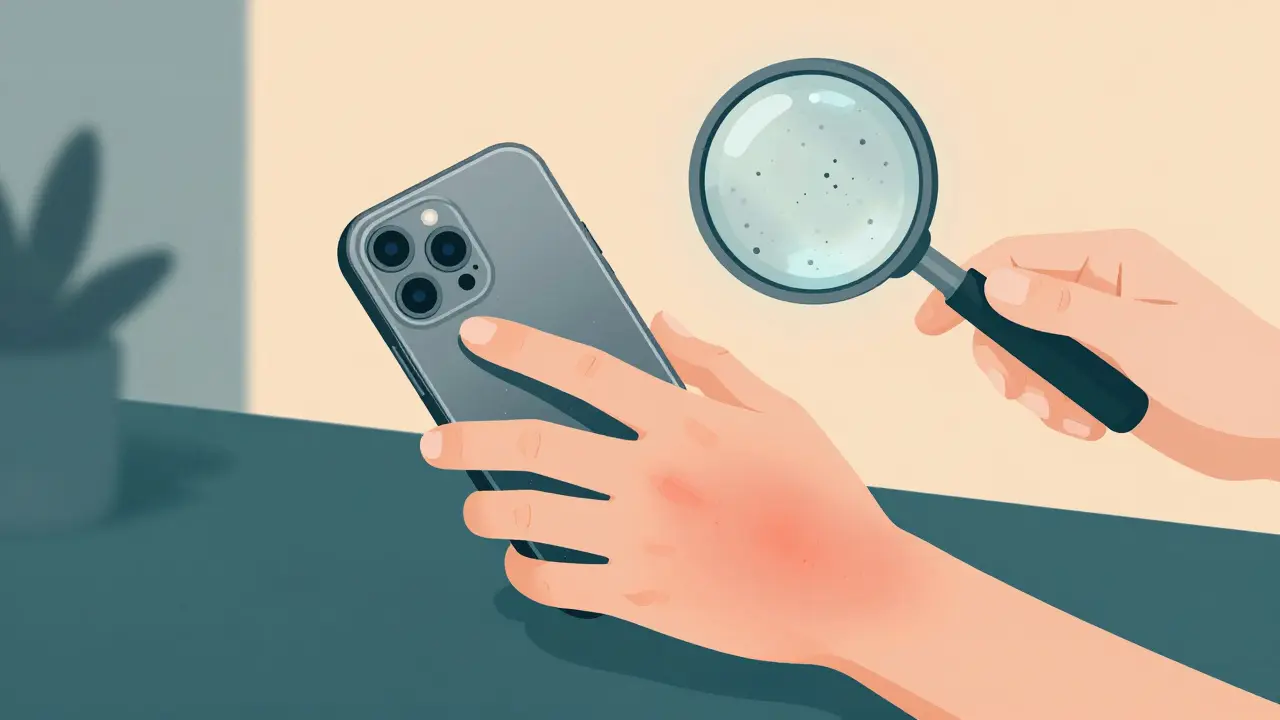
It’s more common than you think. In the U.S., over 13 million workers deal with it each year. Hairdressers, nurses, construction workers, and even office staff who use keyboards or phones are at risk. Nickel, found in jewelry, belt buckles, and phone cases, is the #1 offender worldwide. In fact, 17.4% of women and 3% of men in North America test positive for nickel allergy. And it’s not just metals. Fragrances, preservatives, and even natural plant oils can trigger it.
The Gold Standard: Patch Testing
If you’ve tried every lotion and avoided every soap but the rash won’t go away, patch testing is your next step. This isn’t a skin prick test like for pollen or bees. Patch testing finds delayed reactions-exactly what causes ACD.
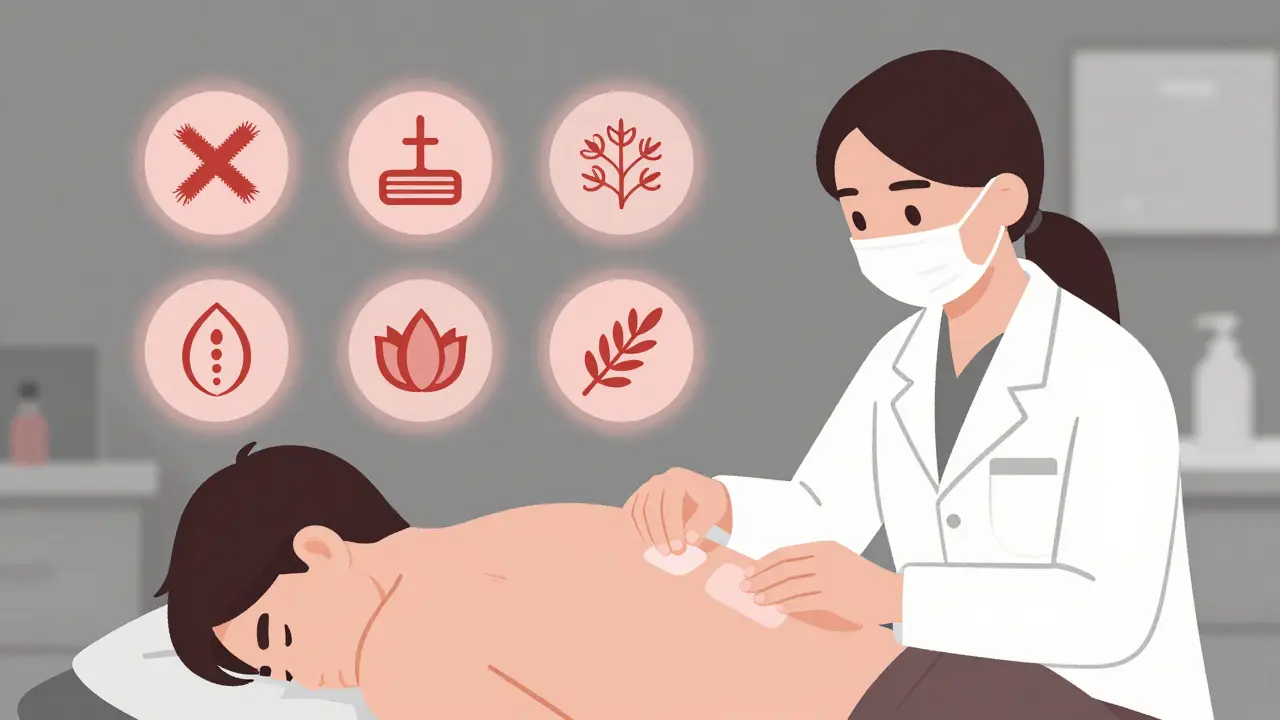
The standard test uses the TRUE Test, which has 29 common allergens pressed onto small patches. These are taped to your back for 48 hours. Then you come back at 72 and 96 hours for readings. That’s because the reaction builds slowly. A positive result shows up as redness, swelling, or tiny blisters right where the patch was.
It’s not perfect. The standard panel only covers 29 allergens, but there are thousands of chemicals in shampoos, lotions, tools, and clothing. That’s why some people need expanded testing. Dermatologists now often use panels with 70 to 100 allergens, especially if you work with chemicals, metals, or cosmetics. For example, if you’re a hairdresser, your doctor might test for paraphenylenediamine (PPD), a common dye that’s not on the basic panel.
One study found that patch testing changed how doctors treated 60-70% of cases. That means instead of guessing, they could tell you exactly what to avoid. And that’s huge.
Top Allergens You Need to Know
Not all allergens are created equal. Some are everywhere. Here are the most common ones found in patch tests:
- Nickel sulfate - Found in jewelry, coins, zippers, phones, and even some eyeglass frames. Affects 14.7% of people tested.
- Cobalt chloride - Often mixed with nickel in metal alloys. Also in paints, cement, and some cosmetics.
- Chromium - Used in leather tanning. A big problem for construction workers and mechanics.
- Fragrance mix - A blend of 8 common scents. But many people are allergic to specific fragrance chemicals not in this mix.
- Balsam of Peru - Found in perfumes, cosmetics, and even foods like cinnamon, citrus, and vanilla. Surprising, right?
- Thimerosal - A preservative in some eye drops and vaccines. Rare now, but still shows up.
- Cocamidopropyl betaine - A foaming agent in shampoos, body washes, and toothpaste. One Reddit user said avoiding this cleared their hand rash after 5 years.
Here’s the kicker: You can be allergic to something you’ve used for years. That’s why it’s so hard to figure out on your own.
What Happens After the Test?
Getting a positive result is just the beginning. Now comes the hard part: avoiding it.
Most people think, “I’ll just stop using that cream.” But allergens hide everywhere. Nickel is in your laptop hinge. Fragrance is in your laundry detergent. Balsam of Peru is in your lip balm. You need a detailed plan.
The American Contact Dermatitis Society created the Contact Allergen Management Program (CAMP). It gives you a personalized list of safe products based on your test results. They’ve cataloged over 18,452 consumer items-shampoos, lotions, tools, even clothing-so you know what’s safe to buy.
One 2023 survey of 1,247 patients found that 82% saw major improvement after avoiding their allergens. But 47% struggled to find hidden sources. Your soap might say “fragrance-free,” but it could still have balsam of Peru. Your new phone case might have nickel. That’s why reading labels matters.
How to Avoid Allergens in Daily Life
Here’s how to start cutting out allergens:
- Switch to fragrance-free, dye-free products. Look for “unscented” and “hypoallergenic” on labels. But read the ingredient list-some products hide fragrance under “parfum.”
- Test new products on your inner forearm. Apply a small amount for 3-5 days before using it elsewhere.
- Use gloves. If you’re allergic to nickel or chromium, wear nitrile gloves when washing dishes or handling tools.
- Check your electronics. Phones, laptops, and smartwatches often contain nickel. Use a silicone case. Avoid metal chargers.
- Be careful with cosmetics. Avoid lipsticks, foundations, and mascaras with balsam of Peru or fragrance mix. Try mineral makeup-it’s often safer.
- Wash new clothes. Dyes and fabric finishes can trigger reactions. Wash before wearing.
For workers: If your job exposes you to chemicals, talk to your employer. OSHA guidelines require them to help identify and reduce exposure. Many companies now provide non-allergenic gloves or tools for at-risk employees.
When Patch Testing Isn’t Enough
Some people get negative results but still have symptoms. That’s frustrating. Why? Three reasons:
- False negatives. The allergen wasn’t in the panel. One patient in a 2023 study had to pay $350 more for expanded testing to find a formaldehyde allergy.
- Hidden allergens. Your shampoo might have 12 ingredients, but only one is the problem. A lab technique called thin-layer chromatographic patch testing can separate these to find the culprit.
- Other conditions. Eczema, psoriasis, or fungal infections can look like contact dermatitis. Your doctor needs to rule those out first.
That’s why experts say patch testing should be done by a dermatologist trained in contact dermatitis-not a general practitioner. Inter-observer error can be as high as 30% if the test isn’t read properly.

What’s Changing in 2025?
The field is evolving. The TRUE Test is expanding from 29 to 80 allergens by late 2025, adding newer ones like those in green cosmetics and electronics. The EU has banned 26 fragrance allergens in cosmetics since 2003. The U.S. hasn’t, but pressure is growing.
Scientists are also testing blood markers. One study found that IL-18 levels in the blood match the severity of your rash. That could mean a simple blood test might one day replace patches-but not yet.
For now, patch testing remains the most reliable tool. And avoidance? It works. One dermatologist in Sydney told me, “I’ve seen patients go from daily steroid creams to zero rashes in 6 weeks. All because they stopped using a shampoo they’d bought for 10 years.”
Real Stories: What Patients Say
On Reddit, users share their breakthroughs:
- “I had eczema on my hands for 5 years. Patch test found cocamidopropyl betaine. I switched shampoos. My skin cleared. No more creams.” - EczemaWarrior87
- “I thought it was stress. Turns out, my watch strap had nickel. I switched to silicone. No more rash.” - WatchRashGuy
- “I spent $1,200 on dermatologists. Patch test found balsam of Peru in my lip balm. I stopped using it. My lips haven’t cracked since.” - LipHealer2024
These aren’t rare cases. They’re common. And they all started with one simple step: getting tested.
Final Thought: Knowledge Is Power
Most people with chronic rashes feel hopeless. They’ve tried everything. But contact dermatitis isn’t a mystery. It’s a puzzle. And patch testing gives you the missing piece.
You don’t need to live with it. You don’t need to guess. You don’t need to spend thousands on creams that don’t work. All you need is one appointment, one test, and the will to read labels.
And if you’ve been told it’s ‘just eczema’? Get a second opinion. Ask for patch testing. It could change your life.
Can contact dermatitis go away on its own?
Yes, if you avoid the allergen. But if you keep touching it, the rash will return. The key is identifying the trigger. Without that, you’re just treating symptoms, not the cause.
Is patch testing painful?
No. It’s not like a needle or a skin prick. Patches are taped to your back and left for 48 hours. You might feel a little itching or tightness, but no pain. The reading is just visual-your doctor looks for redness or swelling.
How long does it take to see results after avoiding an allergen?
Most people notice improvement within 2-4 weeks. Some see changes in days. Full healing can take up to 6 weeks, especially if the skin has been irritated for a long time. Patience matters.
Can I do patch testing at home?
No. Patch testing requires medical-grade allergens, sterile application, and trained interpretation. DIY tests or over-the-counter kits aren’t reliable and can even make your skin worse.
Are natural or organic products safer?
Not necessarily. Many natural ingredients-like tea tree oil, lanolin, or balsam of Peru-are common allergens. Just because something is labeled ‘natural’ doesn’t mean it won’t trigger a reaction. Always check the ingredient list.
What if my patch test is negative but I still have a rash?
You might need expanded testing with more allergens, or your rash could be caused by something else-like eczema, fungal infection, or irritant contact dermatitis. Your dermatologist may recommend a skin biopsy or blood tests to rule out other causes.
Can I be allergic to water?
No. You can’t be allergic to pure water. But hard water (with minerals like calcium or magnesium) can dry out your skin and make existing dermatitis worse. Also, some people react to chlorine in pool water or additives in tap water. These are irritants, not true allergies.
Does insurance cover patch testing?
In most cases, yes. Patch testing is considered medically necessary when chronic rashes don’t respond to standard treatments. Check with your provider, but Medicare and most private insurers cover it under dermatology visits.
15 Comments

Ferdinand Aton
March 8, 2026 AT 09:58
Okay but have you considered that maybe your ‘allergic reaction’ is just your skin crying out because you’re using too many ‘hypoallergenic’ products full of hidden silicones and preservatives? I had a rash for years-switched to plain olive oil and water. Gone in a week. Patch testing is just big dermatology’s way of selling you more tests.

William Minks
March 8, 2026 AT 19:28
This is so real 😊 I had nickel allergy from my phone case and didn’t even know it! Switched to a silicone case and my hands stopped burning. Took me 3 years to figure it out. Seriously, check your gadgets. They’re hiding in plain sight 📱❤️

Jeff Mirisola
March 10, 2026 AT 18:24
People underestimate how much our environment is poisoning us subtly. Nickel in zippers, fragrance in laundry detergent, balsam of Peru in lip balm-it’s not just about what you apply, it’s about what’s touching you 24/7. I’ve seen people transform after patch testing. It’s not magic. It’s science. And yeah, it’s worth the $200.

Susan Purney Mark
March 12, 2026 AT 17:41
I’m so glad this article exists. I spent 4 years thinking my eczema was stress-related until I got patch tested. Turns out, it was cocamidopropyl betaine in my shampoo. I cried when I finally stopped scratching. If you’re suffering, please don’t give up. This is fixable. 💛

Ian Kiplagat
March 12, 2026 AT 17:54
Patch testing works. My wife’s rash vanished after avoiding cobalt in her watch. Simple. No drama. Just science.

Amina Aminkhuslen
March 14, 2026 AT 00:24
Oh honey, you’re not ‘allergic’-you’re just a walking chemical dump. You bathe in ‘natural’ essential oils that are 10x worse than synthetics. Balsam of Peru? That’s a botanical landmine. You think lavender is gentle? It’s a sneaky assassin. And don’t get me started on ‘organic’ shampoos-they’re just poison with a hemp tag.

amber carrillo
March 15, 2026 AT 22:29
Patch testing saved my life. I didn't know what was causing the rash until I got tested. Now I know what to avoid. Simple as that.

Tim Hnatko
March 16, 2026 AT 15:46
I’ve been a nurse for 12 years and never realized my hand eczema was from the chlorhexidine wipes. I thought it was just ‘dry skin from washing hands.’ Patch test revealed it. Now I use non-latex gloves with cotton liners. No more burning. Just wish I’d known sooner.

Aaron Pace
March 17, 2026 AT 10:25
Wait wait wait-so you’re telling me my iPhone case is making my wrist itch? I’ve been using the same one for 5 years! And you’re saying my ‘natural’ coconut oil lotion is the problem? 😳 I’m going to throw out everything I own. My whole life is a lie. Also, can you send me a list of safe brands? I need help.

Joey Pearson
March 17, 2026 AT 19:52
You got this! One test, one change, one step forward. I know it feels overwhelming-but you’re not alone. I’ve been there. Your skin will thank you. And yes, reading labels is annoying. But worth it. 💪

Roland Silber
March 19, 2026 AT 15:30
One thing the article doesn’t mention: cross-reactivity. If you’re allergic to nickel, you might also react to cobalt or chromium-they’re often in the same alloys. And if you’re allergic to fragrance mix, you might not be reacting to the scent, but to limonene or linalool hidden in the ‘unscented’ formula. Patch testing is step one. Education is step two. And patience? Step three. It’s a marathon, not a sprint.

Patrick Jackson
March 21, 2026 AT 05:24
Think about it: our skin is the largest organ, and we treat it like a landfill. We slap on 12 products a day, each with 20 ingredients, then wonder why we’re breaking out. This isn’t just dermatology-it’s a rebellion against modern consumerism. We’ve been sold a lie that ‘more is better.’ The truth? Less is everything. One soap. One lotion. One truth. Patch testing isn’t a test of your skin-it’s a test of your willingness to unlearn everything.

Adebayo Muhammad
March 22, 2026 AT 23:49
Wait, so you're telling me that the entire medical-industrial complex is profiting off of our ignorance? Patch testing? $300? And then they sell you 'safe' products? This is a scam. The real allergens are corporate greed, pharmaceutical lobbying, and the fact that the FDA doesn't regulate cosmetics. You think nickel is the problem? No. The problem is capitalism. And the solution? Burn it all down. 🔥 Also, I'm 17 and I've been self-taught since 13. I know more than your dermatologist.

Pranay Roy
March 24, 2026 AT 23:09
Did you know the government is hiding the truth? Patch testing is a trap. The allergens they test for? They’re the ones they want you to avoid so you’ll buy their ‘safe’ products. The real cause? 5G, EMF radiation, and glyphosate in your water. I’ve been using a Faraday cage on my skin and drinking distilled water. My rash vanished in 3 days. No patch test needed. The system doesn’t want you to know this. But I’m telling you. Share this. Save lives.

Joe Prism
March 26, 2026 AT 03:19
It’s funny. We spend years treating symptoms, but the real answer is in the details. A single ingredient. A single object. A single moment of awareness. I used to think ‘natural’ meant safe. Now I know: safe is what you can prove. Not what you assume. Patch testing isn’t about fear. It’s about clarity.
Write a comment