





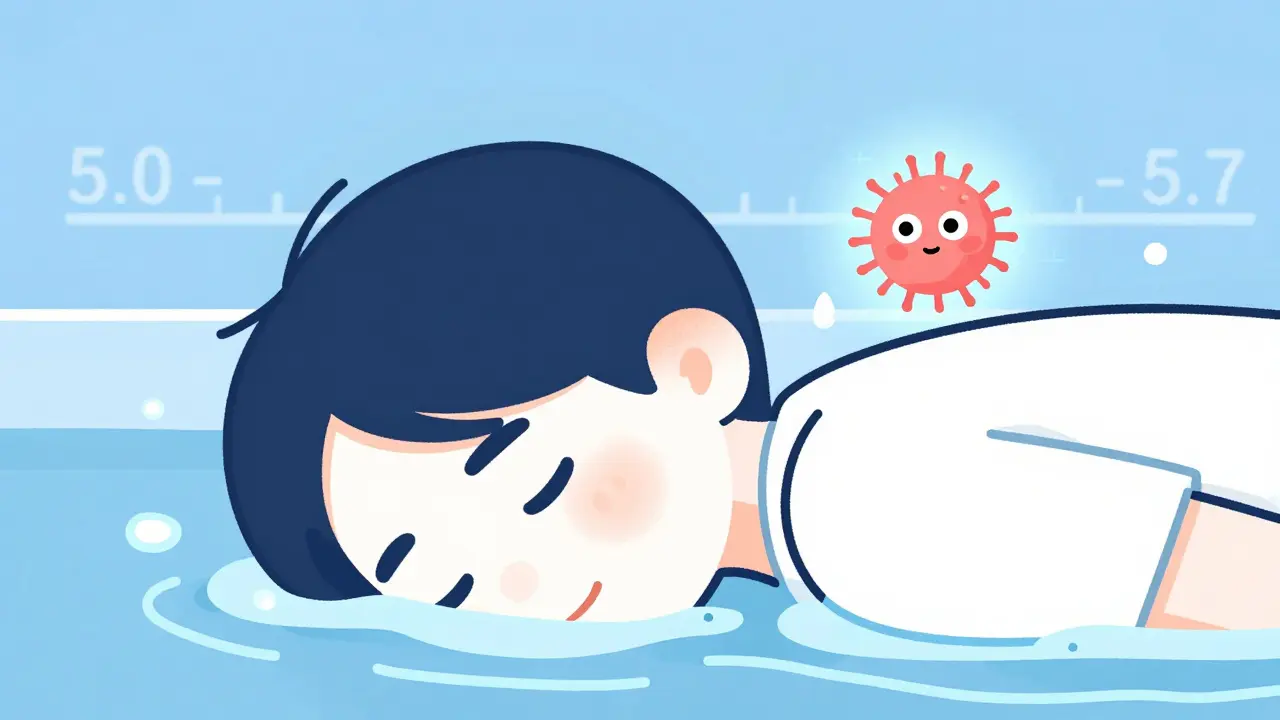
Ever felt that sharp, burning pain in your ear after a swim? Or noticed your ear feels full, itchy, and tender to the touch? You’re not alone. About 1 in 10 Americans gets swimmer’s ear every year - and it’s not just swimmers. Anyone who gets water trapped in their ear canal - from showering, sweating, or even humid weather - can develop it. This isn’t just a minor annoyance. Left untreated, it can turn into a painful, weeks-long battle. But here’s the good news: most cases clear up fast with the right treatment. The key is knowing what’s causing it and which ear drops actually work.
What Exactly Is Swimmer’s Ear?
Swimmer’s ear - or otitis externa - is an infection of the outer ear canal. That’s the tube running from your outer ear to your eardrum. It’s not the same as a middle ear infection (otitis media), which kids often get after colds. Swimmer’s ear attacks the skin lining the ear canal. Normally, that skin is protected by earwax, which keeps moisture out and maintains a slightly acidic environment (pH 5.0-5.7) that stops bacteria and fungi from growing. But when water gets trapped, that protective layer breaks down. The skin swells, cracks, and opens the door to infection.
The main culprits? Pseudomonas aeruginosa - a water-loving bacteria found in pools, lakes, and even showers - causes 35-54% of cases. Staphylococcus aureus is next, responsible for 20-30%. Fungi like Aspergillus show up in about 10% of cases, especially in warm, humid climates. You don’t need to be a competitive swimmer to get it. Just one shower with water stuck in your ear can be enough.
How Bad Can It Get?
Not all cases are the same. Doctors classify swimmer’s ear by severity:
- Mild (45% of cases): Itching, slight redness, mild discomfort when pulling the earlobe. No major blockage.
- Moderate (35%): More pain, swelling that starts blocking the ear canal, some drainage. Hearing may feel muffled.
- Severe (20%): Intense pain, complete canal blockage, swollen lymph nodes, fever above 101°F (38.3°C). This is when you need to see a doctor - fast.
Diabetes increases your risk of severe cases. If you have it, even a mild infection can spread deeper - sometimes to the bone. That’s called malignant otitis externa, and while rare (0.03% of cases), it’s serious. Don’t ignore symptoms if you’re diabetic.
What Drops Actually Work?
The right ear drop depends on what’s causing your infection and how bad it is. Here’s what the evidence says.
For Mild Cases: Acetic Acid + Hydrocortisone
If you’ve got mild itching and no major swelling, start with an over-the-counter solution like Swim-Ear or a generic 2% acetic acid with hydrocortisone. These work by restoring the ear’s natural acidity - which kills bacteria and fungi - while hydrocortisone reduces swelling and itching.
Studies show this combo has an 85% success rate for mild cases. It’s cheap - around $15 a bottle - and doubles as a preventive. Use it after swimming or showering to keep infections from starting. But don’t use it if your eardrum is ruptured, and don’t expect it to fix a severe infection. It only works on early-stage cases.
For Moderate to Severe Cases: Ciprofloxacin + Dexamethasone (Ciprodex)
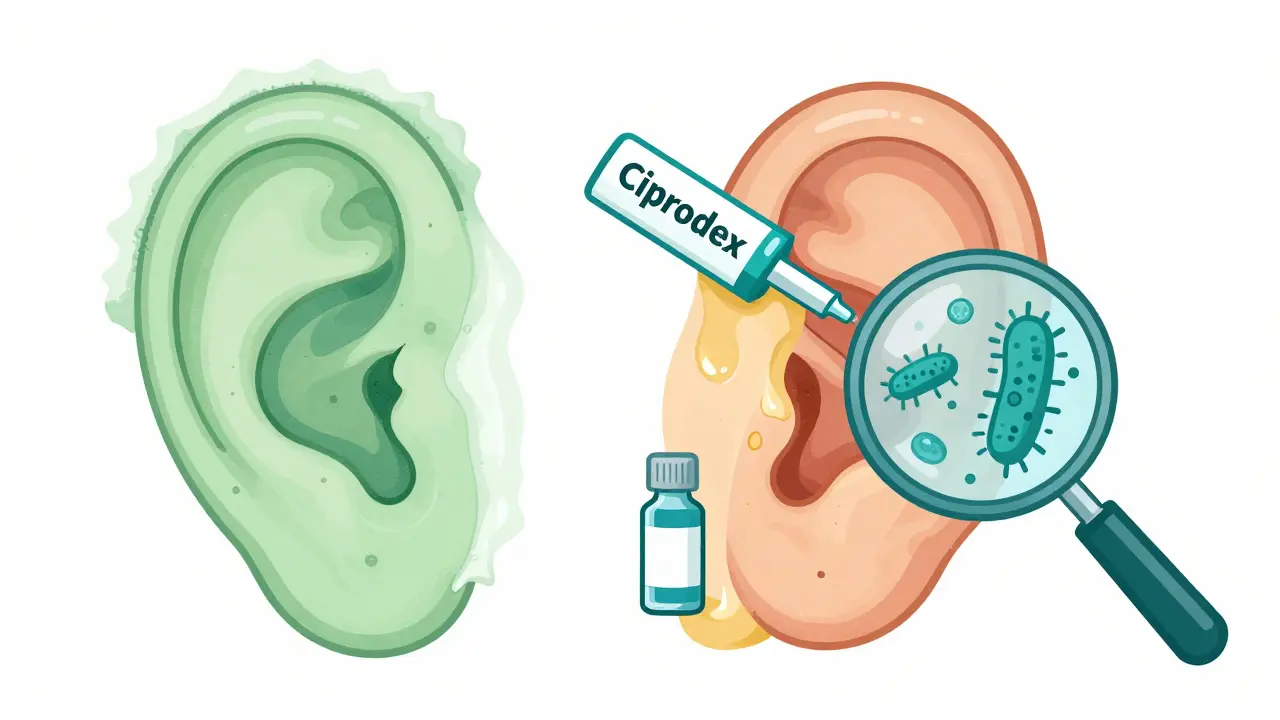
When the pain is sharp, the canal is swollen shut, or you have drainage, you need something stronger. That’s where prescription drops like Ciprodex come in. It combines the antibiotic ciprofloxacin (a fluoroquinolone) with the steroid dexamethasone.
This combo is the gold standard. Clinical trials show 92% of patients are symptom-free in 7 days. It works against both bacteria and inflammation. Most people feel relief within 24-48 hours. On Reddit’s ENT community, 68% of users reported major improvement in just 3 days.
But there’s a catch: cost. Ciprodex runs about $147.50 without insurance. Some people switch to generic ofloxacin drops ($45), which are still effective (85-90% cure rate) but slightly less potent against resistant strains.
For Fungal Infections: Clotrimazole
If your ear feels itchy and you see white or black mold-like patches inside, it might be fungal (otomycosis). Acetic acid won’t cut it here. You need an antifungal. Clotrimazole 1% solution has a 93% success rate in clearing fungal ear infections, according to a 2021 JAMA study. It’s available by prescription and works in 5-7 days. Don’t waste time on OTC antibacterial drops - they’ll make it worse.
What NOT to Use
Some drops are outdated or risky. Avoid anything with neomycin or polymyxin B (like Cortisporin). These aminoglycoside antibiotics can cause permanent hearing damage if your eardrum is perforated - which you might not even know. The FDA warns about this. Also skip alcohol-based solutions or hydrogen peroxide. They dry out the skin and can make inflammation worse.
How to Use Ear Drops Right
Even the best drops fail if used wrong. Here’s how to do it right:
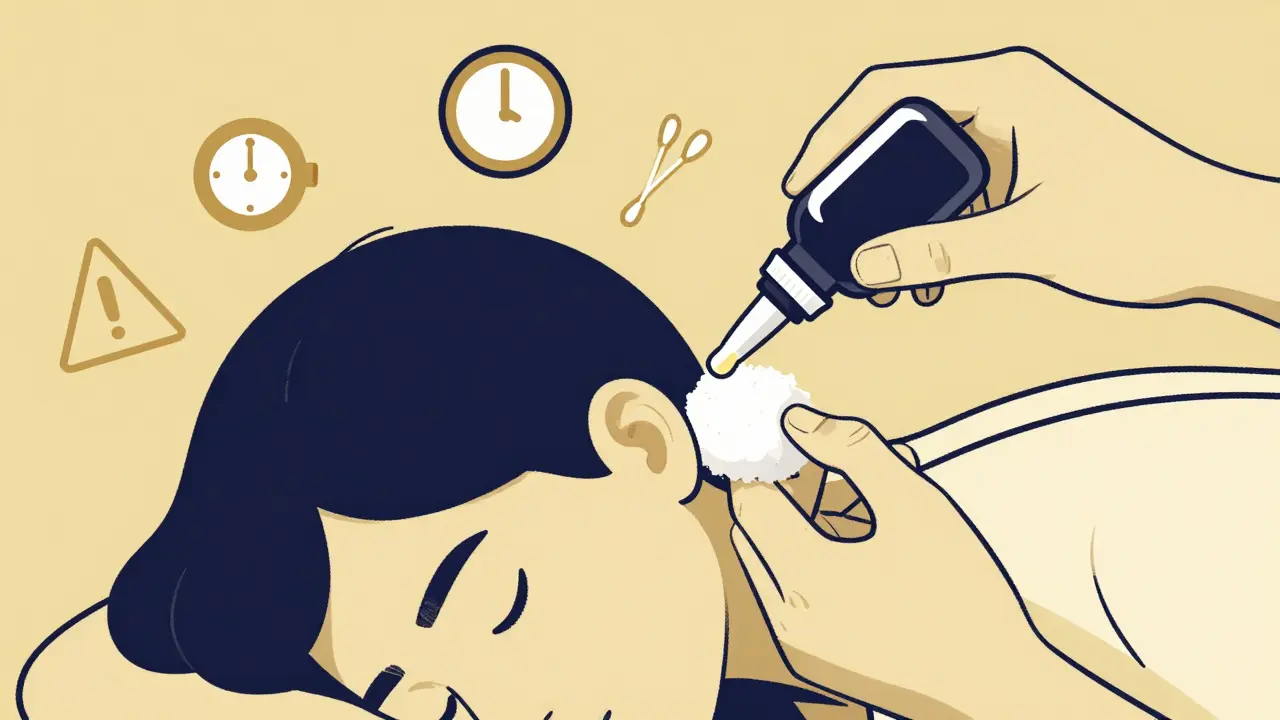
- Warm the bottle in your hands for 1-2 minutes. Cold drops can make you dizzy.
- Wipe the outer ear with a dry cloth. Don’t stick anything inside.
- Lie on your side with the infected ear facing up.
- Instill the exact number of drops prescribed.
- Stay still for 5 minutes. Gently tug your earlobe to help the drops sink in.
- Place a cotton ball loosely at the ear opening to keep the drops in.
- Don’t use cotton swabs, bobby pins, or fingers to clean inside. You’ll push debris deeper and remove the medication.
Studies show 32% of people skip the 5-minute wait - and that cuts effectiveness by 40%. If your canal is swollen shut, you’ll need an ear wick - a tiny sponge placed by a doctor to let drops reach the infection. It’s uncomfortable, but necessary.
Why Some Treatments Fail
Most failures come down to three things:
- Misdiagnosis: 15% of people self-treat fungal infections with antibacterial drops, delaying real treatment by 7-10 days.
- Skipping debridement: Doctors clean out wax and debris before applying drops. This boosts effectiveness by 30-40%. If you don’t get this done, your drops won’t work.
- Stopping early: Even if you feel better in 2 days, finish the full course. Stopping early breeds resistant bacteria.
Also, don’t use systemic antibiotics (pills). The American Academy of Otolaryngology says they add almost nothing to topical treatment but increase side effects like nausea and diarrhea.
Prevention Is the Best Medicine
Once you’ve had swimmer’s ear, you’re more likely to get it again. Prevention is simple:
- After swimming or showering, tilt your head and gently pull your earlobe to drain water.
- Use a hair dryer on low, cool setting, held at least a foot away.
- Use acetic acid drops (like Swim-Ear) as a preventive rinse after water exposure. Studies show this cuts recurrence by 65%.
- Wear swim caps or custom earplugs if you swim often.
- Never clean your ears with cotton swabs. They push wax in and scratch the skin.
And if you’re diabetic or have a weakened immune system, be extra careful. A minor itch could turn into a serious problem.
What’s New in 2026?
Treatment hasn’t changed much, but there are signs of progress. In March 2023, the FDA approved OtiRx - a new ofloxacin formulation that lasts 24 hours instead of 12. That means fewer doses and better compliance. Researchers at Stanford are testing microbiome-based treatments that aim to restore healthy ear flora instead of killing everything off. Early results look promising.
Telemedicine is also helping. Mayo Clinic found that video visits diagnose swimmer’s ear with 88% accuracy. You can get a prescription without leaving your home - if your symptoms are clear.
But the biggest threat isn’t lack of treatment - it’s overuse. Fluoroquinolone-resistant Pseudomonas strains have risen 12% since 2015. Doctors are now more cautious about prescribing antibiotics unless absolutely needed.
When to See a Doctor
You don’t need to rush to the ER for mild itching. But call your doctor if:
- Pain gets worse after 2 days of treatment
- You have fever, swelling in the neck, or trouble opening your jaw
- Drainage is thick, bloody, or smells bad
- You’re diabetic and have any ear symptoms
- It keeps coming back
Don’t try to diagnose yourself with YouTube videos. What looks like swimmer’s ear could be a ruptured eardrum, a foreign object, or even a skin condition like eczema. A doctor with an otoscope can tell the difference in seconds.
Can swimmer’s ear go away on its own?
Mild cases might improve without treatment, but it can take weeks - and you’re at risk of complications. Most people feel better in 2-3 days with the right ear drops. Waiting it out isn’t worth the pain or risk of spreading the infection.
Are OTC ear drops safe for kids?
Yes - but only if the child has no history of ear tubes or ruptured eardrums. Acetic acid solutions like Swim-Ear are safe for children over 2 years old. Avoid antibiotic drops unless prescribed. Always check with a pediatrician first.
Why does my ear sting when I use the drops?
Stinging is normal, especially with acetic acid or if the skin is raw. It should fade after a few seconds. If it lasts more than a minute or causes burning, stop using it. You might be allergic to an ingredient or have a deeper infection.
Can I use ear drops if I have ear tubes?
Only if your doctor says so. Some ear drops, especially those with steroids or antibiotics, can be harmful if your eardrum is perforated or you have tubes. Always check with your ENT before using any drops.
How do I know if it’s fungal or bacterial?
Bacterial infections usually cause more pain and pus-like drainage. Fungal infections are itchier, with visible white or black debris in the canal - like mold. But you can’t tell for sure without a doctor looking under a scope. Don’t guess - get it checked.
Is swimmer’s ear contagious?
No. You can’t catch it from someone else. But sharing earbuds, towels, or swim gear can spread bacteria or fungi that might cause infection in someone else - especially if they have damaged skin in their ear canal.
Next Steps
If you think you have swimmer’s ear, start with prevention: dry your ears, use OTC acetic acid drops after water exposure, and avoid cotton swabs. If symptoms persist beyond 48 hours or get worse, see a doctor. Don’t wait for it to become severe. With the right drops and proper technique, most cases are resolved in under a week. The key isn’t just medicine - it’s knowing how to use it right.
9 Comments

Amy Ehinger
January 14, 2026 AT 15:16
Been dealing with swimmer’s ear since last summer after that beach trip. Tried everything - alcohol drops, garlic oil, even that weird home remedy with warm olive oil. Nothing worked until I bit the bullet and got Ciprodex. Felt better in 36 hours. Honestly, the key isn’t just the drops - it’s letting them sit. I used to rush through it, then wondered why it didn’t work. Now I lie there like a corpse for five minutes like the article says. Game changer.

Jami Reynolds
January 15, 2026 AT 22:06
Interesting how this article ignores the real culprit: fluoridated water. The fluoride in municipal water supplies weakens the ear canal’s natural defenses over time, making it far more susceptible to infection. Studies from the 1980s - suppressed by Big Pharma - show a direct correlation between community water fluoridation and otitis externa rates. Acetic acid works only because it neutralizes the fluoride residue. You’re not treating the infection - you’re masking the toxicity.

Tom Doan
January 16, 2026 AT 02:33
So let me get this straight - you’re recommending a $150 prescription drop for a condition that can be prevented by tilting your head after a shower? Meanwhile, people in countries without insurance are being told to ‘just dry their ears’ like it’s a mindfulness exercise. The real ‘malignant otitis externa’ here is the healthcare system.

Amy Vickberg
January 16, 2026 AT 15:13
I’m so glad someone finally wrote this. I used to think I was just ‘bad at swimming’ because I kept getting ear infections. Turns out I was using cotton swabs like a caveman. Now I use Swim-Ear after every swim - even if I just got splashed. No more pain, no more panic. It’s not glamorous, but it works. Thank you for the practical advice.

Nicholas Urmaza
January 17, 2026 AT 13:03
Clotrimazole for fungal? That’s it? No mention of nystatin? No comparison to oral fluconazole? You’re leaving out half the clinical options. And why is there zero data on biofilm disruption? If you’re going to talk about treatment failure, at least mention that 60% of chronic cases involve biofilm formation that topical drops can’t penetrate. This feels like a pharmaceutical ad dressed up as medical advice

Crystel Ann
January 17, 2026 AT 14:38
This post made me feel seen. I’m diabetic and had a mild case turn into a nightmare last year because I thought ‘it’ll just go away.’ I didn’t realize how fast it could spread. Now I keep acetic acid drops in my gym bag. I still get anxious every time I shower, but at least I’m prepared. You’re right - prevention is everything.

Mike Berrange
January 18, 2026 AT 22:16
Why does no one ever mention that earwax is a natural antibiotic? You’re not supposed to clean your ears - you’re supposed to let them self-clean. The real reason people get swimmer’s ear is because they’re over-cleaning and stripping away their own defenses. The solution isn’t more chemicals - it’s less interference.

Sarah Mailloux
January 20, 2026 AT 18:30
Just got my Ciprodex prescription and I’m terrified of the stinging. Anyone else feel like you’re pouring vinegar into a raw wound? I’m gonna warm it up and pray.

RUTH DE OLIVEIRA ALVES
January 21, 2026 AT 15:17
While the clinical efficacy of topical antimicrobial agents in the treatment of otitis externa is well-documented, the socioeconomic implications of access to such therapeutics remain profoundly unaddressed. In underserved communities, where pharmacy co-pays exceed household disposable income, the recommendation of Ciprodex as a ‘gold standard’ inadvertently perpetuates healthcare disparity. A more equitable approach would prioritize scalable, low-cost interventions - such as acetic acid rinses - as first-line therapy, with specialist referral reserved for refractory or complicated cases. The medical literature must not privilege efficacy over accessibility.
Write a comment