
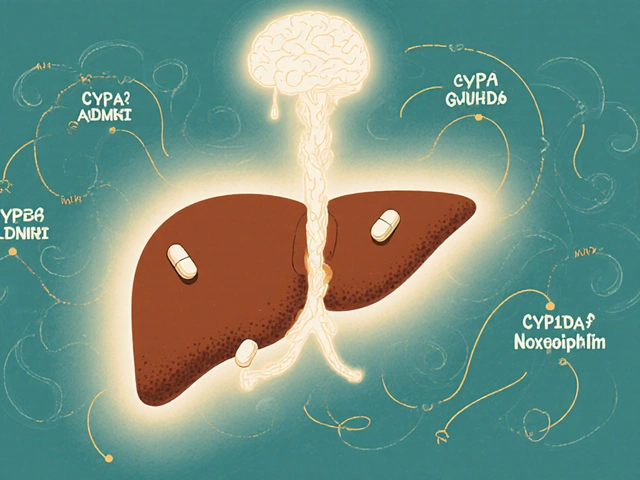




When you pick up a prescription at your local pharmacy, you might not think twice if the pill in the bottle looks different from last time. That’s generic substitution-and it’s routine in retail pharmacies. But if you’re discharged from the hospital and your heart medication suddenly changes, that’s not just a swap. It’s part of a much more complex clinical process. Retail and hospital pharmacies don’t just serve different locations-they operate under completely different rules when it comes to swapping one drug for another.
How Substitution Works in Retail Pharmacies
In retail settings, substitution is mostly about cost and convenience. When a doctor prescribes a brand-name drug like Lipitor, the pharmacist can legally switch it to a generic version like atorvastatin-unless the doctor says "do not substitute" or the patient refuses. This isn’t optional; it’s built into pharmacy law in all 50 states. The goal? Save money. And it works. In 2023, retail pharmacies substituted generic drugs in over 90% of eligible prescriptions, saving the U.S. healthcare system roughly $317 billion that year alone.But it’s not just about the price tag. Insurance companies push hard for generics. Many plans won’t cover the brand unless the patient or doctor jumps through hoops to get prior authorization. That means retail pharmacists spend a lot of time calling insurers, explaining why a patient needs the brand, or convincing them to cover the cheaper version. One pharmacist in Sydney told me, "I had a patient who swore their doctor said brand was better for their blood pressure. But the insurance wouldn’t budge. I had to call three times just to get the prior auth approved."
Patients often don’t realize substitution is happening until they see a different-looking pill. That’s why 47 states require pharmacists to notify patients-some verbally, some in writing-when a substitution occurs. Still, confusion is common. A 2023 Consumer Reports survey found that 14.3% of patients didn’t understand why their medication changed, and some even stopped taking it because they thought it was the wrong drug.
How Hospital Pharmacies Handle Substitution Differently
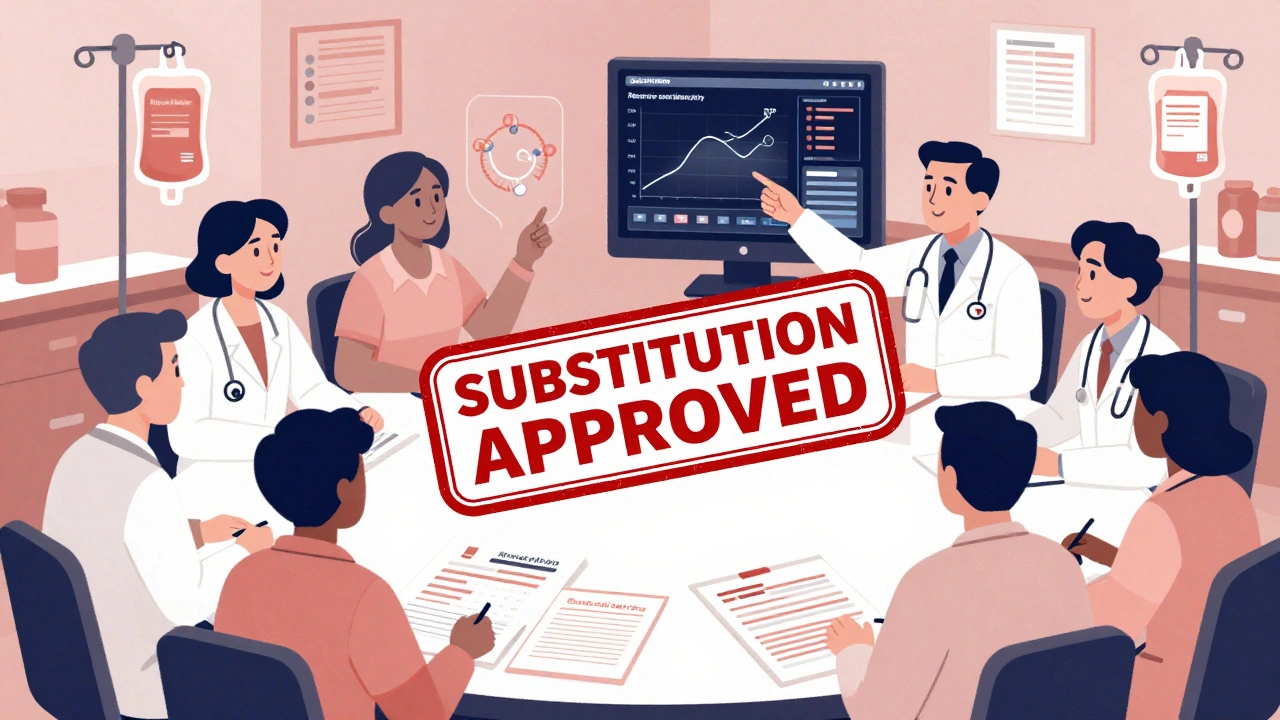
In a hospital, substitution doesn’t happen at the counter. It happens in meetings. Before any drug gets swapped, a team of doctors, pharmacists, nurses, and sometimes infection control specialists sits down as part of the Pharmacy and Therapeutics (P&T) committee. They review clinical data, cost, safety, and how the change fits into treatment protocols. This isn’t about saving a few dollars on a single pill-it’s about improving outcomes across entire units.For example, a hospital might decide to switch from vancomycin to linezolid for treating MRSA infections because studies show fewer kidney side effects and easier dosing. That change doesn’t happen because a pharmacist saw a cheaper price tag. It happens because the P&T committee reviewed clinical trials, tracked infection rates, and consulted with infectious disease specialists. Once approved, the change is coded into the electronic health record (EHR), and doctors get alerts when they try to order the old drug.
Unlike retail, where substitution is mostly oral pills, hospitals swap complex drugs too-IV antibiotics, biologics, even compounded medications. In fact, nearly 70% of hospital therapeutic interchanges involve injectables or infusions. And when a substitution happens, the change is documented in the patient’s medical record in real time. There’s no waiting for the patient to ask questions. The entire care team sees the update.
Who Decides? Patient vs. Team
The biggest difference between the two systems? Who has the final say.In retail, the patient can say no. If they don’t want the generic, they can pay out-of-pocket for the brand. Pharmacists are trained to explain the difference, answer concerns, and respect choices. It’s a personal, one-on-one interaction. That’s why 94.7% of retail pharmacy managers say communication skills are the most important trait for their staff.
In hospitals, the patient doesn’t get to veto. The decision is made by the clinical team, and the patient is informed after the fact. Why? Because in critical care, delays can be dangerous. If a patient needs an antibiotic now and the preferred drug is out of stock, waiting for consent isn’t an option. The pharmacist and physician act together based on protocol. And when a substitution is made, the physician must be notified within 24 hours under Joint Commission standards.
This difference shows up in satisfaction too. A 2022 ASHP survey found that 68.4% of hospital pharmacists felt therapeutic interchange improved patient care. In retail, only 52.7% of pharmacists said the same-mostly because they’re stuck dealing with insurance fights, not clinical outcomes.
What Drugs Can Be Substituted?
Not all medications are equal when it comes to swapping. In retail, 97% of substitutions are for oral tablets or capsules-things like blood pressure meds, statins, or antidepressants. Specialty drugs like injectables, biologics, or cancer treatments? Only 12.7% of those are even eligible for substitution, according to Express Scripts data.Hospitals, on the other hand, substitute across the board. IV antibiotics, insulin pumps, anticoagulants-even drugs used in chemotherapy. The reason? Hospitals need to manage inventory, reduce waste, and standardize care. If a hospital uses three different types of heparin, they might standardize on one to reduce dosing errors. That’s not about cost-it’s about safety.
Also, hospitals often substitute within drug classes. For example, switching from one beta-lactam antibiotic to another because one has better tissue penetration or lower resistance rates. Retail pharmacists rarely do that. They swap a brand for a generic. Hospitals swap one generic for another if it’s clinically better.
Challenges in Each Setting
Retail pharmacies struggle with three big things: insurance delays, patient confusion, and inconsistent state laws. One pharmacist in Melbourne said, "I spent 40 minutes on the phone today just to get a generic approved for a diabetic patient. The patient was frustrated, the doctor was annoyed, and I was exhausted."Hospitals face different headaches. Getting doctors to accept new protocols is tough. A 2022 ASHP survey found that 57.2% of hospital pharmacists said physician resistance was their biggest barrier. One doctor might prefer an older drug because "it’s what I’ve always used." Changing that mindset takes education, data, and time.
Another big issue is transitions of care. When a patient leaves the hospital, their medication list often changes. But the community pharmacy doesn’t always get the updated list. That’s a recipe for errors. The Institute for Safe Medication Practices found that 23.8% of medication errors during hospital-to-home transitions involve substitution mismatches. A patient gets discharged on a new generic, but their retail pharmacy still fills the old brand. Or worse-they fill the generic, but the patient doesn’t know it’s different.
Where Are We Headed?
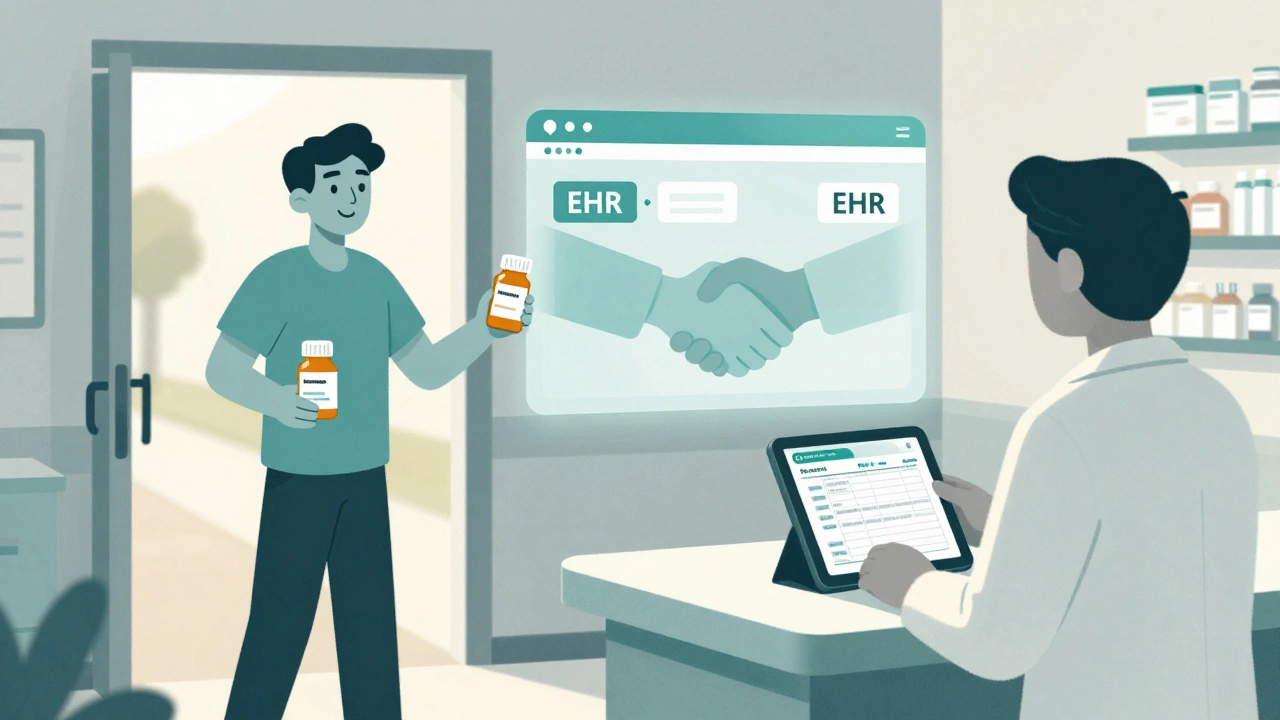
The good news? Systems are starting to talk to each other. New federal rules, like the 2023 CMS Interoperability Rule, now require hospitals and retail pharmacies to share substitution history electronically. Epic and Cerner are building tools that will automatically notify community pharmacies when a patient’s medication changes during hospitalization.Also, transitional care programs are growing. Nearly half of U.S. hospitals now have pharmacists who follow up with patients after discharge to check for substitution issues. And 37% of major retail chains have started offering discharge counseling to make sure patients understand what changed and why.
Long-term, experts predict the lines will blur. As value-based care takes over, the focus shifts from who dispenses the drug to whether the right drug is being used safely and consistently. By 2028, Avalere Health predicts 78% of healthcare systems will have integrated substitution protocols.
But retail substitution won’t disappear. It’s still the main way Americans save money on prescriptions. The Generic Pharmaceutical Association estimates generic drugs will save $1.7 trillion between now and 2028. Hospitals will keep using therapeutic interchange to improve safety and outcomes. The difference isn’t going away-it’s just becoming better connected.
Can a retail pharmacist refuse to substitute a generic drug?
No, a retail pharmacist can’t refuse to substitute if the prescription allows it and the patient doesn’t object. State laws require pharmacists to offer generic alternatives unless the prescriber marks "dispense as written" or the patient refuses. But if the patient says no, the pharmacist must fill the brand-name drug-even if it costs more.
Why do hospital pharmacists swap drugs without asking the patient?
In hospitals, substitution decisions are made by clinical teams-not individual pharmacists. These changes are based on evidence, safety, and institutional protocols. Waiting for patient consent during an emergency or critical care situation could delay treatment. Patients are informed after the fact, and their care team explains the reason. It’s about speed and consistency in a high-risk environment.
Are biosimilars substituted the same way in retail and hospital pharmacies?
No. In retail, 23 states now allow pharmacists to substitute biosimilars (like those for rheumatoid arthritis) without prescriber approval-similar to generics. But hospitals require formal P&T committee approval before switching to a biosimilar, even if the state allows it. Hospitals treat biosimilars as clinical decisions, not just cost-saving moves.
Can I ask my retail pharmacist to switch me back to a brand-name drug?
Yes, you can always ask. If you feel the generic isn’t working or you’re having side effects, your pharmacist can contact your doctor to request the brand. They can also check if your insurance has a prior authorization process. Many patients don’t realize they have this right-pharmacists are there to help you advocate for your care.
What should I do if I notice my medication changed after being discharged from the hospital?
Don’t assume it’s a mistake. Call your hospital’s discharge pharmacy team or your primary care provider to confirm the change was intentional. Then, bring your discharge summary to your retail pharmacist and ask them to compare the new prescription with your old one. Many errors happen because the community pharmacy doesn’t have the updated list. Ask them to flag your record for a follow-up if needed.
Is generic substitution safe?
Yes. The FDA requires generics to be bioequivalent to brand-name drugs-meaning they work the same way in the body. Studies show they’re just as effective and safe. The difference is usually in the color, shape, or inactive ingredients. If you’ve had no issues with the brand, you’re unlikely to have problems with the generic. But if you notice new side effects, talk to your pharmacist or doctor.
Final Thoughts
Retail and hospital pharmacies aren’t competing-they’re complementary. One saves money at the counter. The other saves lives on the ward. The real challenge isn’t choosing which is better. It’s making sure they work together. When a patient moves from hospital to home, the medication list shouldn’t be a puzzle. The system is slowly fixing that. But until then, knowing the difference helps you ask the right questions-and stay in control of your care.
13 Comments

Erik van Hees
December 3, 2025 AT 19:15
Let me tell you something-retail pharmacists are the real unsung heroes of the healthcare system. You think it’s just handing out pills? Nah. They’re juggling insurance red tape, patient panic, and state laws that change like the weather. I’ve seen pharmacists spend an hour on the phone just to get a generic approved for a diabetic patient who can’t afford the brand. And still, they smile. That’s dedication. And yeah, patients freak out when the pill looks different-but that’s not the pharmacist’s fault. It’s the system that’s broken.

Cristy Magdalena
December 4, 2025 AT 14:02
Ugh. I HATE when they swap my meds without telling me. I had a generic for my anxiety med last month and I swear I felt like I was drowning in slow motion. My heart was racing, I couldn’t sleep, I cried for no reason. I thought I was losing my mind. Turns out? The generic had a different filler. A DIFFERENT FILLER. And now I pay out of pocket for the brand. No more games. I’m done being a lab rat for Big Pharma and their insurance puppet masters.

May .
December 4, 2025 AT 19:18
generic works fine for me

Sara Larson
December 4, 2025 AT 20:18
YESSSS this is so important!! 🙌 I used to think generics were just cheaper versions but now I get it-they’re the same science, just different packaging. My grandma switched to generic blood pressure med and saved $80/month. She’s still alive and kicking at 89 😊 And hospitals? They’re doing the heavy lifting with safety protocols. We need MORE of that. Keep fighting the good fight, pharmacy teams! 💪❤️

Mindy Bilotta
December 5, 2025 AT 14:08
in canada we dont have the same insurance drama but hospital med swaps are still wild. i had a friend get switched from one iv antibiotic to another after surgery and no one told her until she saw the label. she was pissed. but honestly? it was safer. just needs better communication. also, pharmacists in bc are way more chill about explaining stuff. maybe we should export that model?

Stacy Natanielle
December 5, 2025 AT 19:48
While the article presents a compelling dichotomy between retail and hospital substitution practices, it fails to adequately address the systemic inequities inherent in the U.S. pharmaceutical supply chain. The 90% generic substitution rate in retail settings is not a triumph of efficiency-it is a symptom of profit-driven cost-shifting onto vulnerable populations. Furthermore, the assertion that hospital substitution is ‘clinically superior’ ignores the fact that many therapeutic interchanges are driven by formulary restrictions imposed by private insurers, not clinical evidence. The narrative is dangerously sanitized.

Akash Sharma
December 6, 2025 AT 22:08
Interesting read, but I think we’re missing the bigger picture. In India, generics are the ONLY option for most people. We don’t have brand-name drugs unless you’re rich. But here’s the thing-we don’t have the same level of oversight. Pharmacists often just give whatever’s cheapest or available. No P&T committees. No EHR alerts. No follow-ups. So while the U.S. has structure, even if flawed, we have chaos. And yet, people survive. Maybe the real lesson isn’t about who swaps better-but how do we make safety universal? Also, I’ve seen people in rural clinics get the wrong generic because the names look similar. That’s scary. We need tech, not just policies.

Justin Hampton
December 7, 2025 AT 10:26
So let me get this straight. Retail pharmacists are forced to swap meds to save money, but hospital pharmacists get to make ‘clinical decisions’? That’s not better. That’s authoritarian. Who gave them the right to decide what I take without asking? If I’m not allowed to say no in the hospital, then why am I even considered a patient? You call that ‘efficiency’? I call it medical paternalism wrapped in a lab coat. And don’t give me that ‘it’s for your safety’ crap. I’ve been on enough meds to know my body better than some pharmacist who’s never met me.

Pooja Surnar
December 7, 2025 AT 13:45
generic is for poor people. if u can afford brand name u should take it. why risk ur life with cheap pills? hospitals r better because they dont care about money. but retail? they just wanna make profit. my cousin died because he took generic heart med and it didnt work. now his family is broke and sad. dont be dumb. brand name = safety. always.

Sandridge Nelia
December 8, 2025 AT 17:20
One thing no one talks about: what happens when your hospital switches you to a generic, but your retail pharmacy doesn’t get the update? I had that happen after my surgery. Took the wrong med for three days. Had to go to the ER. My pharmacist later said she didn’t get the discharge med list. That’s a system failure. We need better electronic handoffs. Also, if you’re switching meds, just tell the patient. Like, out loud. Not in a 20-page discharge packet. We’re not robots.

Mark Gallagher
December 8, 2025 AT 21:17
Why are we letting foreign countries dictate our drug supply? Most generics are made overseas with sketchy quality control. And now hospitals are swapping to cheaper versions? That’s not progress. That’s national security risk. We need American-made meds. Period. This whole ‘generic substitution’ thing is just a Trojan horse for outsourcing. And don’t even get me started on biosimilars-those are just knockoffs of biologics made in China. Wake up, America.

Wendy Chiridza
December 10, 2025 AT 07:33
I work in a retail pharmacy and I see this every day. Patients don’t understand that generics are the same. They think it’s a different drug. We try to explain but most people zone out. Then they come back mad because they feel ‘tricked’. I wish we had more time to talk. But insurance calls, refill requests, and angry customers take up all day. The system is broken but we’re just the ones holding the bag. And yes, I’ve had patients cry because they can’t afford the brand. That’s not a pharmacy problem. That’s a policy problem.

Pamela Mae Ibabao
December 10, 2025 AT 14:49
So here’s the real kicker: the whole system is designed to make you feel like you’re in control, but you’re not. Retail lets you say no-but only if you can pay. Hospitals make the call-but you’re told it’s ‘for your own good’. Either way, you’re not the one deciding. And the worst part? No one ever asks you how you feel about it. Not really. Just ‘do you want the generic?’ like it’s a choice between coffee or tea. It’s not. It’s about money, power, and who gets to decide what your body gets. 🤷♀️
Write a comment