

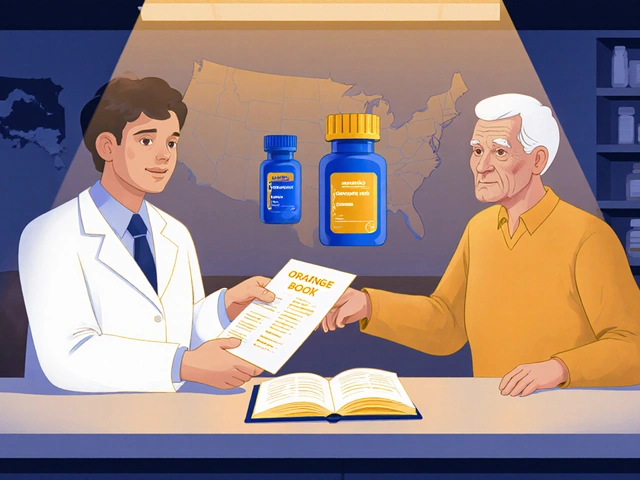

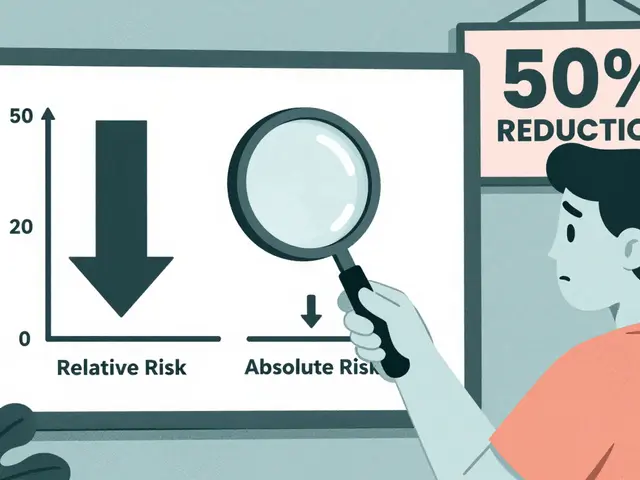
You pick up your prescription. The pharmacist hands you a bottle with a different name and a much lower price tag than the brand-name drug you’ve been taking for years. It’s the same medication, right? That is the promise of generic drugs, which are medications that contain the same active ingredients as brand-name drugs but are sold under their chemical names at a significantly lower cost. But have you ever wondered how regulators guarantee that this cheaper alternative will work exactly like the original?
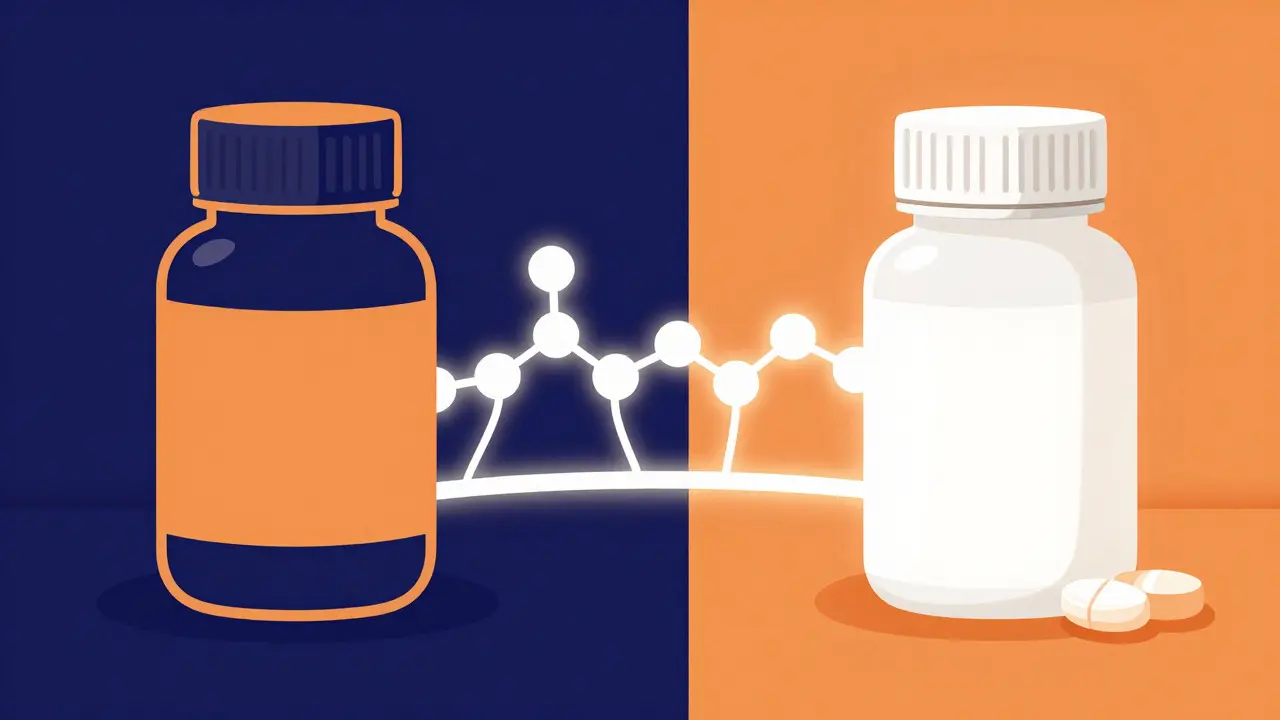
The answer lies in a rigorous scientific process called bioequivalence testing, which is a clinical study designed to prove that a generic drug delivers the same amount of active ingredient into the bloodstream at the same rate as the reference brand-name product. Without this step, switching medications would be a gamble with your health. Bioequivalence is the bridge between affordability and safety, ensuring that when you switch from a brand to a generic, or from one generic manufacturer to another, your treatment remains effective and safe.
What Is Bioequivalence and Why Does It Exist?
Bioequivalence isn't just a buzzword; it is a legal and scientific standard established to protect patients while lowering healthcare costs. The concept was formalized in the United States by the Drug Price Competition and Patent Term Restoration Act of 1984, also known as the Hatch-Waxman Act, which created the modern framework for approving generic drugs without requiring them to repeat expensive clinical trials already done by brand manufacturers.
When a company wants to sell a generic version of a drug, they don’t need to prove it cures the disease again-they need to prove it behaves the same way in the body. Regulatory bodies like the U.S. Food and Drug Administration (FDA) and the European Medicines Agency (EMA) require that the generic drug demonstrates therapeutic equivalence, meaning it has the same clinical effect and safety profile as the reference brand-name product when administered at the same dose.
This system works because it relies on pharmacokinetics-the science of how the body absorbs, distributes, metabolizes, and excretes a drug. If two drugs have identical bioavailability, they produce the same concentration of the active ingredient in the blood over time. This means the generic drug will reach your site of action effectively, just like the brand-name version.
The Science Behind the Test: How Studies Are Conducted
Bioequivalence studies are not guesswork. They follow strict protocols designed to eliminate variables. The most common design is a randomized, single-dose, two-period, two-sequence crossover study conducted in healthy volunteers. Here is how it typically works:
- Randomization: Participants are randomly assigned to receive either the generic test product or the brand-name reference product first.
- Washout Period: After the first dose, participants wait for a specific period (usually five times the drug's half-life) to ensure the drug is completely eliminated from their system before receiving the second dose.
- Crossover: Participants who received the generic first now take the brand-name drug, and vice versa.
- Blood Sampling: Researchers draw blood samples at precise intervals to measure the concentration of the drug in the plasma.
The data collected focuses on two key pharmacokinetic parameters:
- AUC (Area Under the Curve): This measures the total extent of drug absorption-how much of the drug gets into your system overall.
- Cmax (Maximum Concentration): This measures the peak level of the drug in the blood and how quickly it reaches that peak.
For a generic drug to be approved, the 90% confidence interval for the ratio of these parameters must fall within a specific range: 80% to 125%. This might sound like a wide margin, but statistically, it ensures that any difference between the generic and the brand is clinically insignificant for the vast majority of patients.

Narrow Therapeutic Index Drugs: When Precision Matters More
Not all drugs are created equal. Some medications have a very narrow window between being effective and becoming toxic. These are known as narrow therapeutic index (NTI) drugs, which include warfarin (blood thinner), levothyroxine (thyroid hormone), and phenytoin (seizure medication).
For NTI drugs, the standard 80-125% range is too loose. A small change in dosage could lead to serious health risks, such as bleeding or seizures. Therefore, regulatory agencies apply stricter limits. For example, the FDA requires that the 90% confidence interval for NTI drugs falls within 90% to 111%. This tighter constraint ensures that patients switching between brands and generics experience minimal fluctuation in drug levels.
In 2012, the FDA issued specific guidance for levothyroxine, tightening bioequivalence requirements due to its critical role in thyroid management. As a result, generic levothyroxine products now undergo more rigorous testing, giving patients greater confidence in their stability.
Biosimilars vs. Generics: Understanding the Difference
A common misconception is that biosimilars are just "generic biologics." While they serve a similar purpose, the science behind them is vastly different. Small-molecule generic drugs are chemically synthesized and can be identical copies of the brand-name drug. Biologics, however, are large, complex molecules produced in living cells.
Because of their complexity, it is impossible to create an exact copy of a biologic. Instead, companies develop biosimilars, which are highly similar biological medical products to an already approved biological reference product, with no clinically meaningful differences in terms of safety, purity, and potency.
Proving bioequivalence for biosimilars requires a totality of evidence approach. This includes:
- Structural and functional comparisons
- Animal toxicity studies
- Human pharmacokinetic and pharmacodynamic assessments
- Immunogenicity evaluations (checking if the body develops antibodies against the drug)
- Clinical safety and efficacy studies
This multi-step process ensures that even though biosimilars aren't identical copies, they perform equivalently in the body.
| Feature | Small-Molecule Generic | Biosimilar |
|---|---|---|
| Molecular Structure | Simple, chemically synthesized | Complex, produced in living cells |
| Approval Basis | Bioequivalence (PK/PD studies) | Totality of Evidence (including clinical trials) |
| Interchangeability | Generally automatic | Varies by jurisdiction and state laws |
| Cost Savings | Up to 80-85% less than brand | Up to 30-40% less than brand |

Patient Safety and Real-World Outcomes
Does the science translate to real-world safety? The data says yes. According to the Association for Accessible Medicines, generic drugs account for 90% of prescriptions dispensed in the U.S. but only 23% of total drug spending, saving the healthcare system approximately $313 billion in 2020 alone.
Patient satisfaction reflects this success. A 2022 survey by the National Community Pharmacists Association found that 87% of U.S. patients reported generic medications were equally effective to brand-name drugs. Furthermore, the FDA’s Adverse Event Reporting System (FAERS) data from 2020-2023 shows that only 0.07% of adverse drug event reports involved generic drugs with confirmed bioequivalence, compared to 2.3% for brand-name drugs.
Of course, anecdotal reports exist. Online forums occasionally feature stories of patients experiencing issues after switching generics. However, experts note that these cases rarely correlate with actual bioequivalence failures. Often, symptoms arise from other factors, such as changes in inactive ingredients (fillers or dyes) causing mild allergies, or natural fluctuations in the patient’s condition. The FDA closely monitors adverse events and would recall any product showing systematic problems.
Challenges and Future Directions
While the current framework is robust, challenges remain. Complex drug products-such as topical creams, inhaled asthma medications, and ophthalmic drops-pose unique difficulties. For these, measuring blood concentration doesn't always reflect local effectiveness. The FDA’s 2022 Complex Generic Drug Products initiative addresses these gaps by developing new methodologies, including in-vitro tests and physiologically-based pharmacokinetic (PBPK) modeling.
Looking ahead, artificial intelligence is emerging as a tool to predict bioequivalence based on dissolution profiles, potentially reducing the need for some clinical studies. With 134 countries now having established bioequivalence requirements, global harmonization efforts continue to streamline development while maintaining high safety standards.
Is a generic drug exactly the same as a brand-name drug?
A generic drug contains the same active ingredient, strength, dosage form, and route of administration as the brand-name drug. However, it may differ in inactive ingredients like colors, flavors, or preservatives. These differences do not affect the drug's performance or safety, provided bioequivalence is demonstrated.
Why is the bioequivalence range 80-125% instead of 100%?
The 80-125% range accounts for natural variability in how human bodies absorb drugs. Statistically, this interval ensures that any difference between the generic and brand is not clinically significant. For most patients, the slight variation in absorption does not impact therapeutic outcomes.
Can I switch between different generic manufacturers?
Yes, for most drugs, you can safely switch between different generic manufacturers. Each generic product must independently demonstrate bioequivalence to the reference brand. However, for narrow therapeutic index drugs, some doctors prefer keeping patients on a single manufacturer to minimize variability.
Are biosimilars as safe as generic drugs?
Yes, biosimilars undergo rigorous testing to ensure no clinically meaningful differences in safety, purity, or potency compared to the reference biologic. While the approval process is more complex than for small-molecule generics, the end result is a safe and effective alternative.
What should I do if I feel my generic medication isn't working?
Contact your doctor or pharmacist. They can check if the issue is related to the medication or another factor. In rare cases, they may prescribe a specific generic manufacturer or the brand-name drug, especially for narrow therapeutic index medications.