


Cervical cancer used to be one of the leading causes of cancer death in women. Today, it’s on the verge of being eliminated - not because of better treatments, but because of two simple, powerful tools: HPV vaccination and regular Pap testing. These aren’t future possibilities. They’re working right now, in real time, saving lives across the globe.
Why HPV Is the Key
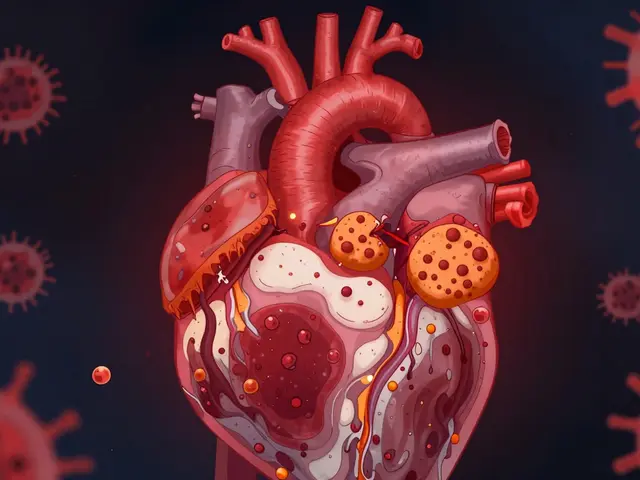
Nearly every case of cervical cancer is caused by the human papillomavirus, or HPV. It’s not just one type - there are over 100 strains, but only a few are dangerous. HPV types 16 and 18 alone cause about 70% of all cervical cancers. The virus spreads through skin-to-skin contact, usually during sexual activity. Most people clear it naturally. But for some, it sticks around, changes cells in the cervix, and over years, those changes can turn into cancer.The scary part? HPV is so common that most sexually active people get it at some point. The good part? We now have a vaccine that stops the most dangerous strains before they ever take hold.
How the HPV Vaccine Works
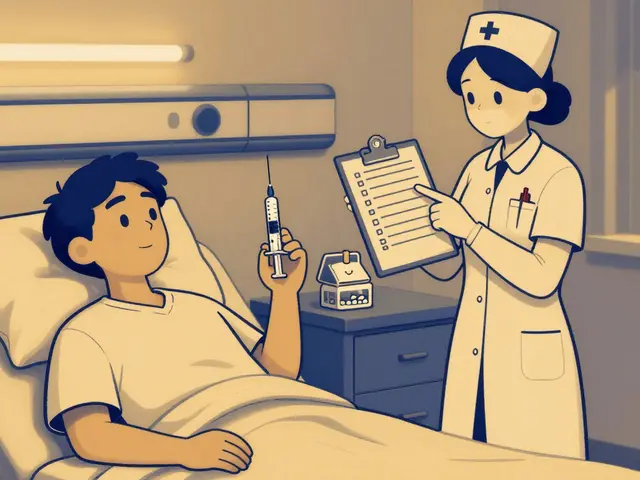
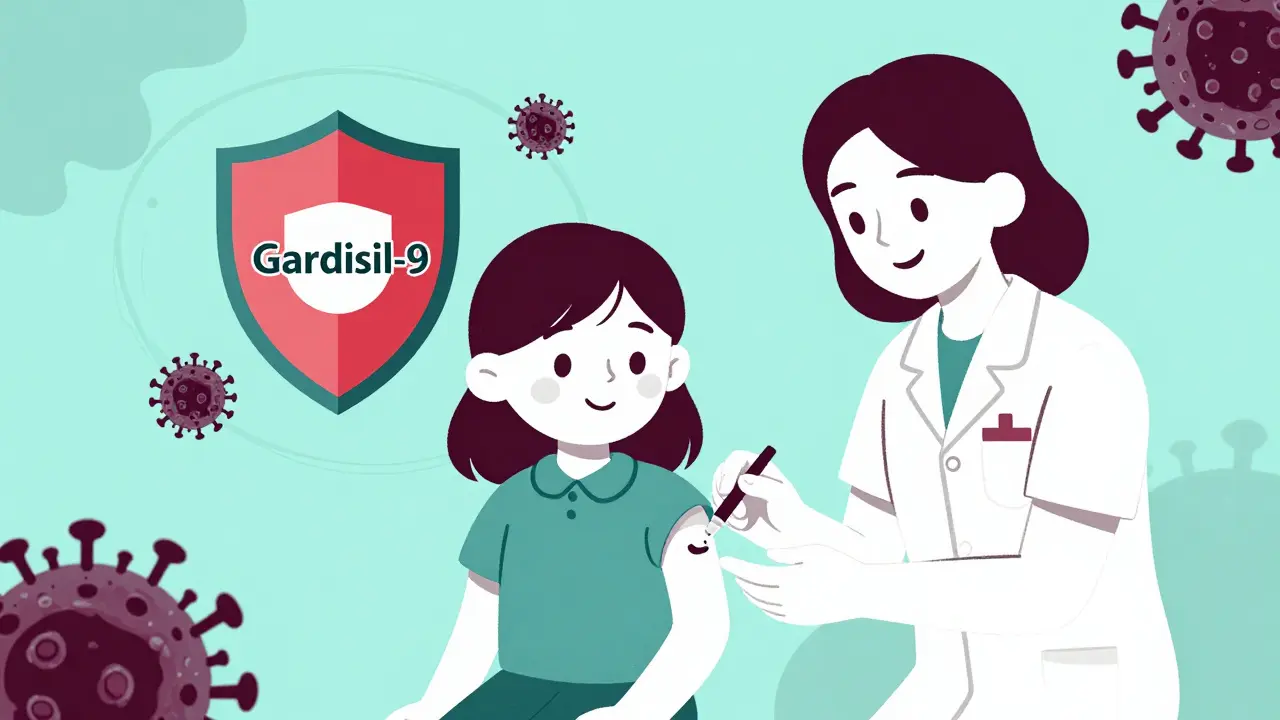
The first HPV vaccine hit the market in 2006. Since then, we’ve gone from protecting against two strains to nine. The current vaccine, Gardasil-9, covers the types responsible for about 90% of cervical cancers. It’s given as a shot in the arm, and it’s safe. More than 98% of people who get the full series develop strong, lasting antibodies.Timing matters. The vaccine works best when given before anyone becomes sexually active. That’s why health groups recommend it at age 11 or 12. At that age, the immune system responds stronger, and fewer doses are needed. Kids who start before 15 only need two shots, six to twelve months apart. If you start at 15 or older, you need three shots over six months.
The data is staggering. A 2024 study in Scotland tracked 138,692 women who were vaccinated between ages 12 and 13. Zero of them developed invasive cervical cancer. That’s not a typo - zero. In Sweden, girls vaccinated before age 17 saw an 88% drop in cervical cancer. In Australia, where vaccination started in 2007, high-grade cervical abnormalities have dropped by 85% in vaccinated women.
Even single doses are proving powerful. A 2022 trial in Kenya found that one shot of the HPV vaccine gave 97.5% protection against dangerous strains 18 months later - and that protection held steady at 36 months. Costa Rican research showed similar results 11 years after a single dose. This isn’t just science fiction. It’s changing how vaccines are delivered worldwide.
Why Pap Tests Still Matter
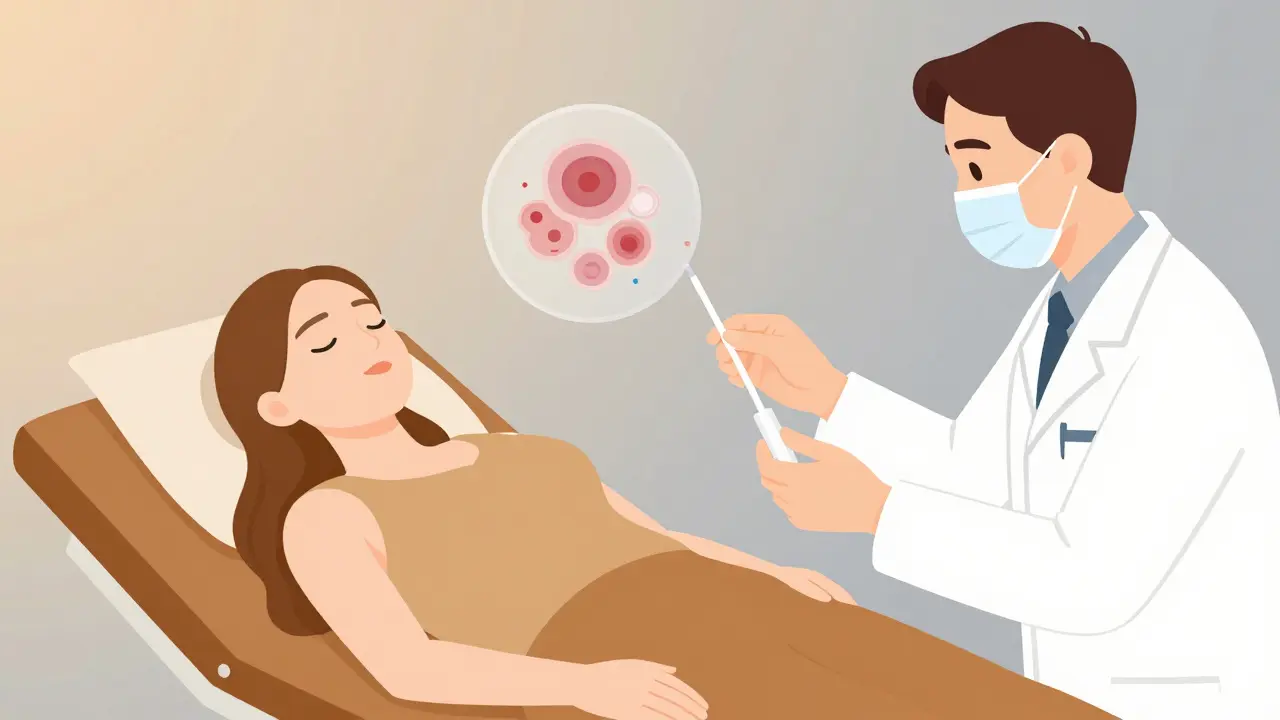
Even if you’ve been vaccinated, you still need screening. The vaccine doesn’t protect against every strain of HPV, and it doesn’t help if you were already exposed before getting vaccinated. That’s where the Pap test comes in.A Pap test - also called a Pap smear - looks for abnormal cells in the cervix before they turn into cancer. It’s simple, quick, and painless. For decades, it was the gold standard. Now, guidelines have shifted. Starting at age 25, HPV testing alone every five years is the preferred method. It’s more accurate and gives you longer protection between tests.
If you’re vaccinated, you can still follow the same schedule. The vaccine doesn’t change the screening timeline. You still start at 21 for Pap tests if you’re not yet 25. After 25, go with HPV testing every five years. Co-testing (HPV plus Pap) is still an option, but it’s not needed for most people.
Screening isn’t just for the vaccinated. It’s for everyone. Even if you’ve had only one sexual partner, or you’re in a long-term relationship, HPV can still be present. Screening catches changes early - when they’re easiest to treat. Left untreated, precancer can take 10 to 20 years to become cancer. That’s a long window to act.
Global Gaps and Local Realities
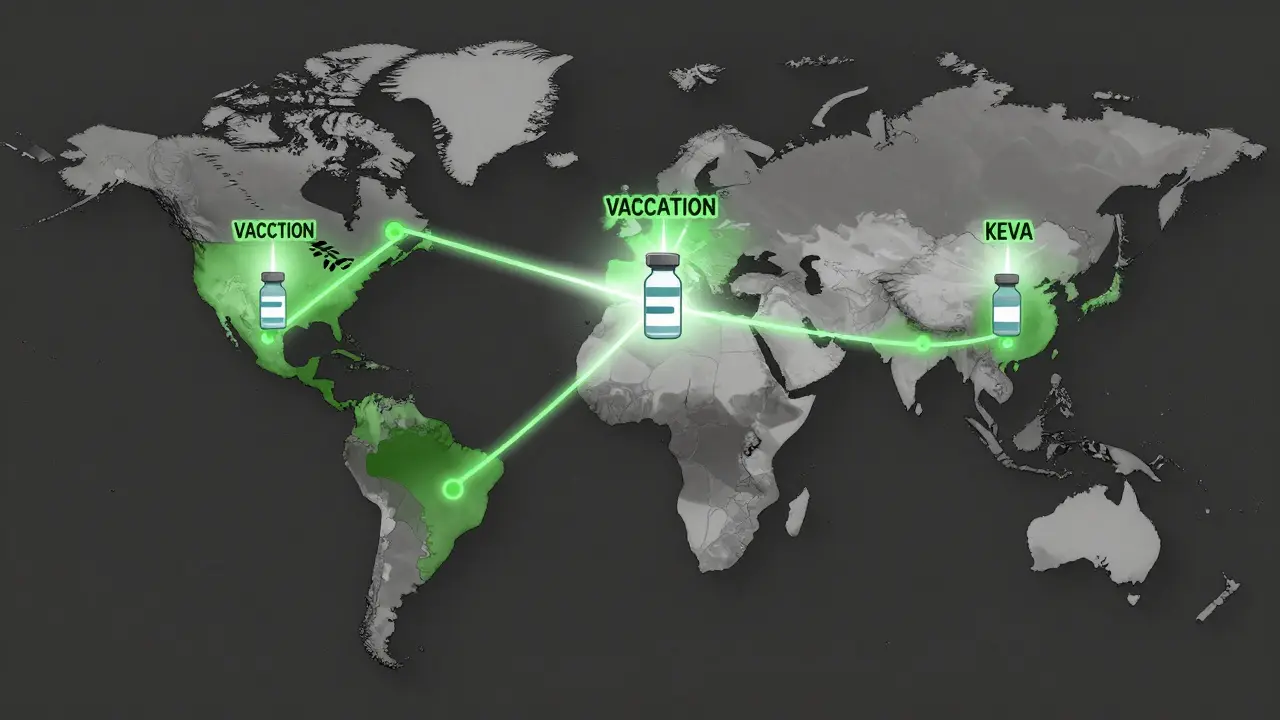
While countries like Australia, the UK, and Scotland are on track to eliminate cervical cancer by 2030, the rest of the world is lagging. The World Health Organization reports that only 12.9% of girls globally have completed the full HPV vaccine series. Most deaths - 85% - happen in low-income countries where access to vaccines and screening is limited.In the U.S., we’ve made progress but still have gaps. In 2022, only 60.4% of teens had completed the HPV vaccine series. Rural areas are seeing rising cervical cancer rates, even as national numbers fall. Vaccine hesitancy, misinformation, and lack of access are real barriers.
But new tools are helping. In January 2024, the FDA approved the first at-home HPV self-sampling test. Women can now collect their own sample in private and send it to a lab. Early data shows this could increase screening rates by 40%. That’s huge for people who avoid clinics due to embarrassment, lack of transportation, or fear.
What You Can Do Right Now
If you’re a parent of a child aged 9 to 12: get them vaccinated. Don’t wait. The earlier, the better. If your child is 13 to 26 and hasn’t been vaccinated, it’s not too late. Catch-up vaccines are still effective.If you’re 21 to 65: get screened. Don’t skip your Pap or HPV test because you feel fine. Cervical cancer doesn’t cause symptoms until it’s advanced. By then, it’s harder to treat.
If you’re over 26 and unsure: talk to your doctor. The vaccine is approved up to age 45, and it can still help if you haven’t been exposed to the main cancer-causing strains. It’s not one-size-fits-all, but it’s worth discussing.
And if you’re in a country where vaccines aren’t widely available: support global efforts. Organizations like Gavi are now funding single-dose HPV vaccines for over 50 low-income countries. A $1.05 billion commitment means millions more girls will be protected.
The Future Is Here
Cervical cancer is the first cancer we have a real shot at eliminating. Not curing. Not managing. Eliminating. We have the tools. We have the science. We have the proof.It’s not magic. It’s public health done right - vaccination, screening, and access working together. Countries that did it right are seeing near-zero cases in vaccinated generations. The next decade will show whether we can make that true everywhere.
The choice isn’t between hope and science. It’s between acting now - or waiting until it’s too late.
Is the HPV vaccine safe?
Yes. Over 135 million doses of HPV vaccines have been distributed worldwide. The most common side effects are mild - soreness at the injection site, dizziness, or a low fever. Serious reactions are extremely rare. Studies tracking vaccinated populations for over 15 years show no long-term health risks.
Do I still need Pap tests if I’ve had the HPV vaccine?
Yes. The vaccine doesn’t protect against all cancer-causing HPV strains, and it doesn’t help if you were already exposed before vaccination. Screening catches what the vaccine misses. You still need regular cervical cancer screening starting at age 21 (Pap) or 25 (HPV test).
Can men get the HPV vaccine?
Yes. HPV causes cancers in men too - including throat, anal, and penile cancers. The vaccine is approved for males up to age 26, and in some cases up to 45. Vaccinating boys also helps reduce transmission to future partners, making the whole population safer.
What if I’m over 26? Is the vaccine still worth it?
It depends. If you’ve had few sexual partners and haven’t been exposed to the main HPV strains, the vaccine can still offer protection. Talk to your doctor. For people with multiple partners or past infections, the benefit is smaller but not zero. The vaccine is approved up to age 45, so it’s worth discussing your personal risk.
Why is Australia doing better than the U.S. with HPV vaccination?
Australia introduced school-based HPV vaccination in 2007, with free shots given in classrooms. They also included boys, had strong public education campaigns, and tracked coverage closely. The U.S. relies on doctors’ offices and parental choice, leading to inconsistent uptake. Australia’s national program reached over 80% coverage by age 15; the U.S. is still at 60.4%.
Can HPV testing replace Pap tests completely?
For most women aged 25 to 65, yes. HPV testing is more sensitive than Pap tests at finding precancer. The American College of Obstetricians and Gynecologists now recommends HPV testing alone every five years as the best option. Pap tests are still used if HPV testing isn’t available or if results are unclear.
Is the single-dose HPV vaccine approved everywhere?
The WHO has prequalified single-dose HPV vaccines (Cervarix and Gardasil-9) for global use, and countries like Australia and the U.S. now recognize single-dose efficacy based on recent trials. But implementation varies. Some clinics still follow the old three-dose schedule. Check with your local health authority - single-dose is now scientifically valid and increasingly available.
9 Comments

Melissa Starks
March 18, 2026 AT 10:55
Just want to say how proud I am of how far we’ve come with this. When I was in college, my gyno was like, ‘Oh, you should get that shot’ like it was optional. Now? My 11-year-old got her first dose at school, no questions asked. Zero drama. Zero pushback from the school nurse. Just a shot and a sticker. And yeah, I know some people freak out about ‘vaccines changing DNA’ or whatever nonsense, but come on. We’re talking about a vaccine that prevents cancer. Not a mind-control chip. Not a tracking device. Just science that works. I’ve seen friends lose their moms to cervical cancer. I don’t ever want another kid to have to do that. So yeah, I’m loud about it. And I don’t apologize.

Lauren Volpi
March 18, 2026 AT 11:28
Y’all act like this is some miracle cure but let’s be real - the pharma companies are laughing all the way to the bank. They made billions off this and now they’re acting like saints. Meanwhile, my cousin got diagnosed at 28 and had to sell her house for treatment. Who’s helping her? Not Merck. Not Pfizer. Not even the CDC. We’re being sold a feel-good story while real people suffer. Vaccines don’t fix systemic failure.

Kal Lambert
March 18, 2026 AT 17:23
Screening still saves lives. Even with the vaccine. I’ve seen cases where someone had HPV before vaccination and still needed treatment. The combo of vaccine + screening is what makes elimination possible. Don’t drop one for the other.

Melissa Stansbury
March 20, 2026 AT 13:34
Wait wait wait - so if you’re over 26 and you’ve had multiple partners, the vaccine is still worth it? I’m 32 and I’ve been with three people. Should I go get it? My doctor said no but I read online that even one shot helps? I’m so confused. Like, I don’t want to waste money but I also don’t want to get cancer. Can someone just tell me what to do? I’m not asking for a lecture. Just a straight answer.

cara s
March 21, 2026 AT 10:22
It is truly remarkable, and indeed profoundly encouraging, to observe the empirical outcomes of widespread HPV vaccination programs, particularly when viewed through the lens of longitudinal epidemiological data. The Scottish cohort study, for instance, which tracked over 138,000 individuals, presents an almost unprecedented statistical anomaly: zero cases of invasive cervical cancer among those vaccinated between the ages of 12 and 13. This is not merely a reduction. It is, in effect, an eradication event within a defined demographic. Furthermore, the emerging evidence supporting single-dose efficacy - particularly in Kenya and Costa Rica - suggests that global public health infrastructure may be poised for a paradigm shift, one that prioritizes accessibility over dogma. The implications for low-resource settings are, frankly, transformative.

Amadi Kenneth
March 22, 2026 AT 10:51
Let me tell you something… the HPV vaccine? It’s not about cancer. It’s about population control. I’ve read the patents. I’ve seen the documents. They’re injecting nanoparticles that link to your DNA - and they’re tracking you through your immune response. The ‘cervical cancer’ thing? A distraction. Why do you think they’re pushing it on 11-year-olds? Why not adults? Because kids are easier to control. And don’t even get me started on the at-home tests - they’re scanning your cervix remotely via satellite. I know a nurse who quit because she saw the reports. They’re not saving lives. They’re building a database. And the CDC? They’re in on it. You think this is science? It’s surveillance. With a smile.

Shameer Ahammad
March 23, 2026 AT 05:56
It is a matter of profound concern that the Western world continues to treat this as a mere medical intervention, rather than a moral imperative. In India, where cervical cancer remains the leading cause of death among women aged 25–45, the lack of awareness is staggering. Yet, in the United States, we debate whether to vaccinate boys because of ‘gender neutrality’ concerns. This is not a policy failure - it is a failure of collective responsibility. The vaccine is not optional. It is not a lifestyle choice. It is a public health obligation. And until we stop treating prevention as a privilege, we will continue to bury women who could have been saved.

Alexander Pitt
March 24, 2026 AT 06:03
Single-dose efficacy is now validated. WHO, CDC, and ACOG all recognize it. If you’re under 26 and unvaccinated, get one shot. It’s not ‘too late.’ It’s not ‘useless.’ It’s life-saving. Don’t overthink it.

Manish Singh
March 25, 2026 AT 03:43
As someone from India, I can tell you - we’re not even close to where Australia is. Our rural clinics don’t have refrigeration for vaccines. Many girls don’t even know what HPV is. But here’s the thing: when we started community health worker programs - women going door to door with pamphlets and free screenings - uptake jumped 40% in six months. No fancy tech. Just trust. Maybe the answer isn’t more vaccines. It’s more people who care enough to show up. The science is ready. The people? We just need to listen.
Write a comment