


When a pharmacist fills a prescription, they’re not just handing out pills-they’re managing a complex web of regulatory rules, technical codes, and patient safety concerns. The difference between a brand-name drug and its generic version might seem simple: one costs more, the other costs less. But in pharmacy systems, that difference triggers a chain of decisions that can affect patient outcomes. Getting it wrong-even once-can lead to adverse reactions, insurance denials, or legal issues. So how do pharmacy systems correctly identify and manage generic versus brand medications? And what are the best practices that actually work in real-world settings?
Why Generic vs Brand Identification Matters
It’s not just about saving money. Generic drugs save the U.S. healthcare system nearly $2 trillion every decade, according to U.S. Pharmacist (2020). But cost isn’t the only factor. The FDA defines a generic drug as identical to its brand-name counterpart in dosage, safety, strength, route of administration, quality, performance, and intended use. That’s the law. And yet, pharmacy systems still struggle to reflect that reality accurately. The problem isn’t that generics are less effective. It’s that pharmacy software often doesn’t know how to tell them apart properly. A patient might get a different pill shape, color, or inactive ingredient-even if the active ingredient is exactly the same. For most people, that’s fine. But for someone on warfarin, thyroid hormone, or phenytoin, even tiny variations in absorption can be dangerous. These are called narrow therapeutic index (NTI) drugs. Systems that treat all generics the same risk harm.The Building Blocks: NDC Codes and TE Codes
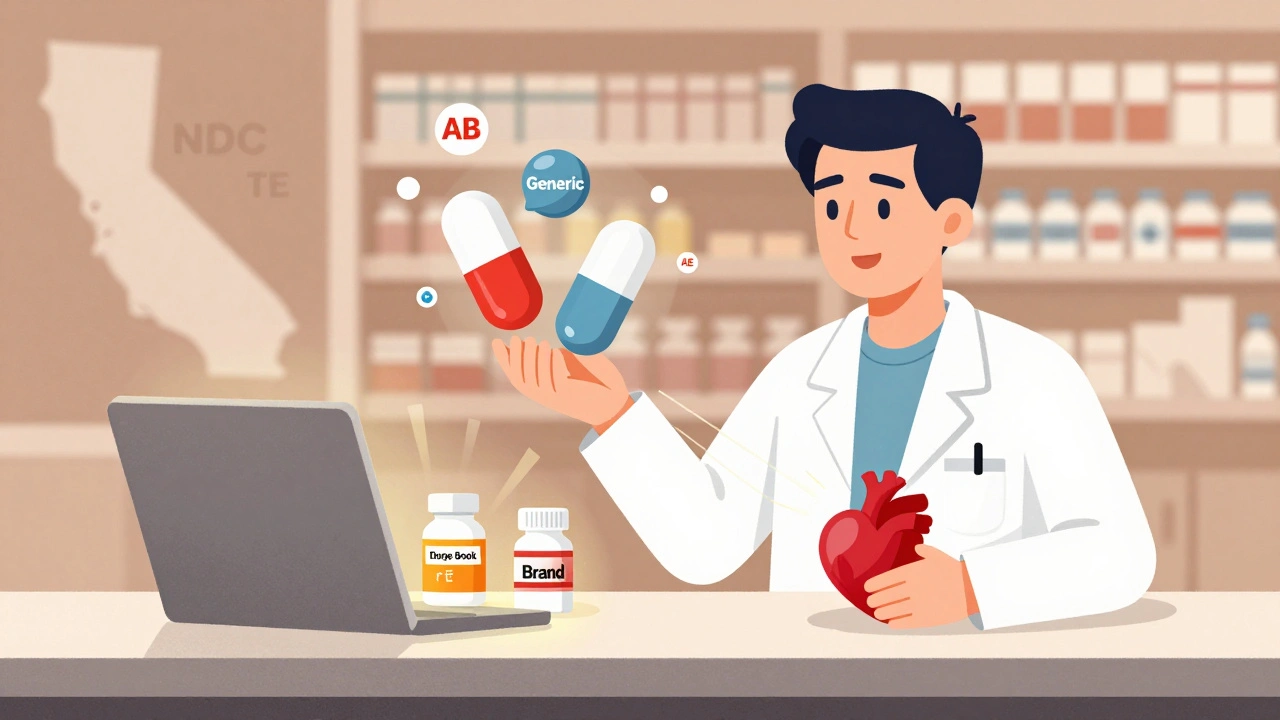
Every medication in the U.S. has a National Drug Code (NDC), a unique 10- or 11-digit number assigned by the FDA. This code identifies the manufacturer, product, and package size. But here’s the catch: a brand-name drug and its generic version each have their own NDC. That means your pharmacy system doesn’t just need to know the drug name-it needs to match the exact code. Then there’s the Therapeutic Equivalence (TE) code, found in the FDA’s Orange Book. This two-letter code tells pharmacists whether a generic is interchangeable with the brand. An “AB” code means the generic is bioequivalent and can be substituted. “A” codes like AO or AN mean it’s equivalent but not substitutable due to formulation differences. “B” codes mean it’s not equivalent at all. Pharmacy systems like Epic, Cerner, and Rx30 pull this data directly from the FDA’s Orange Book. But here’s where things go wrong: if the system isn’t updated monthly-when the FDA releases new TE codes-it might flag a safe generic as “not interchangeable.” Or worse, it might let a non-equivalent drug slip through.Authorized Generics and Branded Generics: The Hidden Confusion
Not all generics are created equal-even when they’re technically the same. An authorized generic is the brand-name drug sold under a generic label. It’s made by the same company, in the same factory, with the same ingredients. But because it’s labeled as generic, pharmacy systems often misclassify it. One Walgreens pharmacist reported on Reddit that their system lists 17 different generics for lisinopril but doesn’t say which ones are authorized. That’s a problem. Patients who had no issues on the brand might suddenly react to a different generic, even if it’s the same pill. Then there are branded generics. These are generics that carry a brand name-like Errin, Jolivette, or Cryselle for birth control pills. They’ve gone through the ANDA process, so they’re legally generic. But their packaging looks like a brand. Patients think they’re getting the original. Pharmacists think they’re getting a generic. Systems often don’t distinguish them from true generics, leading to confusion in billing, substitution rules, and patient education.How Systems Should Handle NTI Drugs
For drugs like warfarin, levothyroxine, and phenytoin, substitution isn’t just a cost-saving move-it’s a clinical decision. The FDA and ASHP both recommend that pharmacy systems block automatic substitution for NTI drugs unless a prescriber explicitly allows it. Kaiser Permanente’s system does this right. It defaults to generics for most prescriptions but has built-in alerts that freeze substitution for NTI drugs. The pharmacist must review the case, consult the prescriber, and document why they’re keeping the brand. In 2022, they achieved a 92.7% generic dispensing rate without a single documented adverse event linked to substitution. Compare that to the 147 adverse events reported by ISMP over 18 months due to improper warfarin substitutions. Those weren’t human errors. They were system failures. The software didn’t recognize the drug as NTI. It didn’t flag the change. It just filled the prescription.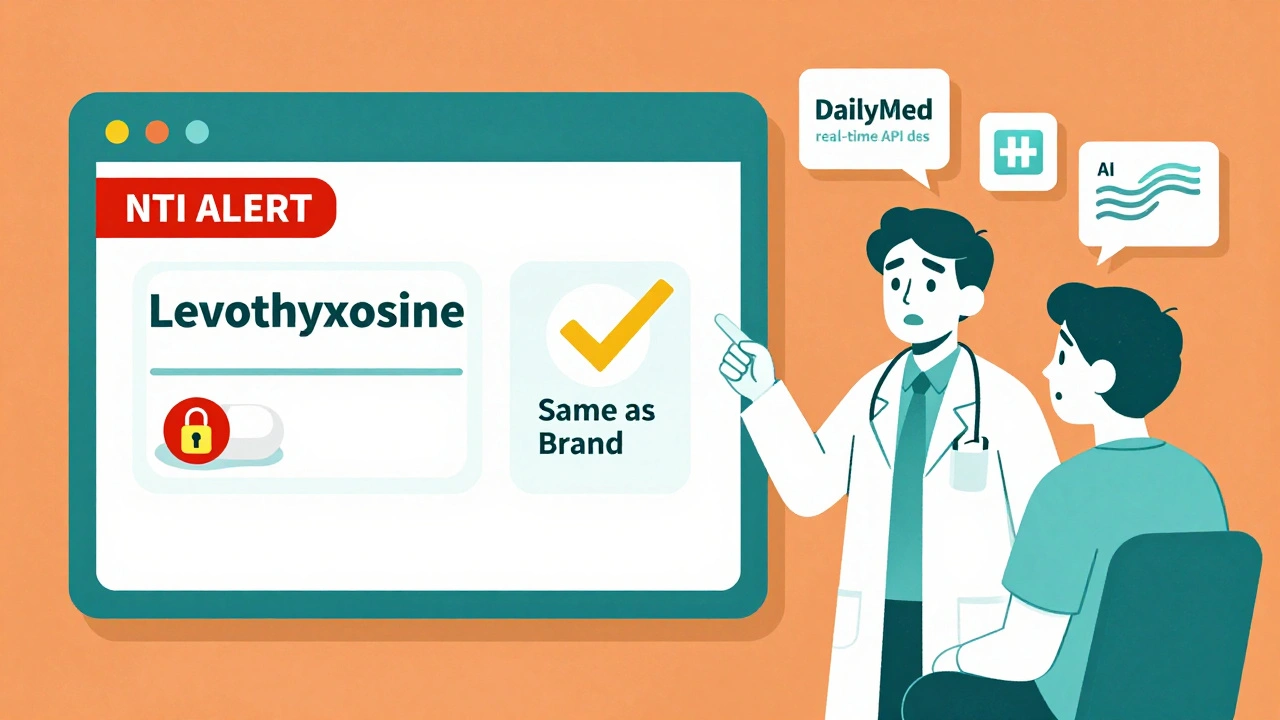
State Laws and the Patchwork Problem
There are 50 states. And 49 of them allow pharmacists to substitute generic equivalents without a prescriber’s permission. But that’s where the similarity ends. California requires pharmacists to document why they kept a brand-name drug in the patient’s record. Texas doesn’t require any documentation at all. New York mandates patient consent before substitution. Florida allows substitution only if the generic is listed in the state’s approved formulary. Pharmacy systems must be configured to handle all of these rules. That means not just knowing the drug-but knowing the state, the payer, and the prescriber’s preferences. A system that works in Ohio might crash in New Jersey. That’s why successful implementations require 15-20 hours of setup per workstation, plus ongoing updates as laws change.What Works: Best Practices from Leading Systems
The best pharmacy systems don’t just react-they guide. Here’s what the top performers do:- Default to generics unless there’s a clinical reason not to. ASHP recommends this as a standard. It cuts costs without sacrificing safety.
- Use real-time FDA Orange Book API updates. Don’t wait for monthly downloads. Systems like LexID process 2.1 billion transactions annually with 99.98% accuracy because they update in real time.
- Flag authorized generics with a special indicator. Patients who’ve had bad reactions to generics before might tolerate the authorized version just fine.
- Integrate with DailyMed to catch inactive ingredient changes. A 2019 study found 0.8% of patients had issues switching from brand to generic antiepileptic drugs-often due to different fillers or dyes.
- Build patient education into the workflow. Kaiser Permanente’s “Medication Comparison” tool shows side-by-side images of brand and generic pills, explains bioequivalence, and lets patients opt out. Result? A 37% drop in brand continuation requests.
- Train staff on branded generics. Birth control pills alone have over 50 branded generic names. If your tech doesn’t know that Sprintec and its generic are the same pill, they’ll confuse patients-and maybe even bill incorrectly.
The Human Factor: Why Patients Don’t Trust Generics
Here’s the irony: generics are just as safe. But 68% of patients don’t know that, according to U.S. Pharmacist (2020). Many believe “generic” means “weaker” or “cheaper junk.” Consumer Reports found that 89% of patients were satisfied with generics when they were explained properly. Only 63% were satisfied when the substitution happened silently. That’s not a pharmacy system issue-it’s a communication issue. The best systems don’t just auto-fill prescriptions. They prompt pharmacists to say: “This is the same medicine as your old pill, just less expensive. Your doctor approved the switch.” That simple sentence reduces anxiety, increases compliance, and builds trust.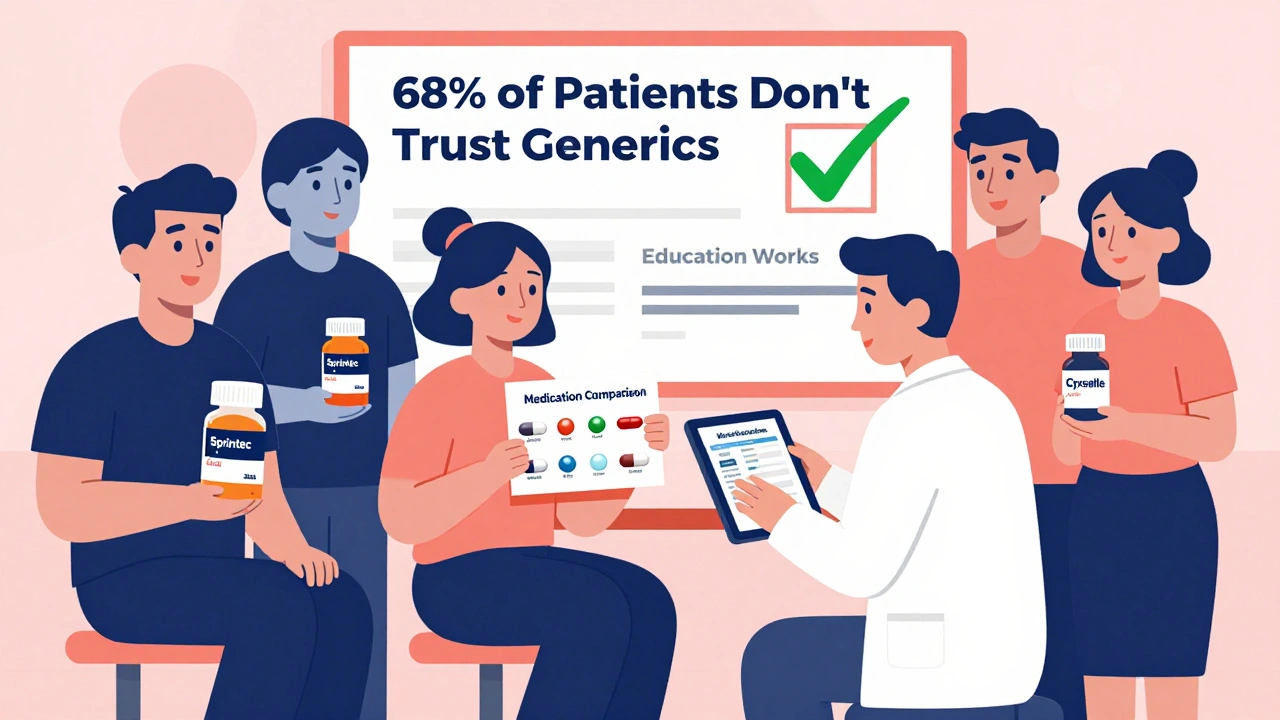
What’s Coming Next
The FDA’s 2023 Orange Book modernization will move to a machine-readable API with real-time updates-ending the current 2-3 week lag between approval and system availability. The 21st Century Cures Act now requires EHRs to clearly label reference listed drugs, authorized generics, and branded generics in structured data fields. And AI is stepping in. A 2023 study in the Journal of the American Medical Informatics Association showed AI systems predicting therapeutic equivalence issues with 87.3% accuracy by analyzing prescription patterns. Imagine a system that notices a patient keeps switching between three different generics for levothyroxine-and automatically flags it as a potential stability issue. The future isn’t just about identifying drugs. It’s about understanding patients.What Independent Pharmacies Need to Know
Big chains like CVS and Walgreens spend millions on pharmacy informatics. But 63% of independent pharmacies still don’t have full generic identification protocols, according to ASHP (2022). That’s not because they’re careless. It’s because they’re under-resourced. The good news? You don’t need a $50,000 system to get it right. Start with these steps:- Ensure your software pulls data from the FDA Orange Book (most do-check your vendor’s update schedule).
- Set your system to default to generics for non-NTI drugs.
- Print a one-page cheat sheet for your staff: “When to flag a brand-NTI drugs, allergies, previous reactions.”
- Ask patients: “Have you ever had a problem with a generic before?” That one question can prevent a bad outcome.
Final Takeaway
Generic drugs aren’t the enemy. Poorly designed systems are. The technology exists to make accurate identification easy, safe, and efficient. The question isn’t whether you can afford to upgrade your system. It’s whether you can afford not to. The goal isn’t to eliminate brand-name drugs. It’s to make sure every patient gets the right drug-whether it’s branded, generic, or authorized-without confusion, delay, or risk.Can pharmacists substitute generic drugs without a doctor’s permission?
Yes, in 49 U.S. states, pharmacists can substitute a generic drug for a brand-name drug without a prescriber’s approval-as long as the generic has an FDA therapeutic equivalence code of “AB.” Exceptions include narrow therapeutic index drugs like warfarin or levothyroxine, where substitution is often restricted. Some states, like California, require documentation if the brand is kept. Always check your state’s specific laws.
Are authorized generics the same as brand-name drugs?
Yes. Authorized generics are exact copies of brand-name drugs, made by the same manufacturer, in the same facility, with the same ingredients. The only difference is the label-they’re sold under a generic name and usually at a lower price. Pharmacy systems often fail to distinguish them from regular generics, which can confuse patients and pharmacists alike.
Why do some patients react badly after switching to a generic?
While the active ingredient is identical, generics can have different inactive ingredients like fillers, dyes, or preservatives. In rare cases, these can cause allergic reactions or affect absorption-especially with narrow therapeutic index drugs. A 2019 study found 0.8% of patients reported issues switching antiepileptic generics. If a patient has a history of problems, the pharmacy should note it and avoid switching unless approved by the prescriber.
What’s the difference between a generic and a branded generic?
A generic drug uses the chemical name (e.g., “levothyroxine”). A branded generic has a proprietary name (e.g., “Synthroid” is brand, “Levoxyl” is a branded generic). Both go through the same FDA approval process (ANDA), but branded generics are marketed like brand-name drugs. Pharmacy systems may not clearly label them, leading to confusion in billing and patient communication.
How often should pharmacy systems update their drug databases?
At a minimum, monthly-when the FDA updates the Orange Book. But the best systems update in real time using the FDA’s API. The NDC directory changes about 3,500 times per month. Outdated systems can miss new generics, misclassify drugs, or fail to block unsafe substitutions. Regular updates are non-negotiable for patient safety.
Do insurance companies force pharmacists to use generics?
Insurance plans often require generics as a condition of coverage, especially under Medicare Part D. But pharmacists can override this if the prescriber marks the prescription as “dispense as written” or if the patient has a documented medical reason. Systems must allow for these overrides and track the reason to stay compliant.
What should patients do if they think their generic isn’t working?
They should contact their pharmacist or prescriber immediately. Don’t assume the generic is ineffective. Sometimes, the issue is the inactive ingredients, a change in manufacturer, or even a different pill shape affecting absorption. The pharmacist can check the NDC and TE code, verify if it’s an authorized generic, and suggest switching back or trying another generic. Never stop or change medication without professional advice.
14 Comments

Kumar Shubhranshu
December 5, 2025 AT 14:56
Generic meds work fine. Stop overcomplicating. If your body reacts, talk to your doc not the system.

brenda olvera
December 7, 2025 AT 03:43
I work in a rural pharmacy and this post nailed it. Patients trust us when we explain the pill looks different but works the same. A little empathy goes further than any software update.

Myles White
December 7, 2025 AT 12:28
I've been in pharmacy informatics for 18 years and let me tell you, the real issue isn't the NDC codes or TE flags-it's the vendors who charge $20k for a monthly update and then act like it's a miracle they even do that. The FDA's API is free, open, and updated hourly. Why are we still using Excel sheets from 2017? Because someone's making money off the chaos. The system isn't broken, it's being exploited. And yes, I've seen pharmacists get sued because their software didn't flag a B-code as non-substitutable. It's not incompetence-it's negligence dressed up as legacy tech.

Mayur Panchamia
December 7, 2025 AT 22:39
Ohhh here we go again-the American healthcare circus! You think this is about safety? NO. It's about $$$! Big Pharma pays pharmacists to push brands. The FDA? Bought and paid for. And now you want me to believe that 'authorized generics' are the same? LOL. My cousin took lisinopril and had a seizure because the 'same pill' had a different filler. They hid it in the fine print! The system is rigged. You think your 'real-time API' fixes that? Wake up! The same companies that make the brand also make the 'generic'-they're the same damn factory! You're being played!

Andrew Frazier
December 8, 2025 AT 13:41
Ugh another tech bro pretending he knows medicine. You think your fancy API stops people from dying? Nah. It just makes your dashboard look pretty while grandma gets the wrong pill because the system flipped her med to a generic with magnesium stearate-she's allergic. And you wanna blame the pharmacist? Go cry to your startup investors. Real people aren't data points.

Priya Ranjan
December 10, 2025 AT 09:29
If you're still confused about branded generics, you shouldn't be handling prescriptions. This isn't rocket science. It's pharmacy 101. Stop making excuses for poor training. The information is public. The FDA Orange Book is free. If you can't read it, maybe you're in the wrong profession.

olive ashley
December 11, 2025 AT 14:32
They're watching. The AI system that flags levothyroxine switches? It's not just tracking meds-it's building profiles. Who's switching? Who's complaining? Who's asking for the brand? That data goes to insurers. Then your premiums go up. You think this is about safety? It's about control. They want you dependent on their system. And if you dare ask why your pill changed color? They'll say 'bioequivalence.' But you know what? You're not a variable. You're a person.

Kay Jolie
December 13, 2025 AT 03:34
The real innovation isn't the API-it's the cognitive load reduction for pharmacists. When you're juggling 80 scripts an hour, state laws, payer rules, and a screaming patient who thinks generics are 'poison,' you need a system that doesn't just tell you what the drug is-but what the patient needs. That's where NLP and sentiment-aware prompts come in. Imagine a system that detects 'I've always taken Synthroid' and auto-suggests: 'This is the same molecule. Would you like to see the pill comparison?' That's not tech. That's empathy engineered.

Chris Park
December 14, 2025 AT 09:14
You mention Kaiser’s 92.7% rate. But you ignore that 7.3%? Those are the patients who got the wrong drug. One death. One stroke. One lawsuit. That’s all it takes. And you think real-time updates fix that? The FDA updates every 24 hours. But the pharmacy system? Still running on Windows XP in the back room. The problem isn’t the data-it’s the infrastructure. And no one’s funding it because profit > safety. This is a public health failure disguised as a software issue.

Nava Jothy
December 14, 2025 AT 14:53
I'm so tired of this... 😔 Everyone thinks generics are 'the same'... but what about the 0.8% who have reactions? Who cares about them? NO ONE. The system doesn't care. The insurance doesn't care. Even the pharmacist is rushing. I had a friend who went into anaphylaxis because the generic had a dye she was allergic to... and the system didn't flag it because 'it's the same drug'. That's not safety. That's a death sentence wrapped in a barcode. 💔

Gwyneth Agnes
December 14, 2025 AT 17:36
Stop the noise. Just ask patients if they've had issues before. That's all you need.

Akash Takyar
December 15, 2025 AT 06:41
To all independent pharmacies reading this: please do not underestimate the power of a printed cheat sheet. I have seen small clinics in Bihar, India, where staff have no digital system at all, yet they maintain perfect records using handwritten logs, color-coded stickers, and daily huddles. Technology is not the solution-clarity, discipline, and human accountability are. Start with one page. One question. One moment of care. That is where true safety begins.

Clare Fox
December 15, 2025 AT 11:27
We treat drugs like they’re widgets. But they’re not. They’re molecules that interact with human bodies shaped by history, trauma, diet, sleep, stress. A generic isn’t just a chemical copy-it’s a cultural shift. The patient who’s been on Synthroid for 15 years? That pill isn’t medicine. It’s stability. It’s identity. When you swap it without context, you’re not changing a drug. You’re breaking a rhythm. And maybe that’s why some people ‘react’-not because of fillers, but because the world changed without warning. Maybe the system needs to ask: 'What does this pill mean to you?' before it swaps it.

Ibrahim Yakubu
December 16, 2025 AT 13:20
This is why Africa can't have nice things. You all are so obsessed with your NDC codes and TE flags while people here are still using handwritten prescriptions on napkins. The real problem isn't the software-it's that you have no idea what real healthcare scarcity looks like. Fix your own house before preaching to the world.
Write a comment