



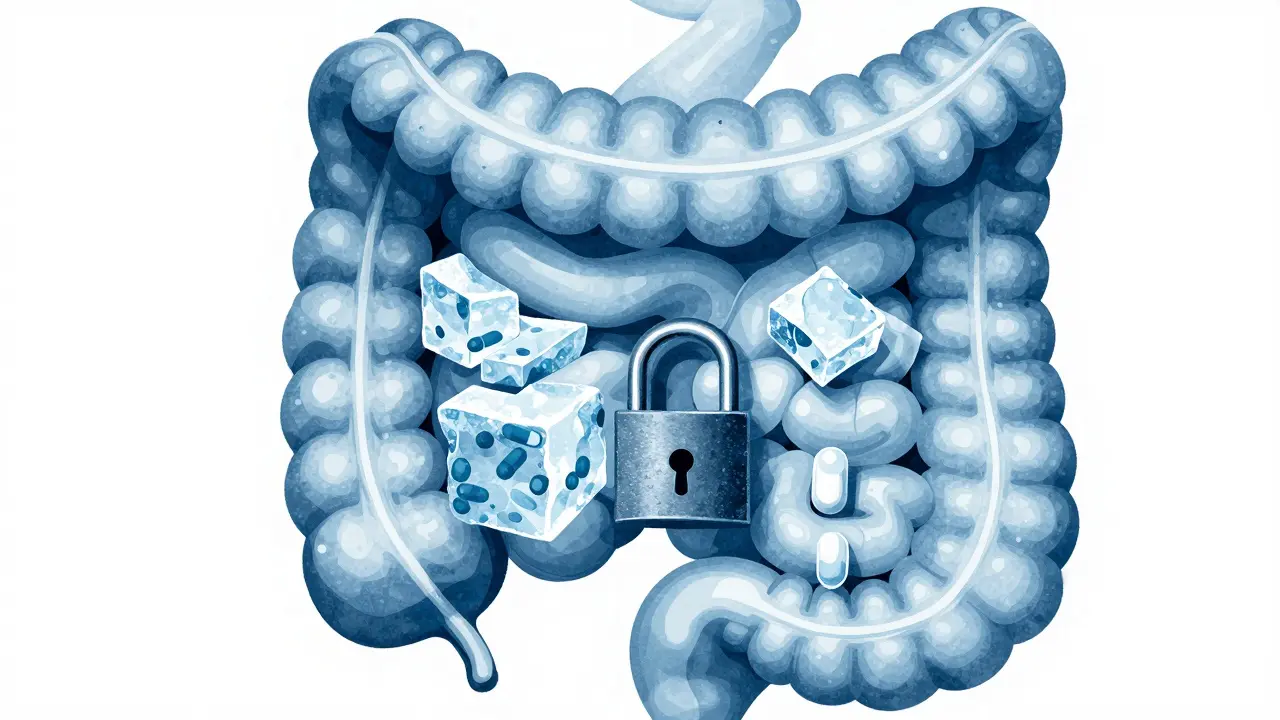
If you are taking chronic opioid therapy for pain, you've likely noticed that while your pain might be under control, your digestion has slowed to a crawl. This isn't just a common side effect; it's a clinical condition called Opioid-Induced Constipation is a persistent gastrointestinal dysfunction caused by the activation of mu-opioid receptors in the gut, which slows down muscle contractions and increases water absorption from stool. Also known as OIC, it affects anywhere from 40% to 95% of people on long-term opioids. Unlike nausea, which usually fades as your body gets used to the medicine, OIC doesn't go away on its own. If you don't manage it, it can become so miserable that you might feel forced to lower your pain medication dose just to get a bowel movement, which puts your pain relief at risk.
Why OIC is different from regular constipation
It's a common mistake to treat OIC like the kind of constipation you get from eating too many cheeseburgers or skipping water. Regular constipation is often about lifestyle, but OIC is mechanical. The opioids bind to receptors in your enteric nervous system, essentially putting your intestines to sleep. This reduces the secretions from your gallbladder and pancreas and stops the natural waves of muscle contractions (motility) that push waste through your system.
Because the cause is biological and receptor-based, standard advice often fails. For instance, many people are told to eat more fiber. While that's great for most, Dietary Fiber can actually be a problem here. When your gut motility is severely inhibited, high amounts of fiber can't move through the colon. Instead, they ferment, causing intense bloating, flatulence, and in severe cases, a fecaloma (a hard, impacted mass of stool). This is why experts from the Mayo Clinic warn against the generic "more fiber" approach for OIC patients.
The First Line of Defense: Preventive Measures
The best way to handle OIC is to start treating it before the first dose of opioids even hits your system. If you're starting a new prescription, your doctor should establish a baseline of your bowel habits using tools like the Bristol Stool Form Scale. Once you're on the medication, the goal is a "proactive" rather than a "reactive" strategy.
For most, the first step involves over-the-counter (OTC) options. However, not all laxatives are created equal for OIC. You generally want to avoid relying solely on bulk-forming agents. Instead, the following are typically recommended:
- Osmotic Laxatives: These pull water into the colon to soften the stool. Polyethylene glycol (often sold as Miralax) is a gold standard here, typically dosed at 17-34g daily.
- Stimulant Laxatives: These "kick" the bowel into moving. Bisacodyl (5-15mg) or Senna (8.6-17.2mg) are common choices to trigger a movement.
Even with these, about 50% to 75% of people find that OTC options aren't enough. When your gut is essentially "turned off" by opioids, you may need something that targets the receptors directly.
| Treatment Type | Mechanism | Typical Response Rate | Primary Benefit | Main Downside |
|---|---|---|---|---|
| Osmotic Laxatives | Water Retention | 25-50% | Safe, accessible | Often insufficient alone |
| PAMORAs | Receptor Blocking | 40-50% | Targets root cause | High cost / Insurance hurdles |
| Chloride Activators | Fluid Secretion | Variable | Non-opioid based | Nausea side effects |

Prescription Options: When OTCs Fail
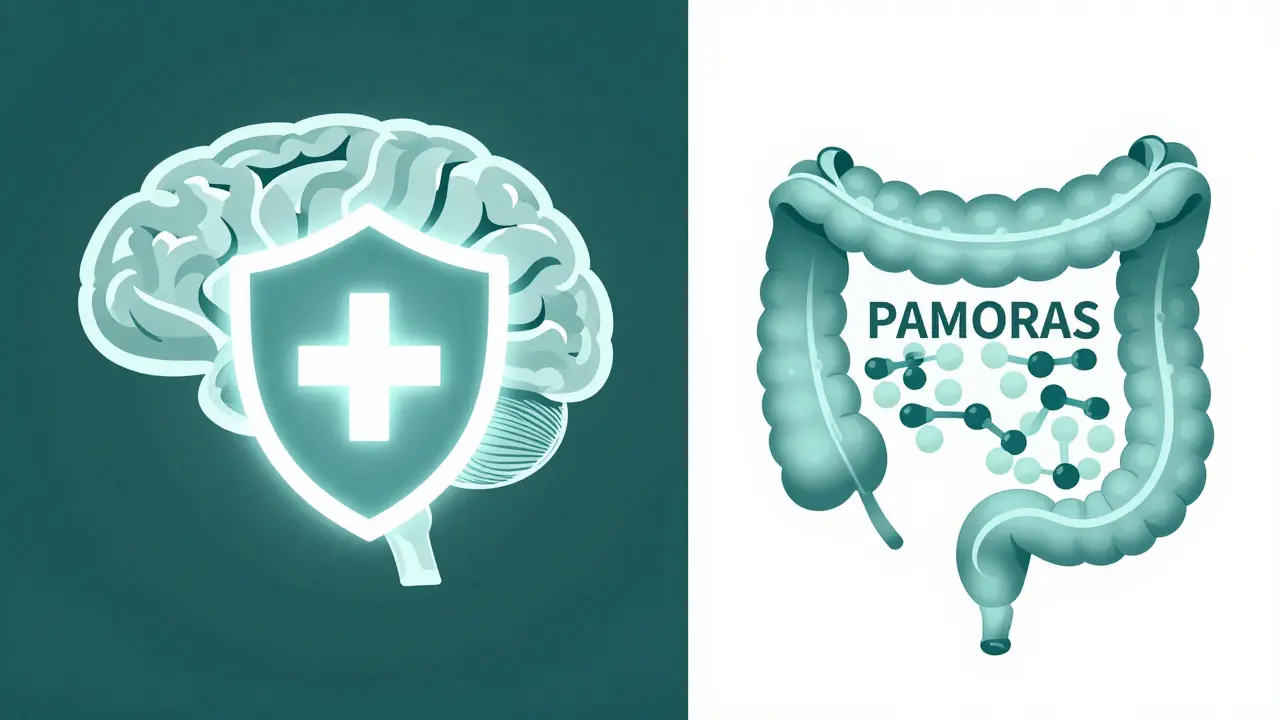
When basic laxatives don't work, doctors move to second-line prescriptions. The most effective of these are PAMORAs (Peripherally Acting mu-Opioid Receptor Antagonists). These are clever drugs: they block the opioid receptors in your gut to restore movement, but they are designed so they can't cross the blood-brain barrier. This means they fix your constipation without blocking the pain-killing effects of the opioids in your brain.
There are three main PAMORAs you should know about:
- Methylnaltrexone bromide (Relistor®): This is often used for patients in palliative care or those with advanced illnesses. It's typically an injection and is known for working quickly-sometimes within four hours.
- Naloxegol (Movantik®): An oral tablet approved for a broader range of chronic non-cancer pain patients.
- Naldemedine (Symcorza®): A newer option approved for adults and recently expanded to pediatric OIC cases.
Another alternative is Lubiprostone (Amitiza®). Unlike PAMORAs, this is a chloride channel activator. It doesn't block receptors; instead, it helps the gut secrete more fluid to move things along. While effective, it has a higher rate of nausea-about 30% of users report it-and it can be risky for people taking diuretics because it may lead to low potassium levels.
The Reality of Managing OIC
If you've tried several of these and still feel stuck, you aren't alone. Many patients report a frustrating "trial-and-error" phase. Data shows that nearly 70% of people on opioids end up modifying their prescribed regimens because the initial plan didn't provide enough relief. Cost is also a massive wall; some of these prescriptions can cost between $500 and $1,200 a month, and many insurance companies require "step therapy," meaning you have to fail on cheaper, less effective laxatives before they'll pay for the good stuff.
The key is consistent monitoring. You shouldn't wait until you haven't gone for a week to call your doctor. A weekly check-in on your bowel function allows your provider to tweak your dose-usually increasing it by 25-50% every few days-until you find the "sweet spot" where you're regular but not dealing with diarrhea.
Can I just eat more prune juice and fiber to fix OIC?
For regular constipation, yes. For OIC, be careful. Because opioids stop the muscles in your gut from moving, adding too much fiber can actually create a "plug" in your system, leading to severe bloating and potential impaction. Always check with your doctor before significantly increasing fiber if you are on high-dose opioids.
Will PAMORAs make my pain medication stop working?
No. PAMORAs are designed to be "peripherally acting," meaning they only work in the gut and do not enter the brain where your pain relief is happening. They block the receptors in your intestines without interfering with the analgesic effects in your central nervous system.
How long does it take for prescription OIC meds to work?
It varies by drug. Methylnaltrexone (Relistor) is known for rapid action, often providing relief within a few hours. Oral medications like Naloxegol or Lubiprostone may take a few days of consistent use to fully regulate your bowel movements.
What are the most common side effects of Lubiprostone?
Nausea is the most frequent side effect, affecting roughly 30% of patients. Diarrhea is also common (15-20%). It's also important to monitor potassium levels if you are taking it alongside diuretics.
Why doesn't the constipation go away after a few weeks of opioid use?
Unlike nausea or vomiting, which the body often develops a tolerance for, the gut does not "adapt" to opioids. As long as the medication is in your system, the mu-opioid receptors in your gut will remain activated, meaning the constipation will persist for the duration of your therapy.
Next Steps and Troubleshooting
If you're currently struggling, start by keeping a simple bowel diary for one week. Note the frequency, consistency (using the Bristol Scale), and any pain associated with movements. This data is gold for your doctor and helps them move past the "trial-and-error" phase faster.
If you are facing insurance barriers for PAMORAs, ask your doctor about "Prior Authorization" or check the manufacturer's websites for patient assistance programs. Many of these high-cost drugs have coupons or grants to help patients bridge the gap. If you experience sudden, severe abdominal pain or a complete lack of gas/stool for several days, contact your provider immediately, as this could indicate an impaction that requires medical intervention.
10 Comments

Simon Jenkins
April 11, 2026 AT 12:26
Finally, a shred of actual medical literacy in this wasteland! Most people are out here suggesting 'warm lemon water' while their guts are literally paralyzed. The sheer audacity of the medical establishment to let patients suffer through 'step therapy'-forcing us to fail on garbage OTCs before granting access to PAMORAs-is nothing short of a systemic tragedy! It's absolutely barbaric!

Emily Wheeler
April 11, 2026 AT 13:53
It is truly fascinating how the human body creates these complex feedback loops where the very medicine meant to provide solace and ease from pain simultaneously introduces a new layer of physical distress that can impact one's mental well-being, and while the transition to prescription-grade help can be a bureaucratic nightmare, finding that specific balance of medication often feels like a journey of self-discovery regarding one's own biological rhythms and needs in a world that often overlooks the nuances of chronic illness management.

Trey Kauffman
April 13, 2026 AT 04:16
Oh sure, because nothing says 'quality of life' like spending a thousand dollars a month to finally be able to use the bathroom. Truly a peak human experience.

Sarina Montano
April 14, 2026 AT 15:45
I've spent way too much time digging into the biochemistry of the blood-brain barrier, and the way PAMORAs are engineered to be peripherally acting is just brilliant. It's like a surgical strike for your intestines without touching the pain relief in the brain. For anyone struggling with the cost, definitely look into the manufacturer coupons-they can be a total lifesaver when insurance decides to play hardball with the prior authorization process.

Will Gray
April 14, 2026 AT 20:21
Typical. They push these high-cost 'designer' drugs while the insurance companies-who are basically just fronts for the big pharma cabal-block access until you're desperate. It's a controlled cycle of dependency and profit. They don't want you cured or comfortable; they want you paying a subscription fee for your own digestive tract.

Victor Parker
April 15, 2026 AT 07:12
Big pharma just wants us on the hook for life 🙄 why do you think these 'receptor blockers' cost so much? Its a scam!! Just use natural ways and stop trusting the system 🤡

Franklin Anthony
April 16, 2026 AT 08:11
the systemic failure here is obvious. you cant just trust the pills without questioning who benefits from the price hikes. though i agree that the mechanical explanation for OIC is helpful for people to understand why the usual advice fails

Ben hogan
April 17, 2026 AT 00:07
Imagine thinking this 'guide' is groundbreaking. It's basic pharmacology. The real tragedy is the cognitive dissonance of people believing a pill can solve a systemic failure of the body's natural state, yet here we are arguing about which expensive chemical works best. Pathetic.

Danny Wilks
April 17, 2026 AT 19:43
The distinction between osmotic and stimulant laxatives is an important one for those who may be unfamiliar with the specific mechanisms of action, as the long-term reliance on stimulants can sometimes lead to a further decrease in natural motility, whereas osmotics tend to be more gentle by simply altering the fluid balance within the colon to facilitate easier passage.

Lynn Bowen
April 19, 2026 AT 03:40
This is really helpful info.
Write a comment