
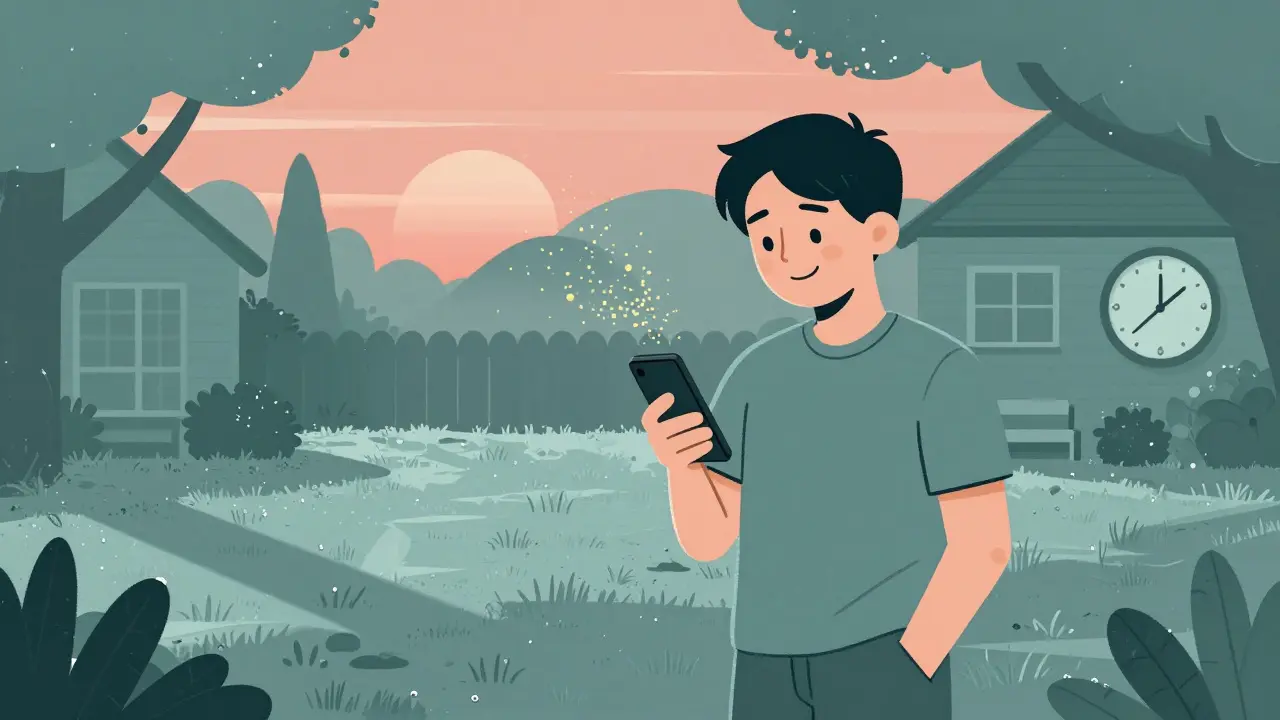
Every spring and summer, millions of people wake up with itchy eyes, a runny nose, and that constant feeling of being stuffed up-not because they’re sick, but because the air is full of pollen. If you’ve ever canceled a hike, skipped the park, or spent an afternoon sneezing on your own lawn, you know how much pollen can ruin your day. The good news? You don’t have to guess anymore. With pollen forecasting, you can plan your outdoor time around the worst days, not just suffer through them.
What Pollen Forecasting Actually Tells You
Pollen forecasting isn’t just a weather app with a flower icon. It’s a science-backed system that predicts how many pollen grains are floating in the air, measured in grains per cubic meter. Think of it like an air quality report, but for allergens instead of smog. The numbers are broken down into four levels: low (under 50 grains/m³), moderate (51-149), high (150-499), and very high (500+). For ragweed, even 20 grains/m³ counts as high. These forecasts aren’t random guesses. They’re built using real-time data from monitoring stations, satellite images, weather patterns, and even local vegetation maps. In places like Sydney, where eucalyptus and grasses dominate, forecasts focus on those specific types. The most accurate systems-like those from BreezoMeter or ECMWF-can predict daily levels with 82% accuracy, using temperature, wind, humidity, and rainfall as key inputs.When Pollen Hits Its Peak (And When It Doesn’t)
Pollen doesn’t just float around all day. It follows a rhythm. Knowing when it peaks can save you from unnecessary symptoms.- Tree pollen (like oak, birch, and eucalyptus) hits hardest between 5 AM and 10 AM. That’s when dew dries, and the wind picks up. If you’re allergic to trees, avoid early morning runs or gardening.
- Grass pollen rises during the day, peaking between 10 AM and 4 PM. This is the main culprit for late spring and early summer allergies. Afternoon soccer games? Maybe reschedule.
- Weed pollen (especially ragweed) gets worst in the late afternoon and early evening, from 4 PM to 8 PM. Evening walks? Not ideal if you’re sensitive.
How to Use Forecasts Like a Pro
Just checking a forecast isn’t enough. You need to use it strategically.- Check two sources. One app might miss your neighborhood. Use at least two-like BreezoMeter and Pollen.com-to cross-check. BreezoMeter gives hyperlocal data (1.5 km resolution), while free apps often only show city-wide averages.
- Know your allergens. Not all pollen is the same. In Sydney, eucalyptus and ryegrass are the big ones. If you think you’re allergic to “spring pollen,” get tested. You might be reacting to something totally different.
- Time your activities. Plan runs, bike rides, or gardening for early morning or after rain. Avoid mowing the lawn on high-pollen days. If you must, wear a mask and do it late in the day.
- Combine with weather apps. Wind speed matters. If the forecast says 20 km/h winds from the east, and your city’s main grass fields are east of you? Expect high counts. Rain coming? Wait 2-4 hours after it stops before heading out.
- Track your symptoms. Use a simple journal or app to note how you feel each day. Over time, you’ll spot patterns-like how your eyes itch every time the forecast says “high grass.” That’s your personal data, and it’s more accurate than any app.
What the Forecasts Don’t Tell You
Pollen forecasts are powerful, but they’re not perfect. Here’s where they fall short:- Thunderstorm asthma. In rare cases, a storm can break apart pollen grains into tiny pieces that go deep into your lungs. Melbourne had a major event in 2016-thousands ended up in hospitals, even though the pollen count was only “moderate.” No forecast predicts this yet.
- Urban microclimates. Pollen levels can be 300% higher in a park than on a busy street just 500 meters away. Most apps don’t account for this. If you live near a park or field, your real exposure might be worse than the forecast says.
- Weed pollen gaps. Only 12% of forecasting systems accurately track ragweed and other weeds. If you’re allergic to weeds, you’re more likely to get caught off guard.
- Climate change is shifting seasons. In Australia, pollen season now starts earlier and lasts longer than it did 20 years ago. What used to be a 6-week grass season is now 10 weeks. Forecasts are catching up, but not fast enough.
Who Benefits the Most?
You might think pollen forecasts are only for people with severe allergies. But they help everyone who spends time outside.- Athletes. Runners and cyclists who time their workouts to low-pollen hours report 45% fewer breathing issues during training. Some pro teams, like Manchester United, now check pollen levels before outdoor sessions.
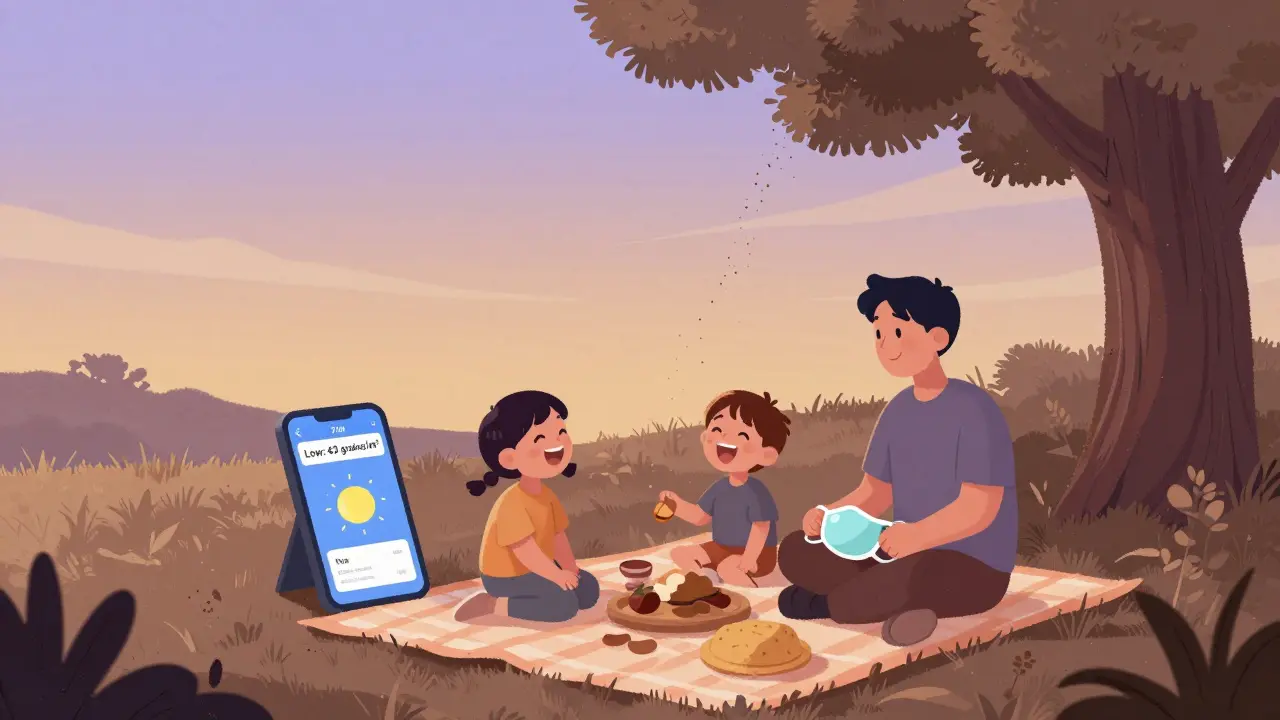
- Parents. Kids with allergies often miss school or sports. Using forecasts helps keep them active without constant meds.
- Seniors. Older adults are more vulnerable to allergy-triggered asthma. Planning walks around pollen peaks reduces hospital visits.
What’s Next for Pollen Forecasting
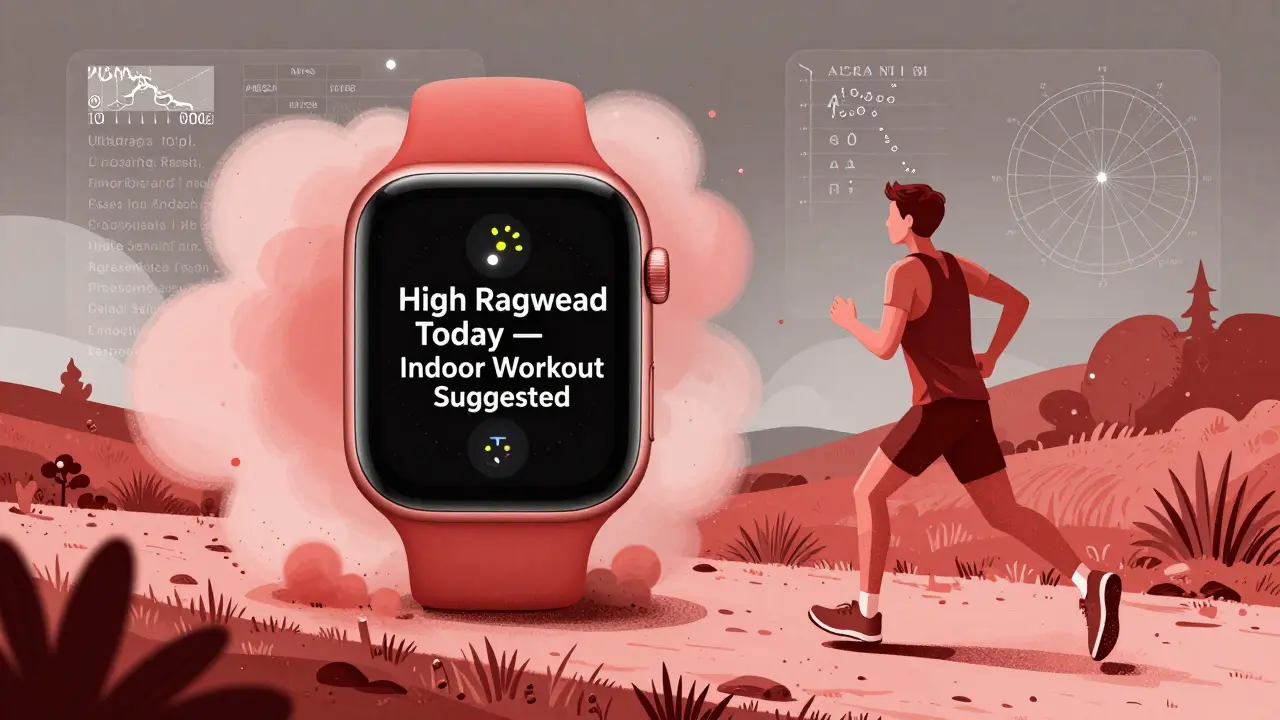
The field is evolving fast. In 2025, the European Space Agency is launching PollenSat, a satellite designed to track pollen types from space. That means global coverage, not just in Europe and North America. Apple and BreezoMeter are also teaming up to link pollen data with your heart rate, sleep, and symptom logs from your Apple Watch. Imagine getting a notification: “Your body reacted strongly to pollen yesterday. Today’s forecast is high. Consider indoor workout.” That’s the future. Meanwhile, researchers are training AI to predict thunderstorm asthma events by combining pollen data with atmospheric pressure and humidity changes. It’s still early, but early results are promising.Start Today: Your Simple Action Plan
You don’t need to be an expert to use pollen forecasts effectively. Here’s your starter plan:- Download BreezoMeter or Pollen.com (both free).
- Turn on daily alerts for your area.
- Check the forecast every night before bed.
- Plan your next day’s outdoor time based on the peak times for your allergens.
- After two weeks, look back at your symptoms. Did you feel better on low-pollen days? That’s your proof it works.
What time of day has the lowest pollen count?
Pollen counts are usually lowest between 5 AM and 7 AM, and again between 7 PM and 9 PM. Tree pollen drops after sunrise, grass pollen falls after sunset, and weed pollen declines after 8 PM. Avoid the midday window (10 AM-4 PM) when counts are highest for most allergens.
Can rain help reduce pollen allergies?
Yes, but not always. Light to moderate rain washes pollen out of the air and can reduce counts by 30-50% within two hours. However, heavy rain followed by wind can stir up pollen from the ground, causing a spike later. Wait 2-4 hours after rain before going outside, and avoid mowing wet grass.
Why do some apps say low pollen but I still feel awful?
Free apps often use city-wide averages, not your exact location. If you live near a park, golf course, or field, your personal exposure could be much higher. Also, some apps don’t track weed pollen well. Check multiple sources and track your own symptoms to find the real pattern.
Are pollen forecasts reliable in Australia?
Yes, especially in major cities like Sydney, Melbourne, and Brisbane. Monitoring stations track eucalyptus, ryegrass, and ragweed-the main local allergens. Accuracy is around 80% for daily forecasts. Global services like BreezoMeter and ECMWF have strong coverage here, but local data from Australia’s National Allergy Bureau is the most precise.
Should I still take my allergy meds if I use forecasts?
Yes, but you might need less. Forecasting helps you avoid exposure, which reduces the burden on your body. Many users cut their medication use by 30-60% when they plan around high-pollen days. Still, keep meds on hand for unexpected spikes, like after windstorms or thunderstorms.
14 Comments

Mario Bros
January 10, 2026 AT 07:14
Just checked BreezoMeter this morning and saw it’s high for grass-so I moved my run to 6 AM. My sinuses thank me. 🙌

Michael Marchio
January 12, 2026 AT 07:01
Let me be clear-most people don’t understand the science behind pollen forecasting, and that’s why they’re still suffering. The ECMWF model has been validated across 17 countries with R² values above 0.81. If you’re using a free app that doesn’t cite its data source, you’re not informed-you’re just guessing. And guesswork is the enemy of allergen management.
Furthermore, the notion that ‘rain always helps’ is dangerously oversimplified. The 2016 Melbourne thunderstorm asthma event was triggered precisely because people assumed low counts meant safety. But when hygroscopic pollen grains rupture under high humidity and then get aerosolized by downdrafts, you get submicron particles that penetrate deep into bronchioles. That’s not an allergy-it’s a respiratory emergency. Forecasts don’t account for this because they’re designed for population-level trends, not individual pathophysiology.
So yes, check your apps-but understand their limitations. And if you’re still relying on ‘common sense’ over data, you’re not just being lazy-you’re putting your health at risk.

Saumya Roy Chaudhuri
January 12, 2026 AT 10:24
Oh please. You think Australia has the best data? In India, we’ve been tracking pollen since the 1980s through the Indian Council of Medical Research. Your ‘80% accuracy’ is cute. We know exactly when Ambrosia artemisiifolia spikes in Delhi because we’ve mapped it against crop harvests, wind corridors, and even temple incense patterns. Your apps don’t even know what ragweed looks like.

Christine Milne
January 13, 2026 AT 13:38
While I appreciate the effort, I must point out that the entire premise of this article is rooted in Western-centric allergen models. In non-industrialized nations, pollen is not the primary driver of respiratory distress-industrial particulates, biomass burning, and indoor mold are. To frame pollen forecasting as a universal solution is not only misleading-it’s colonial. You don’t get to export your seasonal discomfort as a global health paradigm.

Dwayne Dickson
January 14, 2026 AT 03:30
Christine, your tone is as rigid as your worldview. Michael, your paragraph is a masterpiece of overcomplication-clearly written by someone who enjoys the sound of their own voice more than the clarity of their message. And Saumya, while I admire your passion for Indian pollen data, let’s not pretend that your anecdotal observations from Delhi are equivalent to a peer-reviewed monitoring network. The truth lies somewhere between precision and practicality.
Here’s what matters: pollen forecasting isn’t about proving who knows more. It’s about giving people agency. Whether you’re in Sydney, São Paulo, or Srinagar-if you can adjust your routine based on data, you reduce your suffering. That’s not Western imperialism. That’s public health.
And for the record: yes, thunderstorm asthma is terrifying. But that’s why we need better models, not worse skepticism. The ESA’s PollenSat will be a game-changer. Let’s not dismiss innovation because it’s new.

Faith Edwards
January 15, 2026 AT 04:00
Oh, darling, how quaint. You speak of ‘low-pollen hours’ as if they’re sacred rites in some temple of nasal serenity. Meanwhile, I’m sipping my organic, cold-pressed, biodynamic chamomile tea while watching the pollen index climb like a stock market bubble. I mean, really-do you think the universe conspires to ruin your yoga session? Or is it just the 12% of forecasting systems that still can’t tell ragweed from a dandelion?
And don’t get me started on ‘free apps.’ If you’re not paying $12.99/month for hyperlocal, AI-enhanced, pollen-scented notifications, you’re not living-you’re existing. My Apple Watch just whispered to me, ‘Your cortisol spiked yesterday during your 3 PM walk. Consider a lavender diffuser and a new life.’ I’m not allergic to pollen-I’m allergic to mediocrity.

Lisa Cozad
January 16, 2026 AT 22:59
I’ve been using Pollen.com for two years now. My daughter’s asthma flares dropped by 70%. We plan picnics like we plan flights-check the forecast, pick the day, bring the inhaler. It’s not magic. It’s just smart.

McCarthy Halverson
January 18, 2026 AT 19:09
Check two apps. Know your allergens. Time your runs. Track symptoms. That’s it. No fluff. Just do it.

Bradford Beardall
January 20, 2026 AT 05:54
As someone who grew up in rural Kansas and now lives in Mumbai, I’ve seen pollen seasons shift in both places. In Kansas, it was ragweed and cedar. Here, it’s parthenium and kikuyu grass. The science is the same, but the plants? Totally different. That’s why global models still miss local spikes. We need community-based monitoring-like citizen science networks. Imagine if every school in India had a pollen trap. We could map it in real time.

chandra tan
January 21, 2026 AT 05:47
Bro, I just check the weather app and if it’s windy, I stay inside. That’s it. No fancy tools. No apps. My nose knows. 😎

Jake Nunez
January 23, 2026 AT 01:13
I’ve been tracking my symptoms manually since 2020. I noticed my eyes itch every time the wind comes from the north. Turns out there’s a field of ryegrass just two blocks from my apartment. No app told me that. Only my tears did.

Jake Kelly
January 23, 2026 AT 08:39
This is actually really helpful. I never realized timing mattered so much. I’ll try waking up earlier to walk the dog. Thanks for sharing.

Jay Amparo
January 25, 2026 AT 08:03
As someone who grew up in Kolkata, I never thought pollen could be ‘forecasted.’ But after moving to Boston, I realized how much I suffered silently for years. The moment I started checking pollen levels, my sneezing stopped. It’s not about technology-it’s about awareness. And awareness is the first step to peace.

Ashlee Montgomery
January 25, 2026 AT 17:13
If we’re measuring pollen to avoid discomfort, are we not also avoiding a fundamental part of our biological relationship with the natural world? Allergies are an immune system misfiring-but perhaps they’re also a signal. A reminder that we’ve distanced ourselves too far from soil, wind, and seasonal rhythms. Maybe the goal isn’t to eliminate exposure… but to learn how to breathe through it.
Write a comment