
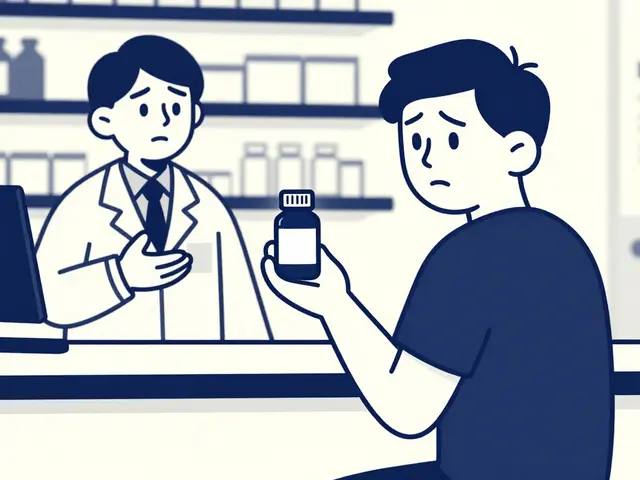



It’s 2026, and hospitals across the U.S. and Australia are running low on basic antibiotics. Not because of overuse or mismanagement-but because the companies making them can’t afford to keep producing them. This isn’t a glitch. It’s a systemic collapse driven by one brutal truth: pricing pressure and shortages are crushing manufacturers, and the people paying the price aren’t corporations-they’re patients.
Why Are Drugs Disappearing from Shelves?
Think about the last time you filled a prescription for amoxicillin, prednisone, or even insulin. Did you notice the price went up? Or worse-your pharmacy said it was out of stock? You might blame the pharmacy, or the pharmacy benefit manager, or even the drugmaker. But the real problem starts years earlier, in a factory somewhere, where a manufacturer is trying to make a profit on a drug that sells for $2 a pill.
Raw materials like active pharmaceutical ingredients (APIs) have surged in cost. Steel, rare earth metals, and even basic chemicals used in synthesis are up 15-20% since 2023. Tariffs on imports from India and China-where 80% of APIs are made-have jumped from 2.4% to over 11% in just two years. That’s not a tax on big pharma. It’s a tax on every pill you take.
And here’s the kicker: the government won’t let manufacturers raise prices enough to cover it. Medicare and Medicaid reimbursements haven’t budged. Private insurers cap what they’ll pay. So manufacturers are stuck. If they raise prices, they risk losing contracts. If they don’t, they lose money. And when you’re losing money on every unit, you stop making it.
The Domino Effect: From Factory Floor to Pharmacy Counter
It’s not just one drug. It’s dozens. A 2025 survey of 347 pharmaceutical manufacturers found that 68% had cut production on at least one generic drug because it was no longer profitable. Some stopped making entire lines-like injectable epinephrine or pediatric antibiotics-because the margins were too thin.
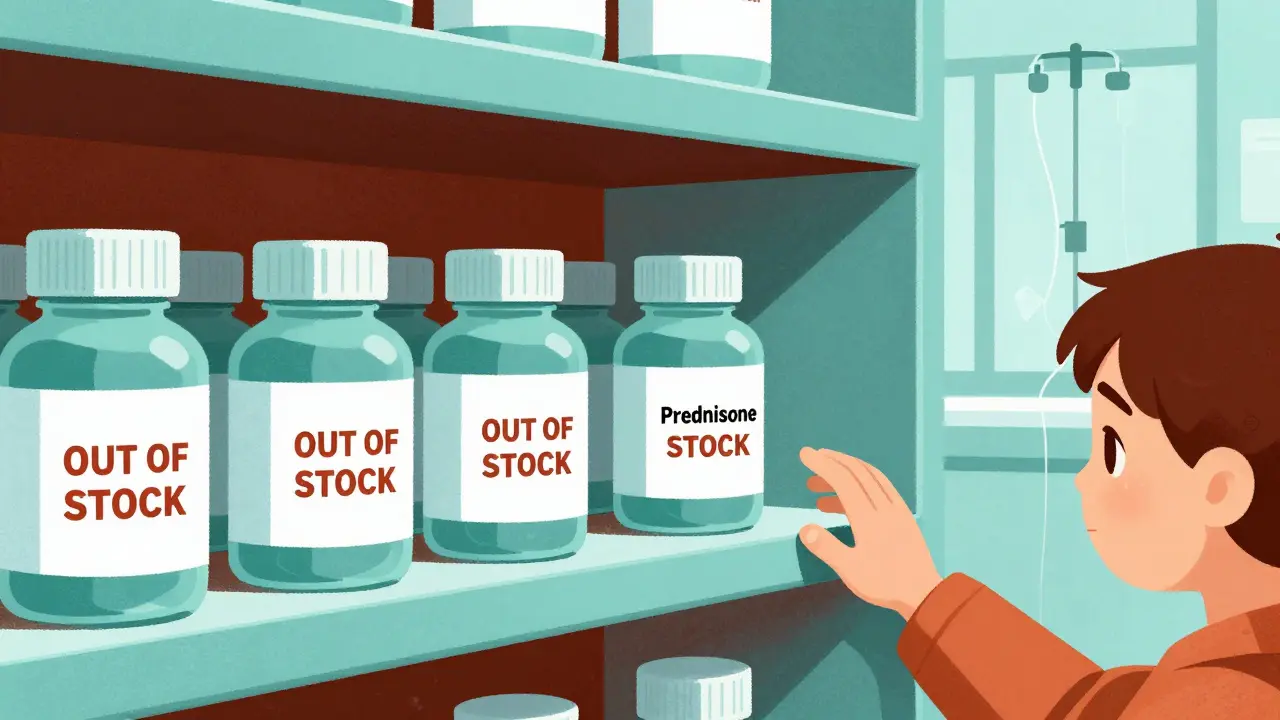
When one company shuts down production, others get overwhelmed. They can’t scale up fast enough. Lead times stretch from weeks to months. Then comes the shortage. And when shortages hit, hospitals scramble. They switch to more expensive alternatives. Patients get delayed care. Some go without.
The St. Louis Federal Reserve found that drug price inflation linked to supply chain disruption now accounts for 3.2% of overall healthcare inflation-higher than the rate for most other medical goods. And unlike electronics or cars, you can’t wait a few months for a new batch of insulin. People die if they don’t get it.
Who’s Really Paying the Price?
You might think big pharma is raking in profits. But the truth is, most of the drugs in shortage are generics-cheap, old, off-patent medicines made by small manufacturers with razor-thin margins. Companies like Teva, Mylan, and Sandoz aren’t luxury brands. They’re the backbone of affordable medicine.
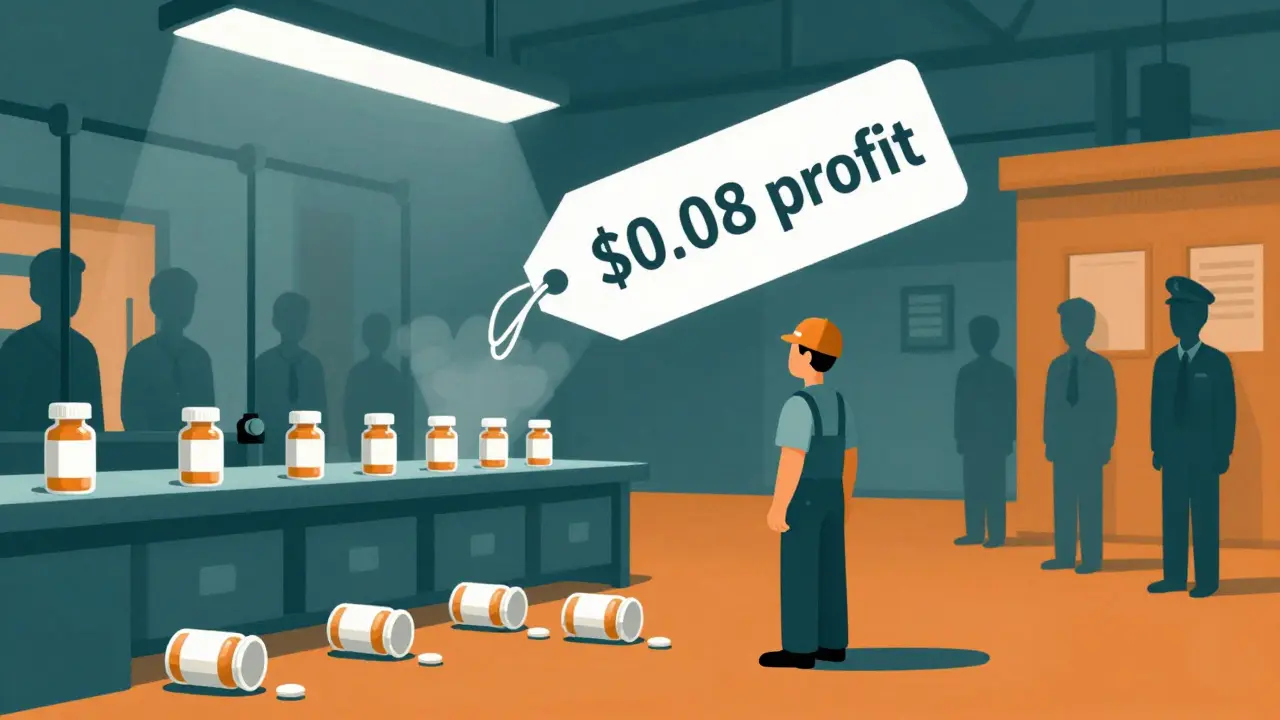
One Midwest-based manufacturer told the Manufacturers Alliance in September 2025: “We made $0.08 profit per tablet of metformin. Our raw material cost went up 23%. We raised the price by 15%. The government still paid us the same. We stopped making it.”
Meanwhile, brand-name drugs with patent protection? They’re fine. They can charge $1,000 a pill. But the drugs that keep millions of low-income patients alive? Those are vanishing.
And it’s not just about money. It’s about risk. Manufacturers don’t want to invest in facilities for drugs that could be pulled from the market tomorrow because of a new tariff, a new regulation, or a political shift. So they don’t build new plants. They don’t hire new workers. They just keep running old, outdated lines until they break down-and then there’s no backup.
The Digital Fix That Isn’t Fixing Anything
Everyone talks about AI, automation, and digital supply chains as the answer. And yes, some companies are using dynamic pricing algorithms to adjust costs in real time. One electronics manufacturer cut margin erosion from 8.3% to 2.1% using these tools. But pharmaceuticals aren’t smartphones.
You can’t just tweak a price overnight for a life-saving drug. Regulators monitor pricing. Patients demand consistency. And the systems that track API inventory? Most are still Excel sheets and phone calls. Only 31% of small generic manufacturers use any kind of digital pricing tool. The rest are flying blind.
Even when manufacturers try to dual-source-buying materials from more than one country-they’re stuck. India and China still control 70% of the global API supply. Alternative sources in Vietnam or Mexico can’t match the scale. And when they do, the quality control is inconsistent. One batch of API might be perfect. The next could be contaminated. No hospital will risk it.
What’s Being Done? (And Why It’s Not Enough)
There are policy proposals. The U.S. has the Drug Shortage Prevention Act. The EU is pushing for strategic stockpiles. Australia’s PBS is reviewing pricing models. But none of them fix the root problem: the system is designed to keep drug prices low, not to keep manufacturers alive.
Some governments are offering tax credits for domestic API production. But building a GMP-certified facility costs $200 million. And it takes five years. By then, the next crisis will be here.
Others suggest paying manufacturers a “sustainability fee”-a small premium on top of the reimbursement rate to cover rising costs. It’s been tried in Canada. It worked. But in the U.S., Congress won’t touch it. Too political. Too expensive.
Meanwhile, manufacturers are cutting corners. Some are reducing batch sizes. Others are skipping non-critical quality checks. One whistleblower report from late 2025 revealed a plant in Gujarat had been shipping API with 12% impurity levels-well above the 1% FDA limit-because they couldn’t afford to rework it.
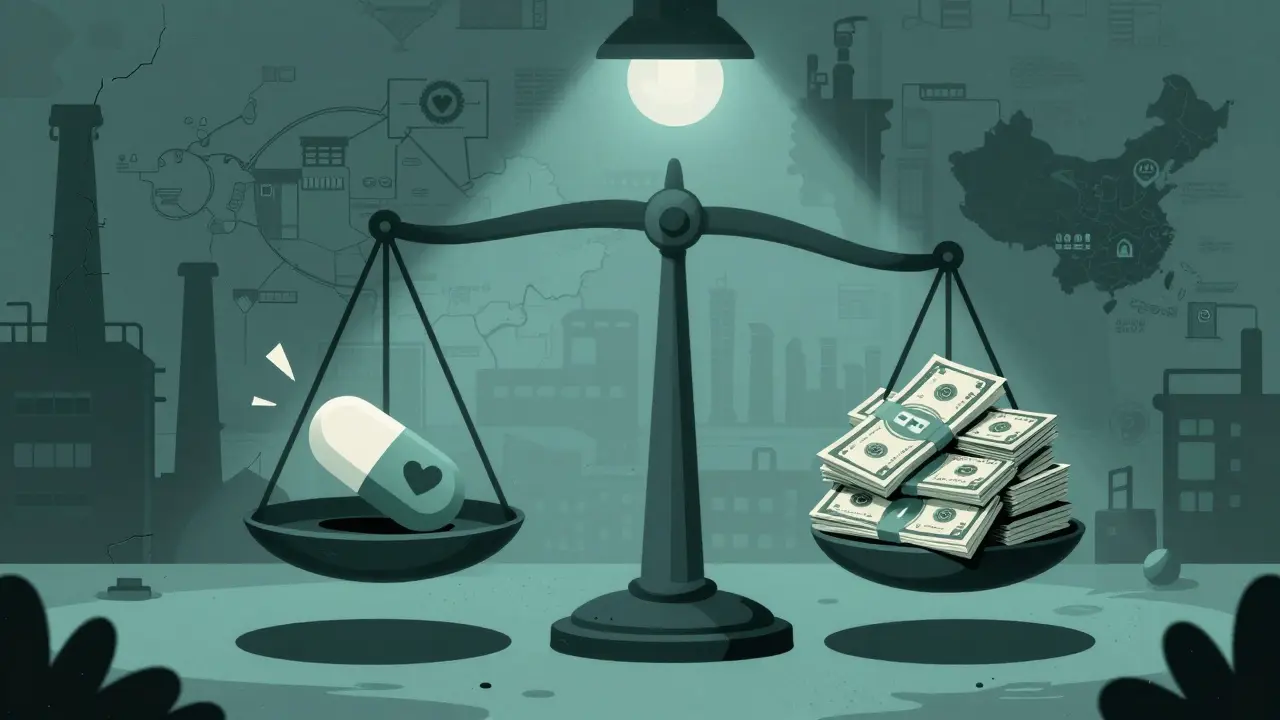
The Only Real Solution: Pay for What You Need
There’s no magic bullet. No app. No AI model. The only way out is simple, but painful: we have to pay for the medicine we rely on.
That means accepting that some drugs will cost more. Not because they’re luxury items-but because the people who make them need to survive. It means government payers must adjust reimbursement rates to reflect real-world costs, not 2010 benchmarks. It means investing in domestic production-even if it’s more expensive-because dependence on a single country for life-saving ingredients is a national security risk.
It also means holding manufacturers accountable. If they’re going to get public support, they need transparency. No more hiding behind “business confidentiality.” If a drug is in shortage, the public deserves to know why.
And we need to stop pretending this is just a “supply chain issue.” It’s a financial system failure. A pricing model that assumes infinite margins in a world of finite resources. A system that rewards volume over viability.
The next time you hear about a drug shortage, don’t blame the pharmacist. Don’t blame the pharmacy chain. Blame the fact that no one’s willing to pay enough for a pill that keeps someone alive.
What Comes Next?
Without major changes, the trend will only get worse. By 2027, the OECD predicts over 120 essential medicines will face chronic shortages. That includes antibiotics, chemotherapy agents, and even basic painkillers like acetaminophen.
Manufacturers are already reducing their product lines. One major generic maker cut 47 drugs from its catalog in 2025. Another closed two plants. The supply chain is thinning. And when it snaps, there won’t be a backup.
There’s still time. But only if we stop treating medicine like a commodity and start treating it like the public good it is.
11 Comments

Lorena Druetta
February 5, 2026 AT 05:05
It breaks my heart to think that a simple antibiotic could vanish because we refused to pay what it costs to make. This isn't about greed-it's about dignity. Every person who relies on these medications deserves to live without fear that their next dose won't arrive. We have the resources. We just need the will.
Let’s stop pretending this is a technical problem. It’s a moral one. And if we don’t act now, we’ll look back in 2030 and ask how we let this happen.
I’ve seen grandparents skip doses. I’ve seen parents cry in pharmacy parking lots. This isn’t policy. This is human suffering. And we’re all complicit by staying silent.

Keith Harris
February 7, 2026 AT 04:24
LMAO so now we’re supposed to pay MORE for pills because some factory owner in Ohio can’t afford his electric bill? 🤡
Here’s the real story: Big Pharma’s been milking Medicare for decades. Now they’re crying wolf because they lost their monopoly on cheap labor overseas. Guess what? The world moved on. You want insulin to cost $3? Fine. But stop pretending these companies are saints. They’re just bad at business-and now they want YOU to bail them out.
Meanwhile, India’s making 70% of the world’s APIs because they’re efficient. Not evil. Not greedy. Just… better. Maybe stop blaming the supplier and fix your own broken system?

Mandy Vodak-Marotta
February 7, 2026 AT 04:58
Okay so imagine this: you’re a small manufacturer in New Jersey, right? You’ve been making metformin for 22 years. Your dad started the company. You’ve got 47 employees. You’re not rich. You’re not fancy. You just… make pills. And then one day, the price of the raw stuff goes up 23%, your supplier in Gujarat stops returning your texts, and Medicare says ‘still $0.08 per tablet, thanks for your service.’
So you shut down. You tell your team to go home. You don’t even get a press release. No one’s mad. No one’s outraged. Just… silence.
And then? You open your fridge and see your kid’s insulin sitting there. You know they’ll need it next week. And you realize-you’re not just a business owner anymore. You’re a parent. And you’re powerless.
That’s the real story. Not tariffs. Not algorithms. Not ‘supply chain.’ Just… people. Broken. Silent. Waiting.
I’m not saying raise prices. I’m saying: stop pretending we’re not all in this together.

Meenal Khurana
February 9, 2026 AT 04:14
API supply from India is reliable. Quality control is strict. The problem is not us-it’s your pricing model.

Sherman Lee
February 10, 2026 AT 06:26
🤔 I knew it. This is all part of the Great Reset. They want you dependent on government-issued pills. That’s why they’re killing off private manufacturers. Soon, you’ll need a QR code just to get aspirin. 😳
Also, did you know the WHO is secretly buying up API stockpiles? 🤫
And why is no one talking about the Chinese labs that are secretly producing 40% more than reported? 🤔
Wake up, sheeple. This isn’t a shortage. It’s a takeover.

Amit Jain
February 10, 2026 AT 13:11
As someone who worked in API logistics for 12 years, I can say this: the real bottleneck isn’t cost-it’s certification. Every batch of API needs GMP approval. That takes months. If a factory in Vietnam makes a good batch, but their paperwork is 3 weeks late, it sits in customs. Meanwhile, hospitals run out.
It’s not about money. It’s about bureaucracy. Fix the paperwork. Stop treating medicine like it’s a luxury handbag.

Kunal Kaushik
February 11, 2026 AT 17:27
Man… I’m from Pune. We make half the world’s antibiotics. I’ve seen the factories. The workers? They’re not rich. They’re tired. They work 12-hour shifts. They don’t have health insurance.
And now you’re saying we’re the problem?
Maybe… just maybe… the real issue is that no one cares about the people making the medicine. Not the patients. Not the CEOs. Not the politicians.
We’re all just waiting for someone else to fix it.

Rachel Kipps
February 12, 2026 AT 11:00
I think this article is very important. The pricing model is out of date. We need to update reimbursement rates. But I also think we need more transparency. Maybe we can use blockchain? I’m not sure. I’m just worried about my mom. She takes metformin. I hope she can still get it.

Prajwal Manjunath Shanthappa
February 13, 2026 AT 22:26
Oh, how quaint. You’ve identified a ‘systemic collapse’-as if this were some novel tragedy, rather than the inevitable consequence of a welfare-state ethos that treats pharmaceuticals as public utilities. You cannot mandate affordability while simultaneously denying profitability. It is not ‘unjust’-it is economically incoherent.
And let us not pretend that domestic production is a panacea: the U.S. has not built a single GMP-compliant API facility since 2008-not because of tariffs, but because the entire regulatory architecture is designed to stifle innovation. You want sustainability? Deregulate. Stop micromanaging. Let the market-yes, the market-decide.
Otherwise, you’re just rearranging deck chairs on the Titanic. And you wonder why India outcompetes you?

Wendy Lamb
February 15, 2026 AT 06:03
You don’t have to pay more. You just have to stop pretending medicine is optional.
It’s not a product. It’s care. And care costs something.
Let’s start there.

Justin Fauth
February 15, 2026 AT 21:07
China and India are stealing our medicine. We need tariffs. We need bans. We need to MAKE AMERICA GREAT AGAIN by making pills here-no exceptions.
Who’s behind this? The globalists. The elites. They want you weak. Dependent. Controlled.
Let’s build a wall around our antibiotics. And stop sending our dollars overseas.
USA! USA! USA!
Write a comment