




When you hear about people losing 20, 30, even 50 pounds on a medication, it’s easy to think it’s magic. But semaglutide - the active ingredient in both Ozempic and Wegovy - isn’t a miracle drug. It’s a powerful tool that works by changing how your brain and body handle hunger, food, and fat. And the science behind it is clearer than ever.
How Semaglutide Actually Works
At its core, semaglutide mimics a natural hormone called GLP-1. This hormone is released after you eat and tells your brain, "You’re full." In people with obesity, this signal gets weak or ignored. Semaglutide turns that signal back up.
It doesn’t just make you feel full faster. It slows down how fast your stomach empties, so food stays in longer. It reduces the release of glucagon - a hormone that tells your liver to pump out sugar. And critically, it acts directly on the hypothalamus, the part of your brain that controls appetite. It shuts down hunger signals from neurons that make you crave food and boosts signals from neurons that make you feel satisfied.
It’s not just about eating less. Studies show semaglutide also helps your body burn fat more efficiently by encouraging "browning" of white fat tissue - turning energy-storing fat into energy-burning fat. That’s why people lose more than just water weight.
Ozempic vs Wegovy: Same Drug, Different Doses
Ozempic and Wegovy are the exact same molecule: semaglutide. The only real difference is the dose and what they’re approved for.
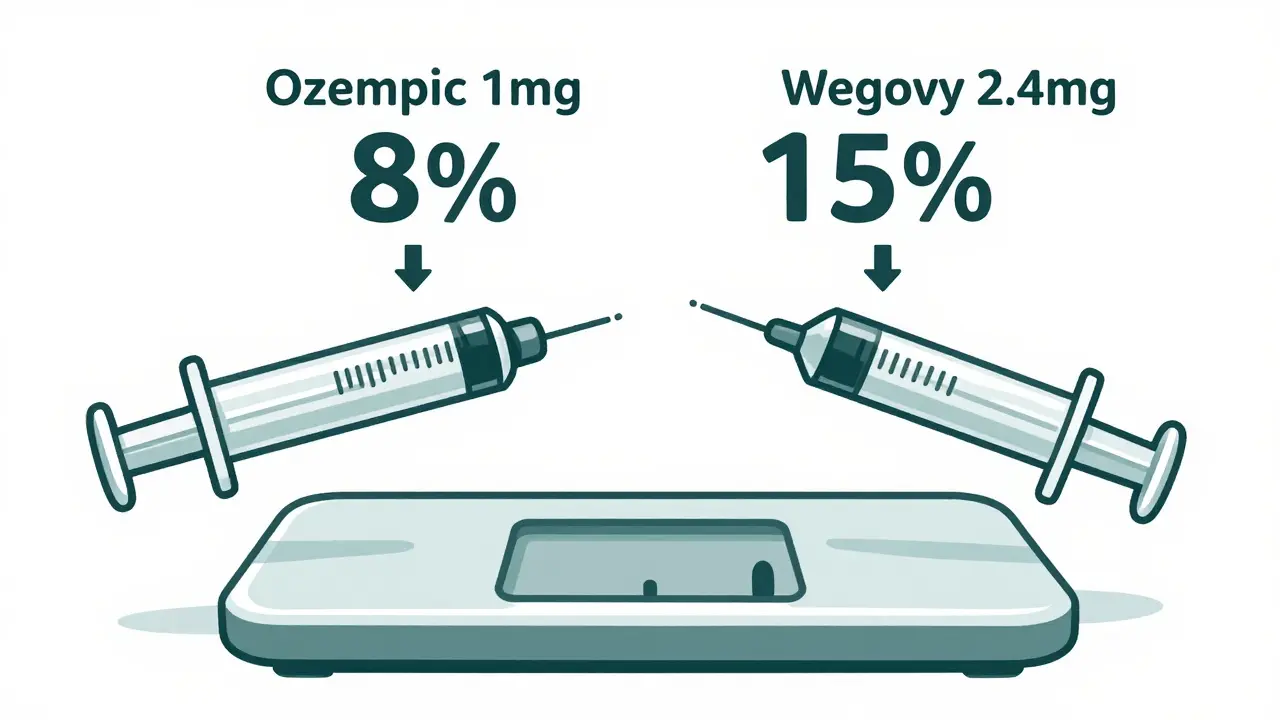
Ozempic comes in doses up to 1 mg per week and was approved in 2017 for type 2 diabetes. Wegovy was approved in 2021 at 2.4 mg per week - more than double the max Ozempic dose - specifically for weight loss in adults with obesity or overweight plus at least one weight-related condition like high blood pressure or sleep apnea.
Because Ozempic isn’t approved for weight loss, doctors can still prescribe it off-label for that purpose. But if you’re looking for maximum weight loss, Wegovy’s higher dose is designed for it. In the STEP 1 trial, people on Wegovy lost an average of 14.9% of their body weight over 68 weeks. That’s about 33 pounds for someone weighing 220 pounds. Placebo users lost just 2.4%.
That’s not just better than older weight loss pills - it’s close to what you’d see after gastric bypass surgery. In fact, one lead researcher called it a "paradigm shift" in obesity treatment.
Who Sees the Best Results?
Not everyone loses the same amount. The STEP trials showed people without type 2 diabetes lost more weight on average than those with diabetes. About 86% of non-diabetic participants lost at least 10% of their body weight. For those with diabetes, it was closer to 70%.
Why? Insulin resistance and high blood sugar can interfere with how the brain responds to appetite signals. Semaglutide helps with both, but the baseline metabolic disruption in people with diabetes makes the full effect harder to achieve.
Age, sex, and starting weight also matter. People with higher starting BMIs tend to lose more absolute weight, but percentage-wise, results are similar across groups. The biggest predictor of success? Sticking with the dose.
The Side Effects No One Talks About
Yes, it works. But it’s not easy.
Three out of four people on Wegovy report nausea. Over half say they vomit. Diarrhea, constipation, and stomach pain are common. These aren’t mild discomforts - they’re disruptive enough that many people stop taking it before reaching the full dose.
The key to tolerating it? Slow titration. The official dosing schedule starts at 0.25 mg once a week for four weeks. Then it increases every four weeks: 0.5 mg, then 1 mg, then 1.7 mg, and finally 2.4 mg. Rushing this process almost guarantees nausea. Most people who stick with it find side effects fade after 8-12 weeks.
There’s also a black box warning for thyroid tumors - based on rodent studies. No human cases have been confirmed, but if you or a close family member has had medullary thyroid cancer or Multiple Endocrine Neoplasia Syndrome Type 2, you can’t use it.
Weight Loss Isn’t the Whole Story
What’s often missed is how much semaglutide improves health beyond the scale.
In the SELECT trial, people on Wegovy with heart disease saw a 20% drop in major cardiovascular events - heart attacks, strokes, death. That’s why the FDA approved it in late 2023 for cardiovascular risk reduction in overweight or obese adults with existing heart disease.
It also lowers blood pressure, improves cholesterol, and reduces liver fat. For many, it’s the first time they’ve seen their A1C drop into the normal range without diabetes medication. That’s why the American Diabetes Association now recommends it as a first-line treatment for people with both obesity and type 2 diabetes.
What Happens When You Stop?
This is the hardest truth: most of the weight comes back.
One year after stopping Wegovy, people regain about two-thirds of the weight they lost. That’s not failure - it’s biology. Your body fights to return to its old weight. Semaglutide doesn’t reset your metabolism. It just suppresses hunger while you’re taking it.
Studies show that if you stop, your appetite returns to pre-treatment levels. The hunger signals you were suppressing come roaring back. Without lifestyle changes, weight gain is almost guaranteed.
That’s why experts say semaglutide should be viewed like blood pressure medication - not a cure, but a long-term tool. The American Association of Clinical Endocrinology recommends staying on it indefinitely if it’s working and tolerated. The STEP 4 trial showed people who continued semaglutide kept 10.6% weight loss at 68 weeks. Those switched to placebo regained nearly 7%.
Cost, Access, and the Reality of Getting It
Wegovy costs about $1,350 a month in the U.S. without insurance. Ozempic is cheaper off-label, but not by much. Insurance coverage is a mess. Many plans don’t cover weight loss medications at all. Others require failed attempts at diet, exercise, or other drugs first.
Supply shortages hit hard in 2023. Nearly 80% of U.S. providers reported patients couldn’t get their prescriptions filled. Some pharmacies rationed doses. Others stopped carrying it entirely.
Novo Nordisk offers a patient assistance program for uninsured people who qualify. But for many, the cost and availability make it impossible to start - or continue.
What Comes Next?
Oral semaglutide (Rybelsus) is approved for diabetes but not yet for weight loss. Early trials show it can cause 10-12% weight loss - less than injections, but still meaningful. If approved for weight loss, it could be a game-changer for people who hate needles.
Combination drugs are coming fast. Tirzepatide (Zepbound), which targets both GLP-1 and GIP receptors, led to 20.9% weight loss in trials. That’s more than any single drug before it.
But experts warn: we’re not ready for this. If millions of people need semaglutide long-term, the healthcare system could spend 1-2% of its entire budget on these drugs by 2030. That’s not sustainable without major policy changes.
Is It Right for You?
Ask yourself these questions:
- Have you tried lifestyle changes for at least 6 months without lasting results?
- Do you have a BMI of 30 or higher (or 27+ with a weight-related condition like high blood pressure)?
- Are you willing to tolerate nausea for the first 2-3 months?
- Can you afford the cost, or do you have insurance that covers it?
- Are you prepared to take this indefinitely - not just until you hit your goal?
If you answered yes to most of these, semaglutide could be life-changing. If you’re hoping for a quick fix, you’ll be disappointed. This isn’t about losing 10 pounds for a wedding. It’s about managing a chronic disease - obesity - the same way you’d manage high blood pressure or cholesterol.
It’s not perfect. But for the first time, we have a medication that doesn’t just nudge the scale - it transforms how your body works. And that’s worth understanding, even if it’s not easy.
Can I use Ozempic for weight loss if Wegovy is unavailable?
Yes, doctors often prescribe Ozempic off-label for weight loss, especially when Wegovy is out of stock. But Ozempic’s maximum dose is 1 mg weekly, while Wegovy is 2.4 mg. You’ll likely lose less weight - around 8-10% instead of 15%. If you’re using Ozempic for weight loss, your doctor may increase the dose beyond the diabetes label, but this isn’t FDA-approved and may not be covered by insurance.
How long does it take to see results with semaglutide?
Most people start noticing reduced hunger and slight weight loss within the first 2-4 weeks. Significant weight loss (5-10%) usually happens by week 12-16. Maximum weight loss occurs around 68 weeks - just over a year. Don’t expect dramatic changes in the first month. The drug builds up slowly, and the body adapts over time.
Do I need to diet and exercise while on semaglutide?
Yes - and not just "a little." The clinical trials that proved semaglutide’s effectiveness included weekly counseling on diet and physical activity. People who combined the drug with lifestyle changes lost significantly more weight than those who only took the medication. Semaglutide reduces hunger, but it doesn’t erase the need for healthy choices. Think of it as making healthy habits easier, not unnecessary.
Is semaglutide safe for long-term use?
Current data shows it’s safe for at least two years, and studies are ongoing. The biggest concern is weight regain after stopping, not long-term toxicity. The thyroid cancer risk in rodents hasn’t been seen in humans, but it’s still a contraindication for people with certain genetic conditions. Regular check-ups with your doctor are essential to monitor for side effects and ensure it’s still the right choice for you.
Can I switch from Ozempic to Wegovy?
You can, but you’ll need to restart the dose escalation. Even if you’ve been on 1 mg of Ozempic for months, you can’t jump straight to 2.4 mg of Wegovy. You must begin at 0.25 mg weekly and increase slowly to avoid severe nausea and vomiting. Your doctor will guide you through this transition, but it requires patience and close monitoring.
9 Comments

Madhav Malhotra
January 10, 2026 AT 19:03
Man, I saw a cousin in Delhi start this stuff last year - lost 40 lbs without even trying to diet. But dude, the nausea? He was puking for weeks. Now he’s chill, though. Still takes it like coffee. India’s got a long way to go with access, but man, if you can get it, it’s wild.

Jennifer Littler
January 12, 2026 AT 09:01
The GLP-1 agonism is pharmacologically elegant - receptor specificity, slow dissociation kinetics, and CNS penetration via albumin binding. But the real clinical value lies in the pleiotropic effects: reduced hepatic gluconeogenesis, enhanced satiety signaling via NPY/AgRP suppression, and adipose tissue browning via UCP1 upregulation. The real bottleneck isn’t efficacy - it’s tolerability and reimbursement architecture.

Jason Shriner
January 13, 2026 AT 11:07
so like... we're paying 1350 bucks a month to feel like a sick turtle who just ate a rock? and this is the future of medicine? i mean, sure, i'll take the 30 lbs off... but at what cost? my dignity? my lunch? my will to live? also, why does every drug now come with a 'black box warning' like it's a horror movie poster?

Alfred Schmidt
January 14, 2026 AT 06:35
Everyone’s acting like this is some miracle drug - it’s not! It’s a chemical leash. You’re not losing weight - you’re being chemically bullied into eating less. And when you stop? You’re gonna gain it all back while sobbing into a pizza. And don’t even get me started on the supply chain chaos - Novo Nordisk is playing monopoly with our health. This isn’t medicine - it’s corporate exploitation with a side of nausea.

Christian Basel
January 14, 2026 AT 16:59
So we’re just going to treat obesity like hypertension now? Cool. Next they’ll inject us with insulin for laziness. The fact that we need a drug to make people eat less says more about our culture than it does about biology. Also, ‘browning fat’ sounds like a sci-fi novel. What’s next? Glucagon spray for procrastination?

Matthew Miller
January 14, 2026 AT 18:27
Let’s be real - this is just the latest pharmaceutical scam. They took a diabetes drug, doubled the dose, slapped a new name on it, and called it ‘weight loss.’ Meanwhile, real solutions like sleep, stress management, and actual food education get ignored. And now we’re supposed to pay $1,350 a month to feel like crap? This isn’t progress - it’s capitalism in a syringe.

Priya Patel
January 16, 2026 AT 05:44
OMG I started Ozempic last month and I swear I didn’t even realize I was eating less - like, I just wasn’t hungry anymore?? I’m not even trying! But the nausea?? 😭 I cried in the bathroom for three weeks straight. Still taking it though - my jeans are literally falling off. Also, I’m vegan and it’s weirdly easier to stick to my meals now. 🙌

Sean Feng
January 16, 2026 AT 14:31
This is just another drug that makes you feel bad to lose weight. Stop selling hope. Just eat less and move more. End of story.

Priscilla Kraft
January 17, 2026 AT 22:42
Thank you for writing this so clearly. I’ve been on Wegovy for 9 months and honestly? It’s the first thing that’s worked. Yes, the nausea was brutal at first - I cried, I panicked, I almost quit. But slow titration saved me. And now? My BP is normal, my A1C dropped to 5.4, and I can play with my kids without getting winded. This isn’t magic - it’s medicine. And yes, I’ll be on it for life. 💙
Write a comment