



After surgery, you’re not out of the woods just because the procedure is over. The next few days - sometimes weeks - are when most medication mistakes happen. And they’re not always obvious. A wrong dose, a mislabeled syringe, or a rushed verbal order can lead to serious harm. The good news? You don’t have to guess how to stay safe. There are clear, proven steps you can take - whether you’re a patient, a caregiver, or part of the medical team.
Why Post-Surgery Medications Are Risky
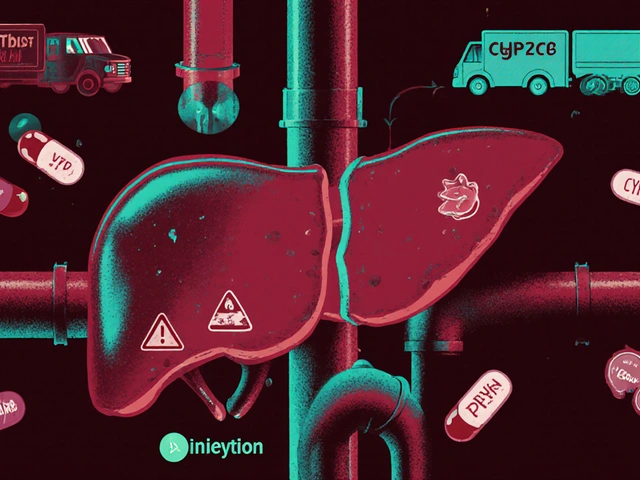
More than 30% of all medication errors in hospitals happen during surgery or right after. That’s not because people are careless. It’s because the environment is chaotic. Doctors are talking over each other. Nurses are juggling monitors, IVs, and pain meds. Patients are groggy or in pain. And time is tight.
High-alert drugs like opioids, insulin, heparin, and neuromuscular blockers are common after surgery. One mistake with these can mean respiratory failure, a stroke, or even death. The CDC found that unsafe injection practices caused 44 outbreaks between 2001 and 2011 - affecting 14,000 people. Most of those were preventable.
And it’s not just about needles. A 2022 report from the ECRI Institute showed that 32% of medication errors in surgical settings involved the wrong drug, 28% were wrong doses, and 19% were unlabeled syringes. These aren’t rare glitches. They’re systemic risks.
What You Need to Know About Labeling
If you see a syringe on the table with no label, don’t use it. Period.
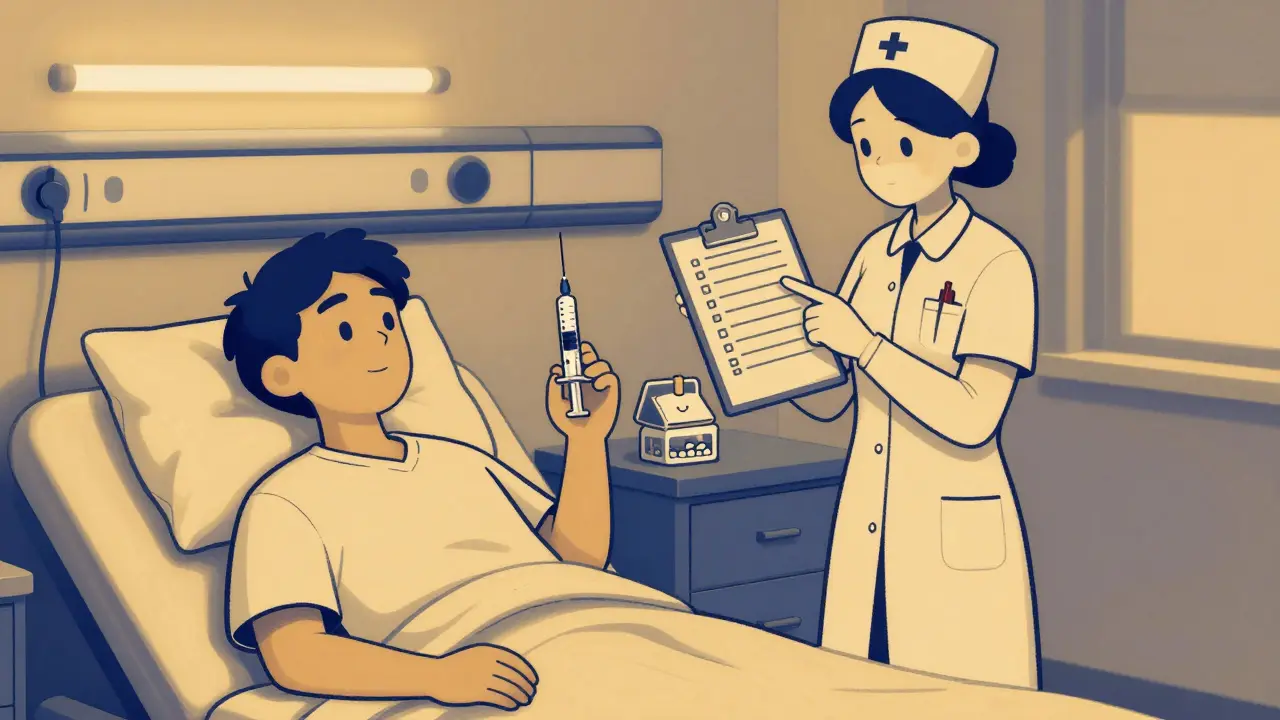
The Institute for Safe Medication Practices (ISMP) says every single container - even if it’s just sitting on the sterile field - must be labeled immediately after being filled. No exceptions. No shortcuts. That means the drug name, concentration, and expiration time written clearly on the syringe or cup. If it’s not labeled, it gets thrown away.
Why does this matter? Because two different strengths of the same drug can look identical. Epinephrine for an ear procedure is 1:1000. For cardiac arrest, it’s 1:10,000. One drop of the stronger version in the wrong place can kill. Surgical technologists are trained to confirm dosage out loud when passing meds - “This is epinephrine 1:1000, 0.5 mL.” That’s not just protocol. It’s a life check.
And here’s something most patients don’t realize: pre-labeling empty containers is banned. Why? Because someone might fill it later with the wrong drug and assume the label is still accurate. It’s happened. And people have died.
Injection Safety Is Non-Negotiable
The CDC updated its injection safety guidelines in November 2023. The rules haven’t changed much - they’re just clearer now. One syringe. One needle. One patient. Always.
Even if you’re giving multiple doses to the same person during one surgery, you can’t reuse the same syringe after it’s been set down. If it’s left unattended - even for 10 seconds - it’s contaminated. Discard it. Use a fresh one.
And don’t assume the nurse or anesthesiologist knows this. If you see them grab a syringe from a tray without checking the label, speak up. Say: “Can you confirm what’s in that syringe?” It’s not rude. It’s necessary.
Also, facemasks are now required during spinal injections. Why? Because a cough or sneeze can contaminate the vial. That’s not science fiction. That’s CDC data.

Communication Is Your Best Defense
Most errors happen because someone heard wrong. A doctor says “10 mg,” the nurse hears “100 mg.” Or worse - the order is given verbally in a noisy OR and never written down.
The fix? Read-backs. When a medication order is given, the person receiving it repeats it back word-for-word. “You want 5 mg of morphine IV, now?” “Yes.” That simple exchange cuts verbal errors by 55%, according to the American College of Obstetricians and Gynecologists.
And if you’re the patient? Ask: “What am I getting? Why? What’s the dose?” Don’t wait for them to explain. You have the right to know. If you’re confused, say so. If you feel something’s off - like the IV bag looks different than last time - speak up. Your voice matters.
What to Do When You Go Home
Most short-term meds after surgery are for pain, swelling, or preventing clots. Opioids are common - but dangerous if misused.
Here’s what you need to do before leaving the hospital:
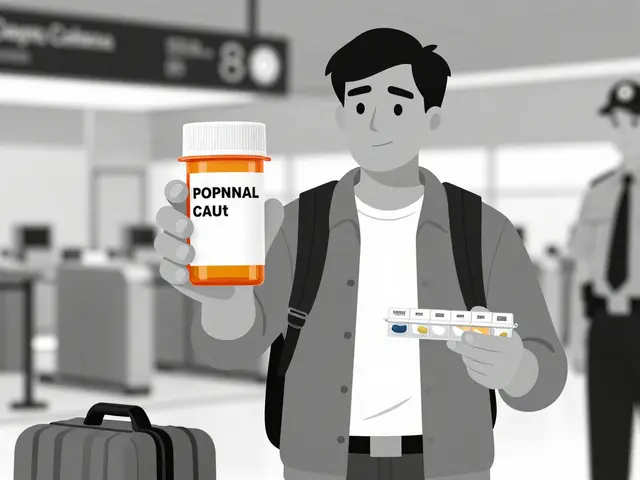
- Get a written list of every medication you’re taking - name, dose, frequency, reason.
- Ask: “What side effects should I watch for?” (Drowsiness? Nausea? Trouble breathing?)
- Confirm: “Do I need to stop any of my regular meds?” (Like blood thinners or diabetes drugs.)
- Ask for a pharmacist consult if you’re unsure. Most hospitals offer this.
Medication reconciliation - comparing what you were taking before surgery to what you’re taking now - cuts adverse drug events by up to 67%, according to the WHO. Don’t skip this step.
Store your meds safely. Keep opioids locked up. Out of reach of kids or visitors. Never leave them on the nightstand. And never share them. A pill meant for your pain could kill someone else.
What Hospitals Should Be Doing (And What They’re Not)
Not every hospital follows the same rules. Academic centers have full safety programs 87% of the time. Ambulatory surgery centers? Only 63%. That’s a big gap.
Facilities that use barcode scanning systems for meds see 39% fewer errors. Smart syringes that auto-verify dose and drug are coming - but they’re still rare. Most places still rely on people reading labels and speaking up.
And here’s the uncomfortable truth: time pressure makes people cut corners. A 2023 Reddit thread from anesthesiologists revealed that 15-20% of emergency doses skip full verification. That’s not normal. That’s risky. And it’s happening because staff are stretched thin.
If your hospital doesn’t have labeling protocols, ask why. If they don’t use read-backs, request it. You’re not being difficult. You’re helping them do their job better.
Red Flags to Watch For
These signs mean something’s wrong:
- A syringe or pill bottle has no label - or the label is faded, handwritten, or unclear.
- Someone gives you a med without explaining what it is.
- You’re given more than one opioid at a time - like oxycodone and hydrocodone together.
- You feel unusually drowsy, confused, or have trouble breathing after a dose.
- Medications are left unattended on a tray or cart.
If you see any of these, stop. Ask. Wait. Don’t take the med until you’re sure.
Final Checklist Before You Leave
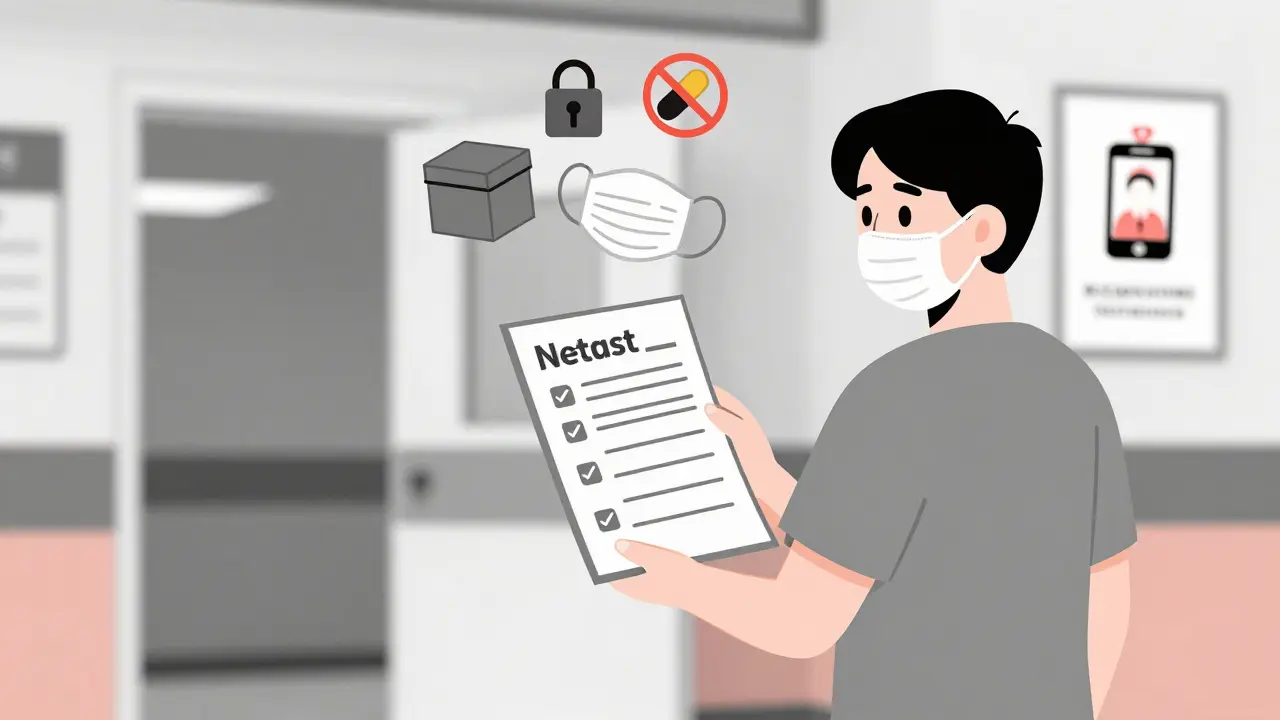
Before you walk out of the hospital, make sure you’ve covered these:
- I have a written list of all my post-op meds - including dosages and times.
- I know what each med is for - pain, blood clots, infection, etc.
- I know the side effects and when to call for help.
- My opioids are stored in a locked box, out of reach of others.
- I know who to call if I have questions - my surgeon’s office, pharmacist, or nurse line.
- I understand if I need to stop any of my regular medications.
That’s it. Six simple things. But they cover 90% of what goes wrong.
What’s Next?
The future of medication safety is tech - smart syringes, barcode scanners, AI alerts. But right now, the best tool is still human awareness. You. Your questions. Your voice.
Don’t assume someone else is watching out for you. You’re the only one who knows how you feel. If something doesn’t feel right - it probably isn’t. Speak up. Always.
Can I take over-the-counter painkillers after surgery?
Maybe - but only if your doctor says so. Some OTC drugs like ibuprofen or aspirin can interfere with healing or increase bleeding risk. Acetaminophen (Tylenol) is usually safe, but check your dosage limits, especially if you’re also getting opioids. Never combine OTC meds with prescribed ones without confirmation.
How long should I take pain meds after surgery?
Short-term usually means 3 to 7 days for most procedures. For major surgeries, it might be up to 2 weeks. The goal is to use the lowest dose for the shortest time possible. If you’re still needing strong pain meds after 2 weeks, talk to your doctor - it could mean something else is going on. Don’t keep taking them just because you’re used to them.
What if I miss a dose of my post-op medication?
Don’t double up. If you miss a dose of a painkiller, take it as soon as you remember - unless it’s close to your next scheduled dose. For blood thinners or antibiotics, missing a dose can be dangerous. Call your surgeon’s office immediately if you’re unsure. Never guess.
Are there safer alternatives to opioids after surgery?
Yes. Many hospitals now use multimodal pain control - combining acetaminophen, NSAIDs, nerve blocks, ice, and physical therapy. This reduces opioid use by up to 50%. Ask your surgeon if this approach is right for your procedure. You don’t have to rely on opioids to manage pain.
How do I safely dispose of leftover pills?
Never flush them or throw them in the trash. Use a drug take-back program - most pharmacies and hospitals offer them. If none are available, mix pills with coffee grounds or cat litter in a sealed container before tossing. This makes them unappealing and unsafe to misuse. Keep opioids locked up until disposal.
8 Comments

Angie Thompson
January 24, 2026 AT 23:10
OMG this is SO needed!! 🙌 I had my knee surgery last year and the nurse handed me a syringe with no label like it was normal. I asked what it was and she said 'oh, just pain stuff'... I nearly had a panic attack. I'm so glad someone spelled this out. Please share this with EVERYONE you know! 💪❤️

James Nicoll
January 25, 2026 AT 02:30
So let me get this straight - we’re trusting our lives to people who can’t be bothered to label a syringe, but somehow we’re shocked when someone dies from a typo? 🤡 The real tragedy isn’t the error - it’s that we treat this like it’s a surprise.

John Wippler
January 25, 2026 AT 08:51
Reading this made me tear up a little - not because it’s sad, but because it’s so damn obvious. We’ve got the tools. We’ve got the protocols. We’ve got the data. The only thing missing is the courage to speak up. I’ve worked in ORs for 18 years. I’ve seen nurses get yelled at for asking, 'Wait, what’s in that?' But here’s the truth: if you don’t ask, you’re not being respectful - you’re being complicit. Speak up. Even if your voice shakes. Even if you’re just the patient. Your voice isn’t noise. It’s a lifeline.

Faisal Mohamed
January 26, 2026 AT 05:54
From a systems engineering perspective, the root cause analysis of perioperative medication errors reveals a non-linear convergence of cognitive load, temporal compression, and perceptual overload within the human-machine interface. The absence of standardized label integrity protocols constitutes a critical failure in the HFE (Human Factors Engineering) domain, particularly when juxtaposed against the ISO 14971 risk management framework. We must implement closed-loop verification architectures with real-time RFID-tagged pharmaceuticals to mitigate latent error propagation.

SWAPNIL SIDAM
January 28, 2026 AT 01:50
Bro, I'm from India and we don't have fancy syringes or barcode scanners... but we have something better - respect. When my uncle had surgery, the nurse held his hand, looked him in the eye, and said, 'This is morphine, 5 mg, for pain.' That's all it took. No tech. Just care. This post? It's not about gadgets. It's about remembering we're humans, not machines.

Geoff Miskinis
January 29, 2026 AT 02:12
It’s amusing how this post frames patient advocacy as some noble virtue - when in reality, it’s just a symptom of systemic incompetence. If your hospital can’t get labeling right, why should I trust their 'multimodal pain control'? The fact that we’re even having this conversation means the system is broken. And no, 'speaking up' isn’t a solution - it’s a Band-Aid on a hemorrhage.

Sally Dalton
January 30, 2026 AT 02:22
thank you for writing this!! i had no idea about the pre-labeling thing 😳 i thought it was just a 'be careful' thing but nooo it's a DEADLY rule. i'm going to print this out and give it to my sister before her surgery next week. also, i think i typoed 'meds' as 'meds' but you know what i mean 😅

eric fert
January 30, 2026 AT 04:47
Let’s be real - this whole thing is a performance. Hospitals love these checklists because they make them look responsible. But if you actually dig into the data, 90% of these ‘preventable’ errors happen during shift changes, when someone’s rushing to clock out or when the anesthesiologist is hungover from last night’s frat party. And guess what? Nobody’s talking about that. Nope. We’re all just supposed to be ‘empowered patients’ asking questions while the system keeps grinding people into dust. You want safety? Fire the administrators who cut staffing to boost profits. Stop making patients the human error-checking software. That’s not empowerment - that’s exploitation dressed up as education.
Write a comment