



Non-alcoholic fatty liver disease (NAFLD), now called MASH (Metabolic Dysfunction-Associated Steatohepatitis), isn’t just about a fatty liver-it’s a warning sign your metabolism is out of balance. If you’ve been told you have it, you’re not alone. About 1 in 4 adults in the U.S. have some form of this condition, and most don’t even know it until their liver enzymes start climbing or an ultrasound shows fat buildup. The good news? You can reverse it. Not with magic pills or detox teas, but with real, proven steps: losing weight, eating smarter, moving more, and in some cases, using new medications that actually target the liver itself.
Why Weight Loss Is the Only Proven Fix
There’s no pill, supplement, or potion that fixes MASH on its own. The science is clear: losing weight is the only treatment with solid proof it works. And it’s not just about looking better-it’s about saving your liver from scarring, cirrhosis, or even cancer.Studies show that losing just 5% of your body weight cuts liver fat in half. That’s not theoretical-it’s measurable. If you weigh 200 pounds, losing 10 pounds reduces fat in your liver enough to lower inflammation and improve liver enzyme levels. But if you want to reverse early scarring, you need to lose 10% or more. That means 20 pounds for someone at 200 pounds. It’s hard, but it’s possible. And the better your weight loss, the better your liver heals.
Here’s the catch: most people struggle to keep it off. A three-year study found that only 1 in 4 people who lost 5% of their weight managed to keep it off. That’s why the focus isn’t just on losing-it’s on maintaining. And that’s where diet, exercise, and sometimes medication come in together.
The Best Diet for MASH: Mediterranean, Not Low-Carb
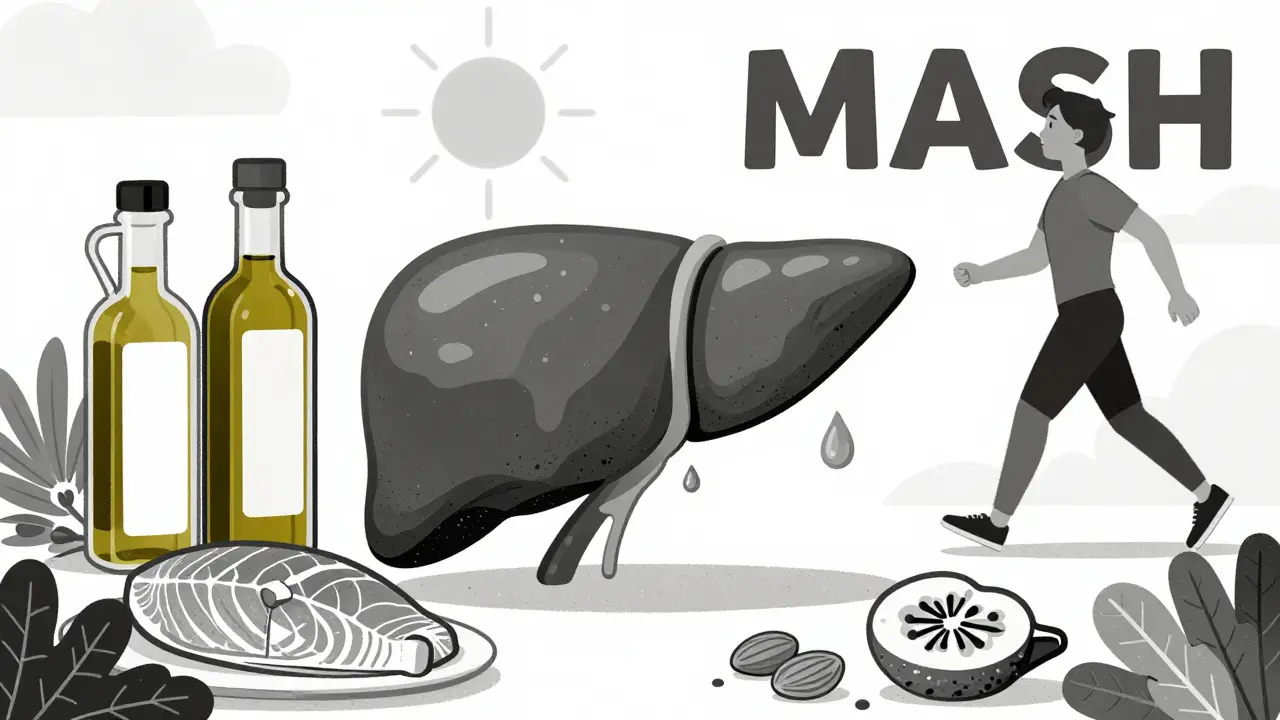
You’ve probably heard conflicting advice: keto, intermittent fasting, low-fat, no carbs. But when it comes to MASH, the evidence points to one clear winner: the Mediterranean diet.This isn’t about cutting out entire food groups. It’s about eating more of what helps your liver-and less of what hurts it. Think olive oil, fatty fish like salmon, nuts, beans, whole grains, and tons of vegetables. Reduce sugar, refined carbs (white bread, pastries, soda), and saturated fats (fried foods, processed meats, butter).
A meta-analysis of multiple studies showed that people on the Mediterranean diet had statistically significant drops in ALT (a key liver enzyme), liver fat, and even liver stiffness-the early sign of scarring. Why does it work? It reduces inflammation, improves insulin sensitivity, and lowers triglycerides-all drivers of MASH.
Forget extreme calorie cuts. You don’t need to starve yourself. Aim for a daily deficit of 500 to 1,000 calories. That means losing 1 to 2 pounds a week-steady, sustainable, and easier to keep off. A registered dietitian can help you build a meal plan that fits your life, not a rigid rulebook.
Exercise: More Than Just Burning Calories
You don’t need to run marathons or lift heavy weights to help your liver. But you do need to move. Regular physical activity improves insulin resistance, burns liver fat, and reduces inflammation-even without major weight loss.The Mayo Clinic recommends at least 150 minutes a week of moderate exercise. That’s 30 minutes, five days a week. Brisk walking, cycling, swimming, or dancing all count. If you can do more, great. But even small increases help. A study showed that people who added just 20 minutes of daily walking saw improvements in liver fat, even if they didn’t lose much weight.
Resistance training (like bodyweight squats, push-ups, or light dumbbells) twice a week adds another layer of benefit. Muscle burns more calories at rest, and more muscle means better blood sugar control. Combine aerobic and strength training, and you’re hitting the sweet spot for liver recovery.
The biggest barrier? Time and motivation. Start small. Park farther away. Take the stairs. Walk after dinner. Build habits before you worry about intensity.
The New Medication: Semaglutide (Wegovy) for MASH
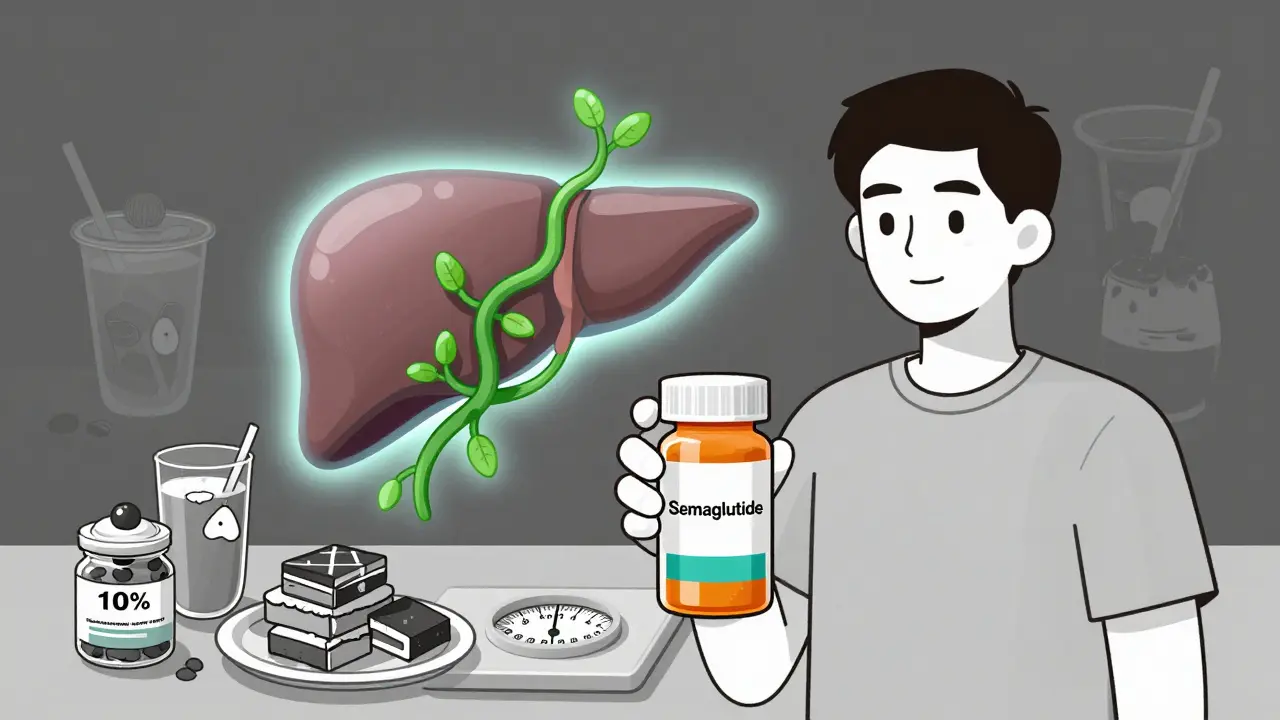
In August 2025, the FDA made history by approving semaglutide (brand name Wegovy) as the first medication specifically for MASH in adults with moderate-to-advanced liver scarring. This wasn’t just another weight-loss drug-it was the first treatment approved to directly improve liver tissue.Semaglutide works by mimicking a natural hormone that tells your brain you’re full, slows digestion, and helps your pancreas release insulin when needed. It’s the same drug used as Ozempic for type 2 diabetes, but at a higher dose for weight loss and liver repair.
Clinical trials showed that nearly 90% of patients stayed on the medication for over a year. Two-thirds saw less liver inflammation. More than one-third had actual improvement in liver scarring. And most lost 10-15% of their body weight. That’s more than most people achieve with diet and exercise alone.
But it’s not perfect. Side effects like nausea, vomiting, or diarrhea are common at first-though they usually fade after a few weeks. And cost is a major hurdle. Without insurance, Wegovy costs about $1,350 a month. Generic metformin, a diabetes drug sometimes used off-label for NAFLD, costs $4-$40 a month. But metformin doesn’t show the same liver benefits. It helps with blood sugar, but not necessarily liver fat or scarring.
Semaglutide isn’t a replacement for lifestyle changes. It’s a tool. For people who’ve tried everything and still can’t lose weight, it can be life-changing. For others, it’s a bridge to help them stick to healthier habits long-term.
Other Medications: What Works and What Doesn’t
There are other drugs out there, but the evidence is weak or mixed.- Metformin: Used for type 2 diabetes, it improves insulin sensitivity but doesn’t consistently reduce liver fat or fibrosis. It’s safe and cheap, but don’t expect miracles for your liver.
- Orlistat: A fat-blocking pill that causes greasy stools. Some small studies suggest it might help, but no major trial proved it reverses liver damage.
- SGLT2 inhibitors (like empagliflozin): These diabetes drugs make you pee out sugar. Early data shows they reduce liver fat and may lower inflammation. More research is needed, but they’re promising.
- Combination drugs (like phentermine/topiramate): These help with weight loss but haven’t been tested specifically for MASH. No proof they fix liver damage.
GLP-1 agonists like semaglutide are the only class with strong, consistent evidence for both weight loss and liver improvement. That’s why experts now say they’re the best option-if you can access them.
What Doesn’t Work (And Why You Should Avoid It)
There’s a lot of noise out there. Avoid these traps:- Detox teas and liver cleanses: Your liver cleans itself. These products are expensive and often unsafe.
- Extreme fasting: Long-term fasting can stress your liver and lead to muscle loss, which makes metabolism worse.
- Supplements like milk thistle or vitamin E: Vitamin E showed some benefit in very specific cases (non-diabetic adults with advanced fibrosis), but it’s not a first-line treatment and can have risks. Milk thistle? No solid proof it helps.
- Alcohol: Even small amounts can speed up liver damage in MASH. Zero is the only safe amount.
Stick to what the science says. No shortcuts. No miracle cures.
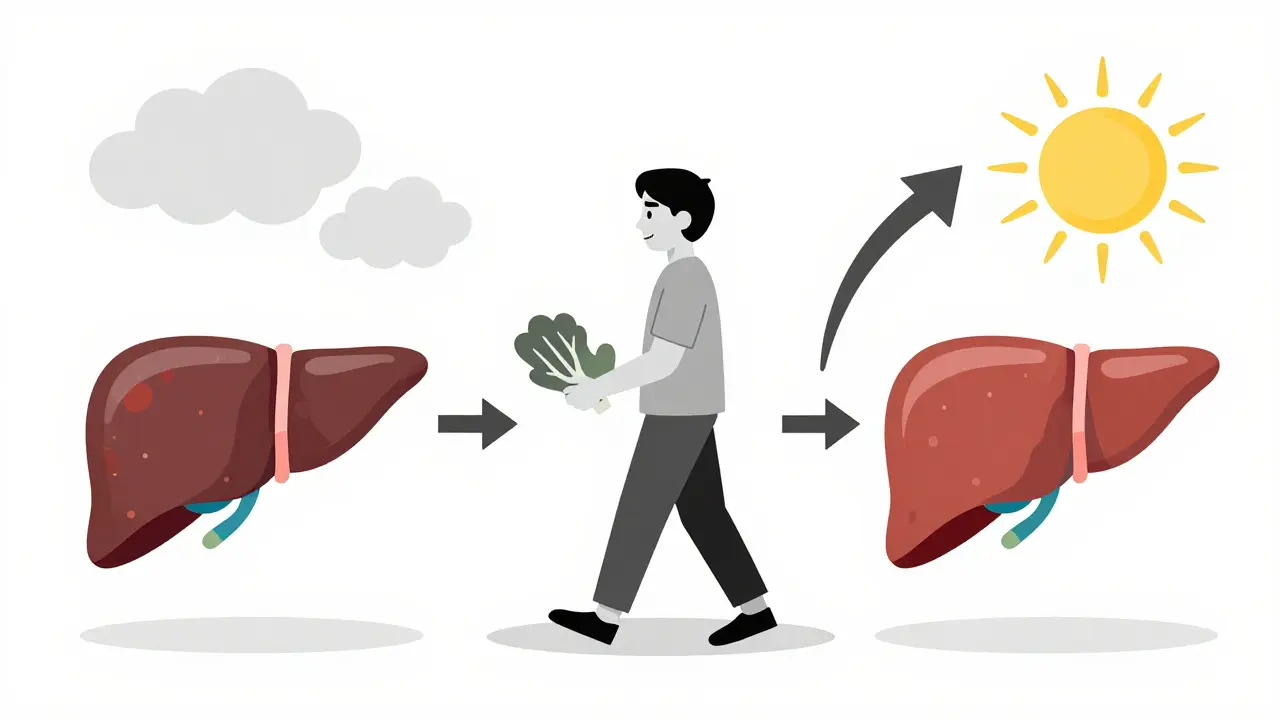
How to Make It Stick
The hardest part isn’t starting-it’s staying on track. Most people hit a plateau after 6 months. Cravings come back. Motivation fades. That’s normal.Here’s how to push through:
- Track your food with an app like MyFitnessPal-not to obsess, but to spot patterns.
- Get support. Join a group, work with a coach, or talk to your doctor about behavioral therapy.
- Focus on habits, not numbers. Celebrate walking every day, cooking at home, drinking water instead of soda.
- Sleep 7-8 hours. Poor sleep increases hunger hormones and makes weight loss harder.
- Manage stress. Cortisol (the stress hormone) drives fat storage around the liver.
Progress isn’t linear. Some weeks you’ll lose weight. Others, you’ll stay the same. That’s okay. What matters is consistency over months, not perfection in days.
When to Talk to Your Doctor
If you have MASH, you don’t need to figure this out alone. Talk to your doctor about:- Getting a fibrosis scan (like FibroScan) to see how much scarring you have.
- Whether semaglutide is an option for you-especially if you’ve tried lifestyle changes for 6+ months with little progress.
- Checking your blood sugar, cholesterol, and blood pressure. These all tie into MASH.
- Referrals to a dietitian or exercise physiologist. These specialists make a huge difference.
Don’t wait until your liver is badly damaged. Early action stops progression. And with new tools like semaglutide, you have more options than ever before.
The Bottom Line
MASH is serious-but it’s not a death sentence. The path back to a healthy liver is clear: lose weight, eat real food, move daily, and avoid alcohol. For many, that’s enough. For others, semaglutide offers a powerful boost.There’s no single magic solution. But there is a proven path. It takes effort. It takes time. But if you stick with it, your liver can heal. And you’ll feel better, have more energy, and reduce your risk of heart disease, diabetes, and liver failure-all at the same time.
Can you reverse NAFLD with weight loss alone?
Yes, in many cases. Losing 5% of your body weight reduces liver fat significantly. Losing 10% or more can reverse early scarring and inflammation. Studies show that sustained weight loss through diet and exercise is the most effective way to improve liver health in MASH. But it’s not easy-most people need support to keep the weight off long-term.
Is semaglutide (Wegovy) approved for NAFLD?
Yes, but with a specific label. In August 2025, the FDA approved semaglutide (Wegovy) for treating MASH (the new name for advanced NAFLD) in adults with moderate-to-advanced liver fibrosis. It’s the first medication approved specifically for liver damage from fatty liver disease, not just weight loss. It’s not approved for everyone with NAFLD-only those with confirmed scarring.
What’s the best diet for fatty liver?
The Mediterranean diet is the most proven. Focus on vegetables, fruits, whole grains, olive oil, nuts, fish, and legumes. Avoid sugary drinks, refined carbs like white bread and pastries, and fried or processed foods. It’s not a low-carb or keto diet-it’s about quality carbs and healthy fats that reduce inflammation and improve insulin sensitivity.
How much exercise do you need for fatty liver?
At least 150 minutes per week of moderate activity-like brisk walking, cycling, or swimming-is recommended. You don’t need to run a marathon. Even 30 minutes five days a week helps reduce liver fat. Adding two days of strength training (bodyweight or light weights) improves muscle mass and metabolism, which further supports liver health.
Can I drink alcohol if I have NAFLD?
No. Even small amounts of alcohol can worsen liver damage in people with NAFLD or MASH. The liver is already working hard to process fat and sugar-adding alcohol puts extra stress on it. Abstaining completely is the safest choice. There’s no safe threshold when your liver is already fatty.
Do supplements like milk thistle help?
No strong evidence supports milk thistle for reversing fatty liver. Some small studies suggest it might lower liver enzymes slightly, but none show it reduces fat or scarring. Vitamin E may help a small group of non-diabetic adults with advanced fibrosis, but it’s not recommended for everyone due to potential risks. Stick to proven methods: diet, exercise, and-if appropriate-medication.
How long does it take to see liver improvement?
You may see lower liver enzymes in as little as 3-6 months with consistent weight loss and lifestyle changes. Fat reduction can be seen on ultrasound within 6 months. But reversing fibrosis takes longer-often 1-2 years of sustained effort. Patience and consistency matter more than speed.
If you’ve been diagnosed with MASH, your next step isn’t panic-it’s action. Start with one change: swap soda for water. Take a 20-minute walk after dinner. Talk to your doctor about your options. Small steps add up. And your liver? It’s ready to heal-if you give it the chance.
12 Comments

Gabrielle Panchev
January 6, 2026 AT 16:41
Okay, but have you considered that the Mediterranean diet is just a fancy way of saying "eat like a Greek grandma who never owned a microwave?" I mean, sure, olive oil and fish sound nice-but what if you live in Iowa and the only "fatty fish" available is canned tuna in a 12-pack from Costco? And don't get me started on the price of "whole grains"-quinoa costs more than my rent this month. Also, who decided that walking 30 minutes five days a week is "exercise?" That's just moving around while avoiding your own thoughts. I'm not saying it doesn't work-I'm saying the whole thing feels like a wellness cult with peer-reviewed citations.

Venkataramanan Viswanathan
January 7, 2026 AT 08:10
Thank you for this detailed and scientifically grounded overview. In India, we see a rising prevalence of metabolic dysfunction, particularly in urban populations consuming refined carbohydrates and sedentary lifestyles. The Mediterranean diet, while culturally unfamiliar, offers a template that can be adapted-replacing rice with millet, using mustard oil instead of refined vegetable oils, and incorporating lentils and leafy greens. Physical activity need not mean gym sessions; traditional practices like yoga and morning walks in parks are effective and accessible. The challenge lies not in knowledge, but in systemic access to healthy food and healthcare infrastructure.

Kiran Plaha
January 8, 2026 AT 15:19
I have MASH. Lost 12 pounds in 4 months by cutting soda and walking after dinner. My liver enzymes went down. No meds. Just small changes. It’s not perfect, but it’s real. You don’t need to be perfect. Just show up.

Matt Beck
January 10, 2026 AT 12:11
So… we’re saying the body is a temple, but the temple is made of processed carbs and cortisol and late-night Netflix binges? 🤔 The liver doesn’t care about your Instagram fitness page-it cares about insulin resistance, mitochondrial dysfunction, and the silent scream of your adipose tissue screaming "I’M TOO FULL!" Semaglutide isn’t magic-it’s a pause button on your biological chaos. And honestly? If you’re still drinking kombucha and taking milk thistle because "it’s natural," you’re not healing. You’re performing healing. 🌿💀

Katie Schoen
January 12, 2026 AT 04:26
LOL at the people who think this is about "willpower." Like, no, sweetie, it’s about a system designed to make you fat and then sell you a $1,350/month drug to fix it. I lost 18 pounds on Wegovy, but I also started cooking. I stopped buying snacks. I slept more. The pill didn’t do it-I did. And yeah, I cried in the grocery store because I realized I’d spent 10 years treating my body like a broken toaster. You’re not broken. You’re just overworked, under-slept, and fed by corporations who profit from your suffering. 🙃

Beth Templeton
January 14, 2026 AT 03:49
Mediterranean diet? More like expensive salad with olive oil. Just cut sugar and walk. Done.

Tiffany Adjei - Opong
January 14, 2026 AT 11:10
Okay, but the FDA approved semaglutide for MASH? That’s cute. Meanwhile, in the real world, people are choosing between insulin and groceries. And let’s not pretend this isn’t just Big Pharma repackaging Ozempic as a liver drug. You think the people who need this most can afford it? Or even get a doctor who’ll prescribe it? This is a luxury solution for a systemic problem. And now we’re gonna make people feel guilty for not having the right insurance? Thanks for the guilt trip, science.

Ryan Barr
January 14, 2026 AT 19:54
Med diet? Please. The only thing proven is caloric deficit. Everything else is noise.

Cam Jane
January 15, 2026 AT 14:37
Hey-I’ve been where you are. I had MASH, insulin resistance, and zero motivation. I started by swapping one soda a day for sparkling water. Then I walked 10 minutes after dinner. Then I cooked one meal a week at home. Slow. Messy. Not perfect. But after 6 months? My liver enzymes dropped. My energy came back. I didn’t lose 50 pounds-I lost 15. And that was enough. You don’t need to overhaul your life. You just need to start. One tiny thing. Today. And if you need help? Find a dietitian. Join a group. Talk to your doctor. You’re not alone. And your liver? It’s waiting for you to give it a chance.

Amy Le
January 16, 2026 AT 14:45
Let’s be real-this whole MASH rebrand is just a PR move so Big Pharma can sell more drugs. NAFLD was bad enough, but now we need a fancy new name so we can charge $1,350 for a pen? And don’t get me started on the "Mediterranean diet"-it’s basically what poor people in Greece ate before tourism turned it into a $30 entree. Meanwhile, in America, we’re told to eat kale while our food deserts are still full of Doritos. This isn’t science. It’s capitalism with a side of avocado toast. 🇺🇸💔

Joann Absi
January 16, 2026 AT 22:12
I’M SO DONE WITH THIS. I LOST 20 POUNDS ON WEGOVY. I STOPPED DRINKING. I STARTED WALKING. MY LIVER IS HEALING. AND NOW SOMEONE’S SAYING IT’S A PHARMA SCAM? I’M NOT A LAB RAT. I’M A HUMAN BEING WHO WAS DYING A LITTLE EVERY DAY. DON’T YOU DARE TELL ME MY TRAUMA ISN’T REAL BECAUSE YOU CAN’T AFFORD THE MED. I’M NOT HERE FOR YOUR POLITICAL DIET. I’M HERE TO SURVIVE. 🤍🩺

Mukesh Pareek
January 16, 2026 AT 22:36
The pathophysiology of MASH is driven by lipotoxicity and inflammasome activation secondary to visceral adiposity. While caloric restriction remains foundational, the GLP-1 agonist class demonstrates pleiotropic effects on hepatic de novo lipogenesis, insulin signaling, and adipokine modulation. Semaglutide’s efficacy in reducing fibrosis markers (e.g., ELF score, FibroScan) is statistically significant in phase 3 trials with p < 0.001. However, long-term adherence remains a challenge due to gastrointestinal side effects and economic inequity in access. The integration of behavioral economics and community-based interventions may improve sustainability beyond pharmacotherapy.
Write a comment