


When a life-saving drug runs out, hospitals don’t just wait for more to arrive. In the U.S., the FDA has a quiet but powerful tool to keep critical medications flowing: extended expiration dates. This isn’t a loophole. It’s a carefully regulated process that lets manufacturers and pharmacies safely use drugs past their printed expiration dates-when supply is critically low.
Why expiration dates get extended
Expiration dates on drugs aren’t arbitrary. They’re based on stability testing: how long the medicine keeps its strength, purity, and safety under normal storage conditions. But those tests are done before the drug hits the market. Most drugs remain stable far longer than their labeled dates suggest. When a shortage hits-say, a key IV fluid or injectable antibiotic-the FDA steps in. They review real-world stability data from the manufacturer. If the data shows the drug is still safe and effective, they approve an extension. This isn’t guesswork. It’s science. The FDA doesn’t extend dates for every drug on the shortage list. Only those deemed critical qualify. That means medications where alternatives don’t exist, or switching patients could cause harm. Think epinephrine for anaphylaxis, propofol for anesthesia, or dantrolene for malignant hyperthermia. These aren’t optional drugs. They’re emergency tools.How the extension process works
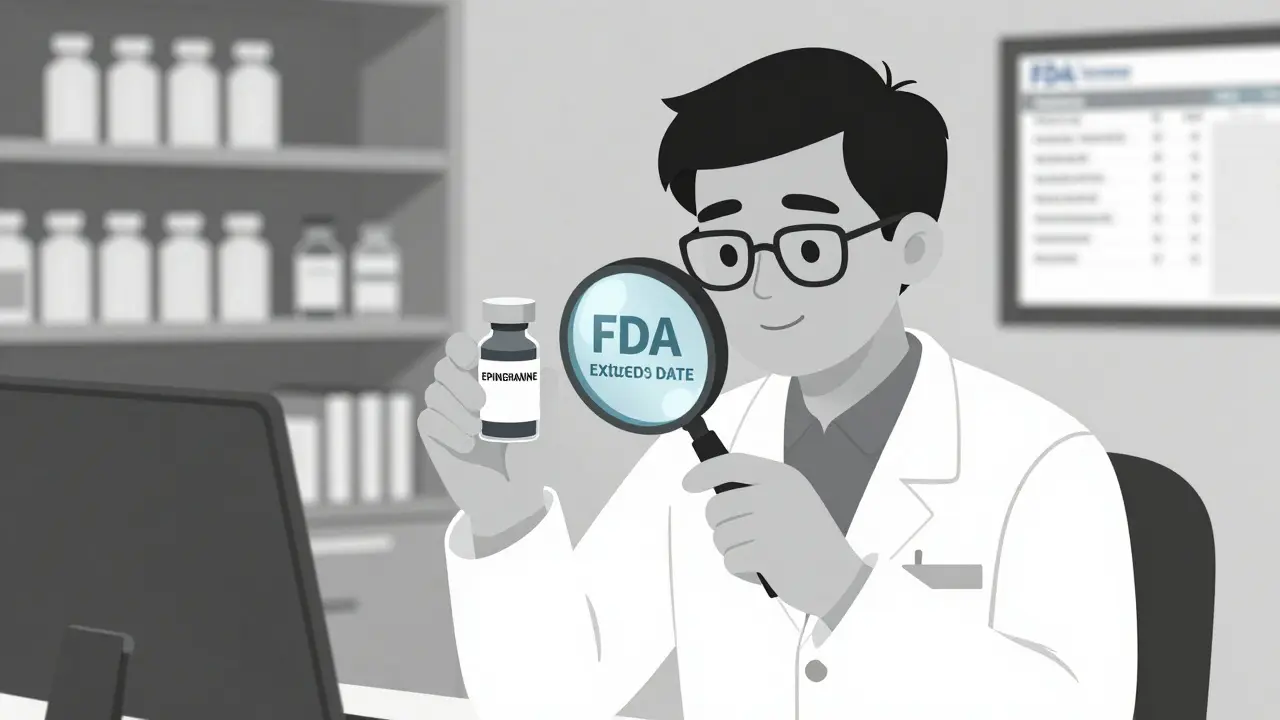
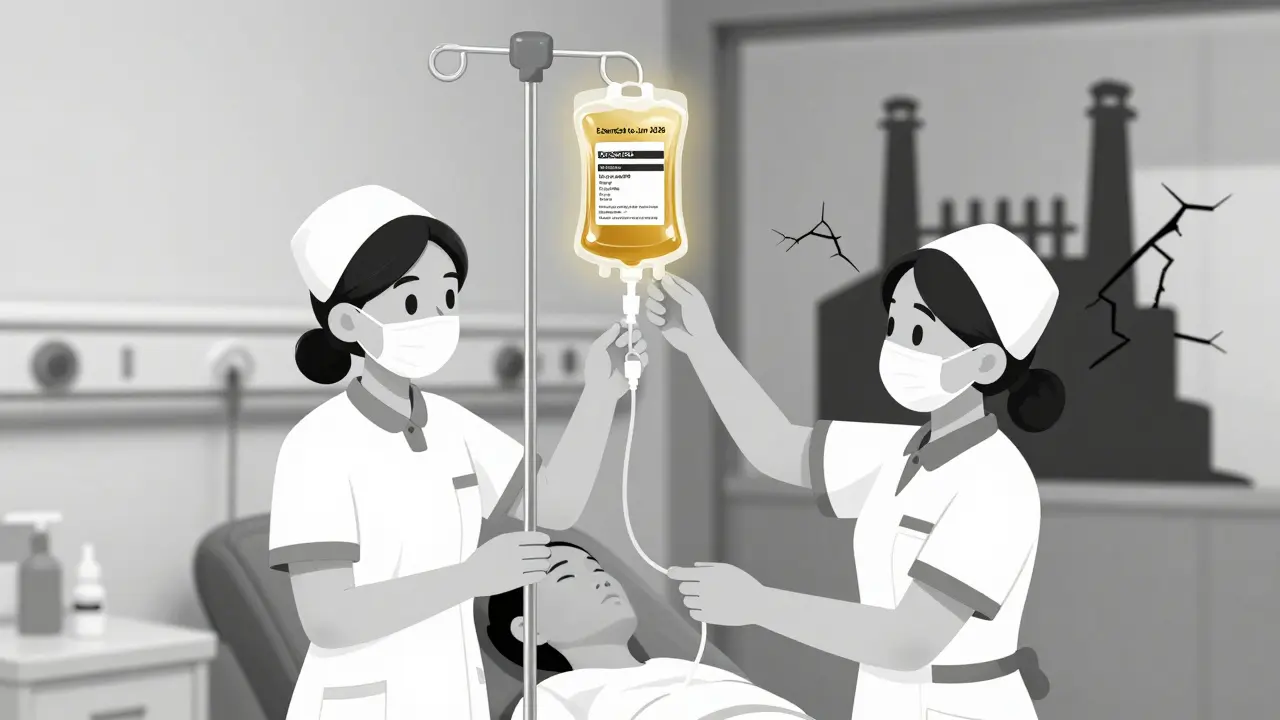
Manufacturers don’t just slap a new date on a bottle. They must submit detailed stability data to the FDA. This includes results from real-time aging studies-tracking how the drug degrades over months or years under controlled conditions. The FDA reviews every batch, every lot number, every chemical change. Once approved, the extension is published in a public, searchable database. The FDA doesn’t require relabeling. That means a vial labeled to expire in September 2025 might still be safe to use until January 2026. But only if it’s the exact lot number listed. No exceptions. The most common extension is one year. But there are exceptions. In late 2024, the FDA authorized certain Baxter IV solutions to be used up to 24 months after manufacture. That’s double the typical shelf life. Why? Because hospitals were running out of empty IV bags and fluids. Patients were being delayed. The risk of not using the product was higher than the risk of using it.What drugs are most often extended
Not all drugs are treated equally. According to FDA data and industry analysis, the top categories for expiration extensions are:- Propofol injection (used for anesthesia and sedation)
- Epinephrine injection (for severe allergic reactions)
- Dantrolene sodium (for rare but deadly muscle disorders)
- Meperidine hydrochloride (a painkiller)
- IV solutions (saline, dextrose, and other fluids)
- Meperidine hydrochloride (Lot HN8657): extended from Sept 30, 2025 to Jan 30, 2026
- Ethiodized oil injection (Lot 24LF701A): extended from Dec 31, 2025 to Mar 31, 2026
- Dantrolene sodium (multiple lots): extended 6-9 months
How hospitals manage extended-date drugs
This isn’t a free-for-all. Hospitals can’t just say, “We’re out of X, so we’ll use anything old.” They must track lot numbers. They must update pharmacy systems. They must train staff. A nurse might grab a vial of epinephrine that says “Exp: 12/2024.” But if that lot is on the FDA’s approved extension list for an extra year, it’s still good. The problem? Many hospital systems still rely on paper logs or outdated software. Mixing expired and extended-date drugs can lead to dangerous mistakes. The American Hospital Association sends alerts to members when new extensions are approved. But it’s up to each pharmacy to cross-check the FDA’s database daily. The FDA updates its list every 24 hours. So does the risk. The FDA makes it clear: if new supply arrives, you must stop using the extended-date products and dispose of them properly. This isn’t about hoarding. It’s about bridging a gap until production catches up.When the FDA won’t extend
Not every drug gets an extension. The FDA denies requests if:- Stability data is incomplete or unreliable
- The drug is a complex biologic that degrades unpredictably
- Alternatives are available and safe
- The product is not classified as critical

The bigger picture: Why shortages happen
Expiration date extensions fix symptoms, not causes. The real problem? Fragile supply chains. Many critical drugs are made in just one or two factories worldwide. A single equipment failure, quality control issue, or raw material delay can cause a nationwide shortage. Some manufacturers cut corners to save costs. Others can’t afford to keep multiple production lines running. The 2012 Food and Drug Administration Safety and Innovation Act (FDASIA) forced manufacturers to notify the FDA early if a shortage was coming. That helped. But it didn’t stop the root causes. The FDA also works to speed up inspections, approve new suppliers, and help manufacturers fix problems faster. But it takes time. Extensions buy that time.What patients and providers should do
If you’re a patient: don’t panic if your prescription seems unavailable. Talk to your doctor. Ask if there’s a safe alternative. Don’t assume a drug is expired just because the date has passed-check the FDA’s list. If you’re a provider: always verify lot numbers. Use the FDA’s searchable database. Don’t rely on memory or outdated charts. Update your pharmacy software to flag extended-date lots. Train your team. The FDA doesn’t regulate how doctors prescribe. But they do provide the data to make safe decisions. That’s their role: to ensure the medicine is still good. The rest is up to the clinical team.The future of drug shortages
As global supply chains remain unstable, expiration date extensions will stay a key tool. The FDA has used this strategy since at least 2017-and it’s working. In 2024, over 343 drug products had approved extensions. But this isn’t a long-term fix. It’s a safety net. The goal is always to get new production online. Once it does, the extended-date inventory is removed from use. The real solution? More resilient manufacturing. More backup suppliers. Better global coordination. Until then, these extensions keep hospitals running-and patients alive.
14 Comments

steve ker
January 13, 2026 AT 08:40
This is just bureaucratic band-aid medicine. Why not fix the supply chain instead of playing god with expiration dates?
Pathetic.

George Bridges
January 13, 2026 AT 11:56
I’ve seen this in action during the propofol shortage last year. Nurses were double-checking lot numbers like it was a treasure map. It’s not glamorous, but it kept ORs running.
Real people, real stakes.

Faith Wright
January 14, 2026 AT 13:25
Oh wow, the FDA is a superhero now? Let me grab my cape.
Meanwhile, the same companies that made the shortage are now the ones ‘proving’ their drugs are still good. Convenient, huh?
Also, why are we still using vials from 2022? Someone’s cutting corners somewhere.

Rebekah Cobbson
January 14, 2026 AT 15:07
If you work in a hospital pharmacy, this isn’t news-it’s daily life.
But it’s also terrifying. One wrong lot number, one mislabeled vial, and someone dies.
Training matters. Systems matter. Don’t let this become a ‘trust us’ situation.

Audu ikhlas
January 15, 2026 AT 13:38
USA always find way to cheat death with paperwork. Nigeria we just wait for drugs to come or die. This is not science this is privilege.
Why you not make more factories? Because you rich and lazy.

Sonal Guha
January 16, 2026 AT 04:51
Extending expiration dates is a statistical illusion wrapped in regulatory theater. Stability data is often extrapolated from accelerated aging tests. Real-world degradation is non-linear. You’re gambling with patient outcomes under the guise of pragmatism.
And yes, I’ve audited these datasets. They’re messy.

TiM Vince
January 17, 2026 AT 08:56
My dad’s ICU nurse told me about this last year. Said they had to use epinephrine that was 18 months past the label. No one got hurt. No one even knew.
It’s not perfect. But it’s better than nothing.

gary ysturiz
January 18, 2026 AT 02:40
This is how we keep people alive when things go wrong. No drama. No politics. Just science and smart people doing the right thing.
Let’s not turn a lifesaving tool into a villain.
Shoutout to the pharmacists checking every lot number at 2 a.m.

Jessica Bnouzalim
January 19, 2026 AT 19:47
Okay, but like… why do we even HAVE expiration dates if they’re just… extended? It’s so weird. Like, the date is printed, but then the government’s like ‘nah, we’re good’?
Also, can we please update the vial labels? I don’t want my nurse to have to Google something while I’m getting anesthesia.
Also also, I love that they’re doing this. Just… maybe make it less chaotic?

laura manning
January 21, 2026 AT 01:12
It is imperative to note that the extension of expiration dates constitutes a de facto modification of product labeling without formal regulatory amendment, thereby violating the foundational tenets of the Federal Food, Drug, and Cosmetic Act, Section 502.
Moreover, the absence of mandatory relabeling introduces a non-trivial risk of iatrogenic error, particularly in high-acuity clinical environments where cognitive load is already elevated.
This practice, while pragmatically expedient, remains procedurally and ethically indefensible without legislative codification.

Bryan Wolfe
January 21, 2026 AT 18:51
Big thanks to the FDA for stepping up when no one else would!
And to all the nurses, pharmacists, and hospital staff who double-check every single lot number? You’re the real MVPs.
Let’s not forget-this isn’t about cutting corners. It’s about keeping people alive while we fix the broken system.
One vial at a time.

Sumit Sharma
January 23, 2026 AT 07:46
The FDA’s methodology lacks rigorous statistical validation for non-linear degradation kinetics in multi-component formulations. The extrapolation from accelerated stability studies to real-time shelf-life extension is methodologically unsound under ICH Q1A(R2) guidelines.
Furthermore, the absence of mandatory batch-level traceability integration with EHR systems represents a critical failure in pharmacovigilance infrastructure.
This is not ‘science’-it’s risk arbitrage disguised as policy.

Jay Powers
January 23, 2026 AT 22:39
My hospital uses this system. We scan every lot. We update our database every morning. It’s a pain. But if it keeps someone from going without epinephrine? Worth it.
Just don’t let it become a crutch. We still need more factories.

Alice Elanora Shepherd
January 24, 2026 AT 17:02
Thank you for this clear, detailed breakdown. As a pharmacist in the UK, I’ve seen similar practices under emergency protocols, though our system is more centralized.
What’s striking is how much of this relies on individual vigilance-rather than automated systems.
Perhaps the next step is integrating FDA extension data into pharmacy management software via API? That would reduce human error significantly.
Write a comment