



Have you ever noticed a strange bulge at the base of your neck? It might look like a swelling, but it could actually be your thyroid gland growing larger than it should. This condition is called a Goiter is an abnormal enlargement of the thyroid gland that may cause a noticeable bulge in the neck, with potential compression of surrounding structures leading to difficulty in breathing, swallowing, and hoarseness. Also known as Thyroid Enlargement, it affects millions of people worldwide. While it often starts as a cosmetic concern, the implications for your health can be significant if left unchecked. Understanding the link between this swelling and your diet is the first step toward managing it effectively.
Understanding the Thyroid Gland and Normal Size
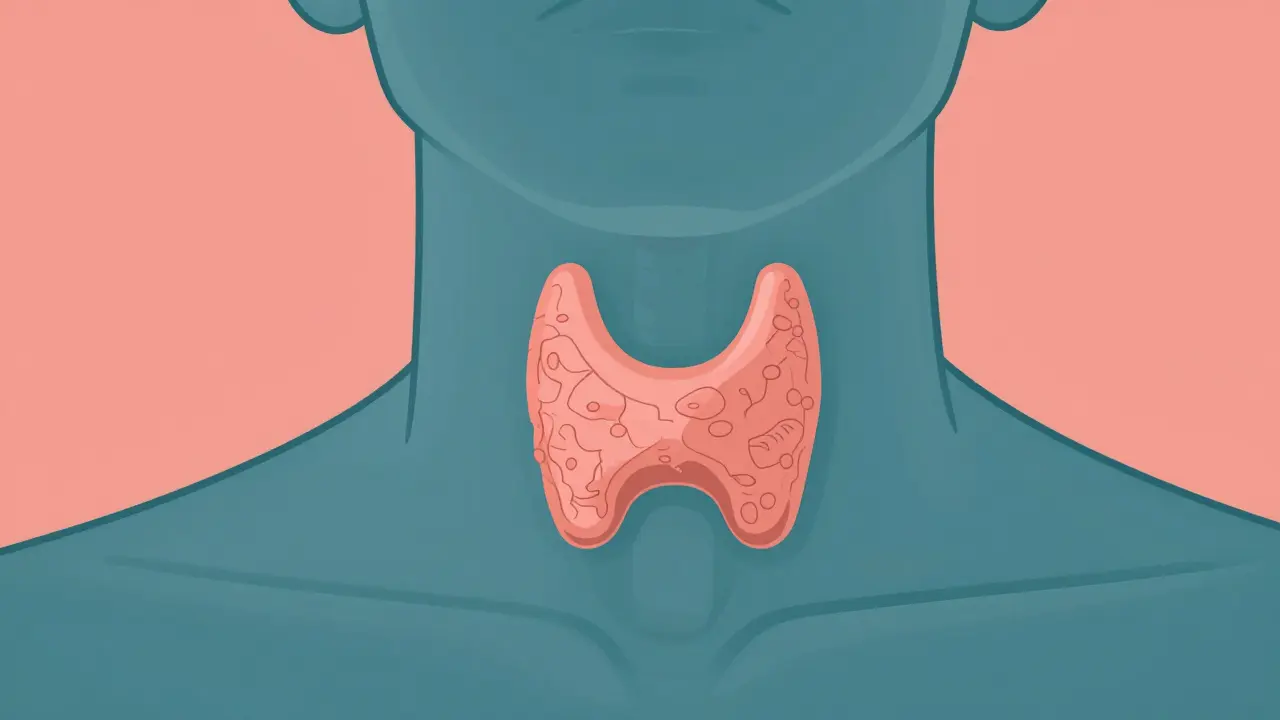
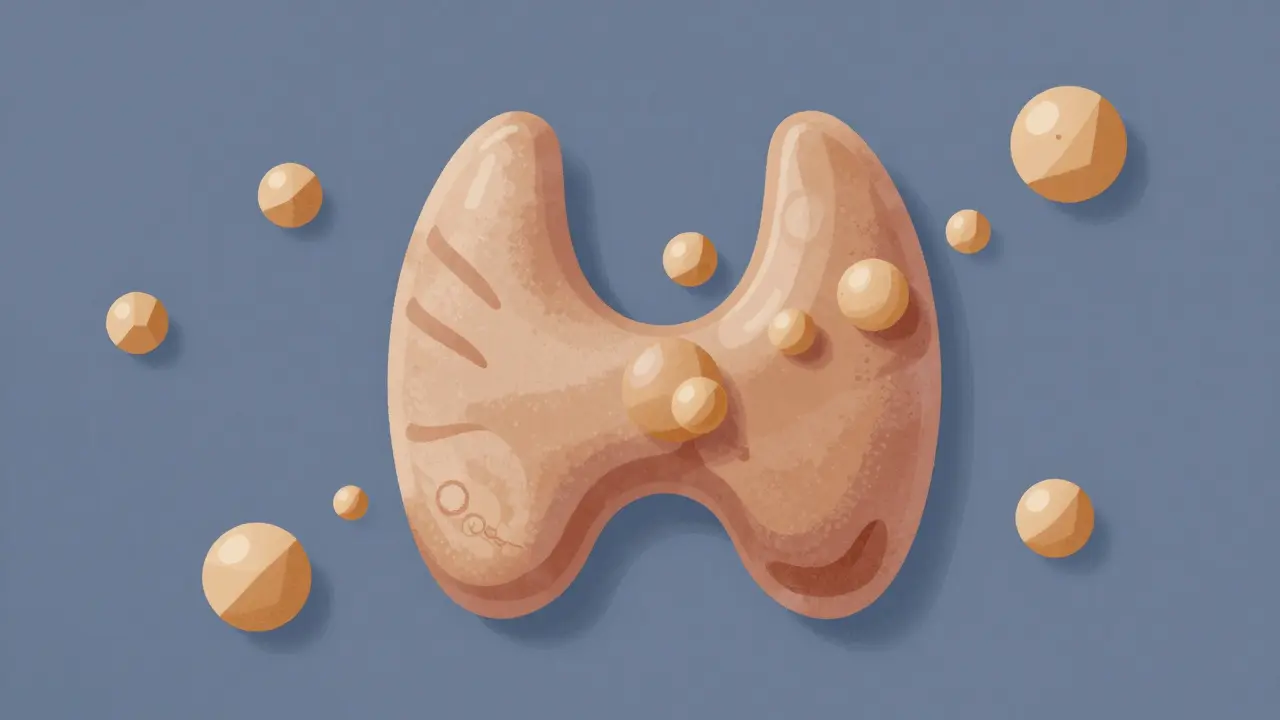
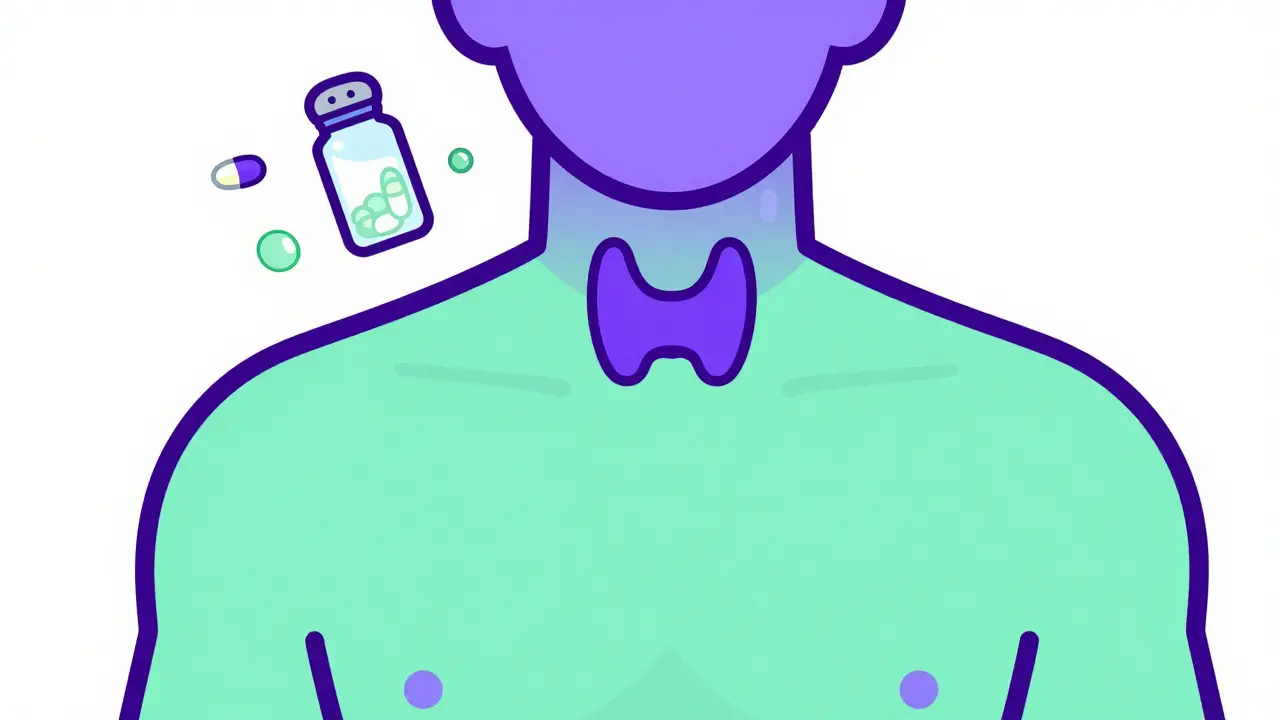
Before we talk about what goes wrong, we need to know what is right. The Thyroid Gland is a butterfly-shaped endocrine gland located in the front of the neck that regulates metabolism. In a healthy adult, this gland is quite small, typically weighing between 15 and 20 grams. When doctors use ultrasound to measure it, a volume exceeding 25 mL is considered abnormal. However, in significant cases of goiter, the gland can swell to 50-100 grams or more. This isn't just a slight change; it is a physical expansion that can press against your windpipe or esophagus.
Why does it grow? The thyroid is sensitive to signals from your brain and your body's nutrient levels. When it doesn't get what it needs to produce hormones, it tries to compensate by growing larger. This is similar to how a muscle might bulk up if you keep asking it to work harder. The most common trigger for this overwork is a lack of essential minerals in your diet.
The Critical Role of Iodine
If you live in a region without access to fortified foods, your risk of developing a goiter increases dramatically. Globally, the most common cause of goiter is iodine deficiency, accounting for approximately 90% of cases in regions without iodized salt programs. Iodine is a mineral that the thyroid needs to create hormones like T3 and T4. Without it, the gland struggles to function, leading to enlargement. The World Health Organization is a specialized agency of the United Nations responsible for international public health reports a 50% global reduction in endemic goiter since universal salt iodization programs began in the 1990s. However, approximately 1.9 billion people remain at risk of iodine deficiency disorders as of 2021.
History shows us how powerful this connection is. The condition was first clinically described in ancient medical texts, but systematic understanding developed significantly after the discovery of iodine's role in thyroid function in the early 20th century. Dr. David Marine conducted the landmark 1917 goiter prevention study in Ohio schoolgirls that established the iodine deficiency connection. His work proved that giving potassium iodide supplements could prevent the swelling. Today, public health interventions provide potassium iodide supplements at doses of 90-150 mcg daily for children and 150-250 mcg for adults and pregnant women. Salt iodization is typically at 20-40 parts per million as recommended by WHO standards.
In the United States, where iodized salt has been standard since the 1920s, the landscape has changed. Autoimmune disorders have become the predominant causes. The American Thyroid Association is a professional organization dedicated to thyroid health and education specifies that the Recommended Dietary Allowance (RDA) for iodine is 150 mcg for adults, 220 mcg during pregnancy, and 290 mcg during lactation. Iodized table salt contains approximately 45 mcg of iodine per gram. For those in iodine-deficient regions, iodine supplementation is the primary defense against this condition.
Autoimmune Causes and Other Factors
While iodine is the global leader in causing goiters, it is not the only culprit. In developed nations, the immune system often attacks the thyroid instead. Hashimoto's thyroiditis represents the most frequent etiology according to the American Thyroid Association (2022). This is an autoimmune condition where your body mistakes your thyroid for a foreign invader. Current epidemiological data indicates that goiter affects approximately 5% of the U.S. population, with higher prevalence in women (7.5%) compared to men (2.5%), and increasing incidence after age 40 as documented in the Merck Manual (2023).
Another condition to watch for is Graves' disease. This causes a toxic goiter where the gland produces too much hormone. The swelling here is often accompanied by weight loss and rapid heartbeat. Current research priorities include the 2023 NIH-funded TRIPOD study examining genetic factors in goiter development among 5,000 participants across 10 countries, with preliminary data suggesting 37 genetic loci associated with thyroid volume regulation. This means your DNA might play a role in whether your gland is prone to swelling.
Diagnosis and Measuring the Enlargement
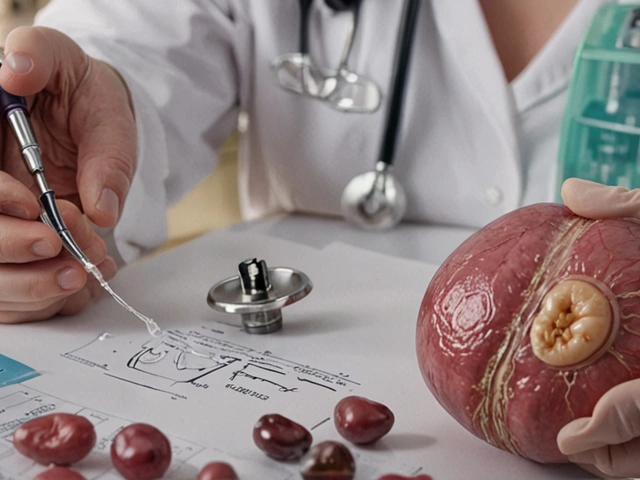
How do doctors know if you have a goiter? It often starts with a physical exam, feeling for a lump that moves when you swallow. However, precise measurement requires technology. Ultrasound is the standard tool. As mentioned, volumes exceeding 25 mL are flagged as abnormal. The symptoms can range from a visible neck bulge to functional issues. You might experience difficulty in breathing, swallowing, and hoarseness as documented by the National Institutes of Health (NIH) in their StatPearls publication (2022). These symptoms happen because the enlarged gland presses on the trachea or esophagus.
Blood tests are also crucial. They check your TSH (Thyroid Stimulating Hormone) levels. If TSH is high, your thyroid is underactive (hypothyroidism). If it is low, your thyroid is overactive (hyperthyroidism). Knowing this distinction is vital because it dictates the treatment path. A simple iodine-deficient goiter often has normal hormone levels initially, while autoimmune goiters usually show hormone imbalances.
Treatment Options and Protocols
Treatment isn't one-size-fits-all. It depends entirely on why the gland is enlarged. For iodine-deficient goiters, supplementation with 150 mcg daily typically reduces thyroid volume by 30-40% within 6-12 months as documented in NIH clinical guidelines. This is often the easiest fix if you catch it early. However, for Hashimoto's-related goiters with hypothyroidism, levothyroxine replacement at doses of 1.6 mcg/kg/day normalizes thyroid function but typically reduces goiter size by only 10-20% due to fibrotic changes in the gland.
For Graves' disease-related toxic goiters, the approach is different. They require antithyroid medications like methimazole at 5-30 mg daily, which reduces thyroid volume by 40-60% over 12-18 months according to Mayo Clinic treatment protocols. Sometimes, medication isn't enough, and more aggressive steps are needed. Below is a comparison of the main treatment paths.
| Treatment Type | Target Condition | Typical Dosage/Action | Volume Reduction | Timeframe |
|---|---|---|---|---|
| Iodine Supplementation | Iodine Deficiency | 150 mcg daily | 30-40% | 6-12 months |
| Levothyroxine | Hashimoto's / Hypothyroidism | 1.6 mcg/kg/day | 10-20% | Variable |
| Methimazole | Graves' / Hyperthyroidism | 5-30 mg daily | 40-60% | 12-18 months |
| Radioactive Iodine | Toxic Goiter | 5-15 mCi dose | 50-60% | 6-12 months |
| Surgery (Thyroidectomy) | Large / Compressive Goiter | Removal of tissue | 100% (Removed) | Immediate |
Surgery and Advanced Interventions
When does a goiter require surgery? Surgical intervention becomes necessary when goiters exceed 80-100 mL in volume or cause compressive symptoms. Total thyroidectomy removes 30-40 grams of tissue on average as reported in Yale Medicine's 2022 clinical data. This is a major decision because removing the gland means you will need hormone replacement for life. Radioactive iodine treatment using doses of 5-15 mCi effectively reduces toxic goiter volume by 50-60% within 6-12 months but carries a 75-80% risk of inducing permanent hypothyroidism requiring lifelong hormone replacement as documented in Cleveland Clinic's 2023 treatment outcomes.
Patient experience data from 2,357 reviews across Healthgrades and RateMDs (2022-2023) indicates 78% satisfaction with iodine supplementation for deficiency-related goiters but only 42% satisfaction with surgical outcomes due to voice changes (15% incidence) and hypocalcemia risks (8% incidence) as documented in post-operative complication tracking. These risks are real. Voice changes happen if the nerves controlling your vocal cords are affected during surgery. Hypocalcemia occurs if the parathyroid glands, which sit near the thyroid, are damaged.
Prognosis and Long-Term Outlook
The prognosis varies significantly by cause. Simple iodine-deficient goiters have excellent outcomes with supplementation, resolving completely in 70-85% of cases within 1-2 years per Merck Manual data. This is great news for those in developing regions where salt programs are improving. However, autoimmune-related goiters often require lifelong management with approximately 60% of Hashimoto's cases progressing to atrophic thyroiditis over 10-15 years as tracked in longitudinal studies cited by NIH. This means the gland eventually shrinks back down but stops working properly.
Contradictory evidence exists regarding selenium supplementation's role, with a 2021 Cochrane Review finding no significant benefit for goiter reduction (odds ratio 0.92, 95% CI 0.71-1.19), while European Thyroid Association guidelines suggest potential benefit in specific autoimmune cases. It is always best to consult a specialist before adding new supplements. Recent regulatory developments include the FDA's 2022 requirement for iodine content labeling on all salt products and the 2023 European Medicines Agency guidelines standardizing radioactive iodine dosing protocols for goiter treatment. These changes help patients make better informed choices about their intake.
Can a goiter go away on its own?
Simple iodine-deficient goiters can resolve completely in 70-85% of cases within 1-2 years with proper iodine supplementation. However, autoimmune goiters usually require ongoing medical management and rarely disappear without treatment.
Is iodine safe for everyone to take?
For most people, the recommended 150 mcg daily is safe. However, people with autoimmune thyroid disease should be cautious, as excess iodine can sometimes worsen conditions like Hashimoto's or Graves' disease. Always check with a doctor first.
What are the symptoms of a large goiter?
Symptoms include a visible neck bulge, difficulty swallowing, trouble breathing, hoarseness, and a feeling of tightness in the throat. These occur when the enlarged gland presses on nearby structures.
Does surgery cure a goiter?
Surgery removes the enlarged tissue, effectively curing the physical enlargement. However, if the thyroid is removed, you will need lifelong hormone replacement therapy to maintain normal metabolic function.
How is goiter diagnosed?
Diagnosis involves a physical exam to feel for swelling, blood tests to check thyroid hormone levels (TSH), and an ultrasound to measure the gland volume. Volumes over 25 mL are considered abnormal.
13 Comments

Rama Rish
March 25, 2026 AT 22:53
my aunt had this and salt helpe her a lot.

Amber Gray
March 26, 2026 AT 07:03
america does this better than other countries we dont need foreign advice on health stuff 😡🇺🇸

Danielle Arnold
March 26, 2026 AT 16:47
another medical article telling us what to eat like we dont know already boring

James Moreau
March 27, 2026 AT 23:56
actually the data on iodine is quite specific to regions so its good to know the difference between deficiency and autoimmune causes

Seth Eugenne
March 28, 2026 AT 16:07
glad you shared this info everyone should look out for their thyroid health 🙌

Zola Parker
March 30, 2026 AT 06:20
but is the salt actually safe or just another way to control us :) people should think deeper about this

florence matthews
March 31, 2026 AT 20:19
we should all support each other in learning about health :)

Kenneth Jones
April 1, 2026 AT 22:50
stop listening to internet doctors go see a real one

winnipeg whitegloves
April 3, 2026 AT 10:38
thyroid woes are a veritable beast lurking in the necklands of many folks waiting to pounce when nutrition is neglected

Rachele Tycksen
April 3, 2026 AT 17:17
yeah i had a goiter once but it went away on its own i think

Aaron Sims
April 5, 2026 AT 07:50
THEY put chemicals in the salt to make us sick on purpose!!! The government knows exactly what they are doing with our food supply!!!

Stephen Alabi
April 6, 2026 AT 07:57
Your assertion lacks empirical backing and disregards established medical consensus regarding iodine fortification protocols. The historical data from the early twentieth century clearly demonstrates the efficacy of supplementation. Public health initiatives have successfully reduced endemic goiter rates by significant margins. It is imperative to distinguish between correlation and causation in dietary studies. The thyroid gland requires specific micronutrients to function within normal physiological parameters. Without adequate iodine intake the gland cannot synthesize sufficient hormone levels. This biological necessity is not a matter of political ideology or conspiracy. Medical guidelines are derived from rigorous clinical trials and longitudinal studies. The American Thyroid Association provides evidence-based recommendations for daily intake. Ignoring these guidelines can lead to preventable health complications for vulnerable populations. The risk of hypothyroidism increases dramatically in regions without iodized salt programs. Surgical intervention is often a last resort for severe cases of enlargement. Hormone replacement therapy is a standard treatment for autoimmune conditions affecting the gland. Patients should consult qualified healthcare professionals before altering their dietary habits. Self-diagnosis can lead to incorrect treatment and worsening of the underlying condition. The scientific community continues to monitor the long-term effects of supplementation strategies.

Kevin Siewe
April 8, 2026 AT 05:32
I think the distinction between autoimmune and deficiency is key here for treatment paths.
Write a comment