




Infusion Reaction Severity Checker
Select the symptoms you are experiencing to determine the reaction grade and the necessary medical action. Note: This is for educational purposes and not a substitute for professional medical advice.
Symptom Checklist
Flushing or Mild Rash
Hives or Shortness of Breath
Severe Hypotension or Wheezing
Anaphylactic Shock or Cardiac Arrest
Assessment Result
Please select the symptoms appearing during or after the infusion to see the grading.
Biologic infusion reactions are
adverse immune responses that occur during or shortly after the administration of biological therapeutics, such as monoclonal antibodies or fusion proteins.
These reactions aren't just "side effects"-they are specific hypersensitivity events where the body recognizes the drug as a foreign threat. Because these medications are so effective-often helping 50-70% of patients who didn't respond to other drugs-the goal isn't necessarily to stop the medicine, but to find a way to deliver it safely.
Knowing the Signs: From Mild Flush to Emergency
Not every reaction is the same. Doctors use a grading system to decide if a patient needs a quick break from the infusion or an immediate trip to the ER. Most reactions fall into a few specific buckets based on when they happen and how they feel.Immediate Hypersensitivity Reactions (HSRs) usually hit within one to two hours of the infusion starting. You might see hives, itching, or swelling. Then there is Cytokine Release Syndrome (CRS), which is more like a "cytokine storm." This feels like a sudden, intense fever, shaking chills (rigors), and a drop in blood pressure. Finally, there are delayed reactions that sneak up 24 to 72 hours later, often manifesting as skin rashes or joint pain.
| Grade | Severity | Typical Symptoms | Action Required |
|---|---|---|---|
| Grade 1 | Mild | Flushing, mild rash | Observation, no intervention |
| Grade 2 | Moderate | Hives, shortness of breath | Medical intervention (meds) |
| Grade 3 | Severe | Severe hypotension, wheezing | Hospitalization / ER support |
| Grade 4 | Life-threatening | Anaphylactic shock, cardiac arrest | Immediate emergency resuscitation |
Preventing Reactions Before They Start
Prevention is all about "priming" the body. Most clinics don't just start the biologic; they use a premedication cocktail to dampen the immune response. This is especially common with monoclonal antibodies (mAbs), which are proteins designed to bind to specific targets in the body but can be seen as intruders by the immune system.A standard prevention plan usually includes three main components: steroids, antihistamines, and fever reducers. For example, taking 1,000 mg of acetaminophen an hour before the appointment helps prevent the chills associated with CRS. Adding an antihistamine like cetirizine (10 mg) or diphenhydramine (50 mg) blocks the histamine that causes itching and hives. The heavy hitter is often a steroid like methylprednisolone (125 mg IV) or hydrocortisone (200 mg IV), administered about 30 minutes before the drug enters the vein. Research shows that using hydrocortisone can cut the development of anti-drug antibodies by nearly 47%, making the drug more effective and the process safer.
Another pro tip for prevention is timing. Some drugs, like adalimumab, are safer when given at regular, shorter intervals (every 8 weeks instead of 12). This prevents the body from "forgetting" the drug and building up a massive army of antibodies that trigger a reaction the next time you get a dose.

Emergency Steps: What Happens When Things Go Wrong
If a reaction occurs, every second counts. The first and most critical step is to stop the infusion immediately. This prevents more of the triggering agent from entering the bloodstream. The medical team will then position the patient flat on their back (supine) with their legs elevated to keep blood flowing to the heart and brain.For severe cases, adrenaline (epinephrine) is the gold standard. It is delivered as an intramuscular injection (0.3-0.5 mg) into the mid-outer thigh. This opens the airways and raises blood pressure almost instantly. If the patient is struggling to breathe, doctors may use nebulized adrenaline to clear the lungs. For mild to moderate reactions, a combination of IV diphenhydramine and steroids is used to calm the immune system down.
To figure out exactly what happened, doctors often test for a biomarker called serum tryptase. This test is done 30 to 120 minutes after the reaction. If the levels are high (above 11.4 µg/L), it confirms that the patient experienced true anaphylaxis, which helps the doctor plan a safer strategy for the next dose.
The 12-Step Desensitization Protocol
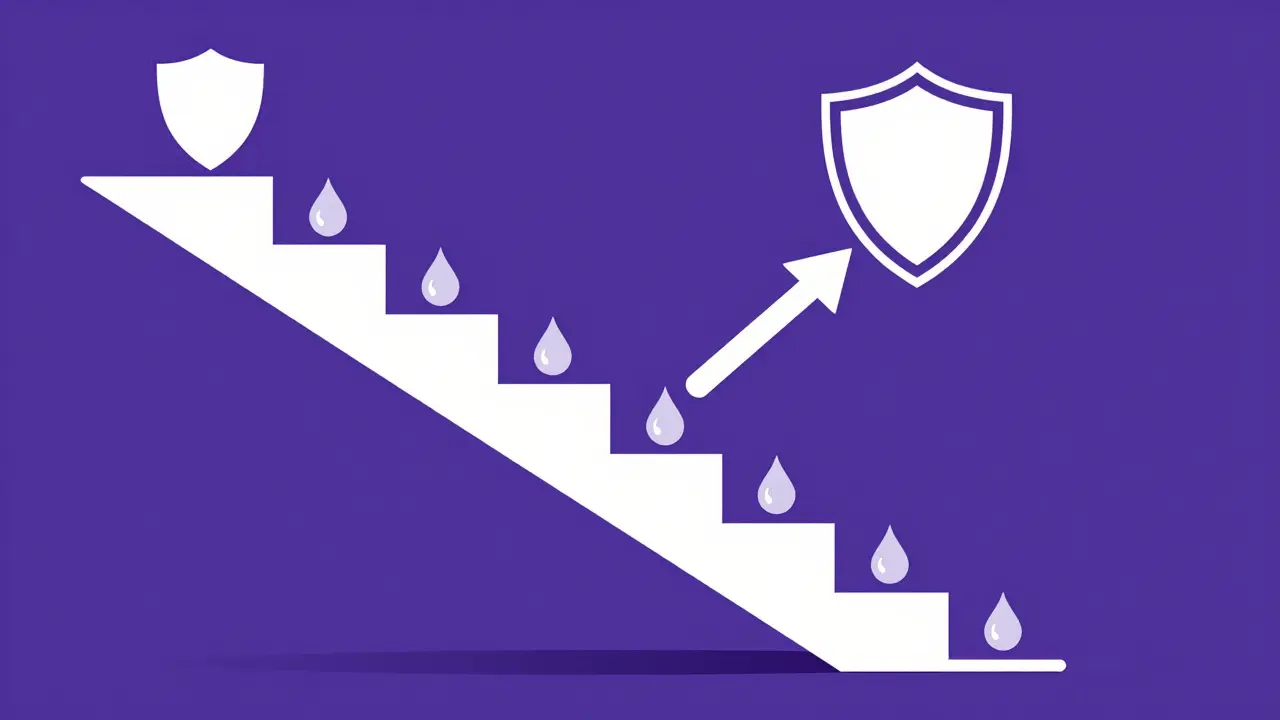
What happens if a patient *needs* a drug but keeps reacting to it? You can't just stop the treatment if it's the only thing working. This is where biologic infusion reactions are managed through a process called desensitization. Instead of giving the full dose at once, the medical team "tricks" the immune system by giving tiny amounts and slowly increasing them.The gold standard for IV biologics is the 12-step/3-bag protocol. Over the course of 4 to 6 hours, the patient receives increments of the drug: starting at just 1% of the target dose and slowly climbing to 10%, and finally 100%. The flow rate starts at a tiny 0.1 mL/min and ramps up to 5 mL/min. To prevent the "cytokine storm" associated with this process, patients are often given a constant drip of normal saline (100-250 cc/h) to keep the system hydrated and diluted.
This process isn't perfect-about 23% of people have a "breakthrough" reaction during the process-but it is incredibly effective. Success rates are as high as 97% for rituximab and 92% for cetuximab. It takes a few hours and a lot of patience, but it allows people to keep using life-saving medicine that their bodies would otherwise reject.
Comparing Reaction Profiles by Drug Class
Not all biologics are created equal. Some are notorious for reactions, while others are quite mild. For instance, TNF inhibitors generally have lower reaction rates compared to B-cell depleting therapies.| Biologic Agent | Typical HSR Rate | Common Profile |
|---|---|---|
| Infliximab | 10-20% | Moderate risk; responds well to steroids |
| Adalimumab | 5-10% | Lower risk; timing of doses is critical |
| Rituximab | 30-80% (1st dose) | High initial risk; very successful desensitization |
| Cetuximab | 20-25% | Moderate risk; high success with slow titration |
| Tocilizumab | Varies | Higher risk of Cytokine Release Syndrome |
Future Outlook: AI and Precision Prevention
We are moving away from a "one size fits all" approach to infusion. In the near future, doctors won't have to guess who might react. New AI-driven tools, like the BioReaction Score™, are already showing about 87% accuracy in predicting who will have a reaction based on their genetics (like HLA-DRA*0102 status) and their medical history.We are also seeing the rise of standardized desensitization kits and real-time cytokine monitoring. Instead of waiting for a patient to get a fever, doctors can use point-of-care testing to see if IL-6 levels are spiking, allowing them to adjust the infusion rate before the patient even feels a symptom. As the global biologics market grows, these safety protocols are becoming the standard of care, ensuring that the most advanced medicines can be delivered without putting the patient at risk.
Can I stop taking biologics if I have a reaction?
It depends on the severity. Grade 1 and 2 reactions can usually be managed with premedication or a slower infusion rate. However, medical guidelines generally warn against continuing therapy after a Grade 4 (life-threatening) reaction due to a high risk of recurrence. Always discuss alternatives with your rheumatologist or oncologist.
Does a reaction mean the drug isn't working?
Not necessarily. In fact, some reactions are caused by the very antibodies the body creates as it interacts with the drug. Many patients who undergo desensitization continue to see massive therapeutic benefits from the medicine despite their initial reactions.
What is the difference between a side effect and an infusion reaction?
A side effect is a general result of the drug's action (like fatigue or nausea). An infusion reaction is an acute immune response-like an allergy-that happens specifically during or immediately after the drug enters your system.
How long does a desensitization session take?
A typical IV desensitization session takes between 4 to 8 hours. Because the dose is increased in very small increments over 12 steps, it requires constant monitoring and a significant time commitment.
Are steroids always necessary before an infusion?
While highly effective, steroids can sometimes mask early symptoms of a reaction. Your doctor will weigh the benefit of reducing the reaction risk against the potential for masking symptoms, depending on your specific drug and health history.