
When your medication runs out and the pharmacy says they don’t have it-again-you’re not alone. In 2025, more than 258 different drugs were in short supply across the U.S. and Australia, with many of these shortages lasting over two years. It’s not just rare drugs either. Common ones like insulin, antibiotics, chemotherapy agents, and even basic pain relievers like acetaminophen injections have all hit critical lows. This isn’t a one-time hiccup. It’s a growing crisis that’s forcing patients, doctors, and pharmacists to find workable solutions-fast.
Why Do Medication Shortages Happen?
It’s not just bad luck. Most shortages come down to three things: manufacturing problems, supply chain fragility, and profit-driven decisions. A single factory making 85% of a generic drug can shut down for a quality issue, and suddenly, millions of people can’t get their medicine. That’s what happened with insulin in early 2025. One major supplier had a contamination issue, and within weeks, pharmacies from Sydney to Seattle were running out. The problem gets worse because many generic drugs are made by just a handful of companies. If one of them stops production-or decides it’s not profitable enough-there’s no backup. And when a drug is made overseas, delays in shipping or regulatory checks can stretch out for months. The FDA started doing monthly inspections at high-risk facilities in January 2025, and while that’s helped cut new shortages by 15%, it’s not fixing the ones already here.What You Can Do Right Now
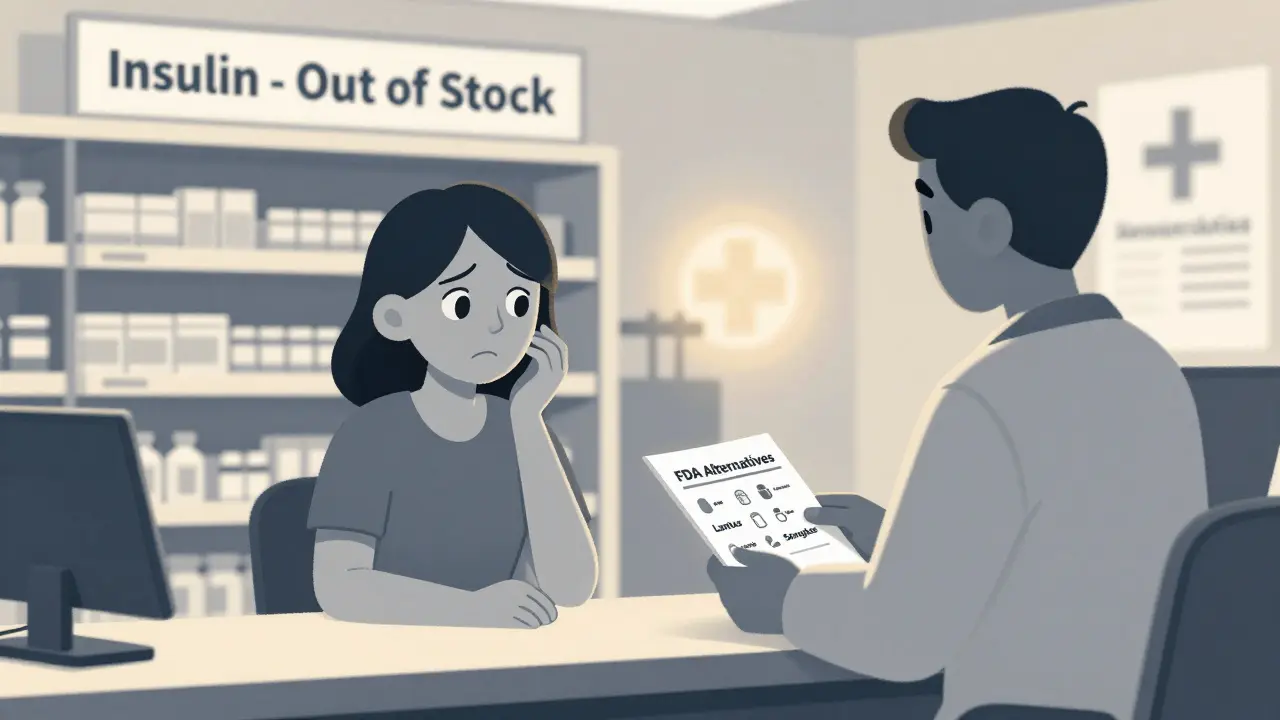
If your pharmacy says they’re out of your medication, don’t panic. Here’s what actually works:- Check the FDA Drug Shortage Database-it’s free, updated daily, and lists approved alternatives. For example, if Semglee (a biosimilar insulin) is out, Lantus is often a direct substitute without needing a new prescription.
- Call multiple pharmacies, including mail-order services. One patient in Sydney spent three days calling seven pharmacies before finding Semglee. The last one had two vials left. Don’t give up after one or two calls.
- Ask your pharmacist. Over 89% of major pharmacy chains now have dedicated staff trained to help with shortages. They can tell you which nearby locations have stock, suggest therapeutic alternatives, and even contact manufacturers for estimated restock dates.
- Talk to your doctor. Not all alternatives are equal. For antibiotics like amoxicillin, azithromycin might be used instead-but it’s not always the right choice. Your doctor can adjust dosage, switch to a different class of drug, or even prescribe a lower-strength version to stretch your supply.
- Check your insurance formulary. Some insurers changed rules during the 2025 insulin shortage. Blue Cross NC, for example, removed prior authorization for Lantus on certain plans. Call your insurer or log in to your portal. You might be able to get an alternative covered without extra steps.
Therapeutic Alternatives: When Substitution Works (and When It Doesn’t)
Not every drug has a safe substitute. But for many, alternatives exist-and they’re backed by data. For insulin, biosimilars like Semglee and Lantus are considered interchangeable by the FDA. That means pharmacists can swap them without a new prescription. But Toujeo and Tresiba? Those are different formulations. You can’t swap them without your doctor’s approval. For antibiotics, switching from amoxicillin to azithromycin might seem easy, but it increases the risk of antibiotic resistance. Studies show this switch spiked during shortages, but it’s not ideal for strep throat or ear infections. Your doctor needs to know the exact infection to pick the right alternative. Oncology drugs are the toughest. Of the 15 cancer medications in shortage between 2023 and 2025, 7 were used for pediatric cancers. There are often no direct substitutes. In these cases, hospitals use dose adjustments, combination therapies, or even delayed treatment schedules-all under strict medical supervision.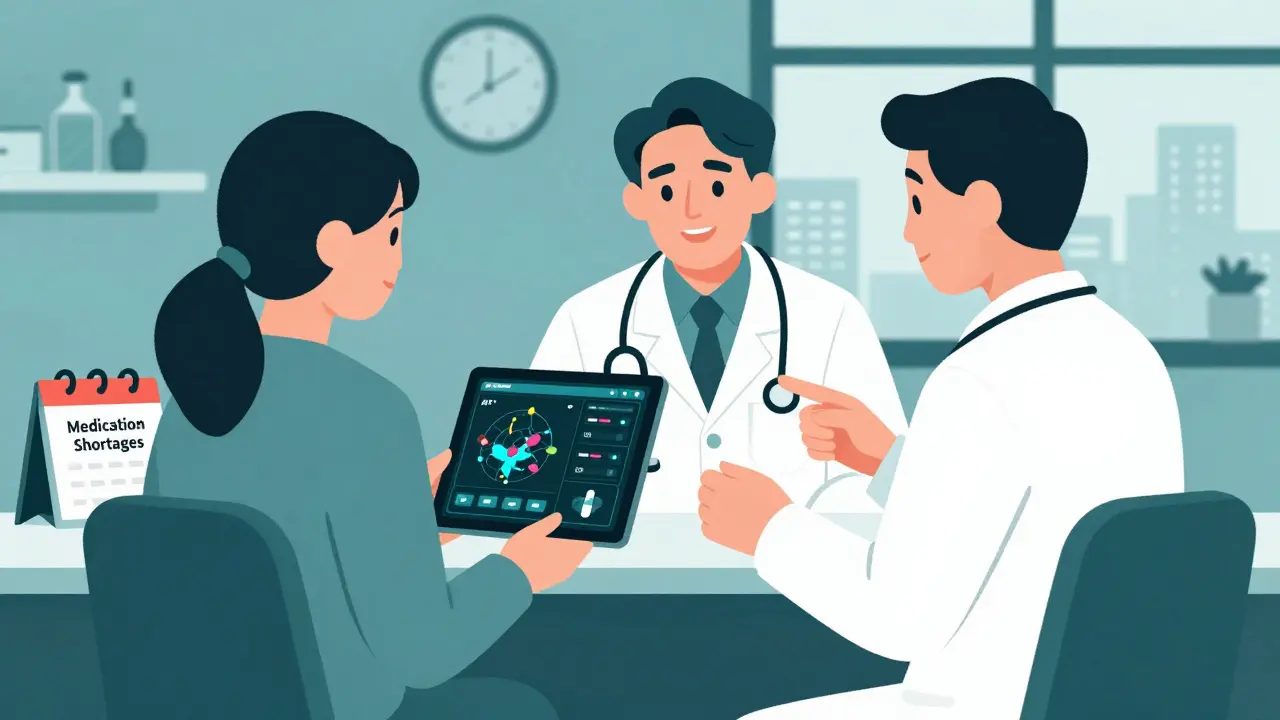
What’s Being Done to Fix This?
Some states and countries are stepping up. Hawaii’s Medicaid program started allowing foreign-approved drugs during shortages in early 2025. That means if a drug is approved in Canada, Australia, or the EU-and deemed safe-it can be imported legally. It’s not a magic fix, but it’s helped with insulin and some chemotherapy drugs. New Jersey proposed letting pharmacists hand out emergency insulin supplies without a prescription during shortages. California, New York, and Massachusetts started stockpiling critical drugs like mifepristone and insulin in case federal policies restrict access. The biggest innovation? Real-time data tools. Pilot programs at 47 major health systems now use AI-powered dashboards that show which drugs are low, where they’re available, and what alternatives are covered by insurance-all in one screen. Doctors using these tools found alternatives 28% faster than before.What Not to Do
Don’t skip doses. Don’t split pills unless your doctor says it’s safe. Don’t buy from unverified online sellers. A 2025 survey found that 32% of patients stopped their medication during a shortage-and nearly half of them saw their condition worsen. Also, don’t assume your doctor knows about the shortage. Many doctors aren’t notified until a patient walks in frustrated. Bring up the issue yourself. Say: “I’ve been unable to fill my prescription for X. Do you have any alternatives or suggestions?”
How to Prepare for the Next Shortage
If you take a chronic medication, plan ahead:- Keep a 30-day supply on hand if possible.
- Ask your doctor for a list of therapeutic alternatives before a shortage hits.
- Sign up for manufacturer alerts. Pfizer and Sanofi send out emails when their drugs are running low, with estimated restock dates.
- Know your insurance’s rules. Some plans require step therapy or prior authorization for alternatives.
- Join patient forums like r/pharmacy on Reddit. Real people share real-time updates on what pharmacies have in stock.
Final Thought: You’re Not Powerless
Medication shortages feel overwhelming because they’re systemic. But your role matters. Talking to your pharmacist, asking your doctor for alternatives, checking official databases, and staying informed are the most effective tools you have. The system isn’t perfect-but you can still get your medicine. You just need to know where to look.
12 Comments

kumar kc
January 21, 2026 AT 06:33
People just don’t plan ahead. If you’re on chronic meds, keep a 30-day buffer. Simple. No excuse.

Carolyn Rose Meszaros
January 23, 2026 AT 06:11
OMG this is so real 😭 I called 12 pharmacies last week for my insulin and finally found it at a CVS in a town 45 mins away. My pharmacist cried with me. We’re all just trying to survive this system.

Greg Robertson
January 23, 2026 AT 10:42
Hey, just wanted to say thanks for laying this out so clearly. I didn’t realize pharmacists had trained shortage staff-my local one was super helpful when my amoxicillin vanished. Just needed to ask.

Jacob Cathro
January 24, 2026 AT 14:10
LMAO the FDA ‘helped’ by inspecting 15% more factories… yeah right. This whole thing’s a corporate scam. Big Pharma lets shortages happen so they can jack up prices on the ‘alternatives’. Also, ‘biosimilar’? Sounds like a sci-fi drug from a bad Netflix show.

Paul Barnes
January 26, 2026 AT 04:29
There is a critical error in the post: Semglee and Lantus are not interchangeable under FDA guidelines for all indications. The interchangeability designation applies only to specific subcutaneous uses, not intravenous or pediatric applications. Misinformation like this can be dangerous.

pragya mishra
January 27, 2026 AT 21:16
Why are we even letting this happen? Your insurance doesn’t cover the right drug? Your doctor doesn’t know? Your pharmacy doesn’t have it? This is a failure of the entire medical-industrial complex. People are dying because CEOs care more about quarterly profits than your life. Wake up.

Manoj Kumar Billigunta
January 28, 2026 AT 19:13
Hey, I’ve been through this with my dad’s chemo meds. The key is to stay calm and call around. Pharmacies talk to each other-if you ask nicely, they’ll check their neighbors. Also, don’t be afraid to ask your doctor for a written list of alternatives. It helps a lot. You’re not alone in this.

sagar sanadi
January 29, 2026 AT 06:48
Oh so now we’re supposed to trust ‘FDA-approved alternatives’? What’s next? Drinking bleach because the water supply’s ‘short’? The real shortage is trust in the system. They’re lying to us. Always have been. And now they want us to ‘check databases’ like it’s a game of Bingo.

Nadia Watson
January 30, 2026 AT 15:39
As someone who has lived in three countries and navigated healthcare systems in each, I can confirm that the U.S. is uniquely ill-equipped to handle these shortages. In Canada, pharmacists have broader substitution authority; in Germany, there are national stockpiles. We are falling behind. This is not just a logistical issue-it is a moral one.

Thomas Varner
January 31, 2026 AT 05:34
Just a heads-up: the FDA database is updated daily, but it’s not always accurate-sometimes it lags by 48 hours. I’ve seen it show ‘available’ when every pharmacy in my county was out. Always double-check with your local pharmacist, and if they’re unsure, call the manufacturer’s hotline. They usually have better real-time data.

Art Gar
January 31, 2026 AT 15:23
The suggestion to join Reddit communities as a resource is inappropriate. Informal forums are not reliable sources of medical information. Patients should rely exclusively on licensed healthcare professionals and official regulatory databases. This post dangerously blurs the line between evidence-based practice and crowd-sourced speculation.

Edith Brederode
February 2, 2026 AT 14:42
Thank you for sharing this! I just used your tips and found my insulin at a Walgreens 10 miles away-pharmacist even gave me a discount because they knew I was struggling. ❤️ We’re all in this together. You’re doing great.
Write a comment