



When a brand-name drug loses its patent protection, the first generic version usually hits the shelves. But here is the real secret to saving money: it is not the first generic that changes the game. It is the second and third ones.
If you have ever looked at your pharmacy receipt and wondered why some medications cost pennies while others still hurt your wallet, the answer often lies in how many companies are making that specific pill. The more competitors in the ring, the lower the price drops. This isn't just theory; it is a measurable economic pattern that saves consumers billions every year.
The Price Drop Curve: Why More Means Cheaper
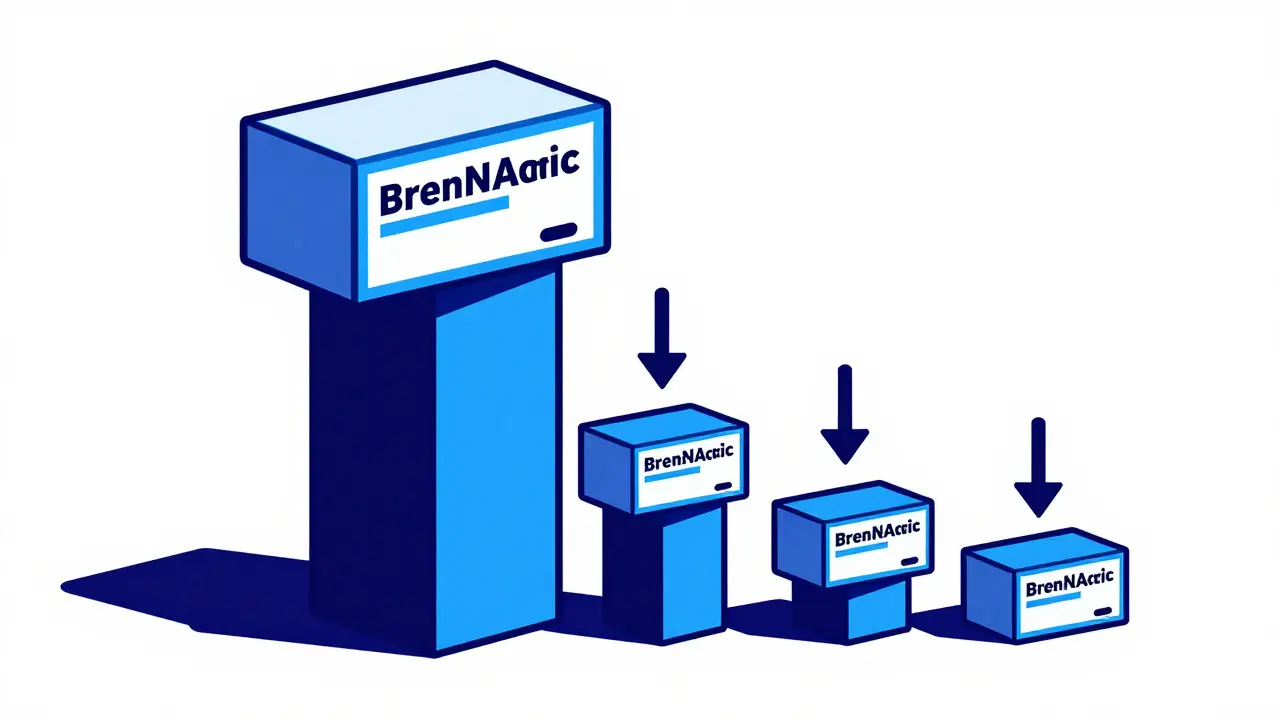
Let's look at the numbers because they tell a clear story. When a brand-name drug is on the market alone, it sets the price. Once the first generic enters, prices typically fall to about 87% of the original brand price. That’s a good start, but it’s not a discount you can’t live without.
Then, the second generic arrives. Suddenly, the price plummets to around 58% of the brand price. And when the third generic joins the party? The price hits rock bottom at roughly 42% of what the brand name charged. According to an analysis by the FDA (Food and Drug Administration) covering drugs approved between 2018 and 2020, this competitive pressure generated $265 billion in consumer savings. That is a staggering amount of money staying in patients' pockets.
| Number of Generic Makers | Average Price vs. Brand Name | Estimated Savings Potential |
|---|---|---|
| Brand Name Only | 100% | $0 |
| 1 Generic (First Entry) | ~87% | Moderate |
| 2 Generics (Second Entry) | ~58% | High |
| 3+ Generics (Third Entry) | ~42% | Maximum |
The "Sweet Spot" for Competition
Why does the drop stop being as steep after three or four companies enter? Experts point to what is known as the "sweet spot." Dr. Randall R. Riese, a former chief medical officer at a major pharmacy benefit manager, noted that the most significant price reductions happen between the second and fifth generic entrants. After that, the market stabilizes. If too many companies enter, some might exit due to low margins, which can actually cause prices to tick back up slightly. But for the average patient, reaching that threshold of three to five competitors is where the magic happens.
This dynamic was confirmed by the Assistant Secretary for Planning and Evaluation (ASPE) at the Department of Health and Human Services. Their 2021 analysis showed that in markets with about three competitors, prices decline by approximately 20% within three years of the first generic entry. In larger markets with ten or more competitors, those declines can reach 70-80%. So, the volume of prescriptions matters, too. The bigger the market, the more aggressive the pricing becomes.
What Happens When Competition Fails?
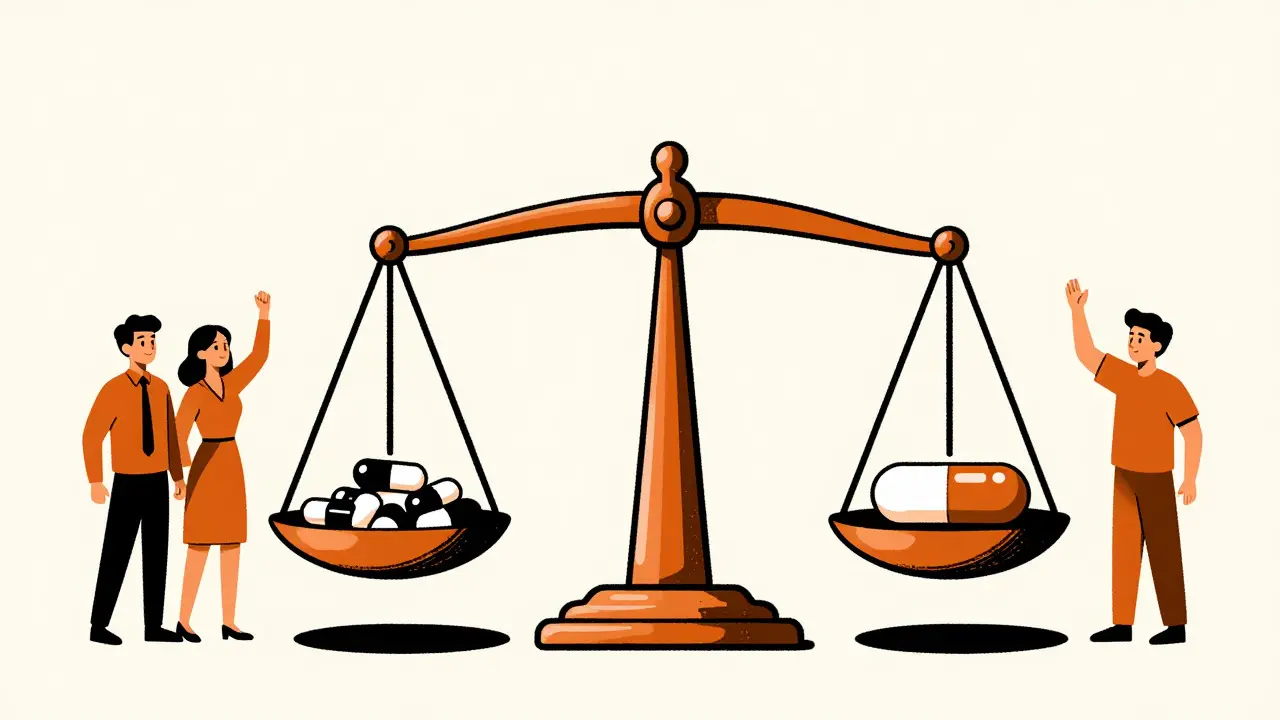
It doesn't always go smoothly. Sometimes, instead of three or four companies competing, you end up with just two. This is called a duopoly. A 2017 study from the University of Florida found that nearly half of all generic drug markets operate under these duopoly conditions. When only two makers control a drug, prices don't just stay high-they can actually rise. In some cases, prices jumped by 100% to 300% when a competitor left the market.
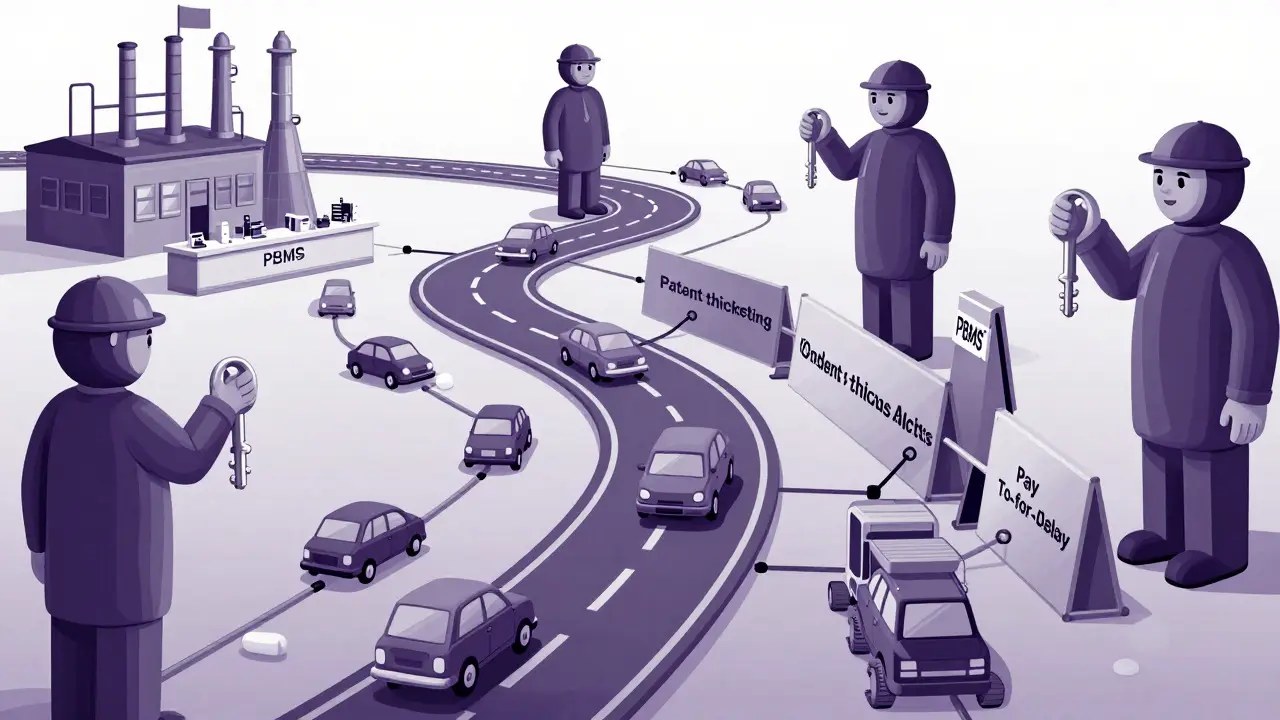
Why do companies leave? Often, the profit margin gets so thin that it isn't worth the risk. Or, sometimes, anti-competitive practices get in the way. For example, "pay for delay" settlements occur when a brand-name company pays a generic maker to wait before entering the market. The Blue Cross Blue Shield Association estimates this practice costs patients nearly $12 billion annually. Then there is "patent thicketing," where brand owners file dozens of overlapping patents to keep generics out longer than necessary. One blockbuster drug in 2002 accumulated 75 patents, extending its monopoly from 2016 all the way to 2034.
The Role of Wholesalers and PBMs
You might think the manufacturer sets the price you pay, but the supply chain plays a huge role. The US pharmaceutical supply chain is dominated by a few big players. Three wholesalers-McKesson, AmerisourceBergen, and Cardinal Health-control about 85% of the market. Similarly, three Pharmacy Benefit Managers (PBMs) process 80% of prescriptions. These entities have massive negotiating power.
In highly competitive generic markets, PBMs like Express Scripts can negotiate much better discounts because they have multiple options. If one generic maker raises their price, the PBM can simply switch to another. This leverage drives prices down further. However, in less competitive markets, the lack of alternatives weakens this bargaining power, leaving manufacturers with more room to keep prices higher. It’s a classic case of supply and demand, but with the added complexity of middlemen taking a cut.
Policy Moves to Boost Competition
Regulators know that keeping the gates open for new generic entrants is crucial. The FDA has implemented programs like the Generic Drug User Fee Amendments (GDUFA), specifically GDUFA III (2023-2027), which aims to speed up approvals for complex generics. Complex generics, such as injectables or multi-drug pills, are harder to replicate, so fewer companies bother to make them. By streamlining the approval process, the FDA hopes to encourage more second and third entrants in these niche areas.
Legislators are also stepping in. The CREATES Act, passed in 2022, prevents brand-name companies from blocking generic makers from getting samples of their drugs-a common tactic used to delay generic development. Meanwhile, proposals like the Preserve Access to Affordable Generics and Biosimilars Act target those "pay for delay" deals. If successful, these policies could save Medicare $25 billion annually by 2030, according to the Congressional Budget Office.
What This Means for Your Wallet
So, how does this affect you? If you are paying full price for a medication that has been off-patent for a few years, check if there are multiple generic versions available. Ask your pharmacist if a different manufacturer offers the same drug at a lower cost. In many cases, the difference between the first and third generic can be the difference between an affordable prescription and a financial burden.
Industry analysts predict that generic drug prices will continue to decline by 3-5% annually through 2027, provided that competition remains robust. But this trajectory depends on maintaining enough market entrants. If consolidation continues among generic manufacturers-as seen with mergers like Teva acquiring Allergan Generics-the potential for deep price cuts diminishes. Keeping an eye on the number of competitors for your specific medications is a simple, yet powerful, way to manage your healthcare costs.
Why are second and third generics cheaper than the first?
The first generic faces less competition and can charge closer to the brand price. As the second and third generics enter, they must undercut existing prices to gain market share, creating a downward spiral in costs that benefits consumers.
Does the brand of the generic matter for price?
Yes. Different generic manufacturers have different production costs and pricing strategies. Switching from one generic maker to another can result in significant savings, especially in markets with high competition.
What is a "duopoly" in the context of generic drugs?
A duopoly is a market condition where only two companies produce a specific generic drug. This limits competition, often leading to higher and more volatile prices compared to markets with three or more competitors.
How do PBMs influence generic drug prices?
Pharmacy Benefit Managers (PBMs) negotiate rebates and discounts with manufacturers. In competitive markets, PBMs have more leverage to drive prices down by threatening to switch formularies to cheaper alternatives.
Can generic prices go up after initial drops?
Yes. If competitors exit the market due to low margins or consolidation, the remaining manufacturers may raise prices. This is particularly common in duopolistic markets where the threat of new entry is low.