



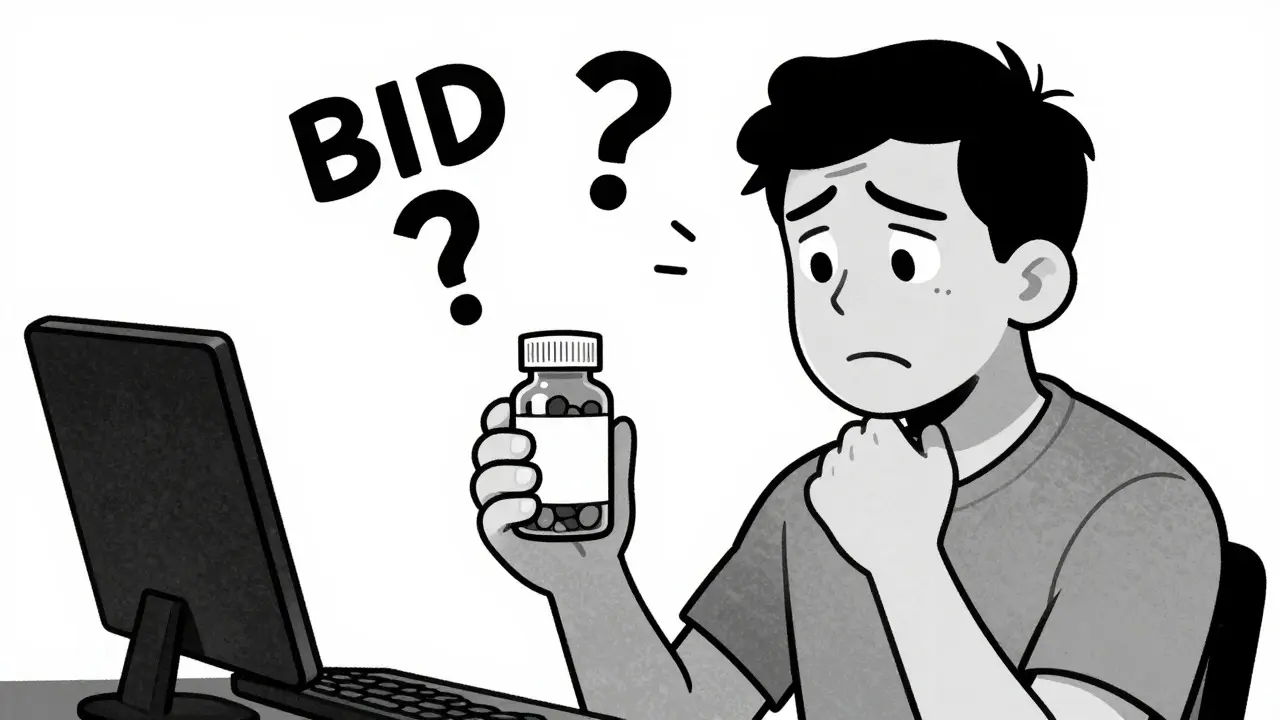
Have you ever stared at a small white sticker on a pill bottle, feeling a sudden wave of confusion? You see "Take as directed" or "BID," but what does that actually mean for your day? It’s not just about taking the right amount; it’s about knowing exactly when to take it. Misinterpreting these instructions is more common than you think, and it can lead to serious health risks.
The way we read prescription labels has changed significantly in recent years. Regulatory bodies like the U.S. Food and Drug Administration (FDA) have pushed for clearer, more explicit language to reduce errors. Yet, many patients still struggle with vague terms. This guide breaks down how to interpret frequency and timing on your prescription labels, ensuring you get the most out of your medication while staying safe.
Understanding the Core Components of Dosage Instructions
Every prescription label contains critical information designed to help you use the drug safely. According to FDA regulations under 21 CFR 201.57(c)(3)(i), the label must include specific details about dosage and administration. This isn't just bureaucratic red tape; it's a safety net.
You need to look for three main elements:
- Dose Quantity: How much medication to take at one time (e.g., 1 tablet, 5 mL).
- Frequency: How often to take it (e.g., daily, twice a day).
- Timing/Route: When to take it relative to meals or other activities, and how to take it (oral, topical, etc.).
The FDA’s 2014 guidance document emphasizes that these sections must be clear enough for patients with varying levels of health literacy. However, a 2023 update revealed that 78.3% of medication errors reported between 2019 and 2022 were linked to unclear dosage instructions. Timing confusion alone accounted for nearly half of those incidents. Understanding these components is your first step toward avoiding these pitfalls.
The Problem with Vague Terminology
One of the biggest sources of confusion is the use of medical abbreviations and vague phrases. Terms like "b.i.d." (twice daily) or "t.i.d." (three times daily) are standard in medical charts but meaningless to many patients. The American Medical Association found that only 37.4% of adults correctly interpret these abbreviations.
Consider the phrase "as needed." While flexible, it often lacks crucial context. A 2023 Consumer Reports survey found that 67.8% of respondents didn’t know the maximum daily dose for pain medications labeled "take as needed." Without a cap, patients risk overdosing. Similarly, "once daily" doesn’t specify when. For drugs like levothyroxine, which require an empty stomach, taking it at night instead of morning can render the medication ineffective.
Dr. Sarah Parker from the FDA noted that vague instructions contribute to 18.2% of preventable adverse drug events. The shift away from these terms is essential for patient safety.
Why Explicit Timing Matters
The solution to this ambiguity is explicit timing instructions. Instead of "twice daily," modern best practices recommend "Take 1 tablet in the morning and 1 tablet in the evening." This specificity reduces guesswork.
| Vague Instruction | Potential Misinterpretation | Explicit Alternative | Benefit |
|---|---|---|---|
| "Twice daily" | Take both pills at once or at random times | "Take 1 tablet with breakfast and 1 tablet with dinner" | Anchors dose to routine, ensures 24-hour coverage |
| "As needed for pain" | Unlimited dosing, risking overdose | "Take 1 tablet every 4-6 hours as needed, max 4 tablets per day" | Prevents toxicity, manages expectations |
| "Once daily" | Taking at inconsistent times each day | "Take 1 tablet every morning before breakfast" | Maintains consistent blood levels, aids absorption |
A 2021 randomized controlled trial at Massachusetts General Hospital demonstrated the power of this approach. Patients receiving labels with explicit timing had 34.7% higher adherence rates compared to those with standard interval instructions. By linking medication intake to daily habits like meals, you create a reliable routine that minimizes missed doses.
Navigating Liquid Medications and Metric Units
If you’re dealing with oral liquid medications, the stakes are even higher due to measurement errors. Historically, labels used household measures like teaspoons or tablespoons. These are imprecise and vary by region and brand.
The National Council for Prescription Drug Programs (NCPDP) now mandates that milliliters (mL) be the standard unit on prescription container labels. Despite this, a 2021 FDA audit found that 63.8% of oral liquid medication labels still used non-standard units. This contributed to a 27.4% error rate in actual patient measurements.
To avoid mistakes:
- Always use the measuring device provided with the medication (syringe or cup).
- Ignore kitchen spoons-they are not accurate for medical dosing.
- Check if your label specifies mL. If it says "teaspoon," ask your pharmacist to clarify the exact mL equivalent.
This simple switch to metric units can drastically reduce the risk of under- or overdosing, especially for children or elderly patients.
Challenges for Shift Workers and Irregular Schedules
While explicit timing helps most people, it can pose challenges for those with irregular schedules. Dr. Michael Wolf’s research highlighted that 22.3% of night-shift workers misinterpreted "morning" and "evening" instructions because their circadian rhythms differ from the norm.
If you work shifts, don’t assume "morning" means 8 AM. Instead, define "morning" as "upon waking" and "evening" as "before bed." Discuss your schedule with your pharmacist. They can adjust the label to reflect your unique routine, such as "Take 1 tablet upon waking and 1 tablet 12 hours later." Flexibility within the framework of explicit instructions is key for maintaining therapeutic effectiveness without disrupting your life.
The Role of Pharmacists and Technology
Your pharmacist is your best ally in decoding these labels. The FDA recommends that pharmacists spend 2.3 to 3.7 minutes per prescription to convert vague instructions into explicit ones. However, workload pressures often limit this interaction.
Technology is stepping in to bridge this gap. Partnerships between Surescripts and NCPDP have implemented standardized timing instruction sets in electronic systems used by over 90% of U.S. pharmacies. This automation reduces conversion time to just 47 seconds per prescription, allowing pharmacists to focus more on patient counseling rather than manual label editing.
Look out for future innovations too. The FDA is piloting augmented reality labels that provide visual demonstrations of dosage timing via smartphone scans. Early trials showed a 52.3% reduction in timing errors. As these technologies roll out, expect your prescription labels to become even more interactive and user-friendly.
Practical Steps for Better Adherence
To ensure you’re interpreting your prescription labels correctly, follow these actionable steps:
- Ask Questions: If an instruction seems vague, ask your pharmacist to rewrite it in plain language.
- Use Pill Organizers: For complex regimens, a weekly pill box can visually reinforce timing.
- Set Reminders: Use phone alarms or apps to anchor doses to specific times or meals.
- Review Regularly: Each time you refill, re-read the label. Instructions may change based on your progress.
- Keep a Log: Track when you take your meds to identify patterns or missed doses.
By taking an active role in understanding your dosage instructions, you empower yourself to manage your health effectively. Clear communication between you, your doctor, and your pharmacist is the cornerstone of safe medication use.
What does "BID" mean on a prescription?
"BID" is a Latin abbreviation meaning "bis in die," which translates to "twice a day." However, this term is increasingly being replaced by explicit instructions like "Take 1 tablet in the morning and 1 tablet in the evening" to prevent confusion, as only 37.4% of patients correctly interpret this abbreviation.
Why are milliliters preferred over teaspoons for liquid meds?
Milliliters (mL) provide a precise, standardized measure. Household teaspoons vary in size and accuracy, leading to a 27.4% error rate in patient measurements. Using mL ensures you receive the exact dose prescribed, reducing the risk of under- or overdosing.
How should I take "as needed" medications?
"As needed" medications should always have a specified maximum daily dose and minimum interval between doses. For example, "Take 1 tablet every 4-6 hours as needed, max 4 tablets per day." If your label lacks this detail, ask your pharmacist to clarify to avoid accidental overdose.
What if my shift work conflicts with "morning/evening" instructions?
If you work shifts, discuss your schedule with your pharmacist. They can adjust the label to reflect your routine, such as defining "morning" as "upon waking" and spacing doses 12 hours apart regardless of clock time. This flexibility helps maintain drug efficacy while accommodating your lifestyle.
Are new technologies improving prescription label clarity?
Yes. Electronic systems now automate the conversion of vague instructions to explicit timing, reducing errors. Additionally, pilot programs using augmented reality labels allow patients to scan their bottles for visual timing guides, showing a 52.3% reduction in timing errors during trials.