



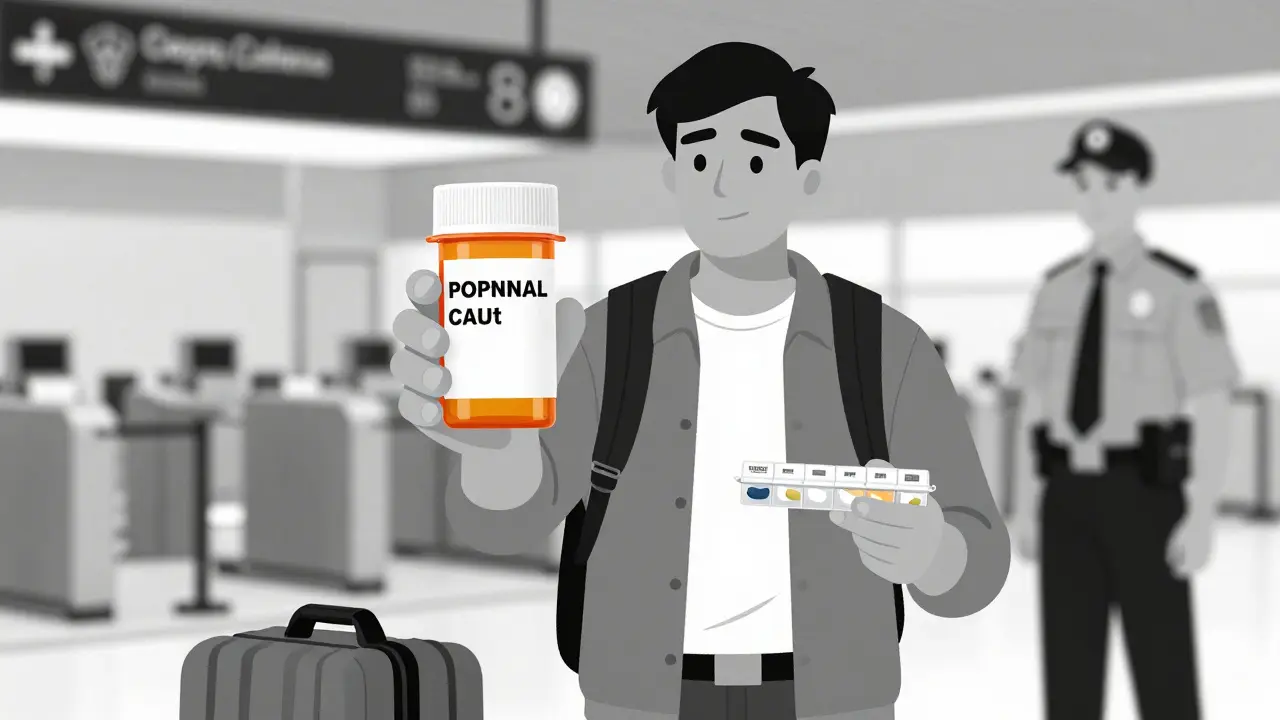
You pack your bags, double-check your passport, and line up your pill organizer for the week ahead. It’s neat, tidy, and efficient. But when you step into security or land in a foreign country, that convenience might turn into a nightmare. While federal agents at airport checkpoints might not care if your pills are loose in a baggie, customs officers, local police, and even state laws often have very different opinions. Carrying medications in their original containers is not just about following rules; it is about protecting yourself from legal trouble, confiscation, and health risks while traveling.
The Myth of "TSA Doesn't Care"
If you read only one rule before flying within the United States, it’s likely this one: The Transportation Security Administration (TSA) does not require you to keep medicines in their original prescription bottles. This fact is widely cited by travel blogs and health sites alike. According to TSA guidelines updated in September 2023, there is no limit to how much solid medication you can bring, as long as it goes through screening. You can use a weekly pill case, a Ziploc bag, or even a coffee cup if you really wanted to.
However, this creates a dangerous false sense of security. The TSA’s job is national security-checking for explosives and weapons-not enforcing pharmacy regulations. Once you clear the checkpoint, you are subject to other jurisdictions. If you are flying internationally, you enter the realm of Customs and Border Protection (CBP). If you are driving across state lines, you enter new state laws. Neither CBP nor state police follow the TSA’s relaxed stance on labeling. Relying solely on TSA rules is like obeying the speed limit but ignoring red lights because the traffic cop isn’t watching right now.
Why Original Bottles Are Your Best Defense
Think of an original prescription bottle as a legal ID card for your medication. It contains critical data points that prove three things: the drug is prescribed to you, it is authentic, and it is being taken for a legitimate medical condition. A pharmacy label includes your name, the prescribing doctor’s name, the drug’s generic and brand names, the dosage strength, and the fill date.
Without this label, a white pill looks exactly like a controlled substance. In many countries, possessing unmarked pills is treated as drug trafficking until proven otherwise. Dr. Marcia Wyman, a medication safety specialist at the Cleveland Clinic, emphasizes that keeping medications in original containers helps both travelers and security personnel identify drugs quickly. This simplicity saves time and reduces suspicion. When an officer sees a bottle labeled with your name and a doctor’s script, they know immediately what they are looking at. When they see a mystery powder in a plastic bag, they have to stop, test, and potentially detain you.
Navigating State Laws Within the U.S.
Even if you never leave the United States, patchwork state laws can trip you up. The National Association of Boards of Pharmacy notes that regulations vary significantly by state. Thirty-seven states, including major hubs like California, New York, and Texas, have specific labeling requirements. In these places, transporting prescription medications requires them to be in their original containers or clearly labeled with specific details.
For example, if you drive from Florida to Pennsylvania, you cross into a state where strict labeling is enforced. While twelve states like Florida and Illinois may have looser rules, the moment you cross a border, you must comply with the stricter law. If you are pulled over for a routine traffic stop and found with unmarked prescription pills, you could face fines or charges for possession without a valid prescription container. It is far easier to keep everything in its pharmacy-issued bottle than to memorize which states allow pill organizers.
| Requirement | U.S. Domestic (TSA) | International / Customs |
|---|---|---|
| Original Container Needed? | No (but recommended) | Yes (Strictly required in most countries) |
| Liquid Limits | Exempt from 3.4 oz rule if declared | Varies by country; often stricter |
| Documentation | Not usually checked | Doctor’s letter often mandatory |
| Quantity Limits | No federal limit | Often limited to 30-day supply |
The International Minefield
Leaving the U.S. changes the game entirely. What is a standard prescription in America might be a banned substance abroad. The Centers for Disease Control and Prevention (CDC) reported that nearly half of all medication-related travel incidents involved common drugs that were illegal in the destination country. For instance, pseudoephedrine (found in Sudafed) is prohibited in Japan, the UAE, and South Korea. Codeine-containing cough syrups are restricted in Thailand and Singapore. ADHD medications like Adderall are banned in many European and Middle Eastern nations.
When you arrive at customs, officers need proof that you are not smuggling drugs. A study by the International Association for Medical Assistance to Travelers found that travelers carrying medications in original containers experienced 73% fewer delays during inspections compared to those using pill organizers. The U.S. Embassy in Mexico saw a similar trend, noting a 68% reduction in entry denials when travelers presented pharmacy-labeled bottles alongside physician documentation.
Many countries also impose strict quantity limits. The United Kingdom typically allows only a 30-day supply without special authorization. Japan limits most medications to a one-month supply. If you show up with six months’ worth of pills in a generic jar, you will likely be detained. Original bottles help verify the quantity because the fill dates and counts are visible.
Liquids, Gels, and Temperature Sensitivity
Liquid medications get a pass on the standard 3.4-ounce liquid rule, but you must declare them. Tell the TSA officer at the start of screening that you have medically necessary liquids. You can bring reasonable amounts exceeding the limit, but they may be subjected to additional testing, such as vapor analysis. Do not assume you can just shove insulin or liquid antibiotics into your checked bag. United Airlines and the TSA explicitly warn against checking medications. Checked luggage can be lost, delayed, or exposed to extreme temperatures that ruin the drug’s efficacy.
Temperature control is another hidden risk. The Cleveland Clinic reports that 23% of travelers experience medication degradation due to improper storage. If you need ice packs for insulin or other temperature-sensitive drugs, you can bring them, but they must be declared. Solid ice packs are preferred, but frozen gel packs are allowed if they are frozen solid when going through security. If they are slushy, they count as liquids. Always check with your pharmacist about specific storage needs before you fly.
Essential Documentation Checklist
Your original bottles are powerful, but they work best when paired with proper paperwork. Experts recommend creating a comprehensive travel medical kit that includes:
- A Doctor’s Letter: Printed on official letterhead, signed by your physician, and dated recently. It should list your medical condition, the medications you take, their generic names, dosages, and why they are necessary. Include the doctor’s license number and contact info.
- Copies of Prescriptions: Keep digital and physical copies of your current prescriptions.
- Generic Names: Brand names change by country. Knowing the generic name (e.g., acetaminophen instead of Tylenol) helps pharmacists and doctors abroad understand what you need if you run out.
- Extra Supply: Pack enough medication for your entire trip plus extra days. Delays happen. Never rely on finding your exact medication at your destination, especially abroad where quality standards may differ.
What If You Must Use a Pill Organizer?
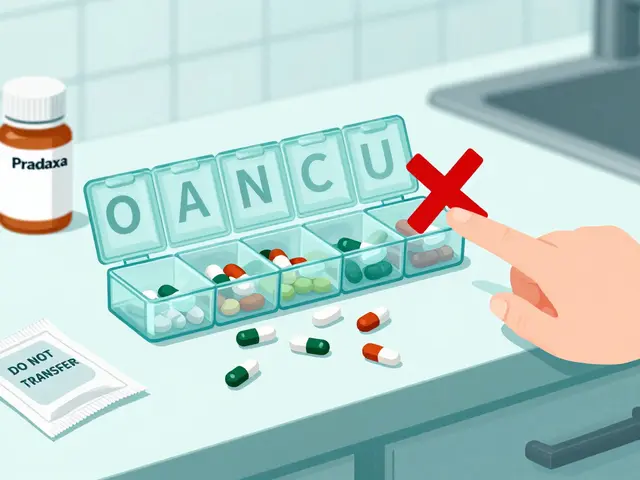
We know life happens. Sometimes you just want the convenience of a weekly pill box. If you must use one, mitigate the risk. First, check the laws of every state you will drive through and every country you will visit. If any jurisdiction requires original packaging, do not use a pill organizer.
If you are cleared to use one, label the organizer clearly. Write the medication name, dose, frequency, and expiration date on the outside. Better yet, take a high-resolution photo of each original prescription bottle and save it on your phone. If questioned, you can show the image as proof of the original labeling. However, remember that a photo is not always accepted by strict customs officials abroad. When in doubt, stick to the bottles.
Summary of Best Practices
Traveling with medication doesn’t have to be stressful, but it requires preparation. The golden rule is simple: keep your meds in their original, pharmacy-labeled containers. This single step satisfies TSA guidelines, complies with most state laws, and provides the strongest defense against international customs scrutiny. Pair this with a doctor’s letter, keep everything in your carry-on, and verify destination-specific bans. By treating your medication with the same respect as your passport, you ensure that your health remains protected, no matter where you go.
Does TSA really not require original bottles?
Yes, the TSA does not mandate original prescription bottles for domestic flights within the U.S. They prioritize security screening over pharmacy regulation. However, they strongly recommend keeping meds in original containers to facilitate smoother processing and avoid confusion.
Can I bring liquid medication over 3.4 ounces?
Yes. Liquid medications are exempt from the standard 3.4-ounce liquid limit. You can bring reasonable quantities for your trip, but you must declare them to the TSA officer at the beginning of the screening process. They may undergo additional testing.
Should I put my medication in checked baggage?
No. Never place medication in checked bags. Bags can be lost, delayed, or exposed to extreme temperatures that degrade the medication. Always keep essential medicines in your carry-on luggage so you have access to them throughout your journey.
What documents should I carry with my medication?
Carry a letter from your doctor on official letterhead stating your condition, the medications you take (including generic names), dosages, and necessity. Also, keep copies of your prescriptions. This documentation is crucial for international travel and some state laws.
Are there countries where common U.S. meds are illegal?
Yes. Many countries ban common U.S. medications. For example, pseudoephedrine is banned in Japan and the UAE, and codeine is restricted in Thailand and Singapore. ADHD medications like Adderall are prohibited in many European and Middle Eastern countries. Always check destination regulations before packing.
How much medication can I bring for international travel?
Most countries limit travelers to a 30-day supply of personal medication without special permits. Some, like Japan, strictly enforce a one-month limit. Bringing more than this can lead to detention or denial of entry. Check specific country limits via the U.S. Department of State or local embassies.
Can I use a pill organizer for international flights?
It is highly discouraged. While TSA allows it domestically, international customs officers often require original pharmacy labels to verify authenticity and ownership. Using a pill organizer abroad significantly increases the risk of delays, confiscation, or legal issues.