




Imagine you have a severe infection. Your doctor prescribes the gold-standard antibiotic, but your chart says "allergic." So, they prescribe something else-more expensive, less effective, and harder on your gut. This happens every day. In fact, about 10% of people claim to be allergic to penicillin, one of the most common antibiotics in history. But here is the shocking part: fewer than 1% of those people actually have a true immune system reaction. Most are confusing a mild side effect with a life-threatening allergy.
This confusion isn't just annoying; it’s dangerous. It drives up healthcare costs by billions of dollars annually and exposes patients to broader-spectrum drugs that fuel antibiotic resistance. If you carry a medication allergy label, you need to know how to manage it correctly. More importantly, you need to know if that label is even real. Let’s break down how to distinguish true allergies from side effects, how to find safe alternatives when you do have an allergy, and why getting tested might be the best health decision you make this year.
The Difference Between an Allergy and a Side Effect
Before we talk about treatments, we need to clear up a massive misconception. Not every bad reaction to a drug is an allergy. The immune system has to be involved for it to count as a true drug allergy. When your body mistakenly identifies a harmless substance in a medication as a threat, it releases histamines and other chemicals. This causes symptoms like hives, swelling, difficulty breathing, or a drop in blood pressure.
On the other hand, non-allergic adverse reactions are much more common. These account for over 90% of negative drug experiences. Think of nausea after taking ibuprofen, a headache from a blood pressure med, or a rash caused by a viral infection while you were on antibiotics. These are side effects, not allergies. According to data from the Cleveland Clinic, mislabeling these side effects as allergies leads to suboptimal care. If you only had a stomach ache from a pill, you aren’t allergic to it. You just can’t tolerate it well on an empty stomach. Knowing this difference is the first step in managing your health safely.
How to Document Your Reactions Properly
If you suspect a reaction, vague notes like "bad reaction" in your medical file help no one. Proper documentation is critical for your safety. Guidelines from the National Institute for Health and Care Excellence (NICE) specify that providers must record seven key data points:
- The generic and brand name of the suspected drug.
- A detailed description of the specific symptoms you experienced.
- The reason you were taking the drug (the diagnosis).
- The exact date and time the reaction started.
- How many doses you took before the reaction began.
- How the drug was administered (pill, injection, etc.).
- Specific drugs or classes to avoid in the future.
Without these details, doctors play it safe by avoiding entire classes of medications. For example, if you write "rash" without context, a doctor might assume it was a severe allergic dermatitis rather than a benign viral exanthem. Carry a wallet card listing your specific allergies and reactions. This simple tool ensures that any provider, anywhere, understands exactly what happened to you last time.
Penicillin: The Most Common Misdiagnosis
Penicillin is the poster child for mislabeled drug allergies. About 10% of the population reports being allergic to it. However, studies show that 90-95% of these patients can safely receive penicillin after proper evaluation. Why the discrepancy? Many childhood rashes were attributed to penicillin when they were actually caused by viruses like Epstein-Barr or mononucleosis.
Dr. Elina Jerschow, Director of Drug Allergy Research at Montefiore Medical Center, notes that most labeled allergies are false alarms. The risk of keeping a false label is high. Patients with documented penicillin allergy are 69% more likely to receive broad-spectrum antibiotics. These stronger drugs kill off good bacteria in your gut, increasing your risk of Clostridium difficile (C. diff) infection by 26%. C. diff is a serious intestinal infection that can be life-threatening. By clearing a false penicillin allergy, you protect yourself from unnecessary hospital stays and harsher medications.
Finding Safe Antibiotic Alternatives
If you do have a confirmed IgE-mediated allergy to penicillin, you still have options. The goal is to find an alternative that treats your infection effectively without triggering a reaction. Here is how different antibiotic classes compare for penicillin-allergic patients:
| Antibiotic Class | Common Examples | Cross-Reactivity Risk | Pros & Cons |
|---|---|---|---|
| Macrolides | Azithromycin, Clarithromycin | None | Safe alternative, but higher cost (~$26 vs $4 for penicillin) and potential GI upset. |
| Fluoroquinolones | Levofloxacin, Moxifloxacin | None | Effective for complex infections, but carries FDA warnings for tendon rupture and nerve damage. |
| Tetracyclines | Doxycycline | None | Good for acne and Lyme disease, but causes sun sensitivity and esophageal irritation. |
| Cephalosporins | Ceftriaxone, Cephalexin | Low (<1%) | Often safe even for penicillin-allergic patients, especially 3rd generation, but requires caution. |
Note the section on cephalosporins. Old textbooks warned of high cross-reactivity between penicillins and cephalosporins. Modern research from the CDC indicates the risk is actually very low, especially with third-generation cephalosporins like ceftriaxone. Your allergist may determine you can safely take these, expanding your treatment options significantly.
When Desensitization Is Necessary
Sometimes, there is no good alternative. Penicillin remains the only effective treatment for certain conditions, such as neurosyphilis or syphilis in pregnant women. In these cases, doctors use a process called drug desensitization. This doesn't cure the allergy; it temporarily tricks your immune system into tolerating the drug.
The protocol involves administering a tiny initial dose of the medication, followed by gradually larger doses every 15-30 minutes over several hours. This must be done under strict medical supervision, usually in an inpatient setting equipped to handle anaphylaxis. Success rates exceed 80% for penicillin desensitization. Once the course is complete, the patient can finish the treatment safely. However, the tolerance wears off once the drug is stopped, meaning desensitization must be repeated if the drug is needed again later.
Getting Tested: Skin Tests and Oral Challenges
If you want to know for sure whether you are truly allergic, you need formal testing. This is typically done by an allergist. The process usually involves two steps:
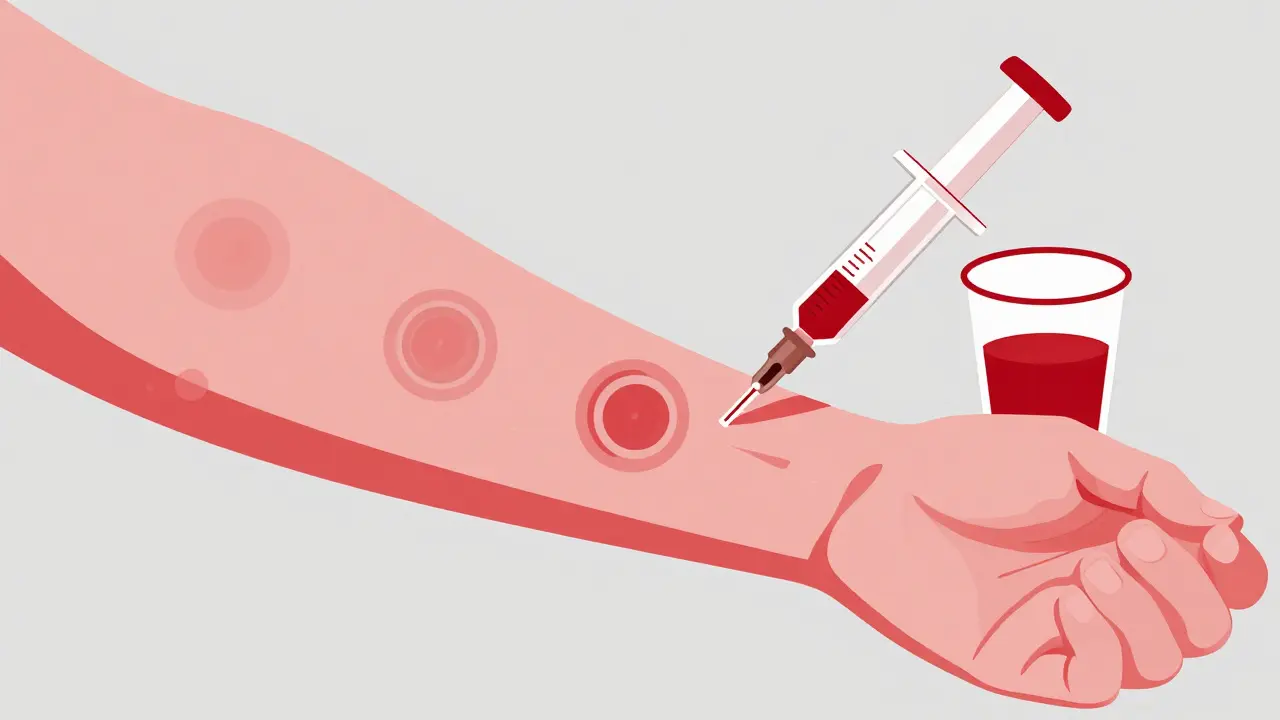
- Skin Testing: The allergist pricks your skin with small amounts of major and minor determinants of the drug. For penicillin, this includes benzylpenicilloyl polylysine and benzylpenicillin G. A positive result means a wheal and flare reaction, indicating a true IgE-mediated allergy.
- Oral Challenge: If skin tests are negative, you may undergo a supervised oral challenge. You take a small dose of the drug, then a full therapeutic dose, while being monitored for any reaction. If you pass this, the allergy label is officially removed from your chart.
A 2021 study tracked 1,000 patients with reported penicillin allergy. After evaluation, 957 of them tolerated penicillin without issue. Getting tested removes the fear and opens up safer, cheaper, and more effective treatment paths for your future infections.
Emergency Management of Acute Reactions
If you do have a confirmed allergy, you must know how to act if exposed accidentally. Immediate cessation of the offending medication is step one. For mild symptoms like localized hives, antihistamines such as diphenhydramine (Benadryl) can help block histamine release. For more serious reactions involving swelling or respiratory distress, corticosteroids may be administered orally or via injection to reduce inflammation.
However, if you experience signs of anaphylaxis-throat tightening, wheezing, dizziness, or rapid pulse-you need epinephrine immediately. Epinephrine is the first-line treatment because it constricts blood vessels to raise blood pressure and relaxes airway muscles to support breathing. Call emergency services right away. Do not wait to see if it gets better. Anaphylaxis can progress rapidly and is life-threatening without prompt intervention.
Can you outgrow a medication allergy?
Yes, particularly with penicillin. Studies show that up to 80% of people lose their penicillin allergy within 10 years. This is why re-evaluation through skin testing or oral challenge is recommended for anyone with a long-standing label, especially if the original reaction occurred in childhood.
What is the difference between a sulfa allergy and a urinary tract infection (UTI) prevention?
Sulfa drugs (sulfonamides) are a common cause of drug allergies. True sulfa allergies involve immune responses, often presenting as rashes or fever. However, many UTI treatments contain sulfamethoxazole. If you have a true sulfa allergy, doctors will prescribe alternatives like nitrofurantoin or fosfomycin. It is crucial to distinguish this from non-sulfonamide drugs that share similar names but do not cross-react.
How much does drug allergy testing cost?
Costs vary by location and insurance coverage. In the US, a comprehensive penicillin allergy evaluation including skin testing and oral challenge can range from $500 to $1,500 out-of-pocket. However, considering the savings from avoiding expensive alternative antibiotics and preventing C. diff infections, many insurers cover these tests when medically justified.
Are NSAID allergies common?
NSAIDs like ibuprofen and aspirin are among the most commonly reported drug allergies, second only to antibiotics. However, many of these reactions are also non-allergic intolerances, such as stomach irritation or asthma exacerbation in susceptible individuals. True IgE-mediated NSAID allergies are rare. If you react to one NSAID, you might tolerate another, or acetaminophen, which works differently.
What should I do if my electronic health record shows an allergy I don't have?
You must advocate for yourself. Contact your primary care provider's office and request a correction to your chart. Provide them with documentation from your allergist showing you passed a skin test or oral challenge. Fragmented records mean different hospitals may not see this update, so carrying a physical copy of your clearance results is essential.