
![Buy Generic Motrin (Ibuprofen) Online Cheap in Australia [2025 Guide]](/uploads/2025/08/thumbnail-buy-generic-motrin-ibuprofen-online-cheap-in-australia-2025-guide.webp)
Imagine picking up your monthly supply of blood pressure medication. You walk out of the pharmacy, feeling relieved that another month’s health management is handled. But what if the bottle in your hand contains a different drug entirely? Or worse, what if the strength listed on the label is ten times higher than what your doctor prescribed?
This isn’t just a hypothetical nightmare scenario. It happens more often than you might think. According to data from the Institute for Safe Medication Practices (ISMP), dispensing errors account for roughly 16-20% of all medication mistakes in community pharmacies. That translates to millions of potentially dangerous incidents annually. The scary part? Most people assume the pharmacist has double-checked everything and skip their own verification.
You are the last line of defense. Research shows that when patients actively verify their labels, they catch errors that even professional double-checks miss. This guide will teach you exactly what to look for, how to read those confusing abbreviations, and why checking your label takes less than two minutes but could save your life.
The Anatomy of a Prescription Label
To spot an error, you first need to know what information should be there. A standard prescription label is dense with data, but not every piece of text is equally critical. Focus on these five core elements:
- Medication Name: Both the brand name (e.g., Lipitor) and the generic name (e.g., atorvastatin). If one is missing or looks unfamiliar, pause.
- Strength: This is the amount of active ingredient per pill (e.g., 40 mg). This is where decimal point errors hide.
- Dosage Form: Is it a tablet, capsule, liquid, or patch? Confusing a tablet for a capsule can lead to swallowing issues or incorrect dosing.
- Directions for Use: How many pills? How often? With food or without? This must match exactly what your doctor told you.
- Indication for Use: Many modern labels now include "For: High Blood Pressure" or similar. This is your biggest clue if the wrong drug was dispensed.
If any of these sections are blurry, cut off, or seem contradictory, do not leave the counter. Ask for clarification immediately.
Look-Alike, Sound-Alike (LASA) Drugs: The Silent Threat
One of the most common causes of pharmacy errors involves Look-Alike, Sound-Alike (LASA) medications. These are drugs with names that are nearly identical visually or phonetically. The FDA notes that LASA errors make up about 30% of all reported dispensing mistakes.
Consider the pair Cycloserine (an antibiotic for tuberculosis) and Cyclosporine (an immunosuppressant for organ transplants). They sound almost the same. In one study, over half of cycloserine orders were filled incorrectly as cyclosporine because the names are so similar.
Another dangerous pair is Hydralazine (for high blood pressure) and Hydroxyzine (an antihistamine/sedative). Taking a sedative instead of a blood pressure med-or vice versa-can have severe consequences.
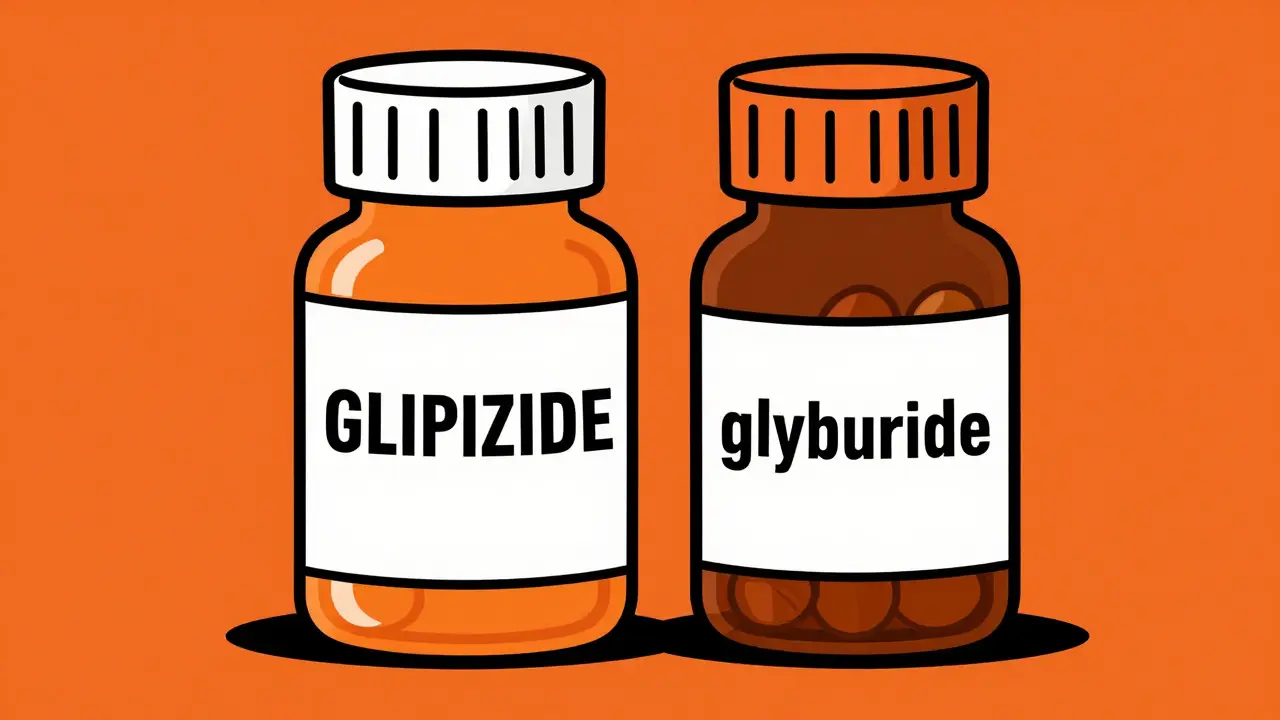
Pro Tip: Pharmacists use "tall-man lettering" to distinguish these. For example, they might write GLIpiZIDE vs. glyBURide. Look for capitalized letters in the middle of the word. If you don’t see this distinction on high-risk meds, ask your pharmacist to explain it.
The Decimal Point Danger Zone
Never underestimate the power of a single dot. Strength errors, particularly involving misplaced decimals or extra zeros, represent about 20% of labeling incidents. This is especially critical for high-alert medications like warfarin (a blood thinner) or levothyroxine (for thyroid issues).
A prescription for 0.5 mg of warfarin mislabeled as 5 mg is a ten-fold overdose. This isn't a minor mistake; it can cause internal bleeding. Similarly, a label reading "100mg" when it should be "10mg" is a catastrophic error.
Action Step: Read the numbers aloud. Say "zero point five milligrams" rather than just glancing at "0.5 mg." Your brain processes auditory information differently than visual text, which helps catch discrepancies. Compare this number directly to your previous prescription bottle if you’ve been taking the drug for a while.
| Drug Pair | Primary Use | Risk of Error |
|---|---|---|
| Cycloserine / Cyclosporine | TB treatment / Immunosuppression | High (Name similarity) |
| Hydralazine / Hydroxyzine | Blood pressure / Anxiety/Sleep | High (Sound-alike) |
| Glipizide / Glyburide | Diabetes management | Medium (Packaging/Name) |
| Warfarin (0.5mg vs 5mg) | Blood thinning | Critical (Decimal error) |
The 60-Second Verification Protocol
You don’t need to be a medical expert to check your meds. The Agency for Healthcare Research and Quality (AHRQ) recommends a simple four-step process that takes under a minute. Practice this every time you pick up a new prescription or refill.
- Compare to the Doctor’s Script: If you have a copy of the prescription or remember the discussion, check the name. Did Dr. Smith say "Lisinopril" or "Losartan"? They treat the same condition but are different drugs.
- Check the Appearance: Does the pill look like what you expect? If you’re used to small white tablets and receive large orange capsules, something is wrong. Note: Generic manufacturers change pill colors occasionally, so call the pharmacy if it looks slightly different but the label matches.
- Verify the Strength Aloud: Read the dosage out loud. "Two hundred fifty micrograms," not just "250." Ensure the unit (mg, mcg, mL) matches your history.
- Confirm the Directions: "Take one tablet twice daily." Does that match what you were told? If the label says "once daily" but your doctor said "twice," stop.
Studies show that patients who use this structured verification method detect nearly 90% of labeling errors, compared to less than 50% for those who just glance at the bag.
When Technology Isn't Enough
Pharmacies today use barcode scanners, automated counting machines, and digital checks. CVS Health, for instance, introduced "Label Lens" technology allowing patients to scan QR codes for audio descriptions. While helpful, technology fails. Barcodes get scanned incorrectly. Software glitches happen.
A 2022 survey found that only 37% of customers consistently verify all label elements. Why? Mostly because they "trust the pharmacy." Trust is good, but redundancy is better. Think of your verification as a seatbelt. You trust the car manufacturer, but you still buckle up.
If you have poor vision or limited health literacy, bring a trusted friend or family member with you. Don’t be embarrassed to ask the pharmacist to walk you through the label. Under the 2024 USP standards, pharmacies are required to use readable font sizes and high-contrast labels specifically to help aging patients. Use these tools.
What to Do If You Spot an Error
So, you noticed something is off. Maybe the name is weird, or the dose seems too high. Here is your action plan:
- Do Not Take the Medication: Put the bottle back on the counter or set it aside at home. Assume it is wrong until proven right.
- Speak Up Immediately: Tell the pharmacist, "This doesn't look like my usual medication," or "The label says 5mg, but I was prescribed 0.5mg." Be specific.
- Ask for a Double-Check: Request that another pharmacist review the order. There is no penalty for asking. In fact, you are helping them improve their safety protocols.
- Report Serious Errors: If an error reached you and caused harm, or if you feel the pharmacy was negligent, report it to your state board of pharmacy. As of 2023, 34 states require mandatory error reporting, making it easier to track trends.
Remember, pharmacists are busy. They may appreciate your vigilance, or they may feel defensive. Stay calm and factual. "I’m just trying to make sure I take the right thing" is a powerful phrase that keeps the conversation collaborative, not confrontational.
Frequently Asked Questions
How common are pharmacy labeling errors?
They are more common than most people realize. Dispensing errors account for 16-20% of all medication errors in community pharmacies. While the absolute risk per prescription is low (around 0.04% to 4.8% depending on the study), the sheer volume of prescriptions means millions of errors occur annually.
What is tall-man lettering on a prescription label?
Tall-man lettering is a formatting technique used to highlight differences between look-alike drug names. For example, writing DOXEpיןIN vs. DOXYcyclINE uses capital letters to draw attention to the distinct parts of the words, reducing the chance of confusion for both pharmacists and patients.
Should I check my medication at home or at the pharmacy?
Ideally, check it at the pharmacy before you leave. If you spot an error then, it’s easy to fix. However, doing a quick second check at home using your old bottle as a reference is also highly recommended, especially for chronic conditions.
Why do decimal point errors happen?
Decimal errors often stem from verbal communication breakdowns or unclear handwriting on original scripts. A spoken "five" versus "point five" can be easily misheard. Digital systems help, but human oversight remains crucial, especially for high-alert drugs like insulin or warfarin.
Is it rude to question the pharmacist?
Not at all. Patient engagement is considered a key safety strategy by organizations like the Institute of Safe Medication Practices. Pharmacists expect questions and view them as a necessary part of the safety protocol. Asking saves lives.