


SGLT2 Inhibitor Bone Health Risk Assessor
Select the options that apply to you to calculate your personalized risk profile.
Risk varies significantly by specific drug.
Your Risk Profile
0
Risk Score
Low
Moderate
High
Safe Profile
Based on current evidence, your risk appears low. However, always consult your doctor for personalized advice.
Disclaimer: This tool is for educational purposes only and does not constitute medical advice. Always consult your healthcare provider before making changes to your medication.
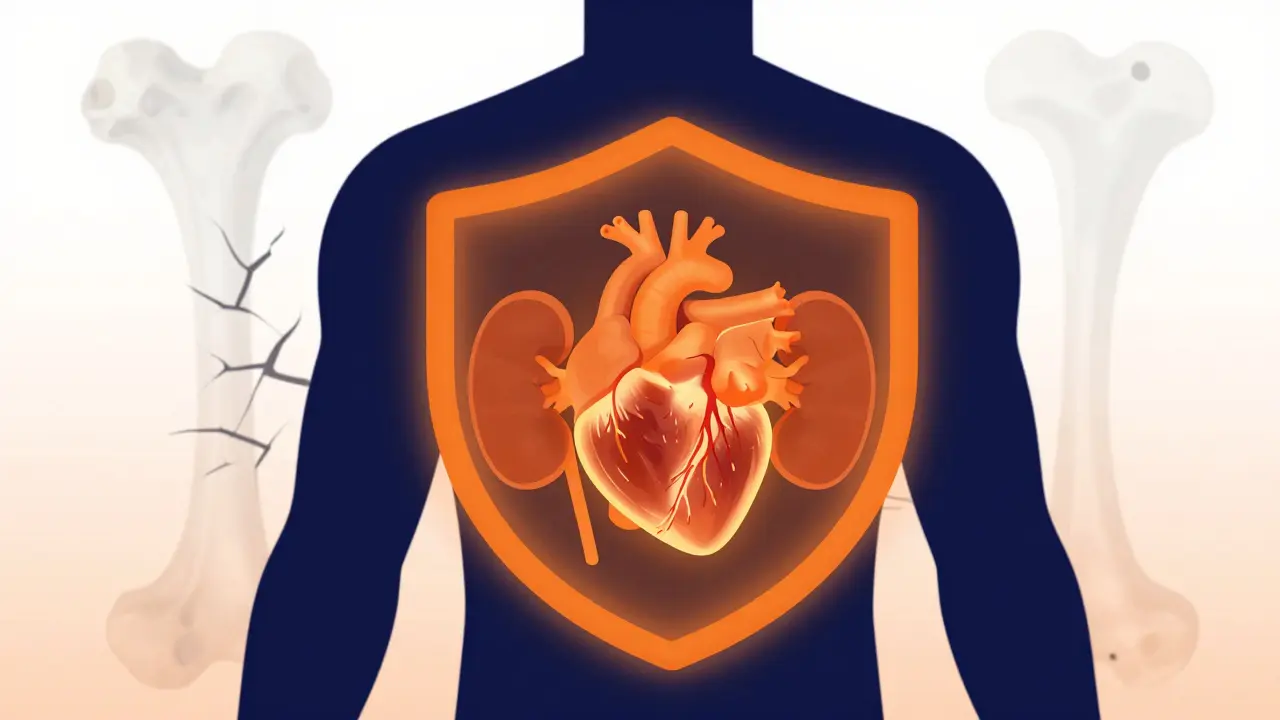
Imagine you’re managing type 2 diabetes with a medication that protects your heart and kidneys. It’s a win-win, right? But then you hear whispers-or maybe read a scary headline-about these drugs weakening your bones. Suddenly, that protective shield feels like it might be cracking something else entirely. This is the exact dilemma many patients and doctors face when discussing SGLT2 inhibitors, a class of medications including popular brands like Jardiance and Farxiga.
The short answer? The fear has been largely overstated for most people in this drug class. However, there is one specific medication within this group that requires extra caution. Understanding the difference between the class as a whole and individual drugs is crucial for making safe choices about your long-term health.
The Origin of the Fear: A Class-Wide Misunderstanding
To understand where this concern comes from, we have to look back at 2013. When the FDA first approved Sodium-Glucose Cotransporter-2 inhibitors, they were hailed as a breakthrough. These drugs work by tricking your kidneys into dumping excess sugar through your urine instead of reabsorbing it into your bloodstream. It’s a clever mechanism that lowers blood glucose without relying on insulin.
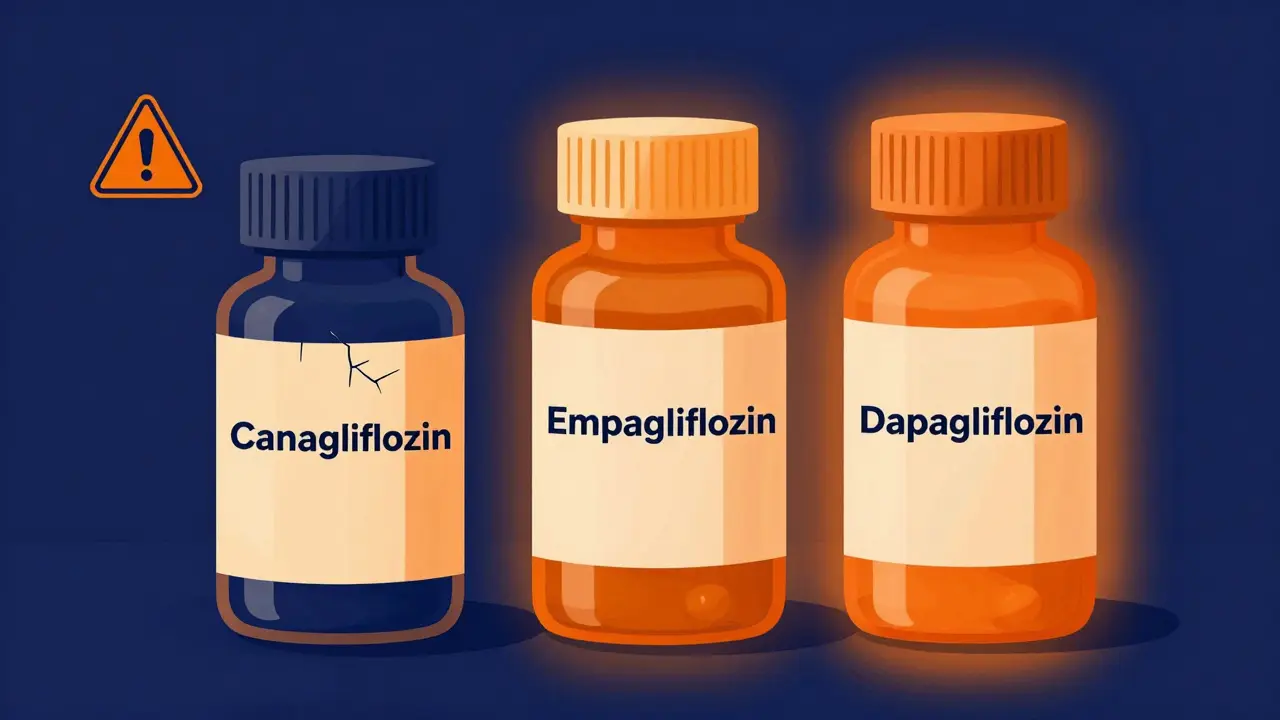
The controversy exploded in 2015 and 2016. Data from the CANVAS trial involving canagliflozin (brand name Invokana) showed an increased rate of fractures compared to placebo. The FDA responded swiftly, issuing a Drug Safety Communication in May 2016. They added a warning label specifically to canagliflozin, noting that fractures could occur as early as 12 weeks after starting treatment and often followed minor trauma, like falling from standing height.
Here is where the confusion set in. Because canagliflozin is an SGLT2 inhibitor, many clinicians and patients assumed the entire class carried this risk. It was a logical leap, but science rarely works in simple black-and-white categories. Subsequent major trials for other drugs in the same family told a different story.
Not All SGLT2 Inhibitors Are Created Equal
If you look closely at the data, a clear pattern emerges: the fracture risk is not uniform across all SGLT2 inhibitors. Let’s break down the three main players currently on the market.
| Drug Name (Brand) | FDA Approval Year | Key Trial Data on Fractures | Current FDA Warning Status |
|---|---|---|---|
| Canagliflozin (Invokana) | 2013 | CANVAS trial showed HR 1.26 (increased risk) | Yes - Specific 'Warning and Precaution' included |
| Empagliflozin (Jardiance) | 2014 | EMPA-REG OUTCOME showed no significant increase | No specific fracture warning |
| Dapagliflozin (Farxiga) | 2014 | DECLARE-TIMI 58 showed no significant increase | No specific fracture warning |
The EMPA-REG OUTCOME trial for empagliflozin and the DECLARE-TIMI 58 trial for dapagliflozin did not show the same elevated fracture rates seen with canagliflozin. In fact, a massive meta-analysis published in January 2023, combining 27 randomized controlled trials with nearly 21,000 participants, found a pooled relative risk of 1.02 for fractures across the entire class. In statistical terms, a relative risk of 1.0 means no difference from placebo. This suggests that for the vast majority of users, these drugs do not inherently weaken bones.
Why Did Canagliflozin Show Higher Risk?
So, if the class is generally safe, why did canagliflozin stand out? Researchers have identified several potential mechanisms, though none are fully proven as the sole culprit.
First, there is the issue of weight loss. SGLT2 inhibitors typically cause a modest weight loss of 2-4 kg. While losing weight is generally good for metabolic health, rapid weight loss can sometimes correlate with changes in bone resorption biomarkers. However, NIH research indicates that weight loss alone explains only about 3% of the variance in these markers, so it’s likely not the main driver.
Second, there is the hormonal angle. Women taking the higher dose of canagliflozin (300 mg) experienced a 9.2% decrease in estradiol levels during clinical trials. Estrogen is critical for maintaining bone density in women, especially post-menopause. A drop in estrogen can accelerate bone loss.
Third, and perhaps most practically, is the risk of falls. SGLT2 inhibitors can cause mild dehydration and lower blood pressure, leading to postural hypotension-a sudden drop in blood pressure when you stand up. This occurs in roughly 0.4-1.0% of patients. If you feel dizzy and fall, the fracture isn’t caused by weak bones directly; it’s caused by the impact. The FDA labeling explicitly mentions this link between hypotension, falls, and subsequent fractures.
Bone Mineral Density: What the Scans Tell Us
We don’t just rely on fracture reports; we also look at Bone Mineral Density (BMD) scans. These X-ray tests measure how dense your bones are. In a mandatory FDA trial involving 714 patients, canagliflozin showed greater BMD loss at the hip (-0.92% vs -0.24% for placebo) and lumbar spine (-1.04% vs -0.44% for placebo) over two years.
This data is concerning for high-risk individuals. If you already have osteoporosis, even a small percentage point drop in density can push you closer to a fracture threshold. This is why guidelines differ based on your baseline health. For someone with strong, healthy bones, a 0.9% change might be negligible noise. For someone with a T-score of -2.5 (the definition of osteoporosis), it’s a significant red flag.
Who Should Be Worried? Assessing Your Personal Risk
Not every patient needs to panic. The American Diabetes Association (ADA) 2023 Standards of Care acknowledge historical concerns but note that recent evidence suggests class-wide fracture risk is minimal. However, they advise specific caution for canagliflozin in high-risk populations.
You should have a detailed conversation with your doctor about bone health if you fit any of these profiles:
- History of Fractures: If you’ve broken a bone after age 50, your bones may already be compromised.
- Osteoporosis or Osteopenia: If you have a diagnosed low bone density (T-score ≤ -2.5 or between -1.0 and -2.5).
- Advanced Age: Bone density naturally declines with age. The American Geriatrics Society lists canagliflozin as a "potentially inappropriate medication" for older adults with osteoporosis.
- Long-term Steroid Use: Corticosteroids are notorious for leaching calcium from bones.
- Post-Menopausal Women: Due to the natural drop in protective hormones.
For these groups, the American Association of Clinical Endocrinologists recommends assessing BMD before initiating canagliflozin. If your T-score is below -2.0, they suggest considering alternative therapies.
Practical Steps for Patients and Doctors
How do you navigate this in real life? Here is a practical approach based on current expert consensus.
- Know Your Drug: Check your prescription bottle. Are you on canagliflozin, or are you on empagliflozin/dapagliflozin? If it’s the latter, your fracture risk is statistically similar to not taking the drug at all.
- Get a DXA Scan if Unsure: If you are over 65 or have multiple risk factors, ask for a dual-energy X-ray absorptiometry (DXA) scan. This gives you a concrete number (your T-score) to work with.
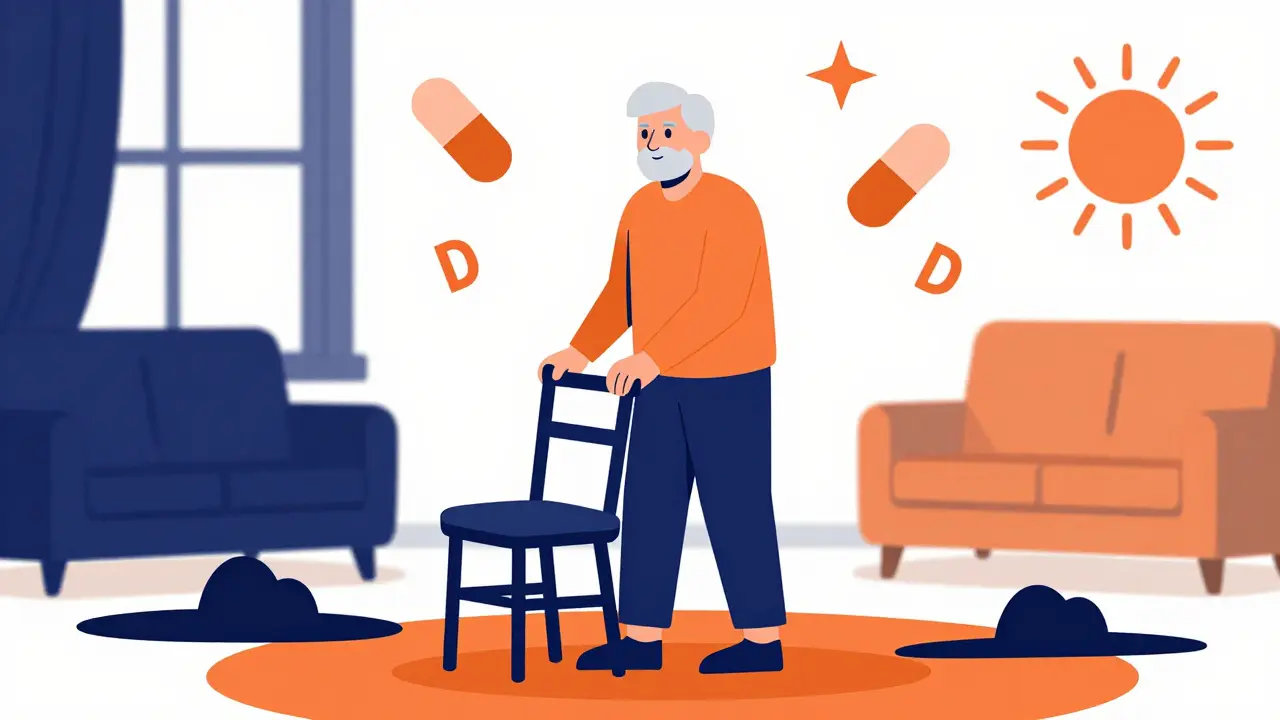
- Prevent Falls: Regardless of the drug, fall prevention is key. Ensure your home is well-lit, remove tripping hazards like loose rugs, and wear supportive shoes. If you feel dizzy upon standing, sit down immediately.
- Maintain Calcium and Vitamin D: These are the building blocks of bone health. Most adults need 1,000-1,200 mg of calcium and 600-800 IU of Vitamin D daily, but your doctor can tailor this to your blood levels.
- Monitor Weight Loss: If you are losing weight rapidly on an SGLT2 inhibitor, discuss nutrition strategies with a dietitian to ensure you aren’t losing muscle mass along with fat, as muscle strength supports bone integrity.
The Evolving Consensus: Moving Forward
The medical community is shifting away from broad fears toward nuanced decision-making. Dr. Mary Buettner and Dr. Thomas Addison, authors of a 2023 study in the *Journal of Parathyroid Disease*, concluded that real-world evidence does not show a connection between SGLT2 inhibitors and fracture risk for the general population. Their findings aim to alleviate concerns among health policymakers.
However, experts like Dr. Robert Heaney caution that while the immediate risk appears low, longer follow-up times are always needed for definitive conclusions. The FDA continues to monitor the situation, having confirmed in September 2023 that they have not identified a consistent signal of increased fracture risk for agents other than canagliflozin.
In the market, this nuance is reflected in prescribing habits. Between 2017 and 2022, prescriptions for canagliflozin in the U.S. declined by 22%, while empagliflozin and dapagliflozin saw increases of 38% and 42% respectively. Many doctors are simply choosing the alternatives with cleaner safety profiles regarding bone health, especially for elderly patients.
Bottom Line
SGLT2 inhibitors remain some of the most effective tools we have for managing type 2 diabetes, offering benefits that extend far beyond blood sugar control to include heart and kidney protection. The fear of bone fractures is valid for a specific subset of patients-primarily those on canagliflozin who already have poor bone health. For everyone else, the data suggests you can take these medications with confidence, provided you stay active, prevent falls, and keep your doctor informed about your overall health status.
Do all SGLT2 inhibitors increase the risk of bone fractures?
No. Current evidence suggests that only canagliflozin (Invokana) has a statistically significant association with increased fracture risk. Other major SGLT2 inhibitors like empagliflozin (Jardiance) and dapagliflozin (Farxiga) have not shown increased fracture risks in large cardiovascular outcome trials.
Should I stop taking my SGLT2 inhibitor if I am worried about my bones?
Do not stop your medication without consulting your doctor. SGLT2 inhibitors provide significant heart and kidney protection. If you are concerned, your doctor may switch you to a different SGLT2 inhibitor with a better bone safety profile, such as empagliflozin or dapagliflozin, rather than stopping the therapy entirely.
What is a DXA scan and who needs one before starting these drugs?
A DXA (dual-energy X-ray absorptiometry) scan measures bone mineral density. It is recommended for patients with multiple fracture risk factors, such as prior fractures, osteoporosis, advanced age, or long-term steroid use, particularly if they are being prescribed canagliflozin.
Can SGLT2 inhibitors cause falls?
Yes, indirectly. These drugs can cause mild dehydration and lower blood pressure, which may lead to dizziness or lightheadedness when standing up quickly (postural hypotension). This can increase the risk of falling, which in turn leads to fractures. Staying hydrated and rising slowly from sitting positions can help mitigate this risk.
Is canagliflozin banned or withdrawn from the market?
No, canagliflozin is still available and approved by the FDA. However, its label includes a specific warning about bone fractures, and many clinicians prefer to prescribe other SGLT2 inhibitors for patients with known bone health issues.
How does weight loss from SGLT2 inhibitors affect bone health?
While rapid weight loss can sometimes correlate with bone resorption, studies show that the weight loss induced by SGLT2 inhibitors explains only a small fraction (about 3%) of changes in bone biomarkers. The primary concern for bone health remains the specific drug mechanism and fall risk, rather than the weight loss itself.
11 Comments

Fred Stone
July 5, 2026 AT 03:55
glad someone finally broke this down without the usual panic mongering. i was on invokana for like two years and kept reading scary stuff about bones breaking from sneezing or whatever. switched to jardiance last year after my doc explained the difference between the drugs. feels good to know its not just me being paranoid but actual data showing the other ones are safer. thanks for clearing that up.

Sean Estabrooks
July 6, 2026 AT 17:41
you think the fda is just sitting there looking out for your bone density? please. canagliflozin was pushed hard by pharma lobbyists who knew the fracture risk but buried it in fine print until they had no choice. the whole sglt2 class is a money printing machine and they dont care if you break a hip as long as your kidneys stay profitable. wake up sheeple.

Gavin Edley
July 6, 2026 AT 20:11
oh great another article telling us we shouldnt worry because some trial said so. trials are funded by the same companies selling the pills. of course empagliflozin looks safe when eli lilly paid for the study. im sticking to metformin and eating kale. maybe then i wont need to worry about which chemical cocktail makes my skeleton turn to dust.

Mary Howarth
July 7, 2026 AT 21:11
I have been taking Farxiga for three years now, and honestly, I feel amazing! My energy levels are through the roof, and my A1C has dropped significantly, which is exactly what we all want to see, right? I did read somewhere that staying hydrated is super important with these meds, so I make sure to drink at least eight glasses of water every single day, and I also take my vitamin D supplements religiously because bone health is crucial, especially as we get older, isn't it? It really gives me peace of mind knowing that the latest studies suggest the risk is minimal for most people, so I am going to keep doing what works for me!

Alana Frassinelli
July 9, 2026 AT 19:31
i hear you on the hydration thing mary. its wild how much water you lose when your kidneys start dumping sugar. i felt dizzy standing up once and nearly faceplanted on the kitchen tile. made me realize how important those fall prevention tips are. its not just about the bone density numbers but actually keeping yourself upright. my mom is on invokana and she has osteoporosis so her doctor made her get a dxa scan first. smart move i guess even if the process was annoying.

fred morgan
July 10, 2026 AT 23:17
The distinction between canagliflozin and the other SGLT2 inhibitors is clinically significant. The CANVAS trial results were specific to that agent, whereas EMPA-REG and DECLARE-TIMI showed no such signal. Patients should consult their physicians regarding individual risk factors rather than extrapolating class-wide effects from a single outlier drug.

Sarah Boomgaard
July 12, 2026 AT 01:15
why do we trust big pharma over our own bodies. they tell us its safe then later we find out it causes cancer or breaks bones. i say go natural. eat less sugar exercise more. why put chemicals in your system that mess with your hormones and bones. it is unethical to sell drugs that weaken people just to make profit. shame on them.

jeremy pritchett
July 14, 2026 AT 01:06
listen up folks the truth is simple. if u r old and weak maybe be careful. but if u r young and strong stop worrying about every little side effect. life is about action not fear. take the med control the diabetes save ur heart and kidneys. yeah maybe ur bones drop a tiny bit but u cant live forever anyway. focus on living now. strength comes from movement not from avoiding meds.

Kimberly Simbulan
July 15, 2026 AT 20:22
Sure, Jeremy, just ignore the science and power through with positive vibes. Because clearly, ignoring medical advice is the key to longevity. Thanks for the inspiration, I'll be sure to add 'ignore osteoporosis warnings' to my self-care routine right after 'drink gallons of water.'

kavitha kumar
July 16, 2026 AT 16:55
i am indian and we have high rates of diabetes here too. doctors here still prescribe canagliflozin sometimes despite the warnings. i asked my doctor to switch me to dapagliflozin because i am worried about fractures since my grandmother broke her hip recently. he agreed and now i feel better knowing i am not taking the one with the bad rep. hope everyone checks their labels carefully.

Brett Aungst
July 18, 2026 AT 12:41
Good points all around. For anyone wondering, the mechanism behind the fracture risk in canagliflozin seems linked to both the estrogen reduction in women and the increased fall risk due to hypotension. If you're on Jardiance or Farxiga, the data supports safety regarding bone density. Just remember to stand up slowly from a seated position to avoid that dizziness. It's a small habit change that prevents a lot of issues.
Write a comment