
![Capoten (Captopril): Official Info, Uses, Dosage, Side Effects, Warnings [2025]](/uploads/2025/08/thumbnail-capoten-captopril-official-info-uses-dosage-side-effects-warnings.webp)
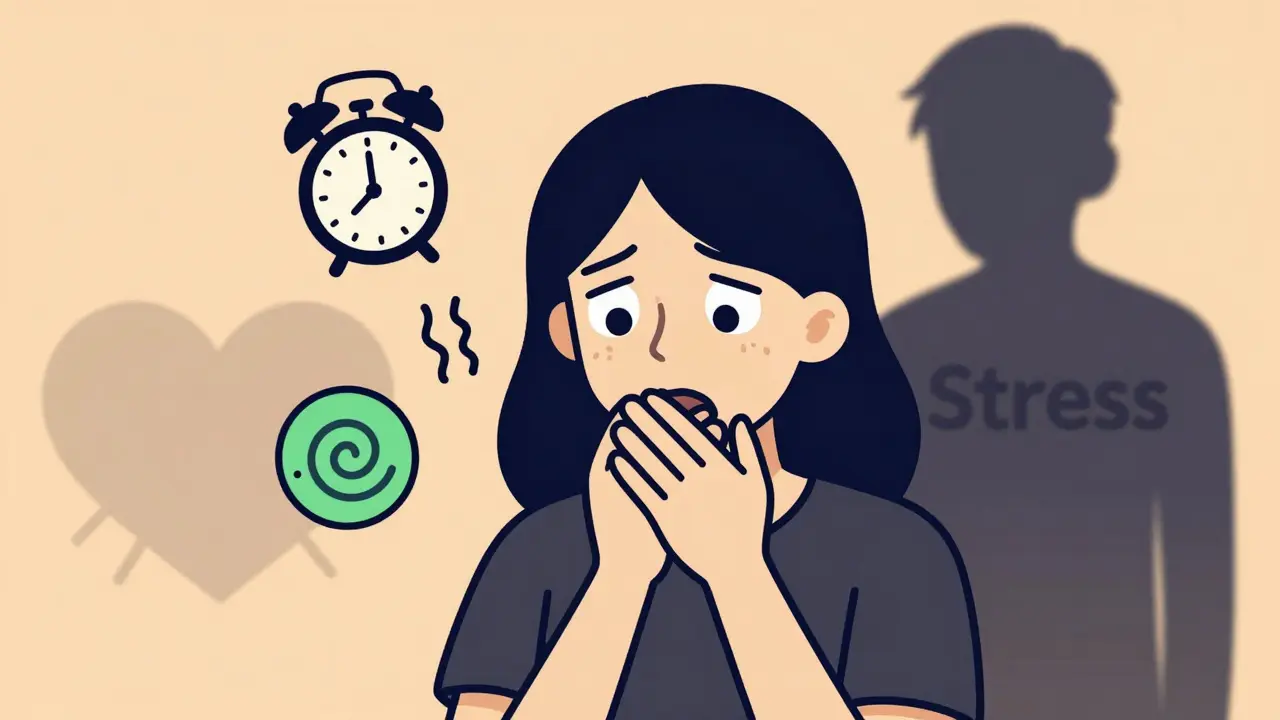
Heart disease kills more women every year than breast cancer, lung cancer, and Alzheimer’s combined. Yet most women still think of it as a man’s problem. If you’ve ever brushed off unexplained fatigue or jaw pain as stress or aging, you’re not alone - but you’re also at risk. The truth is, women’s heart disease looks and feels completely different from men’s, and waiting for the classic chest pain could cost you your life.
What Heart Attack Symptoms Look Like in Women
When you think of a heart attack, you probably picture someone clutching their chest, grimacing, and collapsing. That’s the Hollywood version - and it’s mostly a male experience. For women, the script changes. While about 70-80% of women do feel some kind of chest discomfort during a heart attack, it’s rarely the sharp, crushing pain men describe. Instead, women report pressure, tightness, or a strange heaviness - like someone is sitting on their ribcage. Some don’t feel chest pain at all.
According to the National Heart, Lung, and Blood Institute, nearly half of women having a heart attack feel pain or discomfort in their arms, jaw, neck, or back. That’s 45% versus just 28% of men. You might wake up in the middle of the night with jaw pain that doesn’t go away. Or your shoulder aches for days, and you blame it on sleeping wrong. It’s not always your shoulder. It could be your heart.
Shortness of breath is another major red flag. Women often say they felt winded doing simple things - walking to the mailbox, carrying groceries, or even making the bed. This isn’t just being out of shape. The Heart Research Institute found that 42% of women experiencing a heart attack reported sudden, unexplained breathlessness. And it’s not just physical exertion. Some women say they couldn’t catch their breath while sitting still.
Nausea, vomiting, and dizziness are also common. About one in three women feel sick to their stomach before or during a heart attack. Many mistake it for the flu, food poisoning, or acid reflux. One woman in Sydney told her doctor she’d been vomiting for three days. She thought it was a stomach bug. It was a silent heart attack.
Then there’s fatigue - the kind that doesn’t go away with sleep. Yale Medicine calls it “vital fatigue.” It’s not tiredness. It’s the kind of exhaustion that makes you feel like you’ve run a marathon after brushing your teeth. In their study, 71% of women who had heart attacks described this extreme, lingering fatigue weeks before the event. Yet most doctors don’t ask about it. Most women don’t connect it to their heart.
Why Women’s Heart Disease Is Different
The difference isn’t just in symptoms - it’s in the biology. Men often have blockages in the big arteries that supply the heart. Women are more likely to have problems in the tiny blood vessels - a condition called microvascular disease. These vessels are too small to show up on standard angiograms, so many women get told, “Your heart looks fine,” when it’s actually failing.
Another condition unique to women is spontaneous coronary artery dissection (SCAD). It’s when a tear forms in one of the heart’s arteries, cutting off blood flow. SCAD strikes otherwise healthy women - often in their 40s and 50s, sometimes after childbirth or during extreme emotional stress. It’s not caused by plaque buildup. It’s not linked to smoking or high cholesterol. And it’s rarely diagnosed because doctors aren’t trained to look for it in women.
Stress-induced cardiomyopathy, also known as Takotsubo syndrome or “broken heart syndrome,” affects women nine times more often than men. It mimics a heart attack, with chest pain and ECG changes, but there’s no blockage. Instead, intense emotional or physical stress - like the death of a loved one or a sudden illness - causes the heart to temporarily balloon and weaken. It can be fatal if not treated.
And then there’s the hormonal factor. Estrogen protects the heart before menopause. After menopause, that protection drops. But it’s not just about estrogen levels. Pregnancy complications like preeclampsia, gestational diabetes, or preterm delivery raise a woman’s lifetime risk of heart disease by 60-80%. Many women don’t realize these events are warning signs - not just pregnancy issues.
Why Women Are Misdiagnosed - And What Happens When They Are
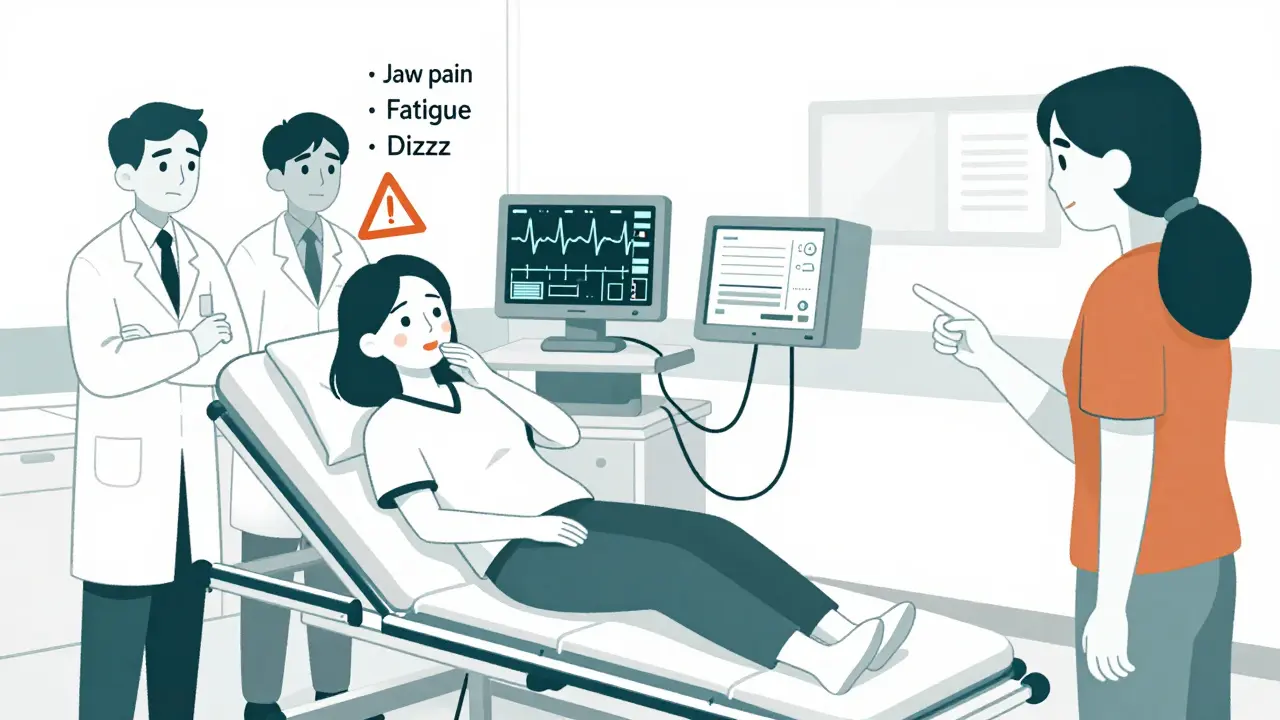
When a woman walks into the ER with nausea, fatigue, and jaw pain, the system isn’t built to see it as a heart problem. A 2022 study in JAMA Internal Medicine found that 68% of emergency room cases involving women with cardiac symptoms were dismissed as anxiety, stress, or indigestion. Men with the same symptoms? They get tested.
The consequences are deadly. Research from the Journal of the American Heart Association shows that women under 55 are seven times more likely than men to be sent home from the ER without proper cardiac testing. Within a year, those misdiagnosed women have a 50% higher chance of dying. Why? Because heart muscle dies fast. Every minute without treatment means more damage.
Women also delay seeking help. The Family Heart Foundation found that women wait an average of 2.3 hours longer than men to call for help. Why? Because they don’t recognize the symptoms. Or they think they’re being dramatic. Or they’re worried about wasting the doctor’s time. One woman in Melbourne waited four days after feeling unexplained fatigue and dizziness. She finally went in when she couldn’t stand up. She had a massive heart attack. She survived - but barely.
How to Recognize the Warning Signs - And What to Do
You don’t need to be an expert. You just need to know your body. If you’re a woman and you feel something off - especially if it’s new, strange, or doesn’t go away - trust that feeling. Here’s a simple checklist to follow:
- Unexplained fatigue that lasts more than two weeks
- Shortness of breath during normal activities
- Pain in the jaw, neck, shoulders, or back without injury
- Nausea, vomiting, or dizziness with no digestive cause
- Chest pressure or tightness - not sharp pain
- Sudden cold sweats or lightheadedness
If you have three or more of these symptoms, go to the ER. Don’t wait. Don’t call your GP first. Don’t try to “sleep it off.” Head straight to the nearest hospital with a cardiac care unit. Tell them you’re worried about your heart - even if you don’t have chest pain.
Hospitals with specialized women’s cardiac programs have a 22% higher survival rate for women having heart attacks. Ask if the hospital has a women’s heart center. If they do, you’re in good hands. If not, push for a cardiology consult. You have the right to be taken seriously.

Long-Term Risk Management for Women
Prevention starts with knowing your history. Track your menstrual cycles, pregnancy complications, and menopause symptoms. If you had preeclampsia, gestational diabetes, or delivered early - tell your doctor. These aren’t just pregnancy stories. They’re red flags for future heart disease.
Menopause is a turning point. After menopause, your risk jumps. That’s when cholesterol levels often rise, blood pressure increases, and belly fat accumulates. Don’t assume hormone replacement therapy is the answer - it’s not a magic shield. Talk to your doctor about lifestyle changes: regular movement (even walking 30 minutes a day), eating more vegetables and less processed sugar, and managing stress.
Stress is a major trigger. Women are 37% more likely than men to have angina (chest pain) triggered by emotional stress. That means chronic stress from caregiving, work pressure, or loneliness isn’t just emotional - it’s physical. Find ways to lower it: therapy, yoga, walking in nature, or even just saying no to extra responsibilities.
Get tested. A standard stress test isn’t always accurate for women. The FDA-approved Corus CAD test analyzes gene expression to detect artery disease with 88% accuracy in women - far better than traditional methods. Ask your doctor if it’s right for you, especially if you have risk factors but no classic symptoms.
The Bigger Picture - And Why Change Is Slow
Despite all the data, women’s heart disease is still underfunded. Only 34% of cardiovascular research funding in the U.S. targets women’s health - even though heart disease kills 307,000 women every year. Women make up 51% of the population but only 38% of participants in major heart studies. That means treatments are still mostly based on male biology.
There’s progress. The NHLBI launched the RENEW initiative in 2023 with $150 million to study sex-specific heart disease. The American College of Cardiology now certifies Women’s Cardiovascular Centers of Excellence - 147 of them across the U.S. as of 2023. And AI tools trained on female symptom patterns could cut misdiagnosis by 40% in the next five years.
But none of that matters if you don’t know your symptoms. If you don’t speak up. If you don’t demand answers.
Heart disease doesn’t care if you’re strong, busy, or caring for others. It doesn’t care if you think you’re too young or too healthy. It only cares if you ignore the signs.
You are not a statistic. You are the person who can change the outcome - by knowing your body, trusting your instincts, and refusing to be dismissed.
Do women always have chest pain during a heart attack?
No. While about 70-80% of women experience some chest discomfort, nearly 43% have heart attacks without any chest pain at all. Women are more likely to feel pressure, tightness, or no pain at all. Other symptoms like shortness of breath, nausea, jaw pain, or extreme fatigue are often the main warning signs.
Can young women have heart attacks?
Yes. While heart disease risk increases with age, women under 55 are increasingly having heart attacks - often due to conditions like SCAD (spontaneous coronary artery dissection) or stress-induced cardiomyopathy. These conditions strike healthy, active women with no traditional risk factors. Young women are seven times more likely than young men to be sent home from the ER with a misdiagnosis, making early recognition critical.
How does menopause affect heart health?
After menopause, estrogen levels drop, which removes a natural protective effect on the heart. Blood pressure and LDL (bad) cholesterol often rise, while belly fat increases. These changes raise heart disease risk significantly. Women who had early menopause (before 45) or surgical menopause have an even higher risk. Tracking these changes and talking to your doctor about heart-healthy habits is essential.
What should I do if I think I’m having a heart attack but I’m not sure?
Call emergency services immediately. Don’t wait for confirmation. Don’t try to drive yourself. Don’t assume it’s indigestion or stress. Women often delay help because they’re unsure - and that delay is deadly. If you have three or more symptoms like unusual fatigue, shortness of breath, jaw pain, nausea, or dizziness - go to the ER. Better to be checked and cleared than to risk your life.
Are standard heart tests accurate for women?
Not always. Traditional stress tests and angiograms were designed using male data and can miss microvascular disease - which affects women more often. The Corus CAD test, FDA-approved in 2020, analyzes gene expression and is 88% accurate in women compared to 72% for standard tests. If you have symptoms but normal test results, ask your doctor about this test or a cardiac MRI, which can detect small vessel disease.
Can pregnancy complications predict future heart disease?
Yes. Complications like preeclampsia, gestational diabetes, or delivering a baby before 37 weeks increase a woman’s risk of heart disease by 60-80%. These aren’t just pregnancy issues - they’re early warning signs. Women who’ve had these complications should be screened for heart disease earlier and more frequently, even if they feel fine.
14 Comments

tamilan Nadar
March 12, 2026 AT 07:40
As someone from India, I've seen this firsthand. Women here often ignore chest discomfort because they're told it's 'just stress' or 'menopause.' No one talks about microvascular disease. My aunt had three silent heart attacks before anyone listened. We need better awareness in rural clinics too.

Emma Deasy
March 12, 2026 AT 18:08
It is absolutely imperative-nay, non-negotiable-that we acknowledge the systemic bias embedded within cardiology research, which has, for decades, prioritized the male physiological paradigm. The data is unequivocal: women’s cardiac symptomatology diverges fundamentally from the classical model. To dismiss fatigue, jaw pain, or nocturnal dyspnea as ‘anxiety’ is not merely negligent-it is lethal. We must demand institutional accountability.
Furthermore, the underfunding of sex-specific cardiovascular research is not an oversight; it is a moral failure. Only 34%? In a population where women constitute over half? This is not science. This is sexism with a stethoscope.
And yet-despite all this-I remain cautiously optimistic. The RENEW initiative, the Corus CAD test, the emergence of Women’s Cardiovascular Centers of Excellence-they represent glimmers of progress. But glimmers are not enough. We need revolution.
I implore every healthcare provider: stop using male-centric diagnostic criteria on female patients. Stop assuming that ‘no chest pain’ means ‘no cardiac event.’ Stop telling women they’re ‘overreacting.’
My mother died at 58 from a misdiagnosed SCAD. She was active. She ate well. She had no ‘risk factors.’ Her death was preventable. And it was ignored.
If you are a woman reading this: trust your body. Even if your doctor blinks twice. Even if your insurance denies the test. Even if your sister says, ‘It’s probably just gas.’ Go to the ER. Demand a cardiologist. Bring this article. Print it. Highlight it. Stick it to the triage desk.
Because your life is not a footnote in a textbook written by men.

Adam M
March 13, 2026 AT 20:58
Women wait too long. That's the problem.

Rosemary Chude-Sokei
March 14, 2026 AT 22:14
I appreciate how thoroughly this was laid out. As a nurse who’s worked in ERs for 18 years, I’ve seen too many women sent home with antacids when they needed stents. One woman came in after three days of fatigue and nausea-she was 41, had gestational diabetes in her 20s, and had been told ‘it’s just perimenopause.’ Her LVEF was 28% when she finally got an echo.
I wish more providers would ask about pregnancy history. It’s not just ‘a past issue’-it’s a cardiac red flag. We need mandatory screening protocols for women with preeclampsia or preterm birth. Period.
Also-yes, stress matters. The cortisol overload from caregiving, emotional labor, and workplace pressure literally changes heart rhythm and endothelial function. We can’t treat cardiac health without addressing social determinants.
And to anyone reading this: if you feel off, don’t Google it. Go to the hospital. Bring someone with you. Say, ‘I think this is cardiac.’ Don’t apologize for it.

Noluthando Devour Mamabolo
March 15, 2026 AT 06:00
OMG YES. I’ve been screaming about this for years 😭🫶
Microvascular angina is REAL. My cardiologist said ‘your arteries look fine’-until I insisted on a cardiac MRI. Turns out, I had diffuse endothelial dysfunction. No blockages. Just… failure. Like my heart was rusting from the inside.
Also-Takotsubo is NOT ‘just stress.’ It’s a physiological earthquake. I had mine after my dad died. No chest pain. Just extreme fatigue and hiccups. HICCUPS. Who knew??
And the Corus CAD test? YES. PLEASE. MY DOCTOR DIDN’T EVEN KNOW IT EXISTED.
Women’s hearts are not ‘smaller versions’ of men’s. They’re different ecosystems. We need sex-specific algorithms, not just ‘add women to trials.’
Also-pregnancy complications = lifelong cardiac risk. Why isn’t this on every OB/GYN’s discharge summary??

Leah Dobbin
March 17, 2026 AT 01:08
How refreshing to see a piece that doesn’t infantilize women or reduce cardiac events to ‘you’re just tired.’ Finally, someone acknowledges that biology is not a social construct. Though I must say-the tone veers slightly into alarmist territory. Are we really to believe that every instance of jaw pain is cardiac? What about dental abscesses? TMD? Cervical radiculopathy?
While the data is compelling, blanket assertions like ‘go straight to the ER’ risk medicalization of normal physiological variation. A nuanced approach is required-especially for asymptomatic women with no risk factors.
That said, I applaud the mention of SCAD and microvascular disease. These are criminally under-researched. The NIH funding disparity is unconscionable. But let’s not replace one bias with another: not every woman needs a cardiac MRI at 35.

Ali Hughey
March 18, 2026 AT 00:44
THIS IS A COVER-UP. I’ve been saying this for years. The pharmaceutical industry, the AMA, the FDA-they all push the ‘chest pain = heart attack’ narrative because it’s profitable. No one wants to admit that 43% of women have heart attacks without chest pain because then they’d have to retrain every doctor, rewrite every textbook, and stop selling beta-blockers like candy.
And don’t get me started on hormone replacement therapy. They told us it was protective… then suddenly, 10 years later, ‘oops, it increases stroke risk.’ Why? Because the trials were done on men first. Always men.
SCAD? That’s not random. It’s linked to 5G towers and fluoride in the water. I’ve got cousins who had SCAD after getting the vaccine. Coincidence? I think not.
They don’t want women to know they can survive this. They want you scared. They want you dependent. Don’t trust the system. Demand the Corus CAD test. Demand a cardiologist who listens. And if they laugh? File a complaint. Then post it online. #WomenHeartTruth

Alex MC
March 19, 2026 AT 19:03
Thank you for writing this. I’m a 52-year-old dad who lost my wife last year to a misdiagnosed heart attack. She had fatigue, nausea, and back pain for weeks. We thought it was the flu. Then she collapsed. They said she ‘didn’t fit the profile.’
I’m sharing this because I don’t want another family to lose someone like we did.
My advice? If you’re a woman and something feels off-trust it. Even if it’s ‘just’ fatigue. Even if you’re ‘too young.’ Even if your doctor says ‘it’s anxiety.’
Go. Get checked. Bring someone. Say ‘I’m worried about my heart.’
And if you’re a man? Ask the women in your life: ‘Have you ever felt like this?’
Love you all.

rakesh sabharwal
March 20, 2026 AT 05:53
Typical Western overreaction. In India, women work 16-hour days, deliver babies at home, and still cook for 10 people. No one goes to the hospital for ‘jaw pain.’ They drink ginger tea and carry on.
Cardiac events are rare in our rural populations because we’re physically active and eat real food. This article reads like a luxury problem for women who have too much time and too little discipline.
Also, ‘stress-induced cardiomyopathy’? Sounds like a therapy bill waiting to happen.

Aaron Leib
March 20, 2026 AT 10:54
Just wanted to say-this is one of the clearest, most important pieces I’ve read in years.
I’m a paramedic. I’ve seen women get sent home with antacids. I’ve seen them come back in cardiac arrest.
My mom had preeclampsia. I’m 42 now. I asked my doctor for a Corus CAD test last year. She didn’t know what it was. I had to send her the FDA page.
Don’t wait for permission. Don’t wait for a ‘classic’ symptom. Your life is worth more than a doctor’s assumption.
Thank you for writing this.

Dylan Patrick
March 21, 2026 AT 05:24
My sister had a heart attack at 39. No chest pain. Just couldn’t get out of bed. Thought she had mono. Took 5 days to get an ECG. They said ‘it’s probably anxiety.’
She had SCAD. No plaque. Just a tear. From stress. From working 70-hour weeks. From being a single mom.
She’s alive because she refused to leave the ER. She screamed at the doctor: ‘I’m not anxious. I’m dying.’
So yeah. If you feel it-scream it.

Buddy Nataatmadja
March 21, 2026 AT 18:29
Interesting. I’m a guy. Never thought about this. But now I’m gonna ask my wife if she’s ever had weird fatigue. Just… checking in.

mir yasir
March 22, 2026 AT 23:37
While the data presented is statistically significant, it lacks methodological rigor. The sample sizes for SCAD and microvascular disease are anecdotal at best. Furthermore, the assertion that ‘women’s hearts are different’ risks reinforcing biological essentialism without acknowledging epigenetic and environmental confounders. A more nuanced discourse is required-one that does not reduce complex pathophysiology to gendered binaries.

Devin Ersoy
March 24, 2026 AT 02:21
Oh wow. So now we’re blaming capitalism, patriarchy, and fluoride for heart attacks? I’m shocked. Shocked, I tell you.
Look-I get it. Women get dismissed. I get it. But let’s not turn this into a superhero origin story. ‘My jaw hurt so I went to the ER and saved myself’? Cute. But if you’re a 60-year-old woman with hypertension and smoking history? Yeah, you’re at risk. But if you’re a 28-year-old yoga instructor with no risk factors and jaw pain? Maybe it’s a tooth.
Not every ache is cardiac. Not every symptom is a revolution.
Be informed. Not hysterical.
Write a comment