

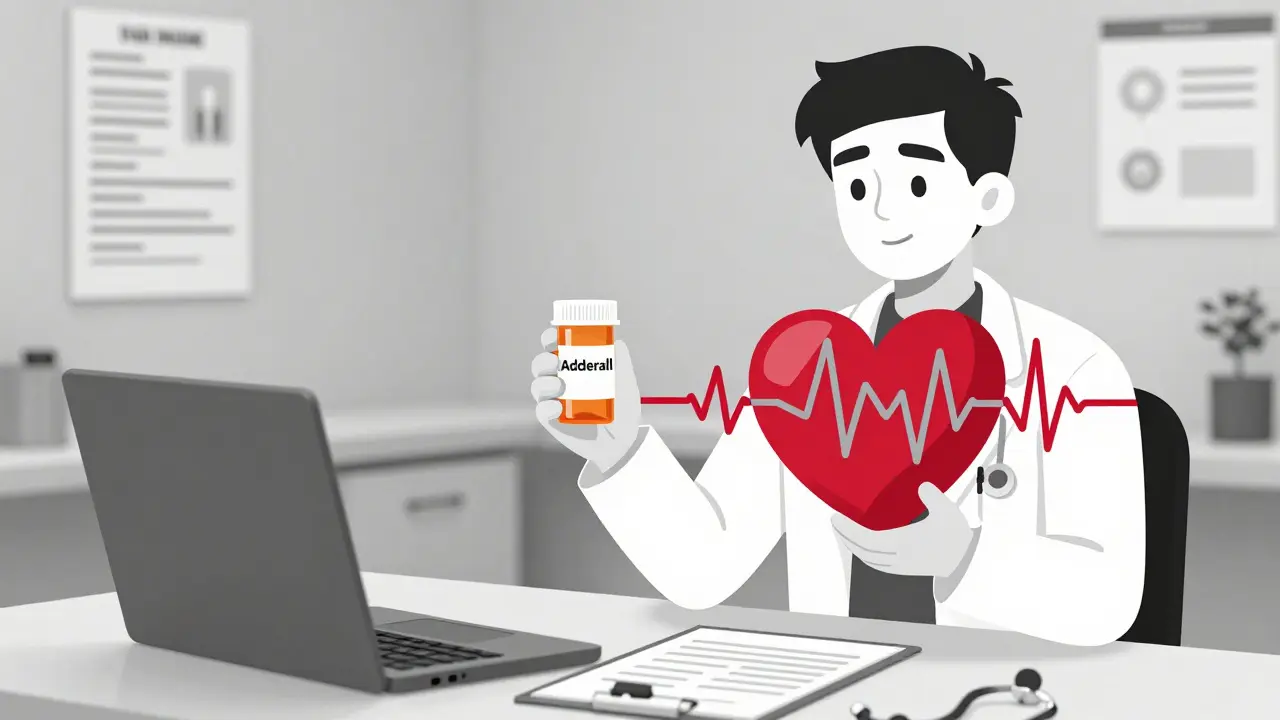
Stimulant Heart Risk Calculator
Personal Risk Assessment
This tool helps you understand your individual risk of cardiac arrhythmias when taking stimulant medications. Based on medical guidelines from the American Heart Association and American Academy of Pediatrics.
Years
Systolic / Diastolic
/
Your Personal Risk Assessment
When you or your child starts taking stimulant medication for ADHD, the focus is usually on focus, impulse control, and getting through the school day. But there’s another conversation that doesn’t get enough attention: what’s happening to your heart?
Stimulants Aren’t Just About the Brain
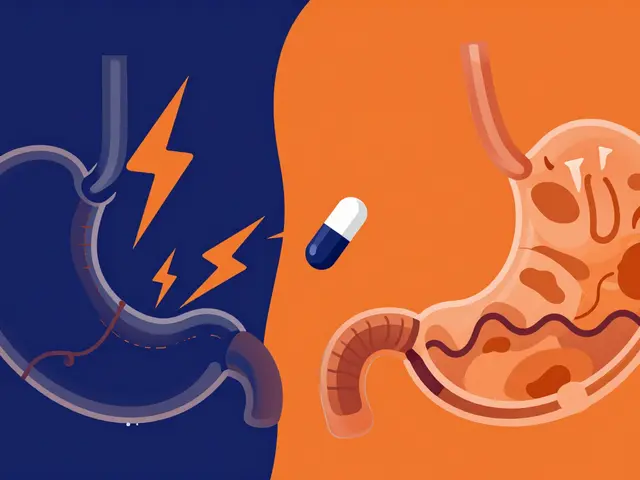
Prescription stimulants like Adderall, Ritalin, and Vyvanse work by boosting dopamine and norepinephrine in the brain. That’s why they help with attention and focus. But those same chemicals also hit your heart. They make your heart beat faster and your blood pressure rise-usually just a little. For most people, that’s harmless. But for some, even small changes can trigger something dangerous: an irregular heartbeat, or cardiac arrhythmia.The risk isn’t the same for everyone. In healthy kids and young adults, the chance of a serious heart problem from stimulants is very low. A study of over 1.2 million children and young adults found almost no increase in sudden cardiac death. But that doesn’t mean the risk is zero. And it changes dramatically with age, dose, and medical history.
Who’s at Higher Risk?
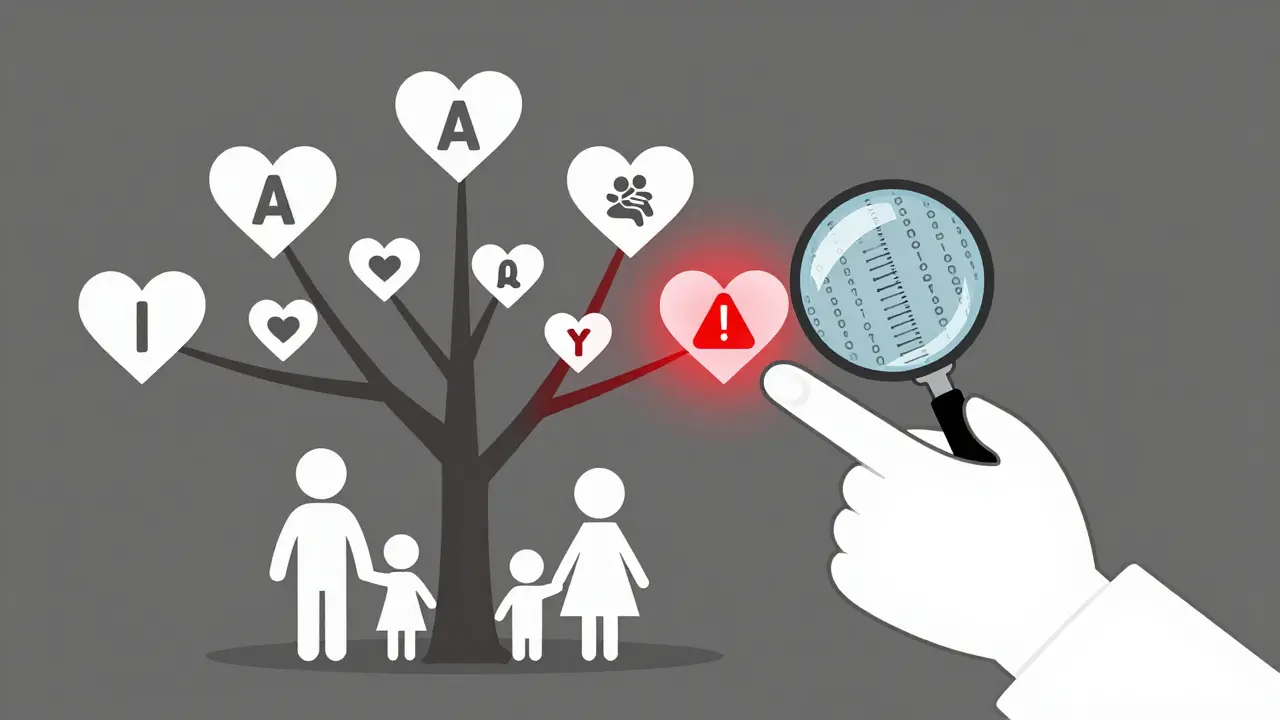
If you’re over 65 and just started a stimulant, your risk of ventricular arrhythmia triples in the first 30 days, according to a 2021 study. That’s not a small jump. It’s not common, but it’s real. For younger people, the danger builds slowly. A 2024 study found that long-term use of stimulants-over years-can lead to heart muscle changes that increase arrhythmia risk later on.Family history matters too. If someone in your family had sudden cardiac death before age 50, or if you’ve had unexplained fainting, chest pain, or a known heart condition like long QT syndrome or hypertrophic cardiomyopathy, stimulants could be risky. Even if you’ve never had symptoms, these conditions can hide until a stimulant triggers them.
And then there’s the elephant in the room: illegal stimulants. Cocaine and methamphetamine don’t just raise your heart rate-they wreck your heart’s electrical system. They block potassium and sodium channels, stretch out the QT interval, and cause early heartbeats that can spiral into deadly rhythms. People who use these drugs have 2.5 to 4.5 times higher rates of ventricular arrhythmias than non-users. Prescription stimulants are nowhere near that dangerous, but they’re not risk-free either.
What Doctors Actually Do Before Prescribing
You might expect every patient to get an ECG before starting stimulants. You’d be wrong. Major groups like the American Heart Association and the American Academy of Pediatrics say routine ECGs aren’t necessary. Why? Because the overall risk is low, and screening everyone would cause more harm than good-unnecessary anxiety, delays in treatment, and false alarms.Instead, doctors are trained to ask the right questions:
- Have you ever passed out for no reason?
- Has anyone in your family died suddenly before age 50?
- Do you have chest pain, shortness of breath, or palpitations?
- Have you been diagnosed with a heart condition?
A physical exam checks for heart murmurs or irregular rhythms. Blood pressure and pulse are measured before starting the medication and again after one to three months. If things look good, they’re checked every six to twelve months. If your blood pressure climbs above the 95th percentile for your age, or if you develop a new arrhythmia, the medication is usually stopped.
For people with known heart conditions-like repaired congenital heart disease or a history of arrhythmias-doctors often refer them to a cardiologist. Some may get an ECG or even an echocardiogram before starting. It’s not about saying no to stimulants. It’s about making sure the benefits outweigh the risks for you.
The Big Contradiction: Do Stimulants Cause Heart Problems?
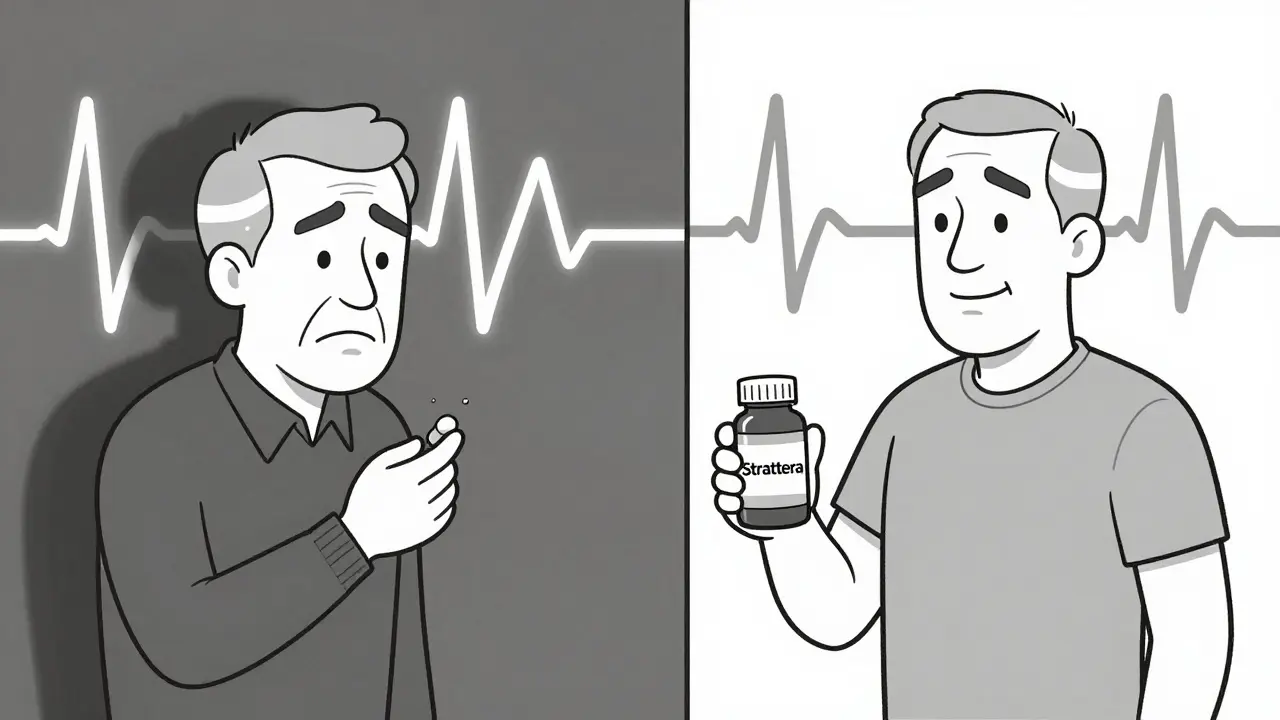
Here’s where things get messy. One study says stimulants triple arrhythmia risk in older adults. Another says there’s no significant link to heart disease across any age group. Both are based on solid data. So which one do you believe?The truth is, both are right-but they’re looking at different things. The tripling of risk in older adults is real, but the absolute number of events is still tiny. Out of 1,000 people over 65 taking stimulants, maybe 2 or 3 will have a serious arrhythmia in the first month. That’s rare. But if you’re one of them, it’s everything.
The meta-analysis that found no overall risk looked at millions of people over years. It didn’t catch the short-term spike in older adults because it averaged everything out. That’s why guidelines keep changing. The American College of Cardiology is working on new recommendations expected in late 2025, likely to include more nuanced risk stratification-like checking for genetic markers that make someone more sensitive to stimulants.
What Are the Alternatives?
If you’re worried about your heart, you don’t have to give up treatment. There are non-stimulant options:- Atomoxetine (Strattera): A daily pill that works on norepinephrine. It doesn’t raise heart rate or blood pressure like stimulants. But it takes weeks to work, and only about 50-60% of people respond well.
- Guanfacine (Intuniv) and Clonidine (Kapvay): Originally blood pressure meds, they help with focus and impulse control by calming the nervous system. They can cause drowsiness and low blood pressure, but they’re safe for people with heart conditions.
These alternatives aren’t as powerful as stimulants. You might not get the same level of focus. But for someone with a family history of arrhythmias, a personal history of palpitations, or high blood pressure, they’re a smarter first choice.
When to Stop
Most people take stimulants for years without issues. But there are red flags:- Heart rate stays above 100 bpm at rest
- Blood pressure rises above the 95th percentile for your age
- You feel your heart racing, fluttering, or skipping beats
- Your ECG shows a QT interval longer than 0.46 seconds
- You pass out, even once
If any of these happen, talk to your doctor immediately. Don’t wait. Don’t assume it’s just anxiety. Arrhythmias can start quietly and escalate fast.
The Bottom Line
Stimulants are effective. For millions of people, they’re life-changing. But they’re not harmless. The key isn’t avoiding them-it’s understanding your personal risk. If you’re young and healthy with no family history of heart problems, the chance of harm is extremely low. If you’re older, have high blood pressure, or a history of fainting or heart disease, you need a more careful plan.Don’t let fear stop you from getting help. But don’t skip the questions, either. Ask your doctor: “What’s my real risk?” and “What are the alternatives if I’m not a good fit for stimulants?” That’s how you make the safest, smartest choice.
Do stimulants cause heart attacks?
Stimulants don’t directly cause heart attacks in most people. But they can increase the chance of dangerous heart rhythms, especially in older adults or those with existing heart conditions. A heart attack is caused by blocked arteries; an arrhythmia is an electrical problem. While they’re different, a severe arrhythmia can lead to cardiac arrest, which is life-threatening.
Should I get an ECG before starting ADHD medication?
Major medical groups don’t recommend routine ECGs for everyone. But if you have symptoms like fainting, chest pain, or a family history of sudden cardiac death, an ECG is a good idea. Your doctor will decide based on your personal and family history-not a one-size-fits-all rule.
Can I take stimulants if I have high blood pressure?
It depends. If your blood pressure is well-controlled with medication and you have no other heart issues, stimulants may still be an option-but with close monitoring. If your blood pressure is uncontrolled or consistently high, your doctor will likely recommend a non-stimulant alternative like guanfacine or atomoxetine.
Are non-stimulant ADHD meds as effective?
Not usually. Stimulants work for 70-80% of people. Non-stimulants like Strattera or Intuniv help about 50-60% of users. They’re slower to work and may not improve focus as sharply. But for people with heart risks, they’re often the best trade-off-better safety, even if slightly less effectiveness.
How often should my heart be checked while on stimulants?
At least once within 1-3 months after starting, then every 6-12 months. If you’re older, have high blood pressure, or a heart condition, your doctor may check more often-every 3 months or even with an ECG. Always report new symptoms like palpitations or dizziness right away.
What Comes Next?
Research is moving fast. Scientists are looking at genetic tests that could predict who’s more likely to develop arrhythmias on stimulants. In the next few years, we may see personalized risk scores-like a heart health rating for ADHD meds-based on your genes, age, and medical history.For now, the message is simple: stimulants are powerful tools, but they need careful handling. Don’t ignore your heart. Don’t assume you’re fine just because you’re young. Ask questions. Get checked. And if your heart doesn’t feel right, speak up. Your focus matters. So does your heartbeat.
11 Comments

swati Thounaojam
January 7, 2026 AT 20:52
my heart skips sometimes when i take my adderall… i just thought it was anxiety. guess i shoulda asked sooner.

Ken Porter
January 8, 2026 AT 11:21
Stop coddling kids. If you can’t handle a little heart rate increase, don’t take the meds. America’s becoming a nation of fragile humans.

Molly Silvernale
January 9, 2026 AT 18:27
It’s not just about the heart-it’s about the soul’s rhythm, you know? The brain’s fireworks, the heart’s drumbeat… we treat ADHD like a switch to flip, but it’s a symphony-and stimulants? They’re the conductor who sometimes forgets the bass section is still tuning.
And yet, we demand perfect harmony from a nervous system that’s been screaming in silence for years.
Maybe the real question isn’t ‘Is this safe?’ but ‘What are we asking the body to endure so the mind can finally be heard?’
I don’t have answers. Just… a lot of questions that keep me up at night.

Joanna Brancewicz
January 10, 2026 AT 00:46
QT prolongation risk stratification is underutilized in primary care-especially in high-dose stimulant regimens. We need better biomarker integration.

Evan Smith
January 10, 2026 AT 20:17
So… we’re saying stimulants are like caffeine, but with more paperwork and a side of panic?

Luke Crump
January 11, 2026 AT 16:57
They say ‘risk is low’-but low for whom? The 99.9% who don’t die? Or the 0.1% whose hearts just… stopped? Who gets to decide what’s an acceptable sacrifice for focus?
We’ve turned children into productivity machines and called it medicine. And now we’re surprised when the machine glitches?
This isn’t science. It’s capitalism with a stethoscope.

Manish Kumar
January 13, 2026 AT 11:28
You know, in India, we don’t even think about this stuff. My cousin took Ritalin for five years, never had a checkup, now he’s a software engineer at Google. His heart? Fine. His grades? Perfect. We don’t have cardiologists for every kid with ADHD-we have parents who say ‘take it, study hard, don’t complain.’ And guess what? It works. Maybe we’re doing it right. Maybe all this ECG nonsense is just Western overthinking. We don’t need a lab to know if someone’s alive or not.
Also, atomoxetine? That’s just a fancy antidepressant with a different name. Why not just go to yoga and drink chai? My uncle with high BP takes that and still runs marathons. No pills. Just discipline.
Don’t get me wrong-I’m not saying stimulants are evil. But maybe the problem isn’t the drug. Maybe it’s the fear. We’ve turned every heartbeat into a crisis.
Back home, if you faint, you drink water. If your heart races, you sit down. If you can’t focus, you do ten push-ups. Simple. Human. No forms. No fear.
Maybe we’re making it harder than it needs to be.

Dave Old-Wolf
January 15, 2026 AT 00:30
I’m a dad of a 10-year-old on Vyvanse. We got the ECG just to be safe-turns out he had a minor bundle branch block, totally asymptomatic. Doctor said it’s fine, just monitor. But if we hadn’t asked, we’d never have known. I get that screening everyone isn’t practical… but if your kid’s heart is a mystery, isn’t it worth a quick scan?
Also-thanks for mentioning the long-term muscle changes. That part scared me. I thought it was just about blood pressure. Didn’t realize it could be structural. Gonna bring this up at next appointment.

Prakash Sharma
January 15, 2026 AT 01:24
USA is weak. You people treat ADHD like a disability, not a challenge. In India, we don’t need ECGs-we need discipline. My brother took Adderall in college, worked 18 hours a day, never had a problem. You cry about heartbeats? Then don’t take the pill. Stop blaming the medicine. Blame your laziness.

Donny Airlangga
January 16, 2026 AT 03:59
My sister has long QT and takes Strattera. She says it’s slower, but she finally feels… calm. Not wired. Not anxious. Just… present. I didn’t realize non-stimulants could do that. I thought they were just ‘weaker.’ Turns out, they’re smarter for some people.

Kristina Felixita
January 16, 2026 AT 19:55
thank you for writing this like a human… not a textbook. my daughter’s on guanfacine now, and she’s not ‘fixed’-but she’s *there*. she laughs more. sleeps better. doesn’t cry when her heart races. i wish someone had told me earlier that safety isn’t the opposite of effectiveness… it’s the foundation.
Write a comment