
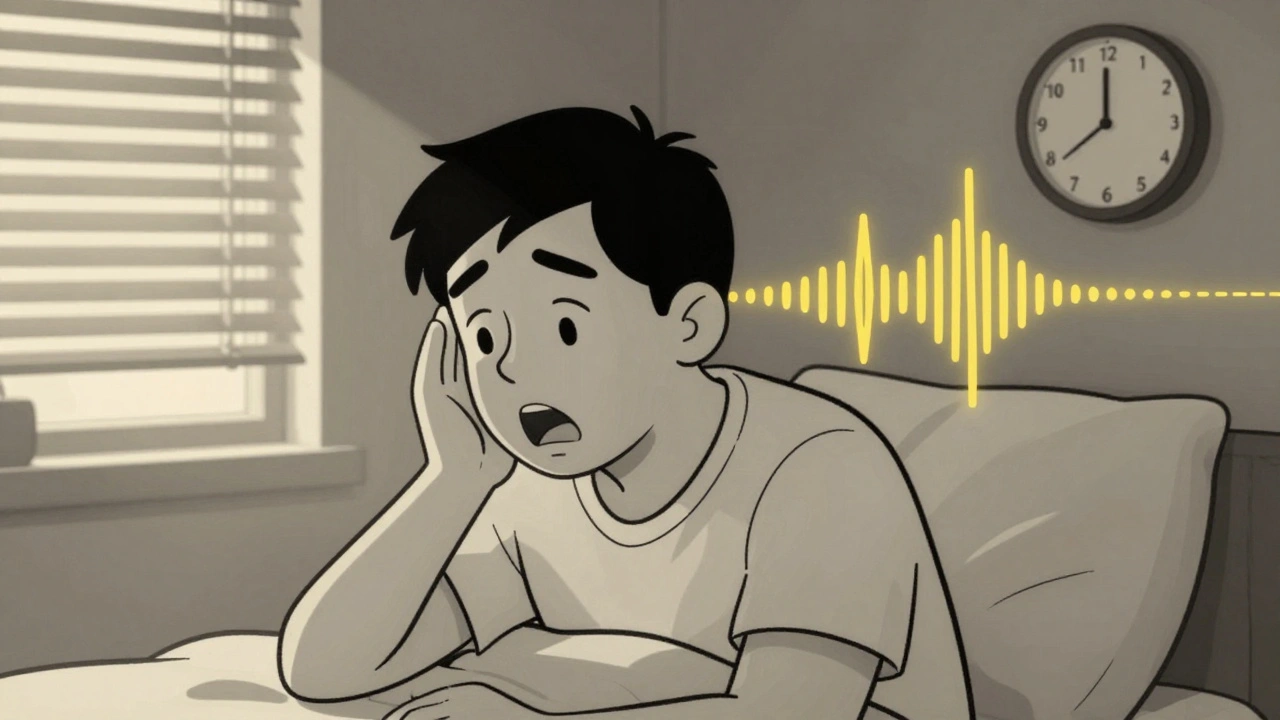
Imagine waking up one morning and your left ear is completely muffled-like someone stuffed cotton inside it. No pain. No dizziness. Just silence where sound used to be. This isn’t a dream. It’s sudden sensorineural hearing loss (SSNHL), and it demands action within hours, not days.
What Exactly Is Sudden Sensorineural Hearing Loss?
SSNHL isn’t just a bad ear infection or earwax buildup. It’s a rapid drop in hearing-usually over just a few hours or up to three days-caused by damage to the inner ear or the nerve that sends sound signals to your brain. The medical definition is clear: you lose at least 30 decibels across three connected frequencies. That’s like going from normal conversation to hearing only shouts. And it happens without warning.About 5 to 27 people out of every 100,000 experience this each year in the U.S. It’s most common between ages 50 and 60, but it can strike anyone-even someone in their 20s. You might notice it while talking on the phone, watching TV, or walking down a busy street. One moment everything’s normal. The next, your world feels quiet and distant.
Why Time Is the Most Critical Factor
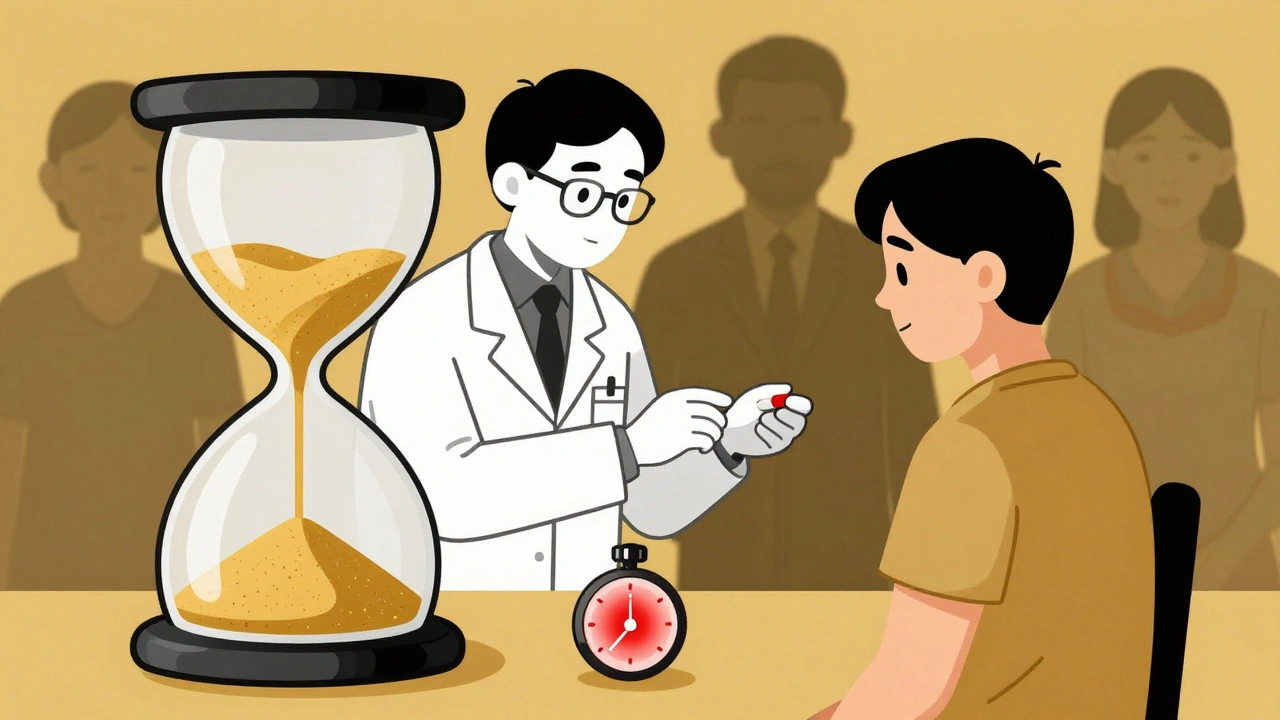
This isn’t something you can wait on. The window for effective treatment is narrow-some experts say it’s measured in hours. Studies show that if you start treatment within two weeks, you have a 61% chance of recovering significant hearing. If you wait past four weeks? That number drops to just 19%. After six weeks, steroids often do nothing at all.Why? Because the damage happens fast, and the body’s ability to repair itself fades just as quickly. The inner ear is delicate. When something triggers inflammation, reduced blood flow, or immune overreaction, hearing cells can die off permanently. Steroids work by calming that inflammation and helping restore blood flow before it’s too late.
Every hour counts. Delaying care because you think it’s just an ear infection, or waiting for your GP appointment next week, could mean losing hearing for good.
The Gold Standard: Oral Steroids
The first-line treatment for SSNHL is oral corticosteroids. The most common is Prednisone, given at 1 mg per kilogram of body weight-usually capped at 60 mg per day. You take it as a single daily dose for 7 to 14 days, then taper down slowly over the same period. This isn’t a quick fix. It’s a controlled process designed to reduce swelling without triggering a rebound effect.An alternative is Dexamethasone, which is stronger and lasts longer in the body. It’s five to seven times more potent than Prednisone, so you need less of it. But it’s not always the first choice because of cost and availability. Most clinics start with Prednisone because it’s cheap, effective, and widely accessible.
Success rates? Between 47% and 62% of patients recover at least some hearing with oral steroids. That’s not perfect-but it’s far better than the 32% to 65% who recover on their own without treatment. And for many, it’s the difference between hearing your grandchild’s laugh and living in silence.
What If Oral Steroids Don’t Work?
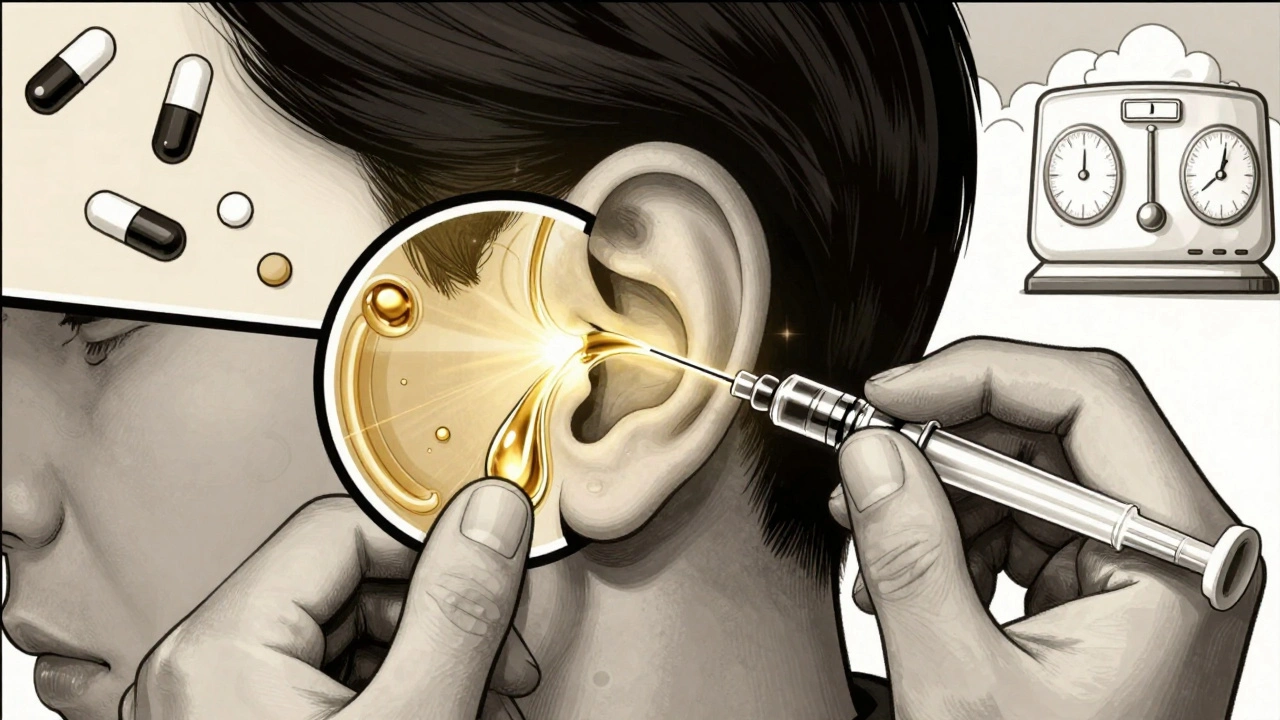
Not everyone responds to pills. If, after 2 to 6 weeks, your hearing hasn’t improved, your doctor may recommend intratympanic steroid injections. This means injecting Dexamethasone directly into the middle ear through the eardrum. The medication seeps into the inner ear, bypassing the bloodstream entirely.It sounds scary-but it’s done under local anesthetic in a clinic. The injection feels like pressure, then a brief sting. Some people rate the pain at 8 out of 10. But for those who’ve lost hearing despite oral steroids, it’s often their last shot. Studies show 42% to 65% of these patients regain usable hearing after the injections.
And here’s the kicker: intratympanic therapy has far fewer side effects than oral steroids. No weight gain. No insomnia. No blood sugar spikes. That makes it ideal for people with diabetes, high blood pressure, or mental health conditions who can’t tolerate high-dose oral steroids.
What Doesn’t Work (And Why You Should Avoid It)
You’ll hear stories about antivirals, blood thinners, or hyperbaric oxygen helping with sudden hearing loss. Don’t believe them-unless you’re in a clinical trial.Multiple large reviews have shown that antivirals like Valacyclovir do nothing better than a placebo. Thrombolytics? No benefit. Vasoactive drugs? No proof. Hyperbaric oxygen therapy (HBOT) might help a little-adding 6% to 12% more recovery on top of steroids-but it’s expensive ($200 to $1,200 per session), hard to find, and only works if started within 28 days. Most people can’t access it in time.
The bottom line: stick to the science. Steroids are the only treatment with consistent, proven results. Everything else is noise.
Side Effects You Need to Know
Yes, steroids come with risks. A 60 mg daily dose of Prednisone for two weeks can cause:- Severe insomnia (reported by 31% of users)
- Weight gain (average 4.7 kg over two weeks)
- Mood swings, anxiety, or irritability (22%)
- High blood sugar (28% in diabetic patients)
- Stomach upset (18%, sometimes requiring acid-reducing meds)
These aren’t rare. They’re common. But they’re also temporary. Most side effects fade within days of stopping the medication. The real danger isn’t the side effects-it’s the permanent hearing loss you risk if you skip treatment.
For patients with existing health issues, intratympanic injections offer a safer alternative. No systemic exposure. No sugar spikes. Just direct delivery to the ear.
What You Should Do Right Now
If you suspect sudden hearing loss:- Don’t wait. Go to an emergency room or urgent care immediately.
- Ask for a tuning fork test. The Weber and Rinne tests are quick, free, and can tell your doctor if the problem is in the inner ear.
- Insist on an audiogram within 72 hours. This is the only way to confirm SSNHL. No audiogram? No diagnosis.
- Start steroids ASAP. Even if you have to pay out of pocket, get them. A full 14-day course of Prednisone costs less than $15.
Primary care doctors can start treatment. You don’t need to see a specialist first. But if your doctor doesn’t know about SSNHL, push back. Print out the AAO-HNSF guideline. Show them the data. Your hearing is worth fighting for.
Real Stories, Real Outcomes
Reddit threads and patient forums are full of stories. One user, u/HearingHope2022, wrote: “Started Prednisone 48 hours after onset-recovered 90% of hearing in my left ear.” Another said: “IT injections saved me after oral steroids failed. Painful, but worth it.”But there are heartbreaking ones too. A 2023 survey found 43% of people with poor outcomes waited more than 72 hours before seeking help. Many thought it was “just a blocked ear.” Others were told to “wait and see.” By then, it was too late.
What’s Next for Treatment?
Research is moving fast. Scientists are now looking at blood markers to predict who will respond to steroids. If you have high levels of certain inflammatory proteins, you’re more likely to benefit. That could mean personalized treatment in the future-no more guessing.For now, steroids remain the only reliable option. The 2024 Military Health System updated its guidelines to standardize Prednisone at 60 mg/day for 14 days. The next AAO-HNSF guideline, due in 2025, will likely refine dosing even further.
But until then? The message is clear: act fast. Treat early. Don’t gamble with your hearing.
Documenting Your Care Matters
If you’re diagnosed with SSNHL, make sure your doctor documents everything:- Baseline audiogram (before treatment)
- Start date and dosage of steroids
- Follow-up audiogram after treatment
- 6-month check-up
Failing to document follow-up care increases your risk of legal issues if your hearing doesn’t recover. It’s not about blame-it’s about proving you got the right care at the right time.
Can sudden hearing loss fix itself without treatment?
Yes, but only in 32% to 65% of cases-and you can’t predict who will recover. Without treatment, you’re gambling with your hearing. Steroids improve recovery rates by nearly double, making prompt care the smartest choice.
How long do steroid side effects last?
Most side effects like insomnia, weight gain, or mood changes start fading within a few days after stopping the medication. Full recovery from the body’s hormonal shift usually takes 1 to 2 weeks. They’re uncomfortable, but temporary. Permanent hearing loss is not.
Is intratympanic injection painful?
The injection feels like pressure and a sharp sting that lasts 10 to 20 seconds. Most people rate it between 6 and 8 out of 10 in pain. A local numbing agent helps, and the procedure takes less than 10 minutes. For many, it’s the only way to save their hearing after oral steroids fail.
Can I use over-the-counter ear drops for sudden hearing loss?
No. OTC ear drops treat infections or wax buildup-not inner ear nerve damage. Using them might delay proper diagnosis and treatment, making your hearing loss worse. SSNHL requires medical intervention, not home remedies.
Do I need to see an ENT specialist right away?
You don’t need to wait for an ENT. Any doctor can start steroid treatment. But you must get an audiogram within 72 hours to confirm the diagnosis. If your ER or GP doesn’t offer one, go to an audiology clinic. Time is critical-don’t let bureaucracy delay your care.
Are steroids FDA-approved for sudden hearing loss?
No. Steroids are used off-label for SSNHL. But that’s standard practice for many conditions, including migraines and certain types of vertigo. The recommendation is backed by decades of clinical evidence and guidelines from the American Academy of Otolaryngology. Off-label doesn’t mean unproven-it means widely accepted.
What if I can’t afford steroid treatment?
Prednisone is extremely cheap-often under $15 for a full 14-day course. Dexamethasone injections cost more, but many clinics offer payment plans or financial aid. Never skip treatment because of cost. The cost of permanent hearing loss-social isolation, lost jobs, depression-is far higher.
Final Thought: Don’t Wait for the Worst Case
Sudden hearing loss doesn’t come with a warning. But your response to it can change everything. If you notice even a slight change in hearing-especially in one ear-act immediately. Don’t wait. Don’t hope. Don’t Google it for hours. Go to a clinic. Get tested. Start steroids.Your ears can’t wait. And neither should you.
13 Comments

AARON HERNANDEZ ZAVALA
December 5, 2025 AT 07:38
Woke up last year with this exact thing thought it was just sleep in my ear
Turns out I had 48 hours to act and I wasted 36
Got the steroids late but still recovered 70%
Don't wait like I did

Craig Ballantyne
December 6, 2025 AT 03:30
SSNHL is an otoneurological emergency requiring prompt corticosteroid intervention to mitigate cochlear inflammation and restore endolymphatic homeostasis
Delayed presentation correlates inversely with recovery probability per AAO-HNSF guidelines

Robert Asel
December 7, 2025 AT 01:21
It's irresponsible to suggest that steroids are the only effective treatment without mentioning the placebo-controlled trials that show marginal benefit
You're promoting pharmaceutical overuse while ignoring the body's innate capacity for self-repair
Also, who funded this article?

Shannon Wright
December 7, 2025 AT 22:18
I want to say thank you for writing this with such clarity and urgency
My brother lost hearing in one ear after ignoring it for two weeks and now he's permanently impaired
He didn't know it wasn't just an ear infection
I wish someone had told him this before it was too late
So many people think it's normal to lose hearing suddenly
It's not
It's a medical emergency like a stroke
And we need to stop normalizing it
If you're reading this and you've ever had a muffled ear that didn't clear up in a day
Go get checked
Don't wait
Don't hope
Just go
Your future self will thank you

Rachel Nimmons
December 8, 2025 AT 20:21
Have you considered that steroids are being pushed because they're profitable for Big Pharma?
And what about the 2021 leaked document from the NIH showing they suppressed data on natural anti-inflammatories?
Why is hyperbaric oxygen so hard to access?
Who controls the clinics that offer it?
Something doesn't add up

gladys morante
December 9, 2025 AT 19:12
I had this and the steroids made me lose my mind for two weeks
Manic episodes
Insomnia
Paranoia
Then I lost 15 pounds
And still didn't recover fully
It's not worth it
They're just drugging you to make you feel like you're doing something

Melania Dellavega
December 11, 2025 AT 17:22
There's something deeply human about losing a sense you didn't realize you took for granted
It's not just about hearing a voice
It's about feeling connected
When the world goes quiet
You realize how much sound was holding you to it
And when you're told time is critical
You understand it's not just about biology
It's about belonging
Don't wait until you're alone in the noise to realize what you've lost

Bethany Hosier
December 11, 2025 AT 23:18
I appreciate the tone of this post but I must respectfully point out that the term 'off-label' is being misused
Steroids for SSNHL are not merely off-label-they are guideline-recommended and evidence-based
Furthermore, the cost comparison to hearing aids and cochlear implants is statistically significant
And yes, the FDA does not approve every medically accepted treatment
That doesn't make it unproven
It makes it standard of care

Shawna B
December 12, 2025 AT 05:49
so if your ear goes muffled just go to the er and ask for steroids?

Lyn James
December 14, 2025 AT 03:02
People like you who push steroids as the answer are part of the problem
You reduce complex biological systems to chemical fixes
You ignore the root causes-stress, toxins, poor diet, chronic inflammation
You treat symptoms like they're the disease
And then you wonder why people are sicker than ever
Real healing doesn't come from a pill
It comes from listening-to your body, to nature, to silence
Maybe if you stopped trying to fix everything with drugs you'd finally hear what your ears have been trying to tell you

Victor T. Johnson
December 14, 2025 AT 03:22
Bro I got this in my 20s
Went to my GP and he laughed at me
Said it was probably earwax
Three days later I went to urgent care and they did the tuning fork test
Started steroids same day
Recovered 85%
Don't let some doctor who doesn't know SSNHL tell you to wait
Print the guidelines
Shove them in his face
And go get treated
My hearing is worth more than his ego

Nicholas Swiontek
December 15, 2025 AT 13:34
This is exactly the kind of info we need to spread
My mom had this and didn't know what to do
She waited and lost 40%
But she's now doing intratympanic injections and it's helping
Thank you for making it so clear what to do
Sharing this with everyone I know
❤️

vanessa parapar
December 16, 2025 AT 01:08
Wow you really believe this? Steroids are just a Band-Aid
What about the gut-brain-ear axis?
Have you heard of the 2023 Stanford study on microbiome modulation for neural repair?
You're missing the bigger picture
And yes, I'm a neurologist so I know what I'm talking about
Stop listening to random Reddit posts and start thinking deeper
Write a comment