




Imagine taking a medication today and then taking the same brand from a different pharmacy next month, only to find it feels slightly different. In the world of simple pills, like aspirin, this doesn't happen because every tablet is an exact chemical copy. But with complex medicines made from living cells, there is a phenomenon called lot-to-lot variability is the inherent variation that occurs between different production batches of biological products due to their complex manufacturing processes using living cells. It isn't a defect or a mistake; it is a natural part of how biological medicine is made. If you are a patient or a provider, understanding this helps you realize why biosimilars aren't just "generics" and why consistency is managed through science rather than exact duplication.


| Concept | What You Need to Know |
|---|---|
| What it is | Natural differences between batches (lots) of the same biologic drug. |
| The Cause | Living cells create the proteins, leading to slight variations in sugar molecules or amino acids. |
| Biosimilars vs Generics | Generics are exact copies; biosimilars are "highly similar" but not identical. |
| Management | The FDA requires rigorous analytical testing to ensure no clinically meaningful differences. |
Why Biologics Aren't Like Traditional Pills
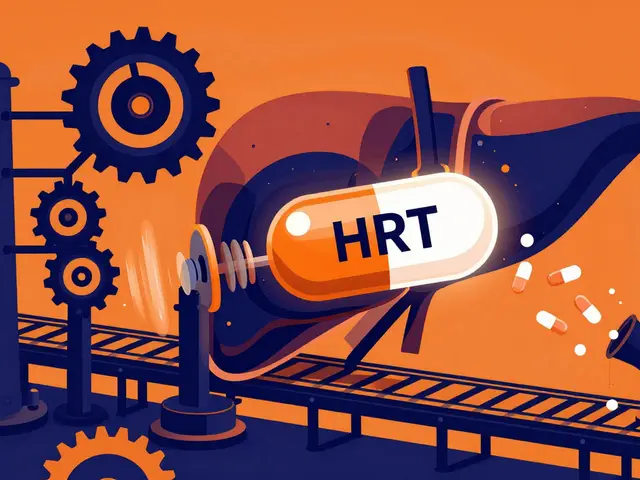
To understand variability, we first have to look at the difference between a small-molecule drug and a Biologic. Think of a small-molecule drug, like a generic ibuprofen, as a bicycle. It is easy to build a thousand identical bicycles using the same parts and a blueprint. Every single one is exactly the same. A biologic, however, is more like a living garden. Biologics are produced using living cells-such as CHO cells or yeast-to create complex proteins or antibodies. Even if you use the same seeds and the same soil, no two gardens are identical. While the cells can make very accurate copies of a protein, the process of "finishing" that protein leads to variations. This often happens during glycosylation, where sugar molecules are attached to the protein. Because this happens in a biological environment, different lots can contain millions of slightly different versions of the same antibody. This is the core of lot-to-lot variability.The Big Difference: Biosimilars vs Generics
There is a common misconception that Biosimilars are just generic versions of biologics. They aren't. In the regulatory world, the FDA is very clear: biosimilars are not generics. Traditional generics follow an abbreviated pathway (ANDA) because they are chemically identical. Biosimilars follow the 351(k) pathway. Because it is physically impossible to make an exact copy of a living cell's output, the goal for a biosimilar is to be "highly similar" to the Reference Product (the original brand-name biologic). Manufacturers must prove that the variations in their biosimilar are similar to the variations already present in the original brand-name drug. They have to show that these differences don't change how the drug works or how safe it is. This is a much higher bar than proving two chemical pills are identical; it requires deep analytical studies and clinical data to ensure the patient's outcome remains the same regardless of which lot they receive.
How the FDA Manages Batch Consistency
If every batch is slightly different, how do we know the medicine is safe? The FDA uses a "totality of the evidence" approach. This means they don't just look at one test; they look at the whole picture. First, they examine the manufacturer's control strategy. This is the set of rules the company uses to keep the variation within a tight, acceptable range. They check the glycosylation patterns and other post-translational modifications to ensure the protein is folded correctly. Then there is the question of Interchangeable Biosimilars. Some biosimilars go a step further. To get the "interchangeable" designation, a company must conduct a switching study. In these studies, patients are switched back and forth between the reference product and the biosimilar multiple times. If the study shows no decrease in effectiveness and no increase in risk, the product can be substituted at the pharmacy level without the doctor needing to write a new prescription.
The Real-World Impact in the Lab
Lot-to-lot variability doesn't just affect the drugs we inject; it affects the reagents used to test our blood. Laboratory professionals deal with this daily. For example, if a lab switches to a new lot of HbA1c reagents for diabetes monitoring, and that lot has a slight bias, it could lead to an average increase in patient results by 0.5%. This might seem small, but in clinical terms, it can change a patient's treatment plan. To fight this, labs use a few specific tools:- Moving Averages: This method monitors the average value of patient results in real-time to spot long-term drifts in stability.
- Lot Verification: Before using a new batch, labs typically test at least 20 patient samples in duplicate to see if the new lot behaves like the old one.
- Statistical Power: Labs aim for a statistical power of 0.8 to 0.95, meaning there is an 80-95% chance they will catch a significant difference between batches before the results ever reach a patient.
Looking Ahead: The Future of Biologic Precision
As we move toward 2026 and beyond, the industry is getting better at managing this natural variation. We are seeing a massive surge in the biosimilars market, which was valued at over $10 billion in 2023 and is growing rapidly. This growth is fueled by better technology. Advanced tools like high-throughput analytics and mass spectrometry are allowing scientists to "see" the proteins with incredible detail. We can now map out almost every sugar molecule attached to a protein, making it easier to control the manufacturing process. We are also moving toward even more complex therapies, like antibody-drug conjugates and gene therapies. These will bring even more natural variation, but the lessons learned from current biosimilars are providing the blueprint for how to handle it safely.Is lot-to-lot variability a sign of poor quality?
No. Lot-to-lot variability is an inherent characteristic of all biologics, including the original brand-name products. Because they are made in living cells, slight variations in the protein structure are normal and expected. Quality is measured by whether these variations stay within a pre-defined, safe range that doesn't affect how the drug works.
Why can't biosimilars be exact copies like generics?
Generics are small-molecule drugs created through chemical synthesis, which allows for an exact match. Biosimilars are large, complex proteins made by living cells. Because biological processes are naturally variable, it is scientifically impossible to create an identical copy. Instead, they are designed to be "highly similar" with no clinically meaningful differences.
What is an interchangeable biosimilar?
An interchangeable biosimilar is a product that has met additional FDA requirements, including "switching studies" where patients alternate between the reference product and the biosimilar. This proves that switching back and forth doesn't increase risk or lower effectiveness, allowing pharmacists to substitute the drug without a new doctor's order in many cases.
How do doctors ensure a different lot won't affect a patient?
Doctors rely on the FDA's rigorous approval process. Manufacturers must prove through analytical and clinical studies that their lot-to-lot variation is consistent and does not impact safety or efficacy. Once a product is approved, the manufacturer's strict control strategies ensure every batch remains within the approved specifications.
Does lot-to-lot variability affect diagnostic tests?
Yes, it can. Reagents used in labs are often biological. A change in a reagent lot can cause a "bias" in test results. To prevent this, labs perform lot-to-lot verification and use moving averages to ensure that a change in the chemical batch doesn't lead to an incorrect medical diagnosis for the patient.
8 Comments

Mark Koepsell
April 30, 2026 AT 06:05
The distinction between small-molecule drugs and biologics is a critical point for patient education. Most people simply don't realize that the manufacturing process for a monoclonal antibody is fundamentally different from synthesizing a chemical compound like ibuprofen. The use of CHO cells introduces a level of complexity that necessitates the 'totality of the evidence' approach for regulatory approval.

Elizabeth Holden
May 1, 2026 AT 16:56
this is basic stuff lol. anyone with a brain knows that biosimilars aint generics. its like saying a dog is like a wolf... close but not the same. stop acting like this is some big revelation!!

Jenny X
May 2, 2026 AT 12:49
Conveniently ignoring the potential for adverse immunogenic responses here. The pharmacological bioequivalence might look good on paper, but the epistemic gap in long-term safety data for these 'highly similar' proteins is where the real danger lies. They want us to trust the 351(k) pathway while the big pharma entities hide the proprietary cell-line data behind trade secrets.

Jimmy Crocker
May 3, 2026 AT 14:31
It is truly exhausting to have to explain such rudimentary biological concepts to the masses, yet one must admit that the nuance of post-translational modifications, specifically glycosylation, is often overlooked by those who lack a proper foundation in biochemistry, although the author's analogy of a garden is perhaps a bit too simplistic for anyone with an actual degree in the sciences, dont you think?

bharat films
May 4, 2026 AT 14:01
Imagine thinking the FDA actually cares about safety over profits 🤡. This whole 'totality of evidence' thing is just a fancy way of saying 'good enough for us' 💸📉.

Mikaela -anonymous 😏
May 4, 2026 AT 22:51
Oh wow... a garden!!! How poetic... and deeply profound... 🙄. I'm just so shook that science can't make a perfect copy of a cell. Truly a tragedy of epic proportions!!!!

Seema Karanje
May 6, 2026 AT 15:37
Stop complaining and start learning! This is the future of medicine and the only way we get cheaper drugs is by embracing this tech! Get with the program or get left behind!

kelvin villa saab
May 8, 2026 AT 07:10
The athor totally missed the mark on how this affects real peopel. its not just about the lab, its about the stress of not knowing if your med is acting different today than it did last week. absolute madness that we just accept this as 'natural' variability. totaly unacceptable!
Write a comment