


Cyclosporine Drug Interaction Checker
Select a medication to see how it affects Cyclosporine plasma concentrations via the CYP3A4 pathway.
Target therapeutic window: 100 - 400 ng/mL
Imagine you're managing a patient's medication list and spot Cyclosporine, an potent immunosuppressive drug used primarily in organ transplantation and autoimmune diseases. You know it's powerful, but do you realize it doesn't just get metabolized by the liver? It actively interferes with the very enzyme responsible for breaking down about 60% of all other drugs. This dual role makes cyclosporine a unique player in pharmacology, acting as both a victim and a perpetrator in drug-drug interactions.
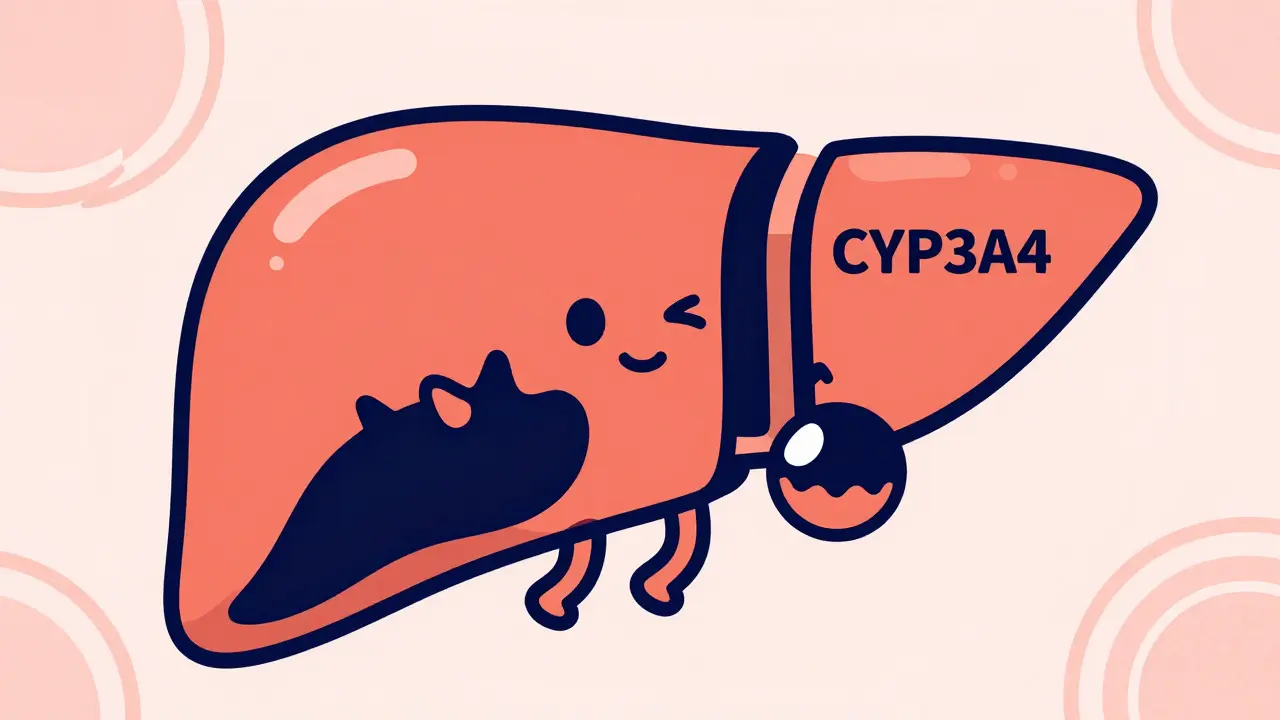
The core issue here is CYP3A4, the most abundant cytochrome P450 enzyme in your liver and intestines. When cyclosporine inhibits this enzyme, it slows down the clearance of other medications, causing their levels to spike. Conversely, if another drug induces CYP3A4, cyclosporine levels can crash, leading to organ rejection. Getting this balance wrong isn't just an inconvenience; it's a safety risk that requires precise management.
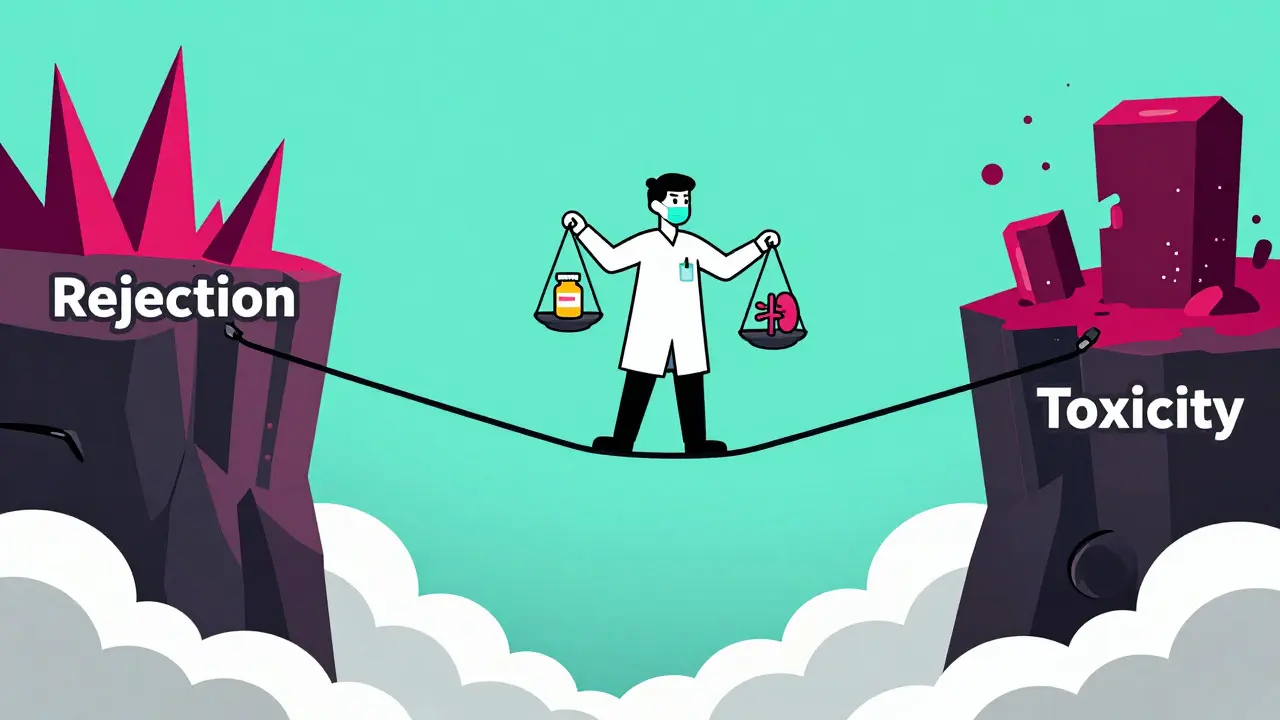
Why Cyclosporine Is a Pharmacological Tightrope Walk
Cyclosporine was discovered in 1970 and approved by the FDA in 1983. Its arrival changed transplant medicine, dropping acute rejection rates from 70-80% to a much safer 20-30%. However, its effectiveness comes with a narrow therapeutic index. For most transplant patients, target trough concentrations need to stay between 100-400 ng/mL. Miss that window on the low side, and the organ might be rejected. Go too high, and you risk kidney toxicity or hypertension.
The complexity deepens because cyclosporine isn't just a passive substrate waiting to be broken down. The FDA explicitly classifies it as a CYP3A4 inhibitor. This means it blocks the enzyme's active site, preventing it from processing other drugs. Unlike strong mechanism-based inhibitors like clarithromycin, which permanently disable the enzyme until new ones are built, cyclosporine acts primarily as a competitive and mixed inhibitor. Its effects are reversible, but they are potent enough to significantly alter the plasma levels of co-administered drugs. Additionally, cyclosporine inhibits P-glycoprotein (P-gp), a transporter protein, creating a double barrier that further complicates how other drugs move through the body.
How CYP3A4 Inhibition Actually Works
To manage these interactions, you need to understand the mechanics. CYP3A4 works by binding to a drug molecule and chemically modifying it so the body can excrete it. When cyclosporine is present, it competes for this binding site. Research indicates that cyclosporine exhibits time-dependent inhibition of both CYP3A4 and CYP3A5 enzymes. This suggests that the longer the exposure, the more pronounced the inhibitory effect becomes.
Genetics play a huge role here. Not everyone has the same version of CYP3A4. Polymorphisms, or genetic variations, mean some people have enzymes that work up to 40% slower than the standard wild-type variant. If a patient has a less active CYP3A4 gene and takes cyclosporine, their baseline metabolism is already slow. Add the inhibitory effect of cyclosporine itself, and the risk of toxicity jumps significantly. This is why one-size-fits-all dosing rarely works well for long-term transplant care.
Common Culprits: Drugs That Clash with Cyclosporine
You don't have to memorize every single interaction, but you should know the big players. Here are the most clinically significant categories:
- Macrolide Antibiotics: Drugs like clarithromycin are strong CYP3A4 inhibitors. Co-administration can increase cyclosporine levels dramatically. In renal transplant patients, starting clarithromycin has been linked to serum creatinine increases of 40-60% within just 72 hours.
- Calcium Channel Blockers: Diltiazem and verapamil are moderate inhibitors. They are often prescribed for blood pressure control in transplant patients, but they require a cyclosporine dose reduction of 25-50% to keep levels stable.
- Azole Antifungals: Ketoconazole and itraconazole are potent inhibitors. They are generally avoided unless absolutely necessary, and if used, require intense monitoring.
- Rifampin: This antibiotic is a strong CYP3A4 *inducer*. It speeds up the breakdown of cyclosporine, potentially lowering levels by 50-80% and triggering acute rejection episodes.
- Sirolimus: Another immunosuppressant that is also a CYP3A4 substrate. Cyclosporine increases sirolimus levels by about 2.2-fold, meaning you usually need to cut the sirolimus dose by roughly 70%.
Tacrolimus vs. Cyclosporine: A Key Distinction
If you work in transplant medicine, you've likely seen tacrolimus replace cyclosporine as the first-line agent. Why? Partly because tacrolimus is primarily a CYP3A4 *substrate* rather than an inhibitor. This makes its profile slightly different. Tacrolimus levels shoot up when exposed to CYP3A4 inhibitors, making it vulnerable. Cyclosporine, on the other hand, pushes up the levels of *other* drugs while also being affected by them. This bidirectional nature makes cyclosporine management more complex but also gives clinicians a bit more control over the specific pathways involved.
| Feature | Cyclosporine | Tacrolimus |
|---|---|---|
| Primary Role | Substrate & Inhibitor | Primary Substrate |
| CYP3A4 Effect | Inhibits enzyme activity | Metabolized by enzyme |
| P-gp Interaction | Strong Inhibitor | Substrate |
| Risk Profile | Raises levels of other drugs | Levels raised by other drugs |
| Typical Use | Kidney, Liver, Autoimmune | Kidney, Heart, Lung |

Practical Strategies for Safe Management
So, how do you actually handle this in practice? The answer lies in structured protocols and proactive monitoring. A multicenter study found that nearly 33% of renal transplant patients experienced at least one significant drug interaction in their first year post-transplant. To prevent hospitalizations, clinical teams follow a clear workflow:
- Identify All Agents: List every medication the patient is taking. Flag any known CYP3A4 substrates, inhibitors, or inducers.
- Calculate Net Effect: Determine if the overall impact will raise or lower cyclosporine levels. Are you adding an inhibitor? Expect levels to rise. Adding an inducer? Expect levels to fall.
- Adjust Dose Preemptively: Don't wait for blood tests to show toxicity. If adding a moderate inhibitor like diltiazem, reduce the cyclosporine dose by 25-50% immediately.
- Monitor Aggressively: Check trough concentrations daily until stable. Once stable, weekly checks are often sufficient.
- Document Everything: Keep a detailed log of dose changes and corresponding blood levels. This helps predict future reactions.
Electronic health record alerts have become game-changers here. A 2022 study showed that implementing automated interaction checks reduced cyclosporine-related adverse events by 45% across 12 transplant centers. These systems flag potential clashes before the prescription is finalized, giving pharmacists and doctors a crucial head start.
The Future: Personalized Dosing and Genetic Testing
We are moving away from trial-and-error dosing toward personalized medicine. Recent research highlights that CYP3A4 polymorphisms significantly affect how patients respond to cyclosporine. By testing a patient's genotype, clinicians can predict their metabolic rate more accurately. Some European guidelines now recommend incorporating pharmacogenetic testing into initial dosing strategies.
Furthermore, point-of-care devices are entering phase 3 trials. These gadgets can measure cyclosporine concentrations in real-time, with correlation coefficients as high as r=0.95 compared to lab tests. Imagine checking a patient's level at the bedside instead of waiting 24 hours for a lab result. This speed allows for faster dose adjustments, keeping patients safely within their therapeutic window.
While newer drugs exist, cyclosporine remains a cornerstone of transplant care, with a global market valued at $1.87 billion in 2022. Its longevity is due to its proven efficacy, but only if we respect its complex interaction profile. By understanding the CYP3A4 dynamic, you turn a potential liability into a manageable part of patient care.
What is the main risk of combining cyclosporine with clarithromycin?
The main risk is nephrotoxicity. Clarithromycin is a strong CYP3A4 inhibitor that can drastically increase cyclosporine levels, leading to kidney damage. Serum creatinine levels can rise by 40-60% within three days of starting the antibiotic.
How does cyclosporine differ from tacrolimus in terms of drug interactions?
Cyclosporine acts as both a substrate and an inhibitor of CYP3A4, meaning it affects the levels of other drugs. Tacrolimus is primarily a substrate, so its levels are mainly affected by other drugs rather than affecting them directly. Cyclosporine also inhibits P-glycoprotein transporters, adding another layer of interaction complexity.
What should I do if I need to prescribe rifampin to a patient on cyclosporine?
Rifampin is a strong CYP3A4 inducer that can lower cyclosporine levels by 50-80%, risking organ rejection. You must monitor trough concentrations closely and be prepared to increase the cyclosporine dose significantly. Alternatively, consider using a non-inducing antibiotic if possible.
Does genetics matter for cyclosporine dosing?
Yes, CYP3A4 polymorphisms can reduce enzyme activity by up to 40% in some individuals. Patients with less active variants may require lower initial doses to avoid toxicity. Pharmacogenetic testing is increasingly recommended to guide personalized dosing strategies.
Can cyclosporine be taken with grapefruit juice?
It is generally advised to avoid large amounts of grapefruit juice. Grapefruit contains compounds that inhibit CYP3A4 in the gut, which can increase cyclosporine absorption and lead to higher blood levels. Consistent consumption is worse than occasional sips, but moderation and monitoring are key.