



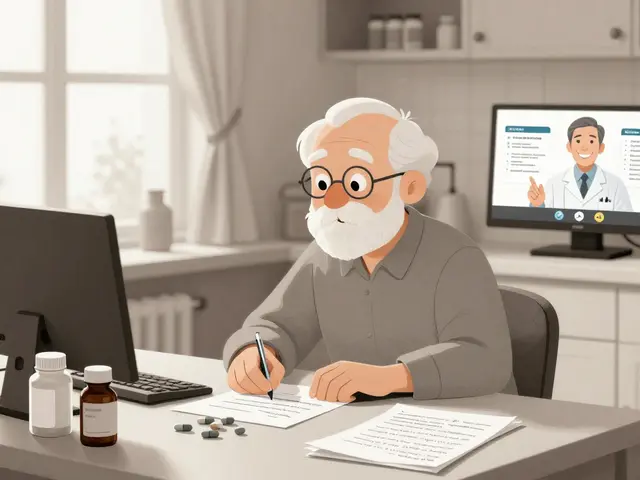

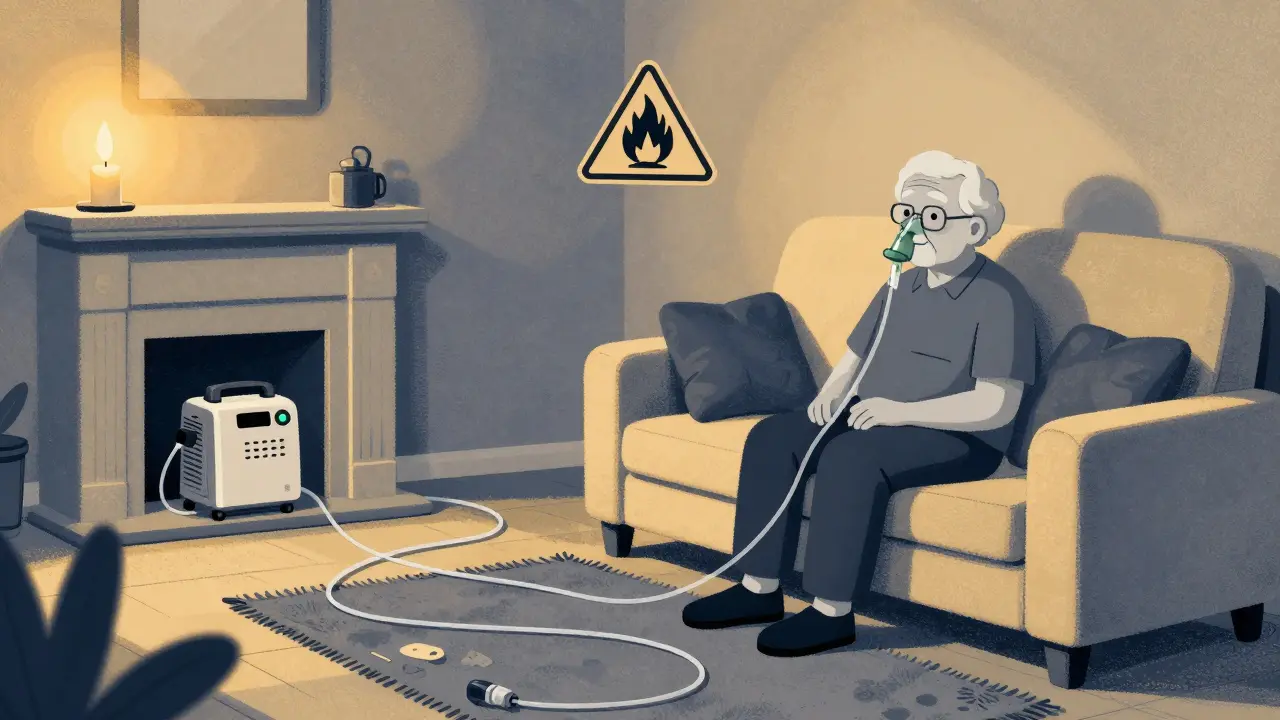
When you’re on home oxygen therapy, your life doesn’t stop-it just changes. You still need to cook, shower, walk the dog, and sit on the couch. But now, you’ve got oxygen tubing snaking across the floor and a machine humming in the corner. The biggest fear? Fire. Not because oxygen burns, but because it makes everything else burn much faster.
Why Oxygen Is More Dangerous Than You Think
Oxygen isn’t flammable. But it turns a small spark into a flash fire in less than a second. Normal air is 21% oxygen. Home oxygen therapy often delivers 40% or more. That’s not just extra air-it’s fuel. A cigarette lit 5 feet away? In normal air, it smolders. In 40% oxygen? It ignites instantly. A spark from a static shock from your synthetic blanket? Gone in a blink. Hair dryers, electric razors, space heaters-anything that gets hot or sparks-is a risk if it’s within 3 feet of your oxygen setup. The numbers don’t lie. Between 2014 and 2018, U.S. fire departments responded to nearly 2,500 home fires each year tied to oxygen equipment. Fifteen people died. Over 100 were injured. Most of these fires happened because someone smoked near their oxygen, or a hair dryer was too close to the tubing. The American Thoracic Society says 92% of oxygen-related deaths involve smoking within 5 feet. That’s not a myth-it’s a pattern.The 10-Foot Rule: It’s Not Optional
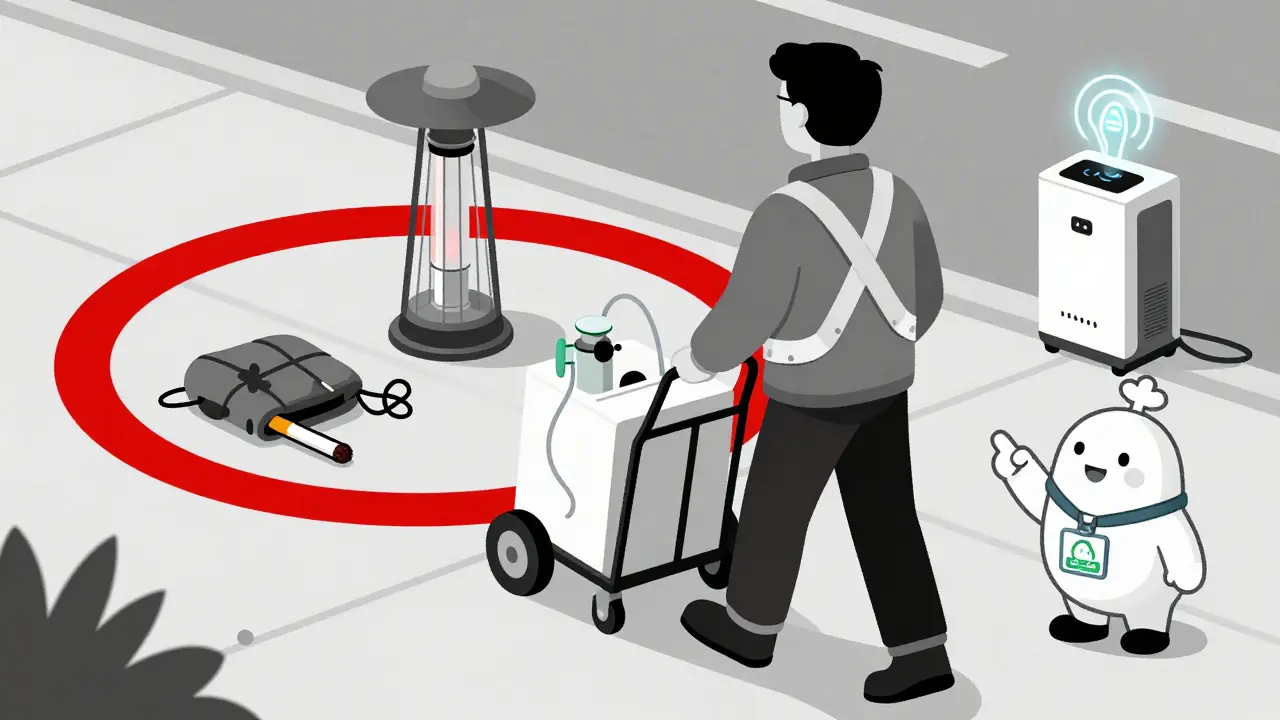
You’ve probably heard the old advice: “Keep flames 5 feet away.” That’s outdated. New research from the NFPA and the American Thoracic Society says 10 feet is the real minimum. Why? Because oxygen doesn’t just travel in a straight line. It flows through the air, settles in corners, and can cling to curtains or clothing. A flame 8 feet away might seem safe-but if your oxygen tubing is draped over a chair, and the chair is near a lamp? The oxygen is still there, waiting. This means:- No smoking anywhere in the house. Not even on the porch if it’s attached.
- Keep candles, fireplaces, and gas stoves at least 10 feet from your oxygen equipment.
- Don’t use electric space heaters within 10 feet of your concentrator or tubing.
- Avoid aerosol sprays-hairspray, deodorant, cleaning products. One mist near oxygen tubing can ignite in under a second.
Choosing the Right Oxygen System
There are three main types of home oxygen systems, and each has different risks:- Oxygen concentrators: These plug into the wall and pull oxygen from the air. They’re the safest for daily use because they don’t store pressurized gas. But they need electricity. If the power goes out, you need a backup battery. Medicare requires at least 30 minutes of battery backup. Look for models with automatic shut-off if oxygen purity drops below 85%.
- Compressed gas cylinders: These are metal tanks filled with oxygen under pressure. They’re portable but dangerous if dropped or exposed to heat. A damaged valve can turn the tank into a rocket-propelling it at 150 mph. Store them upright, secured, and away from direct sunlight or radiators.
- Liquid oxygen systems: These store oxygen as a super-cold liquid (-297°F). They hold more oxygen and last longer, but if they leak, they can cause severe frostbite. They’re heavy (15-30 lbs for portable units) and can be hard to move for older adults. Use them only if you’re physically able to handle the weight.
Most people use concentrators at home and carry a small cylinder or portable concentrator when they go out. If you’re unsure which system is right for you, ask your provider for a safety demo. Don’t just take the paperwork-watch them show you how to handle it.

Electrical Hazards You Can’t See
You don’t need an open flame to start a fire. Static electricity can do it. Synthetic fabrics-polyester pajamas, nylon sheets, acrylic rugs-can build up static charge at levels you can’t even feel. At 1,000 volts, it’s enough to spark in high-oxygen environments. The threshold for human perception is 3,500 volts. You won’t know it’s happening until it’s too late. That’s why cotton is your best friend:- Wear 100% cotton pajamas and underwear.
- Use cotton bedsheets and pillowcases.
- Avoid wool blankets-they generate static too.
- Don’t use electric blankets or heated mattress pads near oxygen.
Also, keep electrical devices away from your oxygen setup. Hair dryers, electric razors, and curling irons are the top three culprits in oxygen-related fires. Even if you’re not using them near your tubing, if they’re plugged in within 3 feet of your concentrator, they can spark. Plug them into outlets across the room.
Staying Active Without Risk
You don’t have to sit still. Oxygen therapy is meant to help you live, not just survive. But you need to move smartly.- Walking: Use a wheeled cart to carry your concentrator. Many users say this cuts tripping hazards by half. Secure the tubing with Velcro straps to your clothing-never let it drag.
- Showering: Keep your oxygen equipment outside the bathroom. Use a nasal cannula with long tubing (up to 50 feet). Make sure the concentrator is in a dry, ventilated spot-no steam near the air intake.
- Traveling: If you’re flying, notify the airline in advance. Portable oxygen concentrators must be FAA-approved. Always carry extra batteries-twice as many as you think you’ll need.
- Using the toilet: Don’t coil tubing under the toilet seat. That’s a common trip hazard. Use ceiling-mounted tubing systems if your provider offers them. They reduce falls by 43%, according to Mayo Clinic data.
Some users report feeling more confident after using an “Oxygen Safety Kit” from the American Lung Association. These kits include flame-resistant blankets, 10-foot zone markers, and a quick-reference card. In a 2023 pilot program, 83% of users said it eased their anxiety.
What to Do If Something Goes Wrong
If you smell smoke, see a flame, or hear a hiss from your oxygen tank:- Turn off the oxygen flow immediately. On a concentrator, press the power button. On a tank, close the valve.
- Get out of the room. Don’t try to put out the fire yourself unless it’s tiny and you have a fire extinguisher nearby.
- Call 911. Tell them you’re on oxygen therapy. That changes how they respond.
- Once you’re safe, contact your oxygen provider. They’ll need to inspect your equipment before you can use it again.
Never use water to put out an oxygen fire. Water won’t help-and it can make electrical fires worse. Keep a Class ABC fire extinguisher near your oxygen area, but don’t rely on it. Prevention is the only real safety.
Training and Maintenance: Don’t Skip This
Most people get 1-2 hours of safety training when they start oxygen therapy. That’s not enough. The American Thoracic Society recommends a 4-phase competency check:- Fire safety understanding (must pass 100%)
- Equipment operation (92% pass rate)
- Emergency procedures (85% pass rate)
- Daily maintenance (97% pass rate)
Ask your provider for a refresher every 6 months. And do this every week:
- Clean the concentrator’s air filter every 2-4 weeks. A clogged filter reduces oxygen output and strains the machine.
- Check tubing for cracks or stiffness. Replace it if it’s brittle.
- Wipe down the concentrator with a dry cloth. Dust buildup can cause overheating.
- Never cover the machine. Keep it at least 6 inches from walls and furniture for airflow.
Medicare-certified providers are required to give you a 12-point safety checklist. If they don’t, ask for it. A 2022 audit found 31% of suppliers gave incomplete materials. You deserve better.
What’s New in Oxygen Safety
Technology is catching up. In 2023, the FDA approved the first smart oxygen concentrator with AI-powered flame detection. Philips Respironics SimplyGo Mini+ can detect a flame 18 inches away and shut off oxygen in under 0.5 seconds-with 99.2% accuracy. That’s not science fiction-it’s available now. Also, the American Lung Association launched the “Oxygen Safety Ambassador” program in 2024. It trains home care providers to teach safety like they teach CPR. If your provider has an ambassador on staff, ask for their help. They’re more likely to catch risks you might miss.Final Thought: Safety Is a Habit, Not a Checklist
Home oxygen therapy gives you back your life. But it demands respect. It’s not about being scared-it’s about being smart. Every time you plug in your concentrator, every time you walk with your tubing, every time you change your bedding-you’re making a choice. Choose cotton. Choose distance. Choose awareness.The goal isn’t to live in a bubble. It’s to live fully-safely. And that’s possible, if you know the rules and stick to them.
Can I smoke if I use oxygen therapy at home?
No. Smoking anywhere in the house-even outside or on the porch-is extremely dangerous. Oxygen makes flames ignite instantly. Between 2014 and 2018, 92% of oxygen-related deaths involved smoking within 5 feet of equipment. There is no safe distance if you’re smoking near oxygen. Quitting is the only safe option.
Can I use an electric blanket with oxygen therapy?
No. Electric blankets generate heat and can create sparks. Even if they’re turned off, the wiring can still pose a risk. Static electricity from synthetic materials can ignite in high-oxygen environments. Use 100% cotton bedding instead. It’s safer and more comfortable.
How often should I clean my oxygen concentrator filter?
Clean the air filter every 2 to 4 weeks, depending on dust levels in your home. A dirty filter reduces oxygen output and forces the machine to work harder, which can shorten its lifespan. Always follow your device’s manual for cleaning instructions. Replace the filter every 6 months or as recommended by the manufacturer.
What should I do if my oxygen tubing gets damaged?
Replace it immediately. Cracks, stiffness, or holes can cause leaks, which increase fire risk and reduce oxygen delivery. Keep spare tubing on hand. Never tape or glue damaged tubing-it’s not safe. Your oxygen provider should supply replacement tubing at no extra cost if you’re on Medicare or other insurance.
Can I travel with my oxygen concentrator?
Yes, but you need to plan ahead. Only use FAA-approved portable oxygen concentrators on airplanes. Contact your airline at least 48 hours before your flight to confirm their requirements. Always carry extra batteries-twice as many as you think you’ll need. Never check your concentrator as luggage. Keep it with you in the cabin.
Is it safe to use a humidifier with oxygen therapy?
Yes, if it’s designed for oxygen use. Humidifiers help prevent dry nose and throat, especially with higher flow rates. But only use humidifiers approved by your oxygen provider. Never add water to the concentrator itself. Always use distilled water, and clean the humidifier daily to prevent mold or bacteria growth.
13 Comments

Janette Martens
December 30, 2025 AT 06:40
OMG I JUST SPILLED MY COFFEE NEAR MY OXYGEN TUBING AND NOW I’M PANICKING 😭 LIKE WTH DID THEY NOT TEACH US THIS IN HIGH SCHOOL?? I’M USING COTTON SWEATPANTS NOW AND I’M NOT EVEN JOKING.

Marie-Pierre Gonzalez
December 31, 2025 AT 10:47
Thank you for this comprehensive guide. As a caregiver to my mother on long-term oxygen therapy, I can attest that many providers offer minimal safety training. The 10-foot rule is non-negotiable, and cotton bedding has made a profound difference in our household. I have printed the checklist and posted it beside the concentrator.

Louis Paré
January 1, 2026 AT 12:23
Let’s be real-this whole thing is a glorified fear campaign. Oxygen doesn’t ‘make things burn faster’-it just enables combustion. If you’re dumb enough to smoke near medical equipment, you deserve to get burned. Also, who the hell still uses liquid oxygen? That’s like carrying a bomb in a backpack. The real problem is lazy patients and negligent suppliers.

Sydney Lee
January 1, 2026 AT 21:19
I find it deeply concerning that the average patient receives only 1-2 hours of safety training. In the United States, we treat oxygen therapy like a commodity, not a life-sustaining medical intervention. The fact that 31% of suppliers provide incomplete materials is not an oversight-it’s systemic negligence. If this were insulin or dialysis, there would be a congressional hearing. Instead, we get a blog post with a pretty infographic.

oluwarotimi w alaka
January 1, 2026 AT 23:37
They say oxygen is dangerous but what about the corporations that make these machines? I heard the FDA approved that 'smart' concentrator because Big Pharma wants you dependent on tech. Also, why do they always say 'cotton' but never mention that polyester is cheaper and the government subsidizes it? Something smells fishy here.

Debra Cagwin
January 3, 2026 AT 14:41
This is such an important post-and so many people don’t realize how much they can still live fully with oxygen. My sister started therapy last year and thought she’d never walk the dog again. Now she uses a wheeled cart and walks 2 miles every morning. You don’t have to give up your life-you just have to adapt. And yes, cotton pajamas are the new luxury.

Celia McTighe
January 3, 2026 AT 18:27
I just got my first concentrator last week and I was terrified. But reading this made me feel so much better 😊 I bought cotton sheets, moved my lamp 12 feet away, and even stopped using my favorite lavender spray (RIP). It’s weird how small changes make you feel safer. Thank you for writing this with so much heart.

Ryan Touhill
January 4, 2026 AT 10:59
I appreciate the intent here, but let’s not pretend this is new information. The NFPA has published these guidelines since 1998. The real issue is that insurance companies won’t cover smart concentrators unless you’re in a clinical trial. Meanwhile, patients are left to Google ‘oxygen fire risk’ at 2 a.m. while their machine hums in the corner. We need policy reform, not pep talks.

Teresa Marzo Lostalé
January 4, 2026 AT 20:17
I’ve been on oxygen for 11 years. I’ve had three close calls. Once, my cat knocked over a bottle of hairspray next to the concentrator. No fire. But I cried for an hour. This isn’t about rules-it’s about living with constant low-grade anxiety. The only thing that helped? Talking to other oxygen users. We’re not patients. We’re survivors.

ANA MARIE VALENZUELA
January 6, 2026 AT 16:39
92% of deaths involve smoking? That’s not a statistic-it’s a moral failure. If you can’t quit smoking while on oxygen, you’re not a patient. You’re a liability. And don’t even get me started on people who use electric razors. If you’re too lazy to use a manual one, maybe you shouldn’t be allowed oxygen at all.

Bradly Draper
January 8, 2026 AT 09:27
I didn’t know static could start a fire. I thought it was just shocks. Now I wear cotton socks all day. My wife thinks I’m weird but I’d rather be weird than dead.

Gran Badshah
January 9, 2026 AT 18:24
bro i just got my oxygen and my cousin said dont use phone near it but i use it all the time. is it bad? i dont think so. also why so much cotton? i hate cotton.

Ellen-Cathryn Nash
January 10, 2026 AT 22:52
I used to wear silk pajamas because they felt fancy. Now I wear cotton because I’m not ready to die. I’ve started calling my oxygen machine 'Betsy'-it’s the only thing keeping me alive, and it deserves respect. I don’t use aerosols, I don’t smoke, I don’t even let my kids use glitter glue near the living room. This isn’t fear. It’s love.
Write a comment