



When a doctor writes a prescription, they’re not just picking a medicine-they’re making a decision that affects your health, your wallet, and their own income. For years, the system rewarded doctors for prescribing brand-name drugs. But that’s changing. Today, generic prescribing incentives are reshaping how providers choose medications-and it’s not just about saving money.
Why Generic Prescribing Incentives Exist
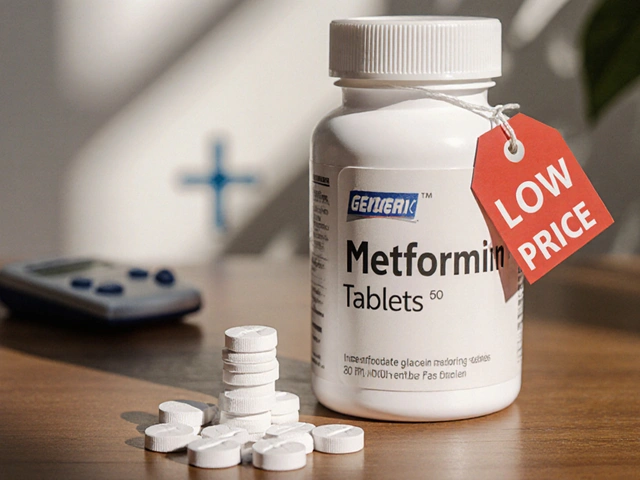
The U.S. spends over $253 billion a year on prescription drugs. Of that, generics make up 90% of all prescriptions but only 23% of the cost. That gap is huge. A single brand-name drug can cost 10, 20, even 50 times more than its generic version, even when they work the same way. So health plans, insurers, and government programs started asking: why not pay doctors to choose the cheaper option? The answer wasn’t just about cutting costs-it was about making smart care the default. In 2006, Medicare Part D became one of the first major systems to tie formulary tiers to cost, pushing generics to the bottom tier. But that didn’t move the needle much. Patients saved money, but doctors kept prescribing brands. So the system evolved. Now, incentives go beyond formularies. They’re built into pay structures, EHR systems, and performance metrics. The goal? Make prescribing generics the easiest, most rewarding choice.How These Incentives Actually Work
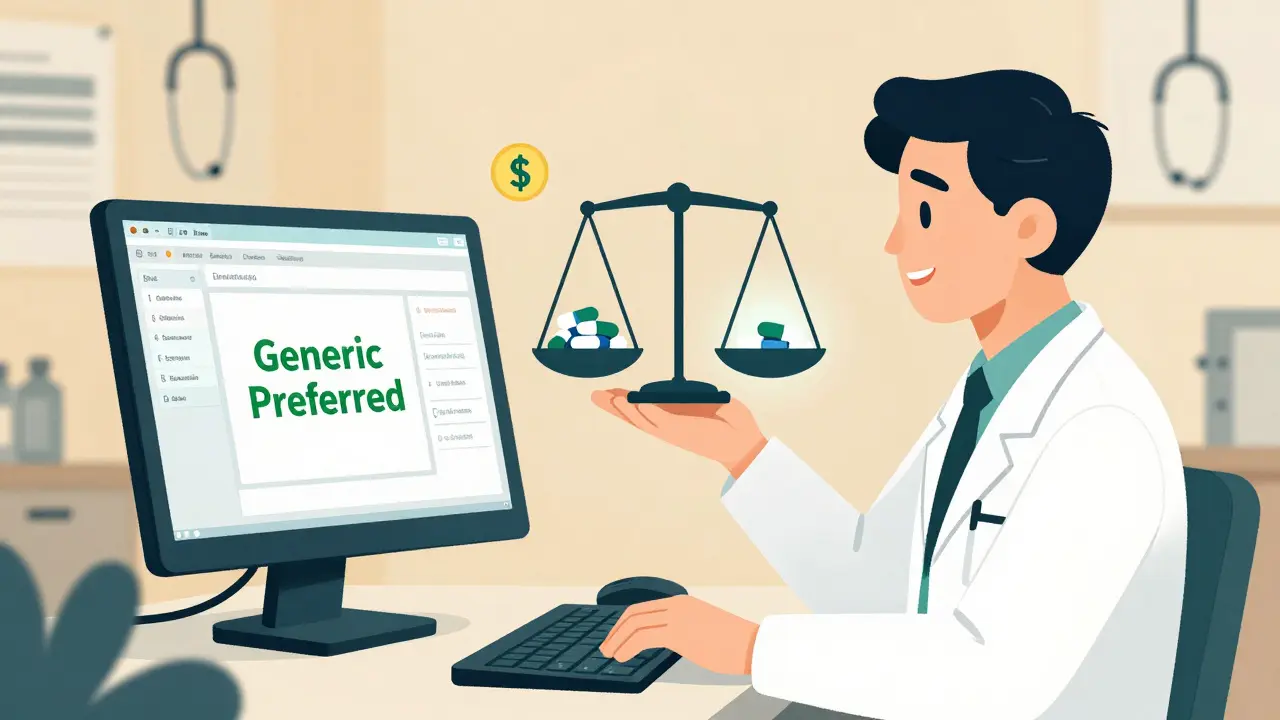
There are two main types: financial and non-financial. And they’re not one-size-fits-all. Financial incentives are direct. Some health plans, like Blue Cross Blue Shield affiliates, pay doctors $5 to $15 per generic prescription for certain drug classes. Top performers can earn up to $5,000 a year. UnitedHealthcare’s Value-Based Prescribing Program pays bonuses tied to overall generic use rates. In primary care clinics, this led to a 24.7% jump in generic prescriptions. But money isn’t the only lever. Non-financial rewards matter too. Some insurers give providers faster prior authorizations if they stick to generics. Others offer priority scheduling or public recognition in newsletters. One program even lets doctors skip the paperwork for certain generics-no more calls to the pharmacy benefit manager. Even technology plays a role. Electronic prescribing systems now default to generics. A 2020 study found that when EHRs automatically suggested the generic version, prescribing rates jumped by over 22 percentage points. That’s not a nudge-it’s a shove in the right direction.What Works-and What Doesn’t
Not all incentive programs deliver the same results. Formulary tiering alone? It only boosts generic use by 8-12%. That’s because patients pay less, but providers don’t gain anything. Direct payments to doctors? They move the needle much harder. But here’s the catch: sometimes, the system backfires. A 2023 JAMA study found that doctors working with 340B hospitals-which get deep discounts on brand-name drugs-prescribed generics 6.8% less often than others. Why? Because they’re financially tied to the brand drugs they can buy cheaply. The same thing happened in England: when doctors could dispense drugs themselves, they prescribed 3.1% more expensive medications. And it’s not just about money. Pharmaceutical companies still visit doctors, offer free samples, sponsor conferences, and give out branded pens and coffee mugs. One study found that doctors who received any kind of pharma incentive were 37% less likely to prescribe generics-especially for new ones. Meanwhile, Germany’s system sets a single reimbursement price for all drugs in a therapeutic class. If a brand costs more than the cheapest generic, the patient pays the difference. Result? 93% of off-patent drugs are prescribed as generics. The U.S. average? 85%.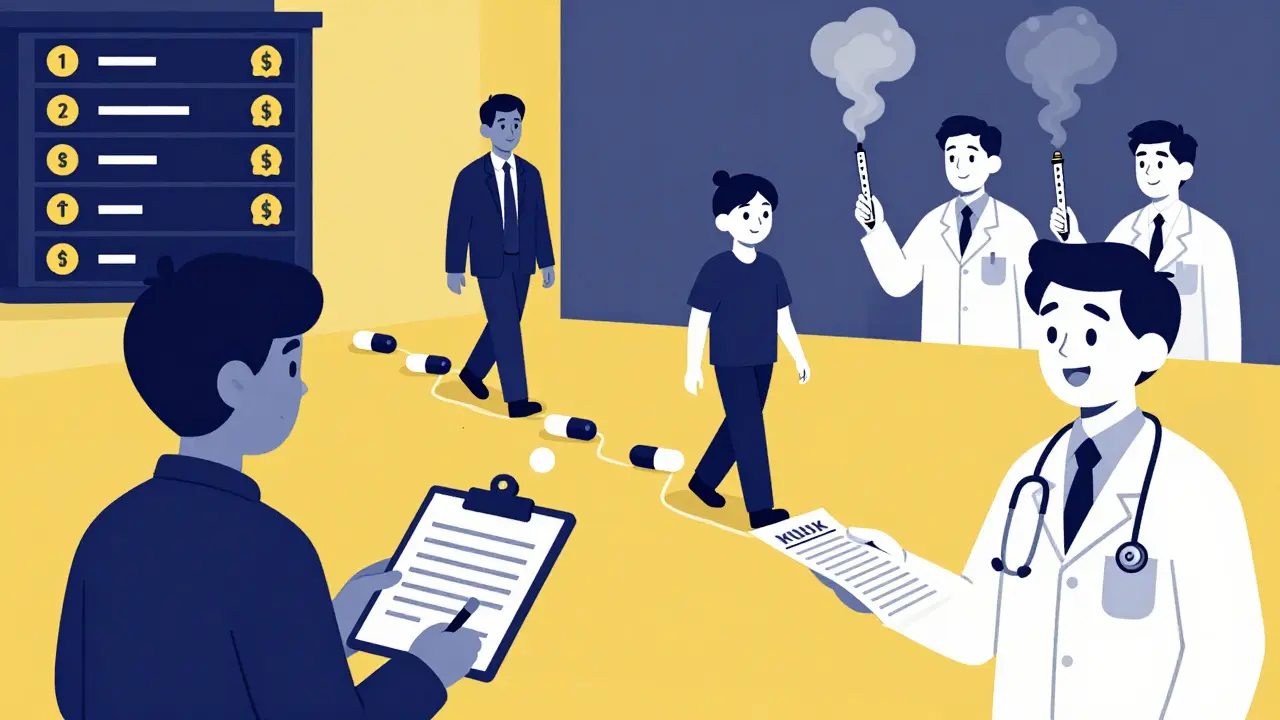
Provider Voices: Real Stories, Real Concerns
On Sermo, a physician network, Dr. Michael Chen from California says the UnitedHealthcare program added $2,800 to his annual income-with no extra work. He calls it a win. But Dr. Sarah Williams in Texas isn’t so sure. She says some programs feel coercive. “I can’t just pick the best drug for my patient if it’s not on the incentive list,” she told Medscape. “What if they need a specific brand because of allergies or absorption issues?” Reddit threads echo this. One user, MedDoc2020, wrote: “Generic incentives work fine for high blood pressure or diabetes. But when a patient has five chronic conditions and three drug interactions? You can’t just click the generic box and call it a day.” A 2021 survey of 1,200 providers found that 63% liked incentives when they were voluntary and tied to quality-not just cost. But 78% worried that if patients found out their doctor was being paid to prescribe generics, trust would erode.The Hidden Risks
There’s a fine line between saving money and compromising care. Some patients need brand-name drugs. Maybe the generic doesn’t absorb well. Maybe the fillers cause reactions. Or maybe they’ve been stable on a specific brand for years, and switching triggers side effects. When incentives ignore these nuances, doctors feel pressured to choose the cheaper option-even when it’s not right. And the administrative load? It’s real. Practices spend months integrating new EHR rules, training staff, and tracking metrics. One study found that implementing a generic-first default took about 15-20 hours per provider. And 68% of clinics reported EHR interoperability issues. Then there’s burnout. A 2023 AMA survey showed 61% of physicians feel overwhelmed by too many performance metrics. When every prescription becomes a data point, medicine starts to feel like a spreadsheet.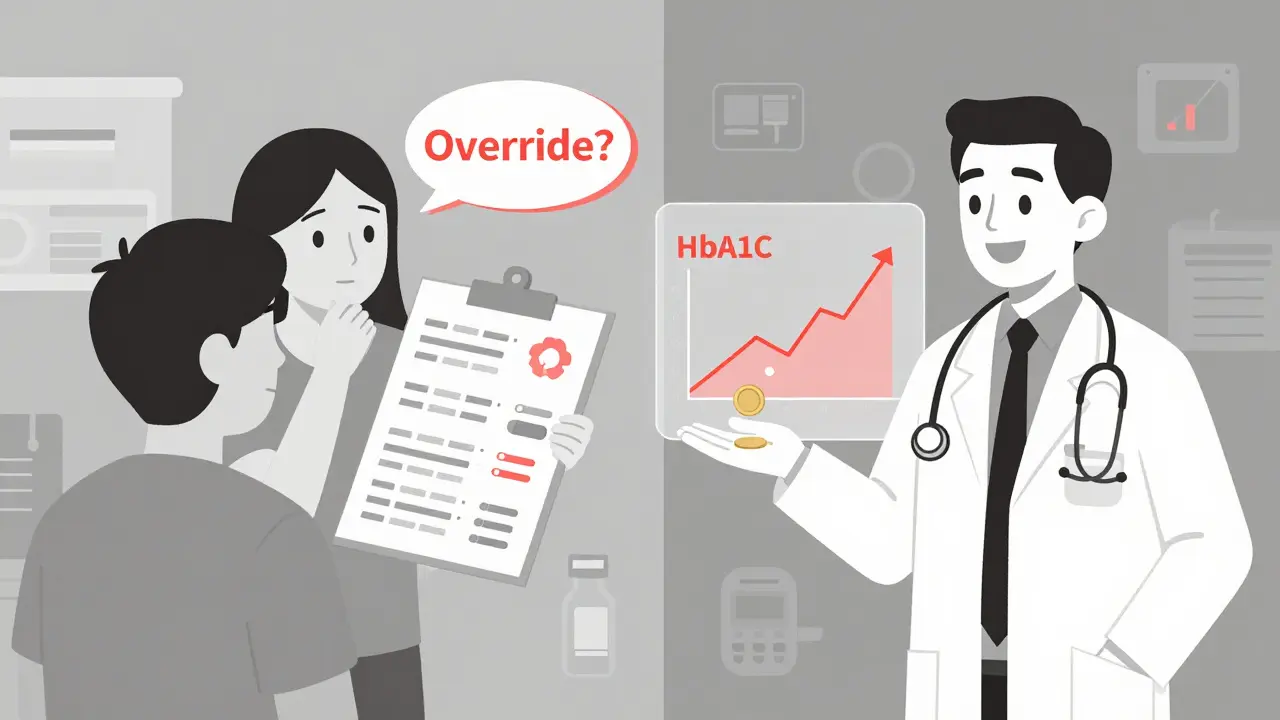
What Makes a Good Incentive Program?
The best programs don’t just push for cost savings-they protect clinical judgment. The American College of Physicians recommends three things:- Exempt drugs where brand is medically necessary
- Use incentives as part of quality metrics, not just cost-cutting
- Be transparent with providers-and if possible, with patients
The Future Is Integrated
The next wave of incentives won’t just reward generic prescribing-they’ll reward good outcomes. UnitedHealthcare’s 2024 rollout of value-based prescribing contracts ties payments to both cost efficiency and clinical results. For example, if a diabetic patient stays on a generic metformin and their HbA1c improves, the doctor gets paid more. If they switch to a pricier drug and still don’t improve? No bonus. CMS is testing standardized $2 co-pays for essential generics across Medicare Advantage plans. Early results show a 22.7% rise in adherence for chronic conditions. The Inflation Reduction Act’s patent reforms could add another 5-7% to generic use by 2027. By 2028, experts predict 94% of prescriptions will be generics. But the real question isn’t whether incentives work. It’s whether we can design them without breaking trust.What You Can Expect
If you’re a patient, you’ll see more generics on your prescriptions. You’ll pay less. You might even get a call from your pharmacy saying, “Your doctor switched you to the generic-do you want to keep it?” If you’re a provider, you’ll see more alerts in your EHR, more dashboards tracking your prescribing rates, and more conversations with your health plan about bonuses. The goal isn’t to eliminate brand drugs. It’s to make sure they’re prescribed when they’re needed-not because someone got a free lunch. The system is evolving. And the best versions of it? They’re not about paying doctors to pick cheap drugs. They’re about paying them to pick the right ones.Do generic prescribing incentives lower the quality of care?
Not when they’re designed well. Generic drugs are required by the FDA to work the same as brand-name versions. The problem isn’t the generics-it’s when incentives ignore clinical exceptions. Programs that exclude drugs where brand is medically necessary, and allow doctors to override defaults for complex cases, protect quality while saving money.
Do doctors get paid directly by pharmaceutical companies to prescribe generics?
No. Generic manufacturers don’t pay doctors to prescribe their drugs-they’re not profitable enough to run marketing campaigns like big pharma does. Instead, health plans, insurers, and government programs pay doctors through bonuses or reduced administrative work. The incentives come from the system trying to reduce overall costs, not from drug companies.
Why don’t all doctors prescribe generics if they’re cheaper and just as effective?
Several reasons. Some doctors worry about patient outcomes with new generics, especially if they’ve had bad experiences with a specific brand’s generic version. Others face pressure from patients who believe brand = better. And in some cases, doctors are indirectly incentivized to prescribe brands-like those working with 340B hospitals that get deep discounts on brand-name drugs, making it financially smarter for them to use those instead.
Are generic prescribing incentives only in the U.S.?
No. Germany uses a system called reference pricing, where the government sets one reimbursement price for all drugs in a class. Patients pay the difference if they choose a more expensive brand. This has led to 93% generic use. The UK, Canada, and Australia also use similar models, though they rely more on formulary controls and public education than direct provider payments.
Can patients ask their doctor if they’re being paid to prescribe generics?
Yes-and they should. While providers aren’t legally required to disclose incentive payments in most cases, transparency builds trust. If you’re concerned, ask: ‘Is this the best drug for me, or is there a financial incentive behind this choice?’ A good doctor will welcome the question and explain their reasoning.
15 Comments

asa MNG
January 23, 2026 AT 13:06
bro the system is rigged 😤 i got a generic for my blood pressure and my pharmacist said the brand was 'better' but i saved $40... who tf is really winnin here? 🤔💸

Dolores Rider
January 24, 2026 AT 08:57
they're watchin us. i swear the EHR pops up 'generic recommended' right after i type 'lisinopril'... and then my boss gets a bonus. who's payin who? 🤫👁️

John McGuirk
January 25, 2026 AT 11:54
germany does it right. one price for all drugs in a class. patient pays extra if they want the fancy one. simple. no magic. no bonuses. no drama. why cant america just copy that? 🤷♂️

Michael Camilleri
January 27, 2026 AT 00:30
this isnt about health its about control. the system wants you doc to be a robot clicking boxes. your intuition your experience your wisdom? irrelevant. if the algorithm says generic then thats your god now. we are becoming data points not healers

Darren Links
January 27, 2026 AT 19:42
you people act like this is some evil corporate plot. america spends more on pills than any country on earth. if we dont cut the fat someone else will. the fact you think brand name = better is why we're in this mess

Kevin Waters
January 29, 2026 AT 05:08
i work in a clinic that uses the unitedhealthcare program and it actually worked. our generic rate jumped from 68% to 89% in 6 months. no one got fired. no one complained. patients saved money. doctors got a little extra. win win. just make sure the exceptions are easy to override

Don Foster
January 29, 2026 AT 08:04
the fact that you need financial incentives to prescribe generics proves the medical system is broken. if the science is solid why do we need bribes? doctors should be motivated by ethics not dollar signs

siva lingam
January 30, 2026 AT 05:00
generic = cheaper. brand = more expensive. doctor = paid to pick cheaper. patient = saves money. pharma = sad. everyone wins except the pharma bros. why is this even a debate

Himanshu Singh
January 30, 2026 AT 11:40
dont forget the human side. i had a patient who switched to generic metformin and got a rash. turned out it was the filler. we switched back. he cried. he was so scared he'd be stuck on the expensive one forever. this isnt just numbers. its people

Elizabeth Cannon
February 1, 2026 AT 08:20
yall are overthinkin this. if the generic works same as brand and costs 1/10th why are we even having this convo? also if your doc gets a $15 bonus for prescribing it... good for them. theyre not stealin from you theyre just gettin paid to do the right thing

Patrick Gornik
February 2, 2026 AT 19:56
the real tragedy here is the epistemological collapse of clinical autonomy. we've replaced judgment with algorithmic compliance. the physician as moral agent is being supplanted by the physician as administrative node. this isn't healthcare reform. it's bureaucratic colonization of the healing relationship

Tommy Sandri
February 2, 2026 AT 22:32
in canada we use formulary controls and public education. no direct payments to doctors. generic use is over 90%. the system works because patients trust it. transparency and consistency matter more than financial nudges

Juan Reibelo
February 4, 2026 AT 16:02
I've seen both sides. I've had patients who were terrified of generics because they'd had bad experiences with a specific brand's version. I've also had patients who were furious when I prescribed the brand because they couldn't afford it. The system needs flexibility. Not mandates. Not bonuses. Just room to breathe.

venkatesh karumanchi
February 4, 2026 AT 16:15
in india we dont even have this problem. generics are 99% of the market. no one cares about brand names. if it works and costs less, its the one. maybe america should learn from the developing world for once

Jenna Allison
February 6, 2026 AT 14:09
i work in pharmacy. patients ask me all the time if the generic is the same. i tell them yes, the fda requires it. but sometimes i see the same patient switch back to brand because they 'feel better'-even though labs show no difference. the psychology here is real. it's not just about cost.
Write a comment