
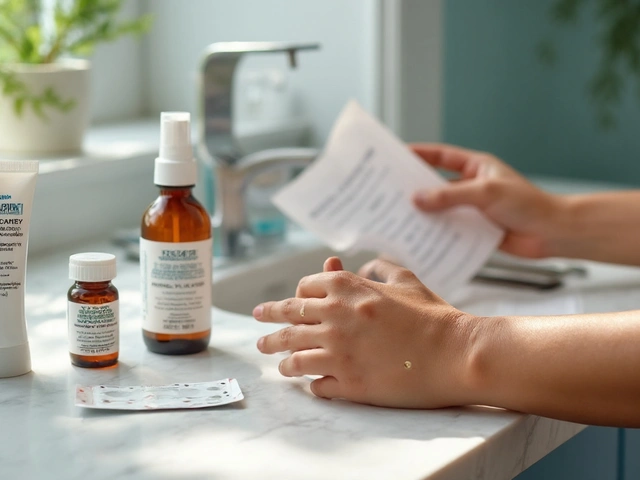
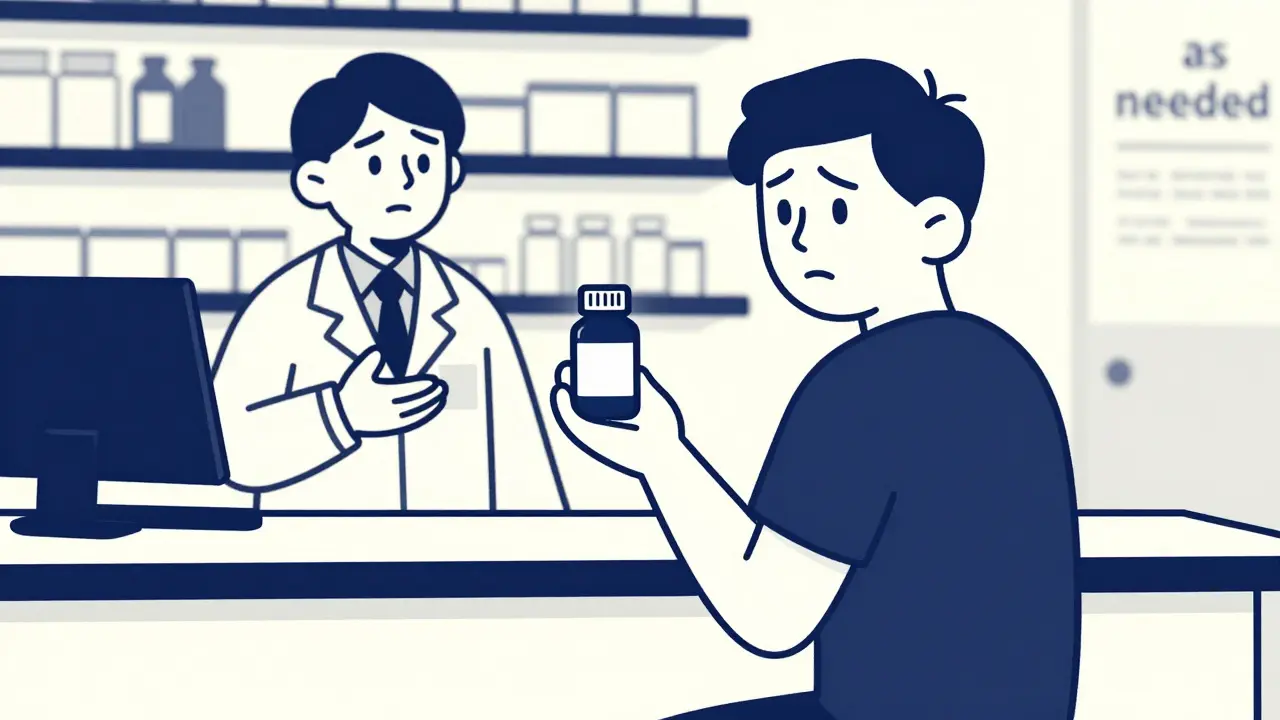
Imagine picking up a new prescription. The pharmacist hands you the bottle and says, "Take as needed." You nod, walk out, and head home. But what does "as needed" actually mean? Is it once a day? Twice? Every time you feel pain? This simple phrase is one of the most common sources of medication errors, which are mistakes in prescribing, dispensing, or taking medicines that can lead to harm. In fact, confusing directions contribute to approximately 1.5 million injuries annually in the United States alone, according to data from the Institute for Safe Medication Practices (ISMP). If you have ever stared at a label wondering if "q.d." means daily or something else, you are not alone. Getting clarification isn't just about being polite; it is a critical step in protecting your health.
Why Clear Communication Saves Lives
The stakes are high when it comes to how we take our medicine. The Centers for Disease Control and Prevention (CDC) reports that four out of five American adults take at least one medication, and one in four takes three or more. When you multiply those numbers by the complexity of modern dosing schedules, the potential for confusion explodes. Ambiguous language, inconsistent manufacturer guidelines, or inappropriate abbreviations can lead to serious adverse drug events. For instance, the abbreviation "IN" might look like "intranasal," but in a rush, it could be mistaken for "IV" (intravenous) or "IM" (intramuscular). The ISMP’s 2019 Electronic Guidelines explicitly ban such dangerous shortcuts, mandating that providers write out terms like "intranasal" instead of using risky acronyms.
Confusion doesn't always come from bad handwriting anymore. Even with electronic prescriptions, timing can be tricky. Does "twice daily" mean morning and night? Or every 12 hours exactly? MD Anderson Cancer Center specifies that medications taken twice daily should be administered as close to 12 hours apart as possible, such as at 8 am and 8 pm. Missing this window can cause drug levels in your blood to spike or drop too low, reducing effectiveness or increasing side effects. Understanding these nuances requires asking questions before you leave the pharmacy counter.
Decoding Common Prescription Abbreviations
Prescription labels often use Latin-derived abbreviations that can be baffling to patients. While the medical community is moving away from them due to safety concerns, you may still see them. Here is a breakdown of what they usually mean and why you should ask for plain English translations:
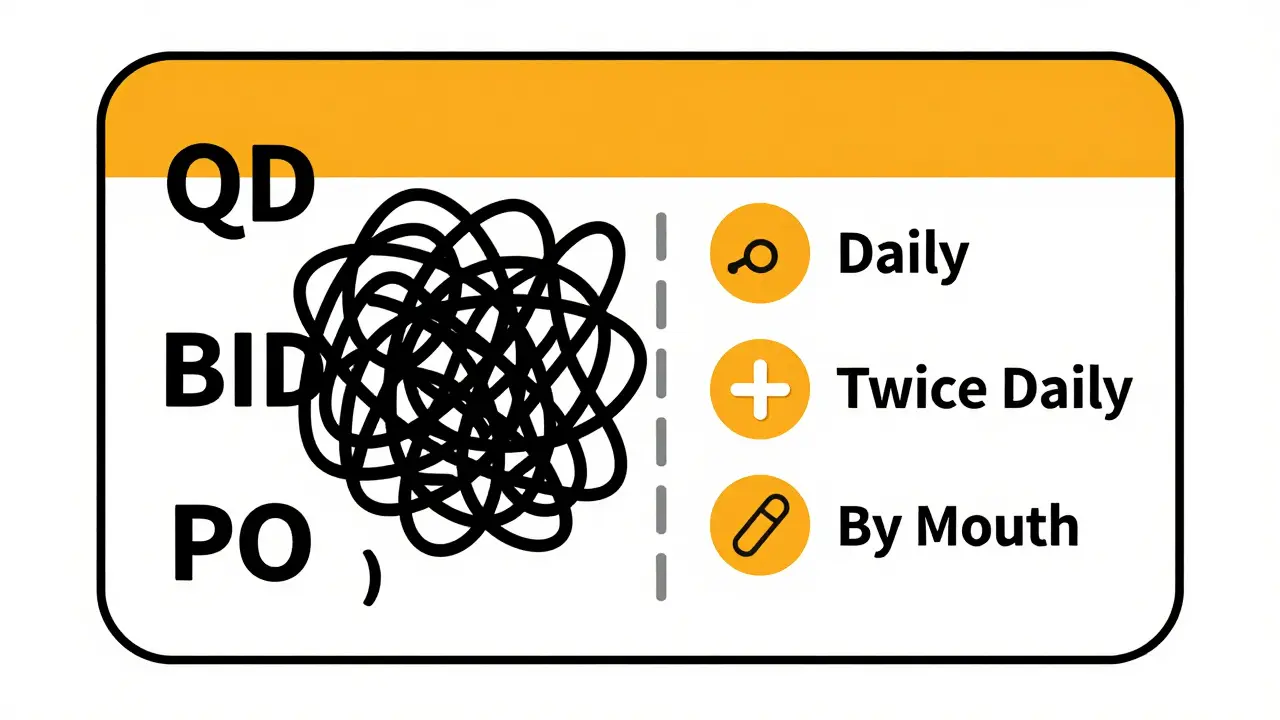
- QD or q.d.: Means "daily." However, this looks dangerously similar to "QID" (four times a day). Many hospitals now ban this abbreviation entirely.
- BID: Means "twice a day." Remember the 12-hour spacing rule mentioned earlier.
- TID: Means "three times a day."
- PO: Means "by mouth."
- PRN: Means "as needed." This is where clarification is most vital, as explained below.
The ISMP prohibits the use of "d" in parameter-based dosing formulas (like mg/kg/d) because it could be interpreted as either "day" or "dose." Always ensure your label uses Arabic numerals (e.g., 5 mg) rather than Roman numerals (V), which can be misread. If you see any abbreviation you don't recognize, do not guess. Ask your pharmacist to rewrite it in plain language.
The "As Needed" Trap: How to Take PRN Medications Safely
Perhaps the most dangerous instruction is "take as needed." Joanne Doyle Petrongolo, a pharmacist at Harvard-affiliated Massachusetts General Hospital, warns that it is not safe to take a medication anytime you feel you need it. You must know the intent of the drug, its maximum daily limit, and the spacing between doses. For example, if you are taking acetaminophen for pain, you need to know if the limit is one dose or three per day, and whether you must wait four hours between doses. Without these specifics, "as needed" becomes a recipe for overdose or ineffective treatment. Always ask: "What is the maximum amount I can take in 24 hours?" and "How long should I wait between doses?"
Manufacturer Differences: Why Your Drug Might Change
You might notice that switching from one brand of a generic drug to another changes the instructions slightly. This is a known issue highlighted by the National Institutes of Health (NIH) in their 2021 guideline on prescription appropriateness. Different manufacturers may have different labeling for the same active ingredient, especially regarding food interactions or timing. The NIH recommends that clinicians review instructions from all manufacturers to determine if the prescription needs modification. As a patient, if your pharmacist switches your brand and the label changes, ask why. Are there significant differences in therapeutic effect? In some cases, minor differences exist, but in others, they can impact your health. Do not assume all generics are identical in usage instructions.
FDA Medication Guides: What They Are and When You Get Them
For certain high-risk drugs, the U.S. Food and Drug Administration (FDA) requires a Medication Guide. These are paper leaflets distributed directly to patients. Established under 21 CFR 208 regulations in 1998, this program covers over 200 prescription drugs as of 2023, including isotretinoin (Accutane), oral contraceptives, and opioids. These guides are mandatory for outpatient settings like community pharmacies. However, if you are in a hospital or nursing home, you may not receive the physical guide, though staff must still counsel you on appropriate use. If you are prescribed one of these high-risk medications, insist on reading the guide. It contains specific warnings about side effects and lifestyle changes that standard labels might miss.
| Setting | Medication Guide Requirement | Patient Counseling Standard |
|---|---|---|
| Community Pharmacy | Mandatory for designated high-risk drugs | Pharmacist provides guide and verbal instructions |
| Hospital/Inpatient | Not required to distribute physical guide | Staff must counsel on use, side effects, and follow-up |
| Nursing Home | Not required to distribute physical guide | Caregivers/staff manage administration per MAR |

Practical Steps to Clarify Your Instructions
Getting clarity is an active process. Here is a checklist to use every time you pick up a new medication:
- Ask for Plain Language: Request that abbreviations be written out. Instead of "5 mg PO BID," ask for "5 milligrams by mouth twice a day."
- Clarify Timing: Ask if the medication should be taken with food, on an empty stomach, or at bedtime. For example, Harvard Health notes that cholesterol-lowering medications are generally taken at bedtime because the body produces more cholesterol overnight.
- Confirm the Purpose: The National Coordinating Council for Medication Error Prevention and Reporting (NCC MERP) requires that the name, purpose, and intended effects be discussed. If you don't know what the drug is for, you won't know if it's working.
- Set Reminders: The CDC recommends setting timers or phone reminders. Complex schedules are hard to memorize. Use technology to bridge the gap.
- Check for Manufacturer Changes: If you switch brands, verify if the instructions remain the same. If they differ, ask your doctor or pharmacist to explain the rationale.
When to Seek Immediate Help
If you realize you have misunderstood an instruction, do not panic, but act quickly. Contact your pharmacist first. They are the most accessible experts on drug interactions and dosing. If you experience unexpected side effects or feel the medication is not working, call your prescriber. Documentation matters too. Keep a personal log of when you take your meds and any reactions. This helps professionals adjust your regimen accurately. Remember, silence is dangerous. Asking questions is the safest thing you can do for your health.
What should I do if my medication label has abbreviations I don't understand?
Do not guess. Return to the pharmacy or call them immediately. Ask the pharmacist to rewrite the instructions in plain English. For example, ask them to change "QD" to "once daily" and "PO" to "by mouth." The Institute for Safe Medication Practices (ISMP) advises against using ambiguous abbreviations precisely because they lead to errors.
Why do I get a Medication Guide for some drugs but not others?
The FDA requires Medication Guides only for high-risk drugs where patient education can prevent serious adverse reactions. This includes drugs like Accutane, opioids, and certain blood thinners. Over 200 drugs currently require these guides. If your drug is not on this list, you still deserve clear verbal instructions from your pharmacist.
Is it okay to switch between generic brands of the same medication?
Generally, yes, but you must check the instructions. The NIH notes that different manufacturers may have varying guidelines for food interactions or timing. While the active ingredient is the same, inactive ingredients or specific labeling differences can affect how you take the drug. Always confirm with your pharmacist if the new brand requires any changes to your routine.
How far apart should I take "twice daily" medications?
Aim for roughly 12 hours apart. MD Anderson Cancer Center recommends scheduling doses as close to 12-hour intervals as possible, such as 8 am and 8 pm. Taking both doses in the morning and skipping the evening can cause drug levels to fluctuate dangerously, reducing efficacy or increasing side effects.
What does "take as needed" really mean?
It means you should take the drug only when symptoms occur, but within strict limits. You must ask your pharmacist for the maximum daily dose and the minimum time between doses. For example, you might be allowed three doses a day, but never less than four hours apart. Never exceed these limits without consulting a healthcare provider.