





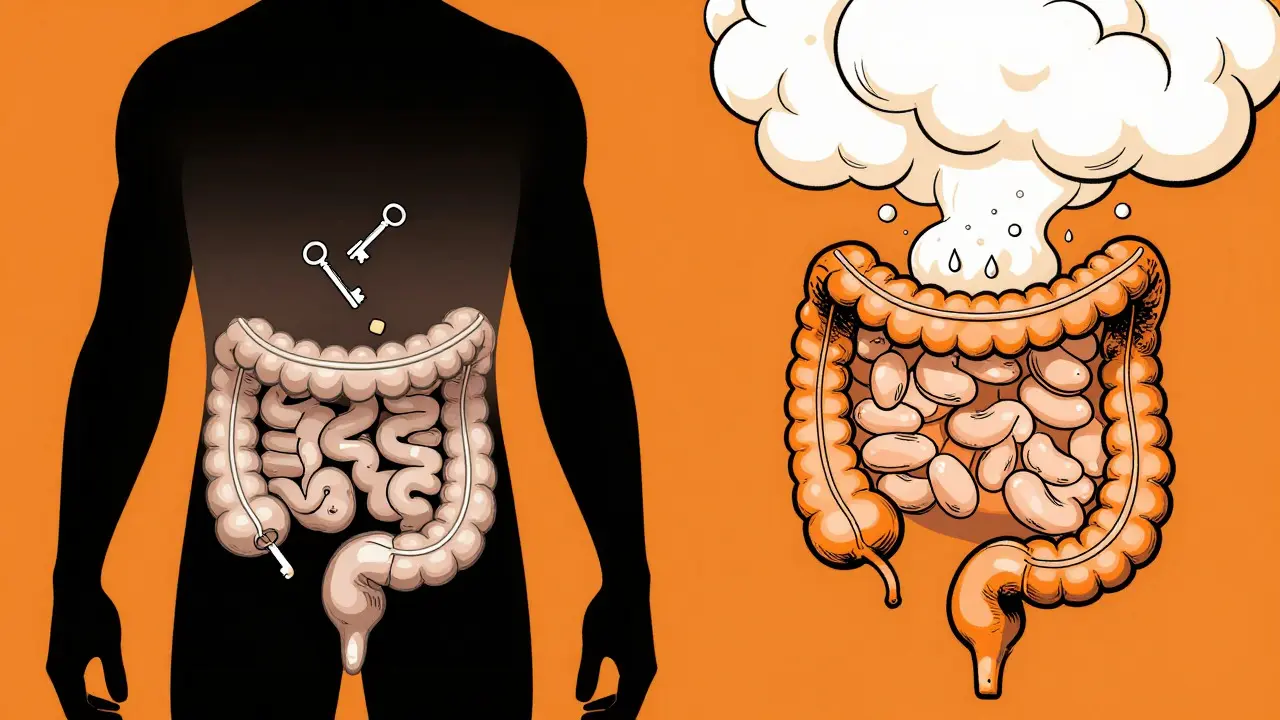
That bloated feeling after a bowl of cereal or a latte isn't just bad luck. For millions of people, it's Lactose Intolerance, defined as the clinical syndrome of abdominal pain, bloating, flatulence, and diarrhea resulting from lactase enzyme deficiency that impairs lactose digestion in the small intestine. It is not an allergy, nor is it a disease you catch. It is a digestive limitation caused by your body’s inability to break down lactose, the sugar found in milk. While often confused with Irritable Bowel Syndrome (IBS), this condition has a specific physiological root: a lack of the enzyme lactase.
Understanding the Physiology Behind the Symptoms
To manage what you eat, you first need to understand what happens inside your gut. When you consume dairy, your small intestine produces lactase, which is an enzyme responsible for breaking down lactose into glucose and galactose for absorption. If you have lactase non-persistence, meaning a genetic trait where lactase production decreases significantly after childhood, that undigested lactose travels to your colon. There, bacteria ferment it, producing gas and drawing water into the bowel. This process triggers the classic symptoms: cramping, excessive gas, and diarrhea.
It is crucial to distinguish between two concepts: lactose malabsorption, which is the physiological inability to digest lactose without necessarily experiencing symptoms, and lactose intolerance, which refers to the symptomatic presentation of malabsorption including pain and digestive distress. Research published by the American Academy of Family Physicians indicates that while many people have low lactase levels, only about 25% of those with Irritable Bowel Syndrome also experience true lactose malabsorption. This overlap often leads to misdiagnosis, making accurate testing essential before cutting out entire food groups.
Diagnostic Methods: Finding the Truth
Self-diagnosing by simply avoiding dairy can be misleading. You might blame dairy for symptoms caused by something else, or worse, cut out necessary nutrients unnecessarily. Medical professionals rely on specific tests to confirm the condition.
| Test Name | Methodology | Accuracy & Limitations | Best For |
|---|---|---|---|
| Hydrogen Breath Test | Ingest 25-50g lactose; measure breath hydrogen every 30 mins for 2-3 hours. | 90% sensitivity. False positives possible with SIBO. Requires 12-hour fast. | Adults; considered the gold standard by NIDDK. |
| Lactose Tolerance Blood Test | Ingest lactose; measure blood glucose over 2 hours. | Positive if glucose rises less than 20 mg/dL. 20% false result rate due to gastric emptying variables. | Clinical settings where breath testing is unavailable. |
| Stool Acidity Test | Measure pH of stool after lactose ingestion. | Acidic stool (pH <5.5) indicates malabsorption. Invasive and messy. | Infants and young children who cannot take breath tests. |
| Genetic Testing | Analyze DNA for C/T-13910 polymorphism. | 95% specificity for primary deficiency. Cannot detect secondary causes (e.g., gut infection). | Confirming primary lactase non-persistence without invasive procedures. |
The hydrogen breath test remains the most clinically useful diagnostic tool, measuring hydrogen exhaled after lactose consumption to determine malabsorption. According to the National Institute of Diabetes and Digestive and Kidney Diseases (NIDDK), a rise of more than 20 parts per million (ppm) in breath hydrogen confirms malabsorption. However, Dr. E. M. Weaver, Director of the Center for Lactose Intolerance Research, notes that a positive test alone does not equal intolerance. If you have high hydrogen levels but no symptoms, you may still tolerate dairy. The American Gastroenterological Association emphasizes that diagnosis should always correlate test results with actual symptom response.
For parents, the stool acidity test is a diagnostic method for infants that measures stool pH to detect undigested lactose fermentation. Since babies cannot breathe into bags for testing, this method checks if their stool becomes acidic (pH below 5.5) after feeding, signaling that lactose is fermenting in the gut rather than being absorbed.

Dietary Management: More Than Just Avoidance
Once diagnosed, the goal isn't necessarily to eliminate all dairy forever. Most adults can tolerate up to 12 grams of lactose in a single sitting-roughly one cup of milk. When consumed with meals, tolerance can increase to 18 grams because food slows down digestion, giving your limited lactase more time to work. The key is finding your personal threshold.
A structured approach involves a lactose elimination diet, which is a temporary dietary strategy removing all lactose sources for 2-4 weeks to assess symptom resolution. After this period, gradually reintroduce dairy products to see which ones trigger symptoms. Many people find they can handle hard cheeses like cheddar or parmesan, which contain negligible lactose, or fermented yogurts with live cultures that help pre-digest the sugar. Only 73% of patients realize they can tolerate these smaller amounts, according to a 2023 Gut Health Foundation survey.

Nutritional Considerations and Supplements
Cutting out dairy carries risks. Dairy is a primary source of calcium and vitamin D. Adolescents, in particular, get 70% of their daily calcium from dairy products. To avoid deficiencies, you must replace these nutrients strategically.
- Fortified Plant Milks: Oat, almond, and soy milks often contain 300-500 mg of calcium per 8-ounce serving, matching cow's milk.
- Leafy Greens: Kale, bok choy, and collard greens provide bioavailable calcium.
- Calcium-Set Tofu: Look for tofu processed with calcium sulfate for a significant calcium boost.
- Fish with Bones: Canned sardines and salmon offer both calcium and omega-3 fatty acids.
If you want to enjoy dairy occasionally, lactase enzyme supplements such as Lactaid are oral tablets containing lactase enzyme that aid in the digestion of lactose when taken before consuming dairy. A 2021 study in the Journal of Clinical Gastroenterology showed these supplements reduce symptoms by 70-90% when taken at doses of 3,000-9,000 FCC units per meal. Take them right before eating, not after, for maximum effectiveness.
Emerging Trends and Future Solutions
The landscape of lactose management is evolving rapidly. New technologies are making diagnosis faster and treatment more personalized. The LactoQuik rapid breath test, FDA-approved in June 2022, reduces testing time from three hours to just 45 minutes while maintaining accuracy comparable to traditional methods.
Microbial therapies are also entering the picture. Pendulum Therapeutics' LactoSpore probiotic demonstrated a microbial therapy showing 40% greater lactose digestion capability than placebo in Phase 2 trials in a March 2023 study published in Gut Microbes. These next-generation probiotics aim to colonize the gut with bacteria that naturally produce lactase, offering a potential long-term solution rather than a daily supplement.
Regulatory changes are also helping consumers. Following hundreds of complaints about misleading labels, the FDA issued new guidelines in January 2023 requiring products labeled "lactose-free" to contain less than 0.01% lactose. This clarity helps shoppers navigate the growing market of dairy alternatives, which now represent nearly 16% of the US milk market.
Can lactose intolerance go away?
Primary lactose intolerance, caused by genetic lactase non-persistence, is lifelong and generally does not go away. However, secondary lactose intolerance, caused by gut damage from illness or surgery, may resolve once the underlying condition heals and the intestinal lining regenerates.
Is yogurt safe for lactose intolerant people?
Often, yes. Fermented yogurts contain live bacterial cultures that partially digest lactose during production. Additionally, these bacteria continue to break down lactose in your gut. Greek yogurt typically has even less lactose than regular yogurt due to the straining process.
What is the difference between a milk allergy and lactose intolerance?
A milk allergy is an immune system reaction to the proteins in milk (casein or whey), which can cause hives, swelling, or anaphylaxis. Lactose intolerance is a digestive issue where the body lacks the enzyme to break down milk sugar, causing gastrointestinal distress but no immune response.
How much calcium do I need if I avoid dairy?
Adults generally need 1,000-1,200 mg of calcium daily. If you avoid dairy, you must consciously incorporate fortified plant milks, leafy greens, calcium-set tofu, and canned fish with bones to meet this requirement and prevent bone density loss.
Are there hidden sources of lactose in food?
Yes. Lactose can be hidden in processed foods like bread, cereals, salad dressings, and even some meats used as fillers. Always check ingredient lists for terms like "whey," "milk solids," "casein," or "lactose." A 2022 FDA audit found lactose in 20% of products labeled as 'non-dairy.'