



Surviving a heart attack or a major cardiac procedure is a massive relief, but it often leaves you feeling fragile. You might want to get back to your old routine, but the fear of "pushing too hard" can be paralyzing. The truth is, sitting still is actually one of the riskiest things you can do. The right kind of movement doesn't just help you get your strength back; it can actually lower your risk of another event by 20-30%.
The goal isn't to jump back into a gym membership on day one. Instead, it's about a structured process called cardiac rehabilitation is a medically supervised program designed to improve cardiovascular health and functional capacity following a heart event. Whether you've had a myocardial infarction or a bypass surgery, the path back to health happens in stages.
The Three Phases of Recovery
Recovery doesn't happen overnight. Experts break it down into three distinct phases to ensure your heart isn't overwhelmed while your muscles wake up.
Phase 1: The Acute Phase
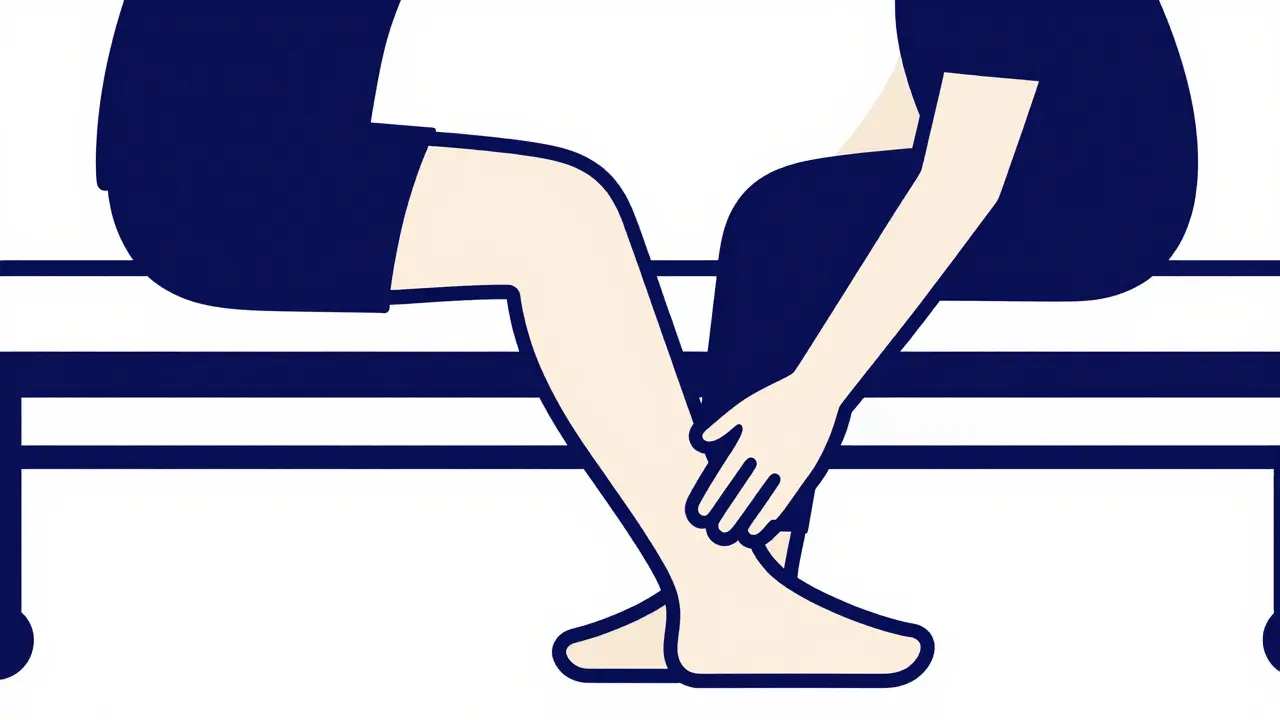
This happens while you're still in the hospital or immediately after you get home. The focus here isn't "fitness"-it's circulation. You'll start with very gentle moves to prevent blood clots and keep your joints moving. Common activities include ankle pumps (flexing your feet up and down) and seated marching. At this stage, you're keeping activity levels very low, usually around 1-2 metabolic equivalents (METs), meaning you're barely breaking a sweat.
Phase 2: Early Outpatient Recovery
Once you're discharged, you move into the foundational stage. This is where you start rebuilding your aerobic base. A typical start involves walking for just 5 to 10 minutes a day, gradually working up to 30 minutes over a month or two. Professionals use the Borg Scale, a tool that measures your Rating of Perceived Exertion (RPE), to make sure you stay in the "safe zone" (typically a score of 11-14). You're looking for a heart rate that is roughly 20-30 beats per minute above your resting rate.
Phase 3: Long-term Maintenance
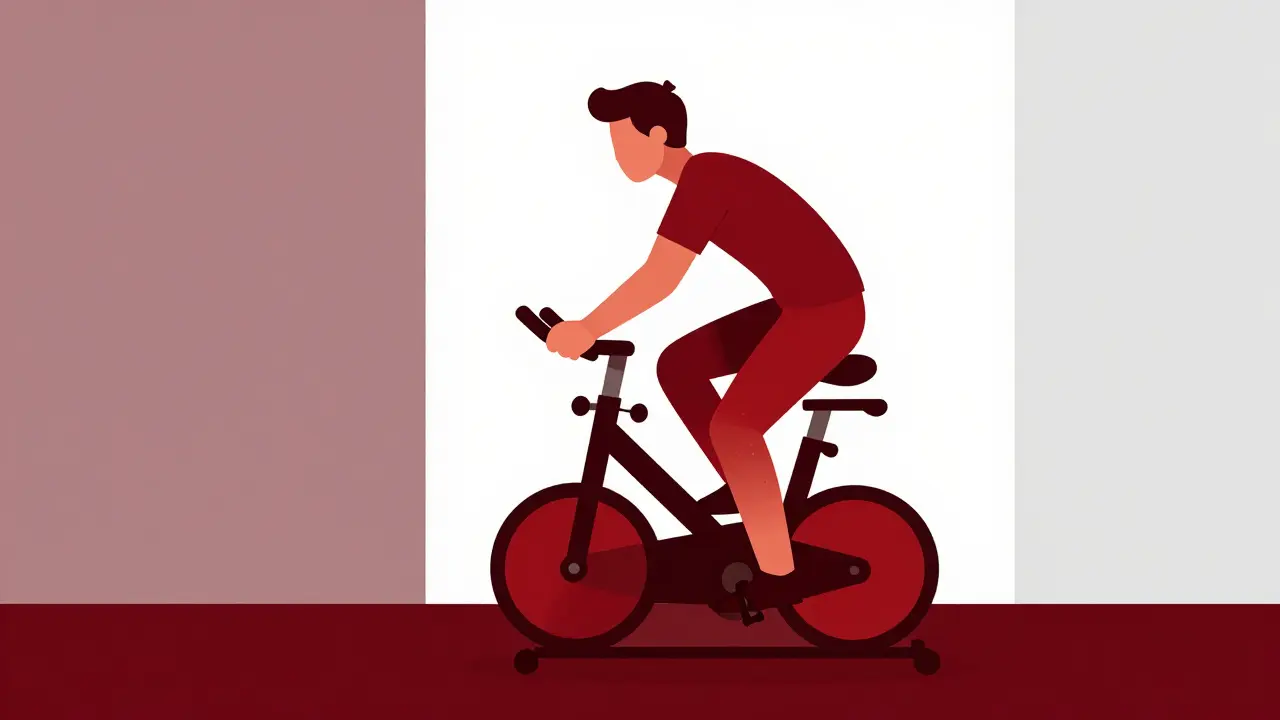
This is your new lifestyle. Following guidelines from the American Heart Association, the target is at least 150 minutes of moderate-intensity aerobic activity per week. This could be brisk walking, swimming, or cycling, paired with muscle-strengthening exercises at least two days a week. The key here is consistency over intensity.
Supervised Rehab vs. Going Solo
You might be tempted to just start walking around the block on your own, but there is a huge difference between "exercising" and "cardiac rehab." Supervised programs provide a safety net that self-directed exercise simply can't offer.
| Feature | Supervised Cardiac Rehab | Self-Directed Exercise |
|---|---|---|
| Mortality Risk Reduction | Significantly lower (up to 30% lower 5-year mortality) | Variable; higher risk of improper intensity |
| Recovery Speed | ~25% faster functional recovery | Slower, often limited by fear or caution |
| Safety Monitoring | Real-time ECG and heart rate tracking | Self-monitoring (often inaccurate) |
| Hospital Readmissions | 47% fewer readmissions in the first year | Higher risk due to lack of clinical oversight |
The biggest danger of going solo is the "guessing game." About 27% of patients who exercise without supervision accidentally exceed their safe heart rate thresholds. When you're in a clinic, a professional can tell you exactly when to push and when to pull back based on your specific cardiac damage.

How to Monitor Your Effort (Without a Lab)
While heart rate monitors are great, they don't tell the whole story-especially if you're on beta-blockers. These medications can artificially lower your maximum heart rate by 20-30%, making a digital monitor misleading. Instead, use these real-world checks:
- The Talk Test: You should be able to carry on a conversation while exercising. If you're too winded to speak in full sentences, you've crossed from "moderate" into "vigorous" and need to slow down.
- The RPE Scale: Ask yourself, "On a scale of 6 to 20, how hard does this feel?" You want to stay in that moderate window where you feel the effort but aren't gasping for air.
- Symptom Journaling: Keep a simple log of how you feel. Note the time of day, the activity, and any weird sensations. This helps your doctor tweak your plan.
Warning Signs: When to Stop Immediately
Knowing when to push is important, but knowing when to stop is life-saving. If you experience any of the following, stop moving and call your care team or emergency services immediately:
- Chest pain, pressure, or a "tight" feeling in the chest.
- Pain radiating toward your jaw, neck, or left arm.
- Sudden, unusual shortness of breath (out of proportion to the activity).
- Dizziness, lightheadedness, or feeling like you might faint.
- Heart palpitations or a feeling that your heart is skipping beats.
- Slurred speech or sudden weakness in one side of the body.
- A systolic blood pressure reading exceeding 200 mmHg.
Overcoming the Mental Hurdle
It's completely normal to be scared. Nearly 68% of people recovering from a heart event report exercise-related anxiety. The fear of "triggering another attack" is a powerful deterrent. However, data shows that after just four weeks in a supervised program, over 80% of patients report a significant drop in this anxiety.
The shift happens when you move from fear to data. When you see your heart rate stay stable during a brisk walk, or when a nurse tells you your vitals look great, the mental barrier begins to crumble. Remember, the goal isn't to be an athlete again immediately; it's to regain your independence.
Practical Tips for Daily Life
Getting back into a routine requires some strategy. Don't just wing it; plan your movement around your biology.
Timing Your Workouts: If you're on medication, try to schedule your exercise when the drug's effects are at their peak for stability, but be mindful of how they affect your heart rate response. If beta-blockers make you feel sluggish, adjust your duration (walk longer) rather than trying to increase the intensity.
Dealing with Weather: You can't always go for a walk in the park. If it's too hot or too cold, use "mall walking"-walking laps in a temperature-controlled shopping center-to keep your streak alive. Indoor alternatives keep you consistent without exposing your heart to extreme temperature stress.
The 24-Hour Rule: Recent research suggests that for low-risk patients, getting moving (even just basic walking) within 24 hours of a procedure like a stent placement can lead to 19% faster recovery. Don't wait for the "perfect" time; start as soon as your medical team gives the green light.
Can I do high-intensity training (HIIT) after a heart attack?
For most people, the answer is "not yet." However, recent studies show that for stable patients who have successfully completed initial rehab, HIIT can actually be safe and may improve functional capacity by 37% more than moderate training. This should ONLY be done under strict medical supervision and after a full clearance from your cardiologist.
How do I know if I'm pushing too hard?
Use the "Talk Test." If you can't speak in full sentences, you're working too hard. Additionally, if you feel chest pressure, dizziness, or unusual shortness of breath, stop immediately. Your effort should feel "moderate"-like you're working, but not struggling.
How long does a typical cardiac rehab program last?
While it varies, many programs offer around 36 supervised sessions. It usually takes about 6 to 8 sessions for a patient to feel confident enough to manage their exercise parameters independently.
Does insurance cover cardiac rehabilitation?
In many regions, yes. For example, Medicare Part B often covers a set number of sessions post-qualifying event. Many modern programs also offer hybrid or telehealth models to make it easier for those with transportation or work conflicts.
What happens if I can't attend an in-person rehab center?
Hybrid and virtual programs are becoming more common. These use FDA-cleared wearable sensors and Bluetooth heart rate monitors to allow clinicians to monitor your progress remotely. While not a total replacement for in-person care in complex cases, they have shown high adherence rates.
9 Comments

Ben Jima
April 25, 2026 AT 10:10
Great breakdown of the recovery phases. For those just starting out, remember that consistency really is the secret sauce. Even if it feels like you're barely moving in Phase 1, those small wins build the foundation for everything else. Just keep showing up for yourself!

Sharyl Foster
April 27, 2026 AT 03:01
The Talk Test is basically just common sense, not some revolutionary medical discovery. Most people already know if they're out of breath without needing a guide to tell them how to speak.

William Zhigaylo
April 28, 2026 AT 23:49
The sheer audacity of suggesting that 'mall walking' is a viable clinical substitute for a rigorous exercise regimen is frankly offensive. It is a pathetic compromise that reflects a complete lack of discipline and a failure to prioritize actual cardiovascular health over mere convenience.

Carol Yang
April 30, 2026 AT 09:25
Love the positive vibes here! It's so encouraging to know that the anxiety part gets better with time. You've got this, everyone!

Hayley Redemption
May 1, 2026 AT 20:22
It's quaint that this guide assumes a standard baseline of health literacy. The mention of METs is a surface-level inclusion that fails to address the complex metabolic variances between patients. Truly, the reductionist approach here is almost charming in its simplicity, if one enjoys a watered-down version of actual clinical data. One must wonder why we bother with such basic summaries when the primary literature is readily available for those with the intellectual capacity to parse it. The table is a nice touch for the visually inclined, I suppose, but it lacks the nuance required for a serious medical discussion. It's essentially a brochure for people who prefer infographics over evidence. The lack of mention regarding the specific impact of ACE inhibitors alongside beta-blockers is a glaring omission that renders the monitoring section incomplete. I find it typical of these 'guides' to prioritize accessibility over accuracy. It's a classic case of sacrificing depth for the sake of a broader, less informed audience. I've seen more detailed summaries in a pharmacy pamphlet. The section on HIIT is particularly reckless, as it glosses over the specific ejection fraction requirements that should be the primary gatekeeper. This is a primer, not a protocol. A fundamentally flawed approach to medical communication. I'm honestly exhausted by the trend of oversimplifying cardiac physiology for the masses. It's a disservice to the complexity of the human heart. Let's be real: this is just fluff disguised as advice.

Gauri Parab
May 2, 2026 AT 09:32
Imagine actually believing a 30% mortality reduction is a 'significant' victory when the control group is literally just people doing nothing. The statistics here are manipulated to look impressive to the average layperson who doesn't understand how to read a confidence interval. Absolute joke.

Daniel Runion
May 3, 2026 AT 02:40
WHY ARE WE STILL TALKING ABOUT MALLS?!?!?! This is the most boring solution I've ever heard of in my entire life!!! Give me some real intensity or give me nothing!!!!

Nikita Shabanov
May 4, 2026 AT 05:36
For those using wearables, just be cautious about the lag in heart rate reporting. Some devices take a few minutes to catch up to your actual effort, which is why the RPE scale mentioned is so useful in real-time.

Kristen O'Neal
May 5, 2026 AT 20:59
I really appreciate the focus on the mental hurdle. It's so important to acknowledge the fear side of this. Does anyone else find that a support group during Phase 2 helps with that anxiety more than the clinical data does?
Write a comment