






You take your morning pill. You drink your fiber shake. It sounds like a perfect start to a healthy day, right? Wrong. That simple routine might be flushing your medicine out of your system before it ever works. Fiber is great for your gut, but when you pack it into a concentrated supplement form, it acts like a magnet for drugs in your stomach. If you aren't careful, that $20 prescription could end up in the toilet instead of your bloodstream.
This isn't just theoretical worry. It's a documented chemical reality. Fiber supplements are concentrated sources of dietary fiber designed to increase daily intake beyond what food provides. Unlike the fiber found naturally in an apple or a bowl of oats, these powders and capsules deliver a massive dose of insoluble or soluble fiber all at once. This concentration creates a physical barrier and accelerates digestion in ways that regular meals do not. The result? Your body has less time-and fewer opportunities-to absorb the medications you depend on.
Why Fiber Blocks Your Medicine
To understand why this happens, you have to look at what fiber actually does inside your body. Think of fiber as a sponge. When you swallow a spoonful of psyllium husk (a common ingredient in brands like Metamucil), it absorbs water and swells. As it moves through your digestive tract, it doesn't just sit there. It binds to other substances.
Dr. Soheyla Gharib from Harvard University Health Services explains it simply: "It's possible that the medication may get swept along with the fiber, so it will be excreted instead of fully absorbed." This process is called adsorption. The drug molecules stick to the fiber particles. Once stuck, they can't pass through your intestinal wall into your blood. They just ride the fiber train straight to the exit.
There's also the speed factor. Fiber increases stool bulk and speeds up gastrointestinal transit. Normally, your stomach empties slowly, giving pills time to dissolve and absorb. High-dose fiber rushes this process. It’s like trying to read a book while running; you miss the details. In medical terms, reduced contact time means reduced bioavailability-the amount of active drug that actually reaches your system.
Which Medications Are Most at Risk?
Not every pill is equally vulnerable, but several critical categories show significant interaction risks. If you fall into any of these groups, timing is everything.
- Thyroid Medications: Drugs like levothyroxine (Synthroid, Levoxyl) are notoriously sensitive. A study published in Nutrition Hospitalaria found that taking fiber supplements alongside levothyroxine significantly decreased its bioavailability. For patients with hypothyroidism, even a small drop in absorption can mean fatigue, weight gain, and brain fog returning.
- Diabetes Medications: Metformin is one of the most prescribed drugs for type 2 diabetes. Research indicates that fiber can interfere with its uptake. Uncontrolled blood sugar levels are no joke, so ensuring full absorption is critical.
- Mood Stabilizers and Antipsychotics: Medications such as lithium and olanzapine require precise blood levels to work safely. Lithium, in particular, has a narrow therapeutic index-meaning the difference between a helpful dose and a toxic one is slim. Interference here can lead to dangerous fluctuations.
- Cholesterol Drugs: While some studies show mixed results, others indicate that pectin-rich fibers can reduce the effectiveness of statins like lovastatin. One trial showed LDL cholesterol levels increased by up to 58% when pectin was taken with the drug, essentially negating its benefit.
Interestingly, not all interactions are negative or significant. An NIH-funded study found that psyllium did not significantly interfere with calcium absorption in postmenopausal women. This proves that context matters. The type of fiber, the type of drug, and your individual biology all play a role.
The Golden Rule: Timing Separation
So, how do you fix this? You don't stop taking fiber. The health benefits are too substantial. Harvard Health notes that a high-fiber diet lowers the risk of heart disease, stroke, and diabetes. Adult men over 50 need 30 grams daily, and women need 21 grams. Yet, 90% of Americans eat only about 15 grams. Supplements help bridge that gap.
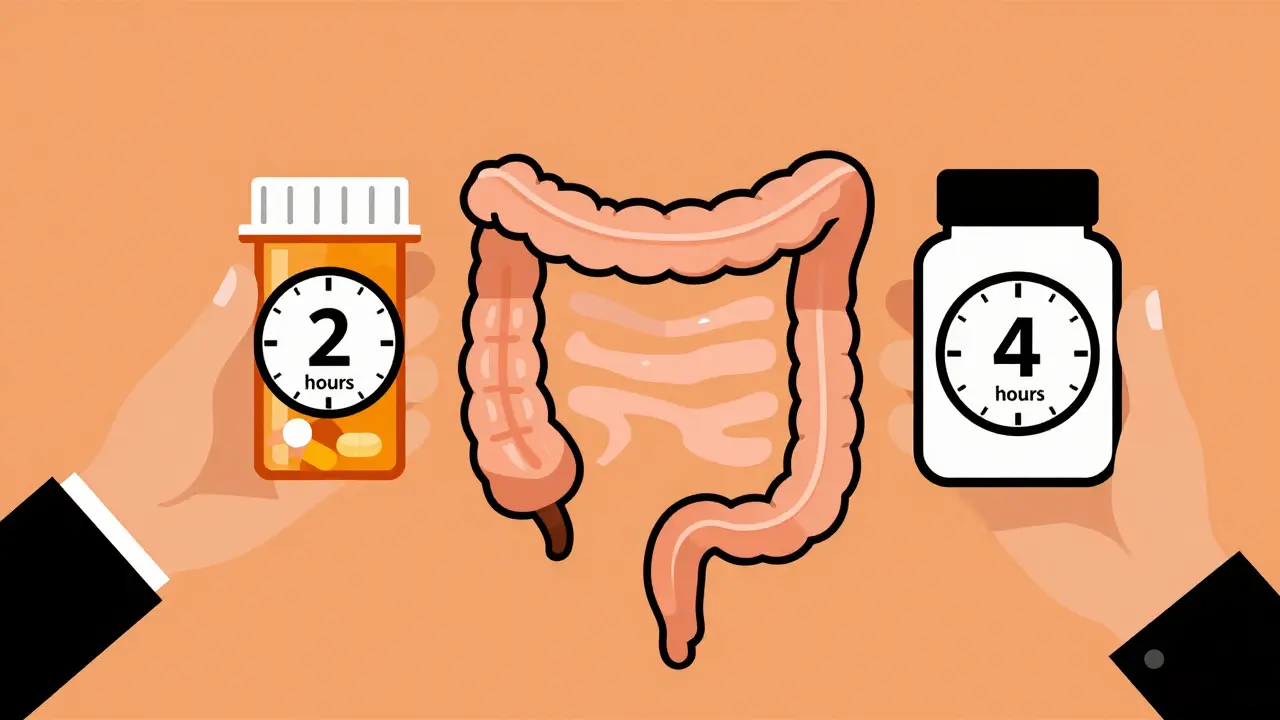
The solution is separation. Medical consensus from sources like Mayo Clinic, WebMD, and Harvard Health agrees on a specific window. You should take your fiber supplement at least two hours before or four hours after taking your medication.
Why four hours after? Because many drugs stay in your stomach or upper intestine longer than you think. Taking fiber immediately after a pill might seem safe, but if the pill hasn't fully dissolved and absorbed, the fiber can still sweep it away. The two-hour buffer before ensures your stomach is empty enough for the drug to start working without competition. The four-hour buffer after ensures the drug has had ample time to do its job.
| Medication Type | Example Drugs | Minimum Separation Time | Risk Level |
|---|---|---|---|
| Thyroid Hormones | Levothyroxine | 4 hours apart | High |
| Antidiabetics | Metformin | 2-4 hours apart | Medium-High |
| Mood Stabilizers | Lithium, Olanzapine | 2-4 hours apart | High |
| Statins | Lovastatin, Rosuvastatin | 2 hours apart | Variable |
| Calcium Supplements | Calcium Carbonate | 2 hours apart | Low-Medium |
Practical Tips for Daily Routine
Knowing the rule is easy. Living it requires planning. Here is how to build a schedule that protects your health.
- Start with Water: Never dry-swallow fiber. WebMD warns that you must take fiber supplements with at least a full glass of water (8 ounces/240 milliliters). Without enough liquid, the fiber can swell in your throat, causing choking or esophageal blockage. Hydration also helps the fiber move through your system efficiently.
- Avoid Bedtime Fiber: It might be tempting to take your fiber right before bed to ensure you remember it. Don't. The FreeRX Blog advises against this because fiber can cause bloating, gas, and abdominal soreness. These symptoms can disrupt sleep, leaving you groggy the next day. Aim for mid-morning or mid-afternoon slots instead.
- Use Alarms: Set phone reminders for both your medication and your fiber. Label them clearly: "Pill First" or "Fiber Later." Consistency is key to maintaining stable drug levels in your blood.
- Check Your Labels: Not all fiber is created equal. Psyllium husk, methylcellulose, and wheat dextrin behave differently. Psyllium is highly viscous and binds strongly. Wheat dextrin is less likely to cause gas but may still affect absorption. Know what you're taking.
Food vs. Supplements: Does It Matter?
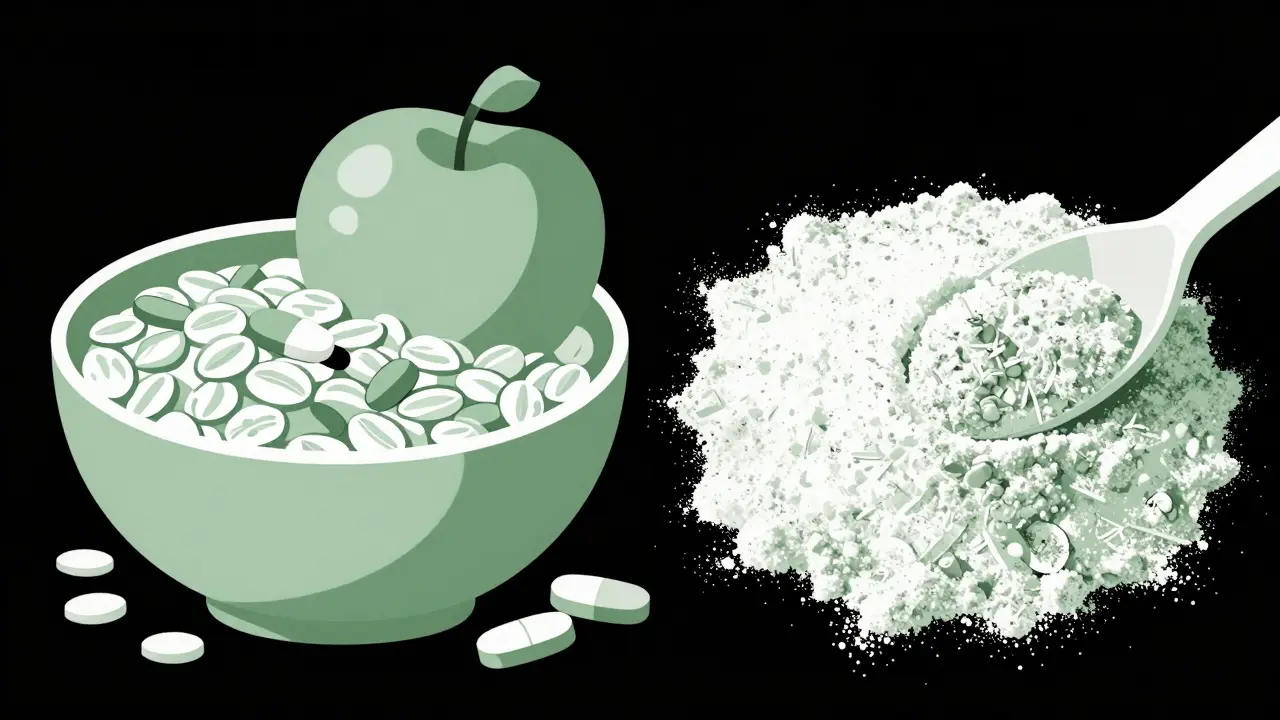
You might wonder, "Do I need to separate my meds from my broccoli?" Generally, no. Whole foods contain fiber, yes, but they also contain water, fats, proteins, and micronutrients that slow digestion and aid absorption. The fiber in a cup of beans is spread out and mixed with other nutrients, reducing its ability to act as a rapid-sweeping agent.
Supplements, however, are pure fiber. They lack the buffering effect of a balanced meal. That's why the strict timing rules apply primarily to concentrated supplements like Metamucil, Benefiber, or Citrucell. If you eat a high-fiber meal, your doctor might still recommend spacing out certain sensitive drugs, but the risk is significantly lower than with supplements.
When to Talk to Your Doctor
If you've been taking fiber and medication together for months, don't panic. But do pay attention to your body. Are your thyroid symptoms creeping back? Is your blood sugar harder to control? Is your mood more unstable? These could be signs of reduced drug efficacy.
Bring your fiber bottle to your next appointment. Ask your pharmacist or doctor: "Does my specific medication interact with fiber?" They can check your specific regimen. Some newer medications have better absorption profiles and may be less affected. Others, especially older formulations, are very sensitive.
Remember, the goal isn't to avoid fiber. It's to use it smartly. By separating your doses, you get the best of both worlds: effective medication management and the long-term health benefits of a high-fiber diet.
Can I take fiber supplements with any medication?
While fiber supplements can technically be taken with most medications, it is not recommended due to the risk of reduced absorption. For safety, always separate fiber supplements from other medications by at least 2 to 4 hours. This is especially critical for thyroid drugs, diabetes medications, and mood stabilizers.
How much water should I drink with fiber supplements?
You should drink at least one full glass of water (8 ounces or 240 milliliters) with each dose of fiber supplement. Drinking insufficient water can cause the fiber to swell in your throat or esophagus, leading to choking or blockages. Adequate hydration ensures the fiber moves smoothly through your digestive tract.
Is it safer to eat high-fiber foods instead of taking supplements?
Yes, generally. Whole foods like fruits, vegetables, and whole grains provide fiber along with other nutrients that aid digestion and reduce the risk of rapid drug binding. However, if you rely on supplements to meet your daily fiber needs, you must adhere to strict timing protocols with your medications to avoid interactions.
What happens if I forget to separate my fiber and medication?
If you accidentally take them together, don't double-dose your medication. Instead, monitor for signs that your medication isn't working effectively, such as returning symptoms of your condition. In the future, try to maintain the 2-to-4-hour separation window. Occasional lapses are unlikely to cause immediate harm, but consistent mixing can lead to chronic under-medication.
Does psyllium husk interact more strongly than other fibers?
Psyllium husk is known for its high viscosity and strong binding properties, making it particularly effective at lowering cholesterol but also potentially more disruptive to drug absorption. Studies have shown significant reductions in levothyroxine and lovastatin absorption when taken with psyllium. Other fibers like methylcellulose may have slightly different interaction profiles, but the same separation rules apply.