

You probably grab a bottle of ibuprofen or an antibiotic from your pharmacy without thinking twice about who made it. You assume it works just as well as the brand-name version and costs a fraction of the price. That assumption isn't magic; it is the direct result of a specific legal framework that reshaped American healthcare. At the heart of this system sits the Federal Food, Drug, and Cosmetic Act (FD&C Act). While most people know the FDA for approving new life-saving drugs, few realize that the same law provides the bedrock for the entire generic drug industry.
Before we look at how generics got here, we have to understand why the law exists. In 1937, a company marketed an antibiotic called sulfanilamide using diethylene glycol as a solvent. They didn't test it for safety. The result was a tragedy: over 100 people died across 15 states. This disaster shocked the nation into action. President Franklin D. Roosevelt signed the FD&C Act in 1938, requiring manufacturers to prove their drugs were safe before selling them. For decades, this law focused on safety. But proving safety wasn't enough. It took another 46 years, until 1984, for Congress to tweak the law in a way that would finally make affordable medicine widely available.
The Hatch-Waxman Turning Point
In the early 1980s, the pharmaceutical market was stuck. Brand-name companies enjoyed long periods of monopoly because patents lasted too long, while generic competitors faced impossible hurdles. If you wanted to sell a generic version of a proven drug, you had to run expensive clinical trials all over again, even though the active ingredient was already known to be safe and effective. This duplication wasted money and time, keeping prices high.
Congress responded with the Drug Price Competition and Patent Term Restoration Act, better known as the Hatch-Waxman Amendments. Named after Senator Orrin Hatch and Representative Henry Waxman, these amendments modified the FD&C Act to create a shortcut for generics. This shortcut is called the Abbreviated New Drug Application, or ANDA. Instead of repeating full clinical trials, generic manufacturers only need to prove their product is bioequivalent to the original brand-name drug.
This change was revolutionary. It balanced two competing needs: encouraging companies to invent new drugs by protecting their patents, and ensuring patients could afford those drugs once protection expired. The amendments introduced a clever trade-off. Brand-name companies got extra patent time to compensate for the years lost during FDA review. In exchange, they agreed to list their patents in a public database, allowing generic companies to challenge them earlier.
How Bioequivalence Works
So, what does "bioequivalent" actually mean? It sounds technical, but the concept is straightforward. When you take a pill, your body absorbs the active ingredient into your bloodstream. The FDA requires generic drugs to show that they release the same amount of active ingredient into the blood at the same rate as the brand-name reference listed drug (RLD).
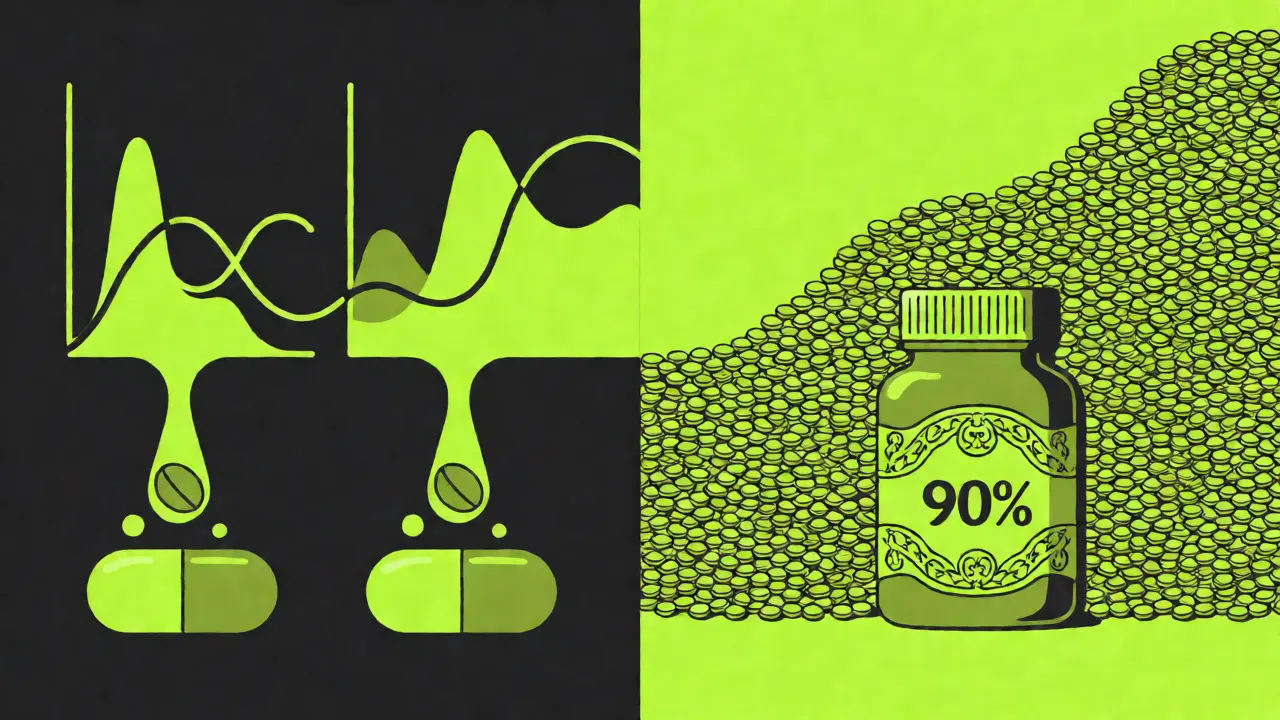
Manufacturers conduct pharmacokinetic studies on healthy volunteers to measure this. They look at two key metrics: Cmax (the peak concentration of the drug in the blood) and AUC (the total exposure to the drug over time). To pass, the 90% confidence intervals for these values must fall within 80-125% of the brand-name drug's results. This tight range ensures that when you switch from brand-name to generic, your body experiences virtually no difference in how the medication works.
| Feature | Brand-Name Drug (NDA) | Generic Drug (ANDA) |
|---|---|---|
| Primary Goal | Prove safety and efficacy from scratch | Prove equivalence to existing drug |
| Clinical Trials | Extensive Phase I, II, and III trials required | Bioequivalence studies only |
| Time to Market | Often 10+ years including development | Typically 2-3 years after patent expiry |
| Cost to Develop | $1 billion+ | $1 million - $50 million |
| Regulatory Basis | Section 505(b)(1) of FD&C Act | Section 505(j) of FD&C Act |

The Orange Book and Patent Challenges
A critical piece of this puzzle is the Orange Book. Officially titled "Approved Drug Products with Therapeutic Equivalence Evaluations," this list is maintained by the FDA. It tells pharmacists and doctors which drugs are interchangeable. More importantly, it lists the patents associated with each approved drug.
When a brand-name manufacturer gets a new patent, they must add it to the Orange Book. Generic companies then certify against these patents. If a generic company believes a patent is invalid or won't be infringed, they can file a Paragraph IV certification. This legal move triggers a notification to the brand-name holder, who often sues for patent infringement. This litigation process is complex, but it serves a vital purpose: it clears away weak patents that might otherwise block competition for years.
To reward the first company brave enough to challenge a patent, the law grants 180 days of marketing exclusivity. During this window, only the challenger and the brand-name company can sell the drug. No other generics are allowed. This temporary monopoly allows the first generic entrant to recoup the legal costs of challenging the patent. Without this incentive, many companies would sit back and wait for someone else to do the hard work, slowing down price reductions.
Impact on Healthcare Costs
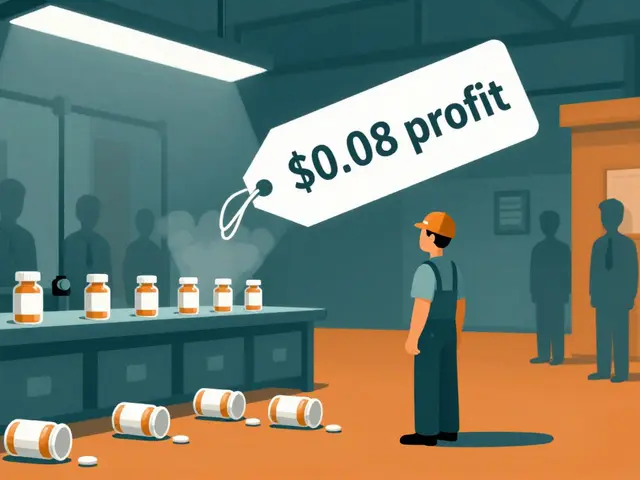
The numbers speak for themselves. Before Hatch-Waxman, generics accounted for only about 19% of prescriptions. Today, they fill nearly 90% of all prescriptions written in the United States. Despite this massive volume, generics represent only about 17% of total pharmaceutical spending. This disparity highlights the efficiency of the system.
According to Federal Trade Commission data, the generic drug sector saved consumers approximately $2.2 trillion over the past decade alone. Imagine if every prescription cost the brand-name price. Healthcare bills would be unrecognizable. The FD&C Act, through its generic provisions, acts as a silent subsidy for the entire medical system. It keeps out-of-pocket costs manageable for patients and reduces the burden on insurance providers and government programs like Medicare.
However, the system isn't perfect. Brand-name companies have learned to play the game. They use tactics like "evergreening," where they tweak a drug slightly-changing the dosage form or adding a minor ingredient-to get a new patent. They also file citizen petitions to delay generic approvals. These strategies extend monopolies beyond the intended period, sometimes keeping prices artificially high for years longer than necessary.
Modern Challenges and Future Outlook
The landscape continues to shift. Complex drugs, such as inhalers, injectables, and biologics, don't fit neatly into the old small-molecule model. Creating a generic version of a biologic drug is much harder because these molecules are large and sensitive. The FDA has been working to update guidance documents to address these complexities. As of recent reports, the agency has issued numerous guidances specifically for developing complex generics.
Legislation like the CREATES Act of 2019 helps combat anti-competitive behavior. It prevents brand-name companies from refusing to sell samples to generic developers, a tactic used to stall testing. Meanwhile, the Generic Drug User Fee Amendments (GDUFA) ensure the FDA has the resources to review applications quickly. Thanks to GDUFA, the average review time for priority ANDAs has dropped significantly, often completing within 10 months.
Looking ahead, the focus is on transparency and speed. The Congressional Budget Office projects that continued implementation of current policies will reduce federal drug spending by billions over the next decade. The core principles established by the FD&C Act remain intact: safety first, followed by fair competition. As technology evolves, so do the laws, but the goal remains the same-ensuring that effective medicine is accessible to everyone, not just those who can pay premium prices.
Key Takeaways
- Safety First: The FD&C Act originated from the 1937 sulfanilamide tragedy, mandating pre-market safety proof.
- The Shortcut: Hatch-Waxman created the ANDA pathway, allowing generics to skip full clinical trials by proving bioequivalence.
- Patent Balance: The law balances innovation incentives (patent extensions) with competition (generic entry).
- Economic Impact: Generics now account for 90% of prescriptions but only 17% of spending, saving trillions.
- Ongoing Evolution: Regulations continue to adapt to complex drugs and anti-competitive tactics like evergreening.
What is the main difference between a brand-name drug and a generic drug?
The main difference is the approval pathway. Brand-name drugs undergo extensive clinical trials to prove safety and efficacy from scratch. Generic drugs rely on the data from the brand-name drug and only need to prove they are bioequivalent, meaning they deliver the same amount of active ingredient into the bloodstream at the same rate.
Why do generic drugs look different from brand-name drugs?
Trademark laws prevent generic manufacturers from using the same color, shape, or logo as the brand-name drug. However, the active ingredient, strength, dosage form, and route of administration must be identical. The inactive ingredients, such as binders or dyes, may vary, which explains the visual differences.
What is the Orange Book?
The Orange Book is a publication by the FDA that lists approved drug products with therapeutic equivalence evaluations. It is crucial for generic manufacturers because it lists the patents associated with brand-name drugs. Generic companies must check this book to determine when they can legally enter the market.
How does the 180-day exclusivity period work?
The first generic company to successfully challenge a brand-name patent receives 180 days of exclusive marketing rights. During this time, no other generic competitors can enter the market. This allows the first entrant to charge higher prices temporarily to recover the legal costs of the patent challenge.
Are generic drugs less effective than brand-name drugs?
No. The FDA requires generic drugs to meet strict bioequivalence standards. Studies consistently show that generic drugs perform clinically the same as their brand-name counterparts. Any perceived differences are usually due to psychological factors or minor variations in inactive ingredients that rarely affect efficacy.
9 Comments

Kim Pender
September 3, 2026 AT 21:02
Good read. It's wild how much we take for granted.

Eric Schultze
September 5, 2026 AT 17:43
The narrative that this system is purely benevolent is a dangerous oversimplification. We must consider who truly benefits from the Hatch-Waxman framework. While consumers see lower prices, the pharmaceutical lobby retains immense power through patent evergreening and citizen petitions. The government acts as a gatekeeper, but one heavily influenced by corporate interests. It is imperative to remain vigilant against the erosion of true competition.

Neil Martin
September 6, 2026 AT 08:13
Your analysis lacks nuance regarding the pharmacokinetic realities.
Bioequivalence does not guarantee clinical equivalence in all therapeutic contexts, particularly for narrow therapeutic index drugs where Cmax variances can precipitate adverse events.
The 80-125% confidence interval is a regulatory construct, not a biological absolute.
We are conflating statistical non-inferiority with identical physiological response.
This oversight perpetuates a false sense of security among prescribers.
Furthermore, the reliance on healthy volunteer data ignores comorbidities that alter absorption rates.
The industry pushes generics because they are cheaper to produce, not necessarily because they are superior clinically.
One must question if the FDA’s expedited review process compromises rigorous safety profiling.
The trade-off between speed and thoroughness is often glossed over in popular discourse.
We need more post-market surveillance data before declaring victory.
The current model favors volume over precision.
It is a judgment call that many practitioners are uncomfortable making without adequate data.
Ultimately, the patient bears the risk of these regulatory shortcuts.
I am deeply concerned about the long-term implications of this standardization.
We are treating complex biology with simple metrics.
This is not just an economic issue; it is a public health dilemma.

Jeremy Westcott
September 7, 2026 AT 23:03
Dude, you're spiraling into the weeds here.
The whole point is that big pharma tries to game the system with those patents anyway.
They stack them like Jenga blocks until the generic guys have to sue their asses off.
It's a rigged casino where the house always wins unless someone flips the table.
Hatch-Waxman was a band-aid on a bullet wound.
They still charge insane prices for the 'new' version while the old one gets dumped.
It's all smoke and mirrors designed to keep stock prices high.
Don't buy the fairy tale about saving the world.
Follow the money trail and you'll see the puppet masters pulling strings.
The Orange Book is basically a weaponized list.
They use it to delay entry and milk the cow dry.
It's shady stuff, man.
Real shady.

Jenn Bell
September 8, 2026 AT 07:18
I think there is a lot of good in the system despite its flaws.
For so many families, accessing affordable medication is the difference between health and bankruptcy.
While the legal battles are frustrating, the end result allows people to get the care they need.
We should appreciate the progress made since the sulfanilamide tragedy.
Safety standards are higher now than they have ever been.
Generics provide a crucial safety net for our healthcare infrastructure.
It is not perfect, but it is working for millions of people every day.
We can advocate for better transparency without dismissing the benefits entirely.
Let's focus on solutions rather than just pointing out problems.
There is hope for even better access in the future.
We just need to keep pushing for fair policies.
Every small step counts towards a healthier society.
I remain optimistic about the direction of drug policy reform.
Together, we can ensure medicine remains accessible.
Let's stay positive and engaged in the conversation.

Pramay Dattani
September 10, 2026 AT 00:54
In India we have been making generics for decades before your fancy laws came along. You Americans act like you invented cheap medicine but we were doing it way back when. Our manufacturing quality is top notch and we export to everyone including your country. Stop acting like you know everything about drug production. We handle the bulk of global supply chains efficiently. Your regulations are slow and bureaucratic compared to our agile industry. We save lives globally with our affordable options. Respect the expertise that comes from mass scale production. Do not lecture us on how to make pills. We do it better and faster. Your pride is blinding you to reality.

Amanda SF
September 11, 2026 AT 08:47
This article is utterly pedestrian.
It recites basic facts without any intellectual rigor or critical depth.
One expects more from a discussion on legislative history.
The treatment of bioequivalence is superficial at best.
Where is the analysis of the economic incentives driving litigation?
The author fails to address the ethical dilemmas inherent in patent monopolies.
It reads like a brochure written by a marketing intern.
Truly disappointing lack of substance.
I have seen better explanations in introductory textbooks.
The tone is excessively apologetic toward the status quo.
No mention of the lobbying expenditures that shaped these amendments.
It ignores the impact on innovation rates for rare diseases.
A lazy critique would suffice for such a shallow piece.
I refuse to engage further with this mediocrity.
It is beneath serious academic consideration.

Neil Sahli
September 11, 2026 AT 23:31
Oh, absolutely! Because nothing says "progress" like fighting tooth and nail over a pill shape.
But hey, at least my wallet isn't crying anymore, right?
That's the real victory here.
Who cares if Big Pharma throws a tantrum?
We won the war on affordability, baby!
Keep those generic bottles coming!
It's beautiful when competition actually works.
So let's celebrate the boring paperwork that saves us thousands.
You're welcome, insurance companies.
Now go enjoy that extra cash.
Life is good when you don't go broke getting sick.
Stay pumped for more accessible healthcare!

Aurelio Haney
September 12, 2026 AT 20:41
The system is flawed but functional. :/
Patent cliffs create chaos.
Manufacturers rush to fill gaps.
Quality control sometimes slips.
Recalls happen more often than we admit.
Supply chain fragility is real.
We rely too heavily on overseas API sources.
If one factory shuts down, shortages ensue.
It is a precarious balance.
:|
Write a comment